Long years ago in old Japan there lived in the Province of Echigo, a very remote part of Japan even in these days, a man and his wife. When this story begins they had been married for some years and were blessed with one little daughter. She was the joy and pride of both their lives, and in her they stored an endless source of happiness for their old age.
むかしむかし、日本の越後の国に、ある夫婦が住んでいました。越後は、今でもたいそう遠く離れた土地です。このお話がはじまるころ、ふたりは結婚して何年かたっていて、小さな娘をひとりさずかっていました。娘はふたりの喜びであり、誇りでした。年をとってからも、この娘がいれば、いつまでも幸せでいられるにちがいないと、ふたりは思っていました。
What golden letter days in their memory were these that had marked her growing up from babyhood; the visit to the temple when she was just thirty days old, her proud mother carrying her, robed in ceremonial kimono, to be put under the patronage of the family's household god; then her first dolls festival, when her parents gave her a set of dolls and their miniature belongings, to be added to as year succeeded year; and perhaps the most important occasion of all, on her third birthday, when her first OBI (broad brocade sash) of scarlet and gold was tied round her small waist, a sign that she had crossed the threshold of girlhood and left infancy behind. Now that she was seven years of age, and had learned to talk and to wait upon her parents in those several little ways so dear to the hearts of fond parents, their cup of happiness seemed full. There could not be found in the whole of the Island Empire a happier little family.
娘が赤んぼうから大きくなっていくあいだには、ふたりの心に金色にかがやく思い出の日が、いくつもありました。生まれてちょうど三十日目には、お宮まいりに行きました。誇らしげな母が、晴れ着につつんだ娘をだいて、家の守り神のご加護をいただきに行ったのです。それから初めてのひな祭りには、両親がひとそろいのひな人形と、小さな道具類を贈りました。人形は、年ごとに買い足されていきました。そして、おそらくなにより大切だったのは、三つになった誕生日です。その日、緋色と金色の初めての帯が、娘の小さな腰に結ばれました。赤んぼうの時代をあとにして、少女時代の入り口をまたいだしるしです。今、娘は七つになりました。おしゃべりもできるようになり、ちょっとしたことで両親の世話もするようになりました。かわいがっている親にとって、それはたまらなくうれしいものです。ふたりの幸せは、あふれんばかりでした。島国の日本じゅうをさがしても、これほど幸せな小さな家族は見つからなかったでしょう。
One day there was much excitement in the home, for the father had been suddenly summoned to the capital on business. In these days of railways and jinrickshas and other rapid modes of traveling, it is difficult to realize what such a journey as that from Matsuyama to Kyoto meant. The roads were rough and bad, and ordinary people had to walk every step of the way, whether the distance were one hundred or several hundred miles. Indeed, in those days it was as great an undertaking to go up to the capital as it is for a Japanese to make a voyage to Europe now.
ある日、家の中は大さわぎになりました。父親が、用事でとつぜん都へ呼ばれたのです。鉄道や人力車や、そのほかの速い乗り物がある今の時代には、松山から京都までの旅がどういうものだったのか、なかなか想像がつきません。道はでこぼこで、ふつうの人々は、道のりが百マイルであれ何百マイルであれ、一歩一歩、ずっと歩いていかなければなりませんでした。そのころ都へのぼるのは、今の日本人がヨーロッパへ船旅をするのと同じくらいの大仕事だったのです。
So the wife was very anxious while she helped her husband get ready for the long journey, knowing what an arduous task lay before him. Vainly she wished that she could accompany him, but the distance was too great for the mother and child to go, and besides that, it was the wife's duty to take care of the home.
夫の長旅の支度を手伝いながら、妻はたいそう心配しました。夫の前にどれほど骨の折れる道のりが待っているか、わかっていたからです。一緒に行けたらと願っても、むだでした。母と子が行くには、道のりがあまりに遠すぎました。それに、家を守るのが妻のつとめだったのです。
All was ready at last, and the husband stood in the porch with his little family round him.
とうとうすっかり支度がととのい、夫は小さな家族にかこまれて玄関に立ちました。
"Do not be anxious, I will come back soon," said the man. "While I am away take care of everything, and especially of our little daughter."
「心配しなくていい。すぐに帰ってくるから」と、男は言いました。「わたしの留守のあいだ、何もかもよく気をつけておくれ。とりわけ、わたしたちの小さな娘のことをね」
"Yes, we shall be all right—but you—you must take care of yourself and delay not a day in coming back to us," said the wife, while the tears fell like rain from her eyes.
「ええ、わたしたちはだいじょうぶです。でも、あなた、あなたこそお体に気をつけて、一日も遅れずに帰ってきてくださいね」と、妻は言いました。その目からは、涙が雨のようにこぼれ落ちていました。
The little girl was the only one to smile, for she was ignorant of the sorrow of parting, and did not know that going to the capital was at all different from walking to the next village, which her father did very often. She ran to his side, and caught hold of his long sleeve to keep him a moment.
ほほえんでいたのは、小さな女の子だけでした。女の子は、別れの悲しみを知りませんでした。都へ行くのは、父がしょっちゅうしているように隣村まで歩いていくのとは、まるでちがうのだということも、わからなかったのです。女の子は父のそばに駆けより、少しでも引きとめようと、父の長い袖をつかみました。
"Father, I will be very good while I am waiting for you to come back, so please bring me a present."
「おとうさん、帰ってくるのを待っているあいだ、とってもいい子にしているから、おみやげを買ってきてね」
As the father turned to take a last look at his weeping wife and smiling, eager child, he felt as if some one were pulling him back by the hair, so hard was it for him to leave them behind, for they had never been separated before. But he knew that he must go, for the call was imperative. With a great effort he ceased to think, and resolutely turning away he went quickly down the little garden and out through the gate. His wife, catching up the child in her arms, ran as far as the gate, and watched him as he went down the road between the pines till he was lost in the haze of the distance and all she could see was his quaint peaked hat, and at last that vanished too.
泣いている妻と、ほほえんで目をかがやかせている子どもを、最後にもう一度見ようとふり返ったとき、父親は、まるでだれかに髪の毛をつかまれて、うしろへ引きもどされるような気がしました。それほど、ふたりを残していくのはつらかったのです。それまで一度も、離ればなれになったことがなかったのですから。けれども、呼び出しにはどうしても応じなければならず、行くしかないことはわかっていました。父親はぐっと思いを断ち切り、きっぱりと背を向けると、小さな庭を足早に抜けて、門を出ていきました。妻は子どもをだきあげて門まで走り、松並木の道を行く夫を見送りました。夫の姿はやがて遠くのかすみの中にまぎれ、あの変わったとんがり笠だけが見えていましたが、とうとうそれも消えてしまいました。
"Now father has gone, you and I must take care of everything till he comes back," said the mother, as she made her way back to the house.
「さあ、おとうさんは行ってしまったから、帰ってくるまで、あなたとわたしとで、何もかも気をつけなければなりませんよ」と、母は家へ戻りながら言いました。
"Yes, I will be very good," said the child, nodding her head, "and when father comes home please tell him how good I have been, and then perhaps he will give me a present."
「うん、とってもいい子にしてる」と、子どもはうなずきながら言いました。「おとうさんが帰ってきたら、わたしがどんなにいい子にしていたか話してね。そうしたら、おみやげをくれるかもしれないから」
"Father is sure to bring you something that you want very much. I know, for I asked him to bring you a doll. You must think of father every day, and pray for a safe journey till he comes back."
「おとうさんはきっと、あなたがとても欲しがっているものを買ってきてくださるわ。わかっているの。お人形を買ってきてくださいって、頼んでおいたのだから。毎日おとうさんのことを思って、帰ってくるまで、旅が無事であるようにお祈りしなければいけませんよ」
"O, yes, when he comes home again how happy I shall be," said the child, clapping her hands, and her face growing bright with joy at the glad thought. It seemed to the mother as she looked at the child's face that her love for her grew deeper and deeper.
「うん、おとうさんがまた帰ってきたら、どんなにうれしいかしら」と、子どもは手をたたきながら言いました。そう思うだけで、顔が喜びで明るくかがやきました。その顔を見ていると、娘をいとしく思う気持ちが、ますます深まっていくように、母には思われました。
Then she set to work to make the winter clothes for the three of them. She set up her simple wooden spinning-wheel and spun the thread before she began to weave the stuffs. In the intervals of her work she directed the little girl's games and taught her to read the old stories of her country. Thus did the wife find consolation in work during the lonely days of her husband's absence. While the time was thus slipping quickly by in the quiet home, the husband finished his business and returned.
それから母は、三人の冬着をつくる仕事にとりかかりました。素朴な木の糸車をすえて、まず糸をつむぎ、それから布を織りはじめました。仕事の合間には、小さな娘の遊びを見てやり、この国の古いお話を読むことを教えました。こうして妻は、夫の留守のさびしい日々を、仕事にはげむことでなぐさめました。静かな家で時がすみやかに過ぎていくあいだに、夫は用事をすませて帰ってきました。
It would have been difficult for any one who did not know the man well to recognize him. He had traveled day after day, exposed to all weathers, for about a month altogether, and was sunburnt to bronze, but his fond wife and child knew him at a glance, and flew to meet him from either side, each catching hold of one of his sleeves in their eager greeting. Both the man and his wife rejoiced to find each other well. It seemed a very long time to all till—the mother and child helping—his straw sandals were untied, his large umbrella hat taken off, and he was again in their midst in the old familiar sitting-room that had been so empty while he was away.
男のことをよく知らない人なら、だれも見分けられなかったでしょう。あわせてひと月ほども、毎日毎日、雨風にさらされて旅をしてきたので、赤銅色に日焼けしていたのです。けれども、いとしい妻と子は、ひと目で夫だとわかりました。ふたりは両側から飛んでいって迎え、待ちかねたように、それぞれ片方ずつ袖をつかみました。夫も妻も、たがいに元気だったことを喜びあいました。母と子が手伝って、わらじのひもをほどき、大きな笠をはずしました。留守のあいだはがらんとしていた、なじみの茶の間で、夫がまたふたりにかこまれるまでが、みなには、とても長い時間に思われました。
As soon as they had sat down on the white mats, the father opened a bamboo basket that he had brought in with him, and took out a beautiful doll and a lacquer box full of cakes.
白い畳の上に座るとすぐ、父親は持って入ってきた竹かごを開けて、美しい人形と、お菓子がいっぱいに入った塗りの箱をとり出しました。
"Here," he said to the little girl, "is a present for you. It is a prize for taking care of mother and the house so well while I was away."
「さあ」と、父親は小さな娘に言いました。「おまえにおみやげだよ。わたしの留守のあいだ、おかあさんと家のことをよく気をつけてくれたごほうびだ」
"Thank you," said the child, as she bowed her head to the ground, and then put out her hand just like a little maple leaf with its eager wide-spread fingers to take the doll and the box, both of which, coming from the capital, were prettier than anything she had ever seen. No words can tell how delighted the little girl was—her face seemed as if it would melt with joy, and she had no eyes and no thought for anything else.
「ありがとう」と、子どもは言って、畳につくほど頭をさげました。それから、指をいっぱいに広げた、小さなもみじのような手を出して、人形と箱を受けとりました。どちらも都の品で、これまでに見たどんなものよりもきれいでした。小さな娘がどれほど喜んだかは、とても言葉では言いあらわせません。顔は喜びでとろけてしまいそうで、ほかのものには目もくれず、何も考えられませんでした。
Again the husband dived into the basket, and brought out this time a square wooden box, carefully tied up with red and white string, and handing it to his wife, said:
夫はふたたびかごの中に手を入れて、今度は紅白のひもでていねいに結んだ、四角い木の箱をとり出しました。そして、それを妻に渡して言いました。
"And this is for you."
「そして、これはおまえにだ」
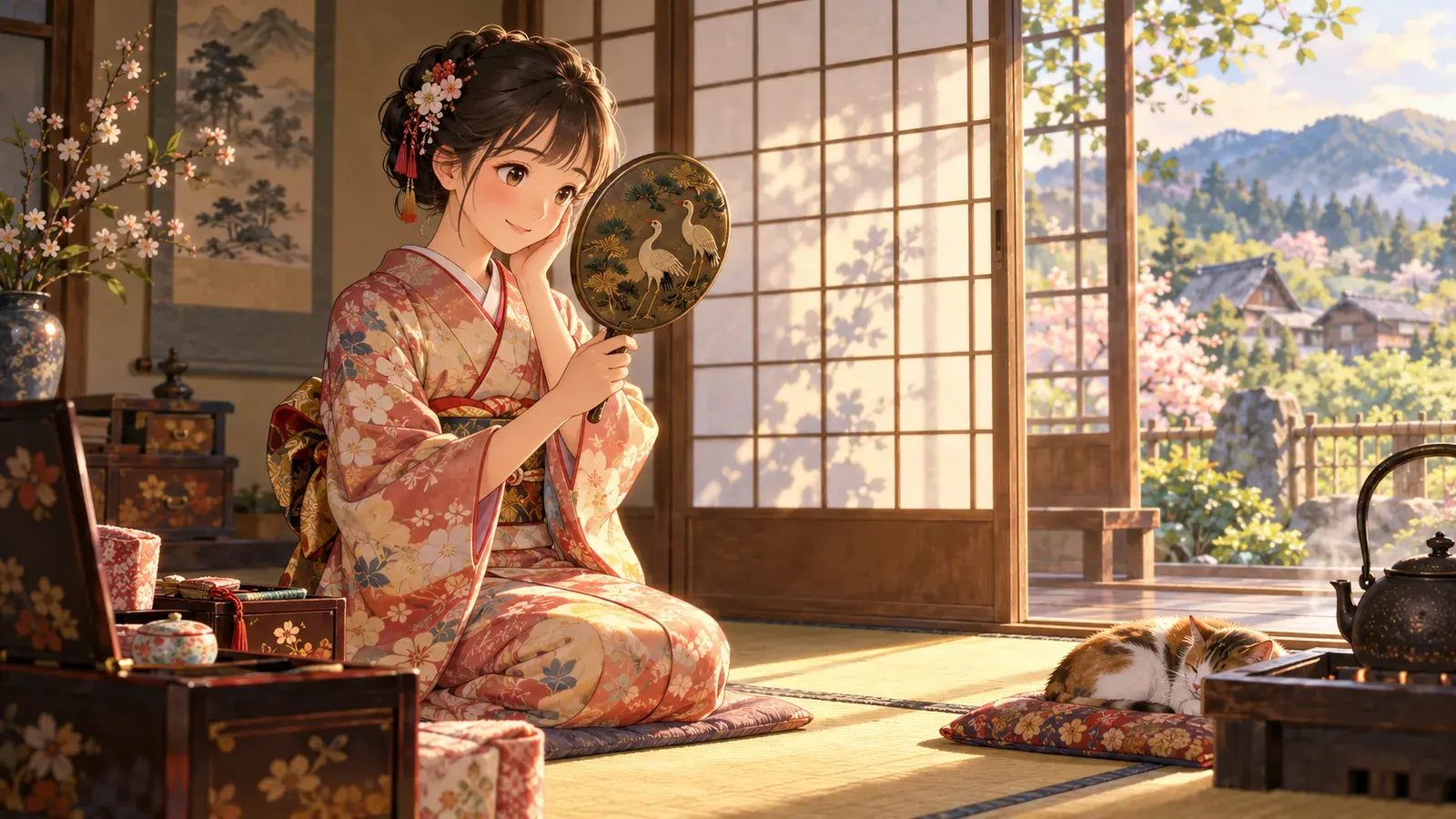
The wife took the box, and opening it carefully took out a metal disk with a handle attached. One side was bright and shining like a crystal, and the other was covered with raised figures of pine-trees and storks, which had been carved out of its smooth surface in lifelike reality. Never had she seen such a thing in her life, for she had been born and bred in the rural province of Echigo. She gazed into the shining disk, and looking up with surprise and wonder pictured on her face, she said:
妻は箱を受けとり、ていねいに開けて、柄のついた金属の円盤をとり出しました。片面は水晶のように明るく光っていました。もう片面には、松と鶴の模様が、なめらかな面から本物そっくりに彫りだされていました。こんなものは、生まれてこのかた一度も見たことがありません。妻は、いなかの越後で生まれ育ったのです。妻は光る円盤をのぞきこみ、それから驚きと不思議さを顔いっぱいに浮かべて、夫を見あげました。
"I see somebody looking at me in this round thing! What is it that you have given me?"
「この丸いものの中で、だれかがわたしを見ています! いったい何をくださったのですか?」
The husband laughed and said:
夫は笑って言いました。
"Why, it is your own face that you see. What I have brought you is called a mirror, and whoever looks into its clear surface can see their own form reflected there. Although there are none to be found in this out of the way place, yet they have been in use in the capital from the most ancient times. There the mirror is considered a very necessary requisite for a woman to possess. There is an old proverb that 'As the sword is the soul of a samurai, so is the mirror the soul of a woman,' and according to popular tradition, a woman's mirror is an index to her own heart—if she keeps it bright and clear, so is her heart pure and good. It is also one of the treasures that form the insignia of the Emperor. So you must lay great store by your mirror, and use it carefully."
「なに、おまえに見えているのは、おまえ自身の顔だよ。わたしが持ってきたのは鏡というものでね、その澄んだ面をのぞきこめば、だれでも自分の姿が映って見えるのだ。こんな片いなかには一枚もないけれど、都では、たいそうむかしから使われているのだよ。都では、鏡は女の人がかならず持っていなければならないものとされている。『刀が侍の魂であるように、鏡は女の魂である』という古いことわざもある。世間の言い伝えでは、女の人の鏡は、その人の心をあらわすものなのだそうだ。鏡を明るく澄んだままにしておけば、その人の心も清く正しい、とね。それに鏡は、帝のしるしである三つの宝物のひとつでもあるのだ。だから、おまえも鏡をたいそう大事にして、気をつけて使わなければいけないよ」
The wife listened to all her husband told her, and was pleased at learning so much that was new to her. She was still more pleased at the precious gift—his token of remembrance while he had been away.
妻は夫の話をすっかり聞いて、知らなかったことをこんなにたくさん教わったのを喜びました。そして、この大切な贈り物をもらったことを、いっそう喜びました。夫が留守のあいだも、自分のことを思っていてくれたしるしだったからです。
"If the mirror represents my soul, I shall certainly treasure it as a valuable possession, and never will I use it carelessly." Saying so, she lifted it as high as her forehead, in grateful acknowledgment of the gift, and then shut it up in its box and put it away.
「鏡がわたしの魂をあらわすのでしたら、大切な宝物としてしまっておき、決していいかげんに使ったりはいたしません」そう言うと、妻は贈り物へのお礼のしるしに、鏡をひたいの高さまでおしいただき、それから箱にしまって片づけました。
The wife saw that her husband was very tired, and set about serving the evening meal and making everything as comfortable as she could for him. It seemed to the little family as if they had not known what true happiness was before, so glad were they to be together again, and this evening the father had much to tell of his journey and of all he had seen at the great capital.
夫がたいそう疲れているのを見て、妻は夕食の支度にとりかかり、夫ができるだけくつろげるように、何もかもととのえました。また一緒にいられるのがあまりにうれしくて、小さな家族は、それまでほんとうの幸せを知らなかったような気がしました。その晩、父親には、旅のことや、大きな都で見たあれこれについて、話すことがたくさんありました。
Time passed away in the peaceful home, and the parents saw their fondest hopes realized as their daughter grew from childhood into a beautiful girl of sixteen. As a gem of priceless value is held in its proud owner's hand, so had they reared her with unceasing love and care: and now their pains were more than doubly rewarded. What a comfort she was to her mother as she went about the house taking her part in the housekeeping, and how proud her father was of her, for she daily reminded him of her mother when he had first married her.
静かな家で時は流れ、娘は子どもから、十六の美しい娘に育ちました。両親のいちばんの望みが、かなったのです。かけがえのない宝石を持ち主がたいせつに手にいだくように、ふたりは絶えまない愛情と心づかいで、娘を育ててきました。そして今、その苦労は二倍以上にむくわれました。家事の一部を受けもって家の中を立ち働く娘は、母にとって、どれほど心強かったことでしょう。そして父は、娘をどれほど誇りに思ったことでしょう。娘を見ていると、結婚したばかりのころの妻の姿が、毎日のように思い出されたのです。
But, alas! in this world nothing lasts forever. Even the moon is not always perfect in shape, but loses its roundness with time, and flowers bloom and then fade. So at last the happiness of this family was broken up by a great sorrow. The good and gentle wife and mother was one day taken ill.
けれども、ああ! この世に、永遠につづくものは何ひとつありません。月でさえ、いつも満月ではなく、時とともに欠けていきます。花も咲いては、しぼみます。そうして、この家族の幸せも、ついに大きな悲しみにこわされてしまいました。善良でやさしい妻であり母である人が、ある日、病にたおれたのです。
In the first days of her illness the father and daughter thought that it was only a cold, and were not particularly anxious. But the days went by and still the mother did not get better; she only grew worse, and the doctor was puzzled, for in spite of all he did the poor woman grew weaker day by day. The father and daughter were stricken with grief, and day or night the girl never left her mother's side. But in spite of all their efforts the woman's life was not to be saved.
病のはじめのうちは、父と娘は、ただのかぜだろうと思って、それほど心配していませんでした。けれども、日がたっても母はよくならず、悪くなっていくばかりでした。医者も首をかしげました。どんなに手をつくしても、かわいそうな母は、日ごとに弱っていったのです。父と娘は悲しみに打ちひしがれ、娘は昼も夜も母のそばをはなれませんでした。けれども、どれほど手をつくしても、母の命は救えない運命でした。
One day as the girl sat near her mother's bed, trying to hide with a cheery smile the gnawing trouble at her heart, the mother roused herself and taking her daughter's hand, gazed earnestly and lovingly into her eyes. Her breath was labored and she spoke with difficulty:
ある日、娘は母の床のそばに座っていました。胸をさいなむ心配を、明るいほほえみでかくそうとしていたのです。すると母は力をふりしぼって娘の手をとり、真剣に、いとおしそうに娘の目を見つめました。息は苦しげで、話すのもやっとでした。
"My daughter. I am sure that nothing can save me now. When I am dead, promise me to take care of your dear father and to try to be a good and dutiful woman."
「わたしの娘や。もう何をしても、わたしは助からないでしょう。わたしが死んだら、大切なおとうさまのお世話をして、よい、孝行な女になるよう努めると、約束しておくれ」
"Oh, mother," said the girl as the tears rushed to her eyes, "you must not say such things. All you have to do is to make haste and get well—that will bring the greatest happiness to father and myself."
「まあ、おかあさま」と、娘は目に涙をあふれさせながら言いました。「そんなことをおっしゃってはいけません。おかあさまは、ただ早くよくなってくださればいいのです。それが、おとうさまとわたしにとって、いちばんの幸せなのですから」
"Yes, I know, and it is a comfort to me in my last days to know how greatly you long for me to get better, but it is not to be. Do not look so sorrowful, for it was so ordained in my previous state of existence that I should die in this life just at this time; knowing this, I am quite resigned to my fate. And now I have something to give you whereby to remember me when I am gone."
「ええ、わかっていますよ。あなたがどれほどわたしがよくなるのを願っていてくれるか、それを知るのが、この最期の日々のなぐさめです。でも、そうはならないの。そんなに悲しそうな顔をしないで。わたしがこの世で、ちょうど今このときに死ぬことは、前の世から定められていたことなのです。それがわかっているから、わたしはもう、すっかり覚悟ができています。さて、わたしがいなくなったあとで、わたしを思い出すよすがになるものを、あなたにあげましょう」
Putting her hand out, she took from the side of the pillow a square wooden box tied up with a silken cord and tassels. Undoing this very carefully, she took out of the box the mirror that her husband had given her years ago.
母は手をのばして、枕のわきから、四角い木の箱をとりました。房のついた絹のひもで結んであります。母はそのひもをたいそうていねいにほどいて、何年も前に夫からもらった鏡を、箱からとり出しました。
"When you were still a little child your father went up to the capital and brought me back as a present this treasure; it is called a mirror. This I give you before I die. If, after I have ceased to be in this life, you are lonely and long to see me sometimes, then take out this mirror and in the clear and shining surface you will always see me—so will you be able to meet with me often and tell me all your heart; and though I shall not be able to speak, I shall understand and sympathize with you, whatever may happen to you in the future." With these words the dying woman handed the mirror to her daughter.
「あなたがまだ小さな子どもだったころ、おとうさまが都へのぼって、この宝物をおみやげに持ってきてくださったの。鏡というものです。これを、死ぬ前にあなたにあげます。わたしがこの世からいなくなったあとで、さびしくなって、ときどきわたしに会いたくなったら、この鏡をとり出しなさい。その澄んだ、光る面に、いつでもわたしが見えるでしょう。そうすれば、いつでもわたしに会って、心の中をすっかり話すことができます。わたしは口をきくことはできないけれど、この先あなたにどんなことが起こっても、ちゃんとわかって、一緒に悲しんだり喜んだりしてあげますよ」そう言って、死にゆく母は鏡を娘に手渡しました。
The mind of the good mother seemed to be now at rest, and sinking back without another word her spirit passed quietly away that day.
やさしい母の心は、もうやすらいだように見えました。それきりひとことも言わずに枕に身をしずめると、その日のうちに、母の魂はしずかに去っていきました。
The bereaved father and daughter were wild with grief, and they abandoned themselves to their bitter sorrow. They felt it to be impossible to take leave of the loved woman who till now had filled their whole lives and to commit her body to the earth. But this frantic burst of grief passed, and then they took possession of their own hearts again, crushed though they were in resignation. In spite of this the daughter's life seemed to her desolate. Her love for her dead mother did not grow less with time, and so keen was her remembrance, that everything in daily life, even the falling of the rain and the blowing of the wind, reminded her of her mother's death and of all that they had loved and shared together. One day when her father was out, and she was fulfilling her household duties alone, her loneliness and sorrow seemed more than she could bear. She threw herself down in her mother's room and wept as if her heart would break. Poor child, she longed just for one glimpse of the loved face, one sound of the voice calling her pet name, or for one moment's forgetfulness of the aching void in her heart. Suddenly she sat up. Her mother's last words had rung through her memory hitherto dulled by grief.
あとに残された父と娘は、悲しみのあまり気もくるわんばかりで、ただただ嘆きにくれました。今まで自分たちの人生を満たしていた、いとしい人に別れを告げ、その亡骸を土にゆだねるなど、とてもできないと思いました。けれども、この狂おしい悲しみの嵐が過ぎると、ふたりは打ちひしがれながらも、あきらめて、ふたたび自分の心をとりもどしました。それでも、娘にとって、毎日はわびしいものでした。亡き母を慕う気持ちは、時がたっても少しもうすれません。思い出はあまりにあざやかで、ふだんの暮らしのあらゆること、雨が降るのも風が吹くのさえ、母の死を思い出させました。そして、ふたりで愛し、分かちあったすべてのことを思い出させるのでした。ある日、父が出かけていて、娘がひとりで家の仕事をしていると、さびしさと悲しみが、たえられないほどにつのってきました。娘は母の部屋に身を投げだし、胸がはりさけんばかりに泣きました。かわいそうに、娘はただ願いました。なつかしい顔を、ひと目でいいから見たい。自分を呼ぶあの呼び名を、ひと声でいいから聞きたい。それがかなわないなら、胸にぽっかりあいたこの痛みを、ほんのひとときでも忘れたい、と。とつぜん、娘は起きあがりました。それまで悲しみでぼんやりしていた心に、母の最後の言葉がよみがえったのです。
"Oh! my mother told me when she gave me the mirror as a parting gift, that whenever I looked into it I should be able to meet her—to see her. I had nearly forgotten her last words—how stupid I am; I will get the mirror now and see if it can possibly be true!"
「ああ! おかあさまはこの鏡を形見にくださったとき、これをのぞけば、いつでもおかあさまに会える、おかあさまの姿が見えるとおっしゃったわ。おかあさまの最後の言葉を、もう少しで忘れるところだった。わたしったら、なんてばかなんでしょう。今すぐ鏡をとり出して、ほんとうかどうか見てみましょう!」
She dried her eyes quickly, and going to the cupboard took out the box that contained the mirror, her heart beating with expectation as she lifted the mirror out and gazed into its smooth face. Behold, her mother's words were true! In the round mirror before her she saw her mother's face; but, oh, the joyful surprise! It was not her mother thin and wasted by illness, but the young and beautiful woman as she remembered her far back in the days of her own earliest childhood. It seemed to the girl that the face in the mirror must soon speak, almost that she heard the voice of her mother telling her again to grow up a good woman and a dutiful daughter, so earnestly did the eyes in the mirror look back into her own.
娘はすばやく涙をふき、戸棚へ行って、鏡の入った箱をとり出しました。鏡をとり出して、そのなめらかな面をのぞきこむとき、娘の胸は期待にどきどきしていました。すると、どうでしょう。母の言葉はほんとうでした! 目の前の丸い鏡の中に、母の顔が見えたのです。しかも、ああ、なんとうれしい驚きでしょう! それは、病でやせおとろえた母ではありませんでした。娘がまだほんの幼いころ、遠いむかしに覚えている、若く美しい母の姿だったのです。鏡の中の目が、あまりに熱心に自分の目を見つめ返すので、鏡の中の顔が今にも口をきくように、娘には思われました。よい女に、孝行な娘に育ちなさいと、母がもう一度言う声が、聞こえてくるような気さえしました。
"It is certainly my mother's soul that I see. She knows how miserable I am without her and she has come to comfort me. Whenever I long to see her she will meet me here; how grateful I ought to be!"
「わたしが見ているのは、きっとおかあさまの魂なのだわ。おかあさまがいなくて、わたしがどんなにつらいか知っていて、なぐさめに来てくださったのよ。会いたくなったら、いつでもここで会ってくださるのね。なんてありがたいことでしょう!」
And from this time the weight of sorrow was greatly lightened for her young heart. Every morning, to gather strength for the day's duties before her, and every evening, for consolation before she lay down to rest, did the young girl take out the mirror and gaze at the reflection which in the simplicity of her innocent heart she believed to be her mother's soul. Daily she grew in the likeness of her dead mother's character, and was gentle and kind to all, and a dutiful daughter to her father.
そのときから、娘の若い心をおしつぶしていた悲しみは、ずいぶん軽くなりました。毎朝、その日のつとめにはげむ力をもらおうと、そして毎晩、休む前のなぐさめにと、娘は鏡をとり出して、そこに映る姿をじっと見つめました。無垢ですなおな娘は、それを母の魂だと信じていたのです。娘は日ごとに亡き母の気だてに似ていき、だれにもやさしく親切で、父にはよく孝行をつくしました。
A year spent in mourning had thus passed away in the little household, when, by the advice of his relations, the man married again, and the daughter now found herself under the authority of a step-mother. It was a trying position; but her days spent in the recollection of her own beloved mother, and of trying to be what that mother would wish her to be, had made the young girl docile and patient, and she now determined to be filial and dutiful to her father's wife, in all respects. Everything went on apparently smoothly in the family for some time under the new regime; there were no winds or waves of discord to ruffle the surface of every-day life, and the father was content.
こうして小さな家庭で喪に服した一年が過ぎたころ、親類たちのすすめで、父は再婚しました。娘は、まま母のもとで暮らすことになったのです。それはつらい立場でした。けれども娘は、なつかしい実の母を思い出し、母が望んだような娘になろうと努めて日々を過ごしてきたので、すなおで辛抱づよい心が育っていました。娘は、何ごとにつけても父の新しい妻に孝行をつくそうと決心しました。新しい暮らしがはじまって、しばらくのあいだは、家の中は何ごともなく過ぎていくように見えました。ふだんの暮らしを乱すような、もめごとの風も波も立たず、父は満足していました。
But it is a woman's danger to be petty and mean, and step-mothers are proverbial all the world over, and this one's heart was not as her first smiles were. As the days and weeks grew into months, the step-mother began to treat the motherless girl unkindly and to try and come between the father and child.
けれども、女の人は、とかくつまらないことにこだわり、心がせまくなりがちなものです。それに、まま母の意地悪は、世界じゅうどこでも、ことわざになるほどです。このまま母も、心の中は、はじめに見せたほほえみとはちがっていました。日がたち、週がたち、やがて月日がたつにつれて、まま母は、母のいない娘につらくあたるようになりました。そして、父と娘の仲を裂こうとしはじめたのです。
Sometimes she went to her husband and complained of her step-daughter's behavior, but the father knowing that this was to be expected, took no notice of her ill-natured complaints. Instead of lessening his affection for his daughter, as the woman desired, her grumblings only made him think of her the more. The woman soon saw that he began to show more concern for his lonely child than before. This did not please her at all, and she began to turn over in her mind how she could, by some means or other, drive her step-child out of the house. So crooked did the woman's heart become.
ときどき、まま母は夫のところへ行って、まま娘のふるまいについて苦情を言いました。けれども父は、こういうことはよくあるものだとわかっていたので、意地の悪い苦情にはとりあいませんでした。まま母は、夫の娘への愛情がうすれることを望んでいたのですが、その不平は、かえって父に娘のことをいっそう思わせるばかりでした。夫がさびしい娘のことを前よりも気づかうようになったのに、まま母はまもなく気づきました。それがまったく気に入らず、まま母は、なんとかしてまま娘を家から追いだせないものかと、思いめぐらすようになりました。それほどまでに、心がねじけてしまったのです。
She watched the girl carefully, and one day peeping into her room in the early morning, she thought she discovered a grave enough sin of which to accuse the child to her father. The woman herself was a little frightened too at what she had seen.
まま母は、娘を注意ぶかく見張っていました。そしてある日の早朝、娘の部屋をのぞきこんで、父親に言いつけるのに十分な、重い罪を見つけたと思いました。見たものに、まま母自身も少しおびえていました。
So she went at once to her husband, and wiping away some false tears she said in a sad voice:
そこでまま母はすぐに夫のところへ行き、そら涙をふきながら、悲しげな声で言いました。
"Please give me permission to leave you today."
「どうか、今日、おいとまをくださいませ」
The man was completely taken by surprise at the suddenness of her request, and wondered whatever was the matter.
とつぜんの頼みに、夫はすっかり面くらって、いったいどうしたのだろうと思いました。
"Do you find it so disagreeable," he asked, "in my house, that you can stay no longer?"
「わたしの家にこれ以上いられないほど、いやなことがあるのかね?」と、夫はたずねました。
"No! no! it has nothing to do with you—even in my dreams I have never thought that I wished to leave your side; but if I go on living here I am in danger of losing my life, so I think it best for all concerned that you should allow me to go home!"
「いいえ! いいえ! あなたのせいではございません。おそばをはなれたいなどと、夢にも思ったことはございません。でも、このままここに住んでいたら、わたしは命を落とすかもしれないのです。ですから、実家に帰らせていただくのが、みんなのためにいちばんよいと思うのです!」
And the woman began to weep afresh. Her husband, distressed to see her so unhappy, and thinking that he could not have heard aright, said:
そして、まま母はまた泣きだしました。妻がこんなに悲しんでいるのを見て、夫はうろたえました。聞きちがえたにちがいないと思って、夫は言いました。
"Tell me what you mean! How is your life in danger here?"
「どういうことなのか話しておくれ! どうしてここにいると、命があぶないのだね?」
"I will tell you since you ask me. Your daughter dislikes me as her step-mother. For some time past she has shut herself up in her room morning and evening, and looking in as I pass by, I am convinced that she has made an image of me and is trying to kill me by magic art, cursing me daily. It is not safe for me to stay here, such being the case; indeed, indeed, I must go away, we cannot live under the same roof any more."
「おたずねですから、お話しいたします。あなたの娘は、まま母のわたしをきらっているのです。しばらく前から、娘は朝晩、部屋に閉じこもっております。通りがかりにのぞいてみて、わたしにはわかったのです。娘はわたしの人形をつくって、毎日のろいをかけ、魔術でわたしを殺そうとしているのです。そういうわけですから、ここにいては、わたしの身があぶないのです。ほんとうに、ほんとうに、わたしは出ていかなければなりません。もうひとつ屋根の下で暮らすことはできません」
The husband listened to the dreadful tale, but he could not believe his gentle daughter guilty of such an evil act. He knew that by popular superstition people believed that one person could cause the gradual death of another by making an image of the hated one and cursing it daily; but where had his young daughter learned such knowledge?—the thing was impossible. Yet he remembered having noticed that his daughter stayed much in her room of late and kept herself away from every one, even when visitors came to the house. Putting this fact together with his wife's alarm, he thought that there might be something to account for the strange story.
夫はこの恐ろしい話を聞きましたが、やさしい娘がそんな悪いことをしているとは、信じられませんでした。憎い相手の人形をつくって毎日のろいをかければ、その人をじわじわと死なせることができる。世間でそういう迷信が信じられているのは、知っていました。けれども、年若い娘が、そんなことをどこで覚えたというのでしょう? ありえないことです。それでも、娘が近ごろ部屋にこもりがちで、客が来たときでさえ、だれとも顔を合わせようとしないのには、気づいていました。そのことと妻のおびえようを考えあわせると、この奇妙な話にも、何かわけがあるのかもしれないと思いました。
His heart was torn between doubting his wife and trusting his child, and he knew not what to do. He decided to go at once to his daughter and try to find out the truth. Comforting his wife and assuring her that her fears were groundless, he glided quietly to his daughter's room.
妻を疑う気持ちと、娘を信じる気持ちとのあいだで、心がひきさかれ、夫はどうしたらよいかわかりませんでした。そこで、すぐに娘のところへ行って、ほんとうのことをつきとめようと決めました。妻をなぐさめ、心配することは何もないと請けあってから、夫はしずかに娘の部屋へ向かいました。
The girl had for a long time past been very unhappy. She had tried by amiability and obedience to show her goodwill and to mollify the new wife, and to break down that wall of prejudice and misunderstanding that she knew generally stood between step-parents and their step-children. But she soon found that her efforts were in vain. The step-mother never trusted her, and seemed to misinterpret all her actions, and the poor child knew very well that she often carried unkind and untrue tales to her father. She could not help comparing her present unhappy condition with the time when her own mother was alive only a little more than a year ago—so great a change in this short time! Morning and evening she wept over the remembrance. Whenever she could she went to her room, and sliding the screens to, took out the mirror and gazed, as she thought, at her mother's face. It was the only comfort that she had in these wretched days.
娘は、ずっと前から、たいそうつらい思いをしていました。やさしく、すなおにふるまうことで好意を示し、新しい母の心をやわらげようと努めてきました。まま親とまま子のあいだには、たいてい偏見と誤解の壁が立ちはだかっているものです。その壁をくずそうとしたのです。けれども、その努力がむだだと、まもなく思い知らされました。まま母は決して娘を信じようとせず、することなすことを、すべて悪いほうにとるようでした。そして、まま母がたびたび意地の悪い作り話を父に言いつけていることを、かわいそうに、娘はよく知っていました。ほんの一年あまり前、実の母が生きていたころと、今のつらい身の上とを、くらべずにはいられませんでした。この短いあいだに、なんという変わりようでしょう! 朝に晩に、娘は思い出しては泣きました。そして、できるかぎり自分の部屋へ行き、ふすまを閉めて鏡をとり出し、母の顔だと思っているものを、じっと見つめるのでした。このみじめな日々のなかで、それが娘のただひとつのなぐさめだったのです。
Her father found her occupied in this way. Pushing aside the fusama, he saw her bending over something or other very intently. Looking over her shoulder, to see who was entering her room, the girl was surprised to see her father, for he generally sent for her when he wished to speak to her. She was also confused at being found looking at the mirror, for she had never told any one of her mother's last promise, but had kept it as the sacred secret of her heart. So before turning to her father she slipped the mirror into her long sleeve. Her father noting her confusion, and her act of hiding something, said in a severe manner:
父がやって来たのは、娘がちょうどそうしているときでした。ふすまを押し開けると、娘が何かにかがみこんで、一心に見入っているのが見えました。だれが入ってきたのかと肩ごしにふり返って、娘は父の姿に驚きました。父はふだん、話があるときには、娘を呼びにやるのでした。それに、鏡を見ているところを見つかって、娘はうろたえました。母の最後の約束のことはだれにも話さず、心の中の大切な秘密にしてきたのです。そこで娘は、父のほうに向きなおる前に、鏡を長い袖の中にすべりこませました。娘のうろたえぶりと、何かをかくしたしぐさに目をとめて、父はきびしい口調で言いました。
"Daughter, what are you doing here? And what is that that you have hidden in your sleeve?"
「娘や、ここで何をしているのだ? それに、袖の中にかくしたのは何だ?」
The girl was frightened by her father's severity. Never had he spoken to her in such a tone. Her confusion changed to apprehension, her color from scarlet to white. She sat dumb and shamefaced, unable to reply.
父のきびしさに、娘はおびえました。父がこんな口調で話しかけたことは、一度もなかったのです。うろたえはおびえに変わり、顔はまっ赤からまっ青になりました。娘はものも言えず、恥じいって座ったまま、答えることができませんでした。
Appearances were certainly against her; the young girl looked guilty, and the father thinking that perhaps after all what his wife had told him was true, spoke angrily:
たしかに、見たところ娘には不利なことばかりでした。娘はいかにもうしろめたそうに見えます。やはり妻の言ったことはほんとうだったのかもしれない。そう思って、父は怒って言いました。
"Then, is it really true that you are daily cursing your step-mother and praying for her death? Have you forgotten what I told you, that although she is your step-mother you must be obedient and loyal to her? What evil spirit has taken possession of your heart that you should be so wicked? You have certainly changed, my daughter! What has made you so disobedient and unfaithful?"
「では、おまえが毎日まま母をのろって、その死を祈っているというのは、ほんとうなのか? たとえまま母でも、すなおにしたがい、まごころをつくさなければいけないと言ったのを、忘れてしまったのか? どんな悪霊がおまえの心にとりついて、そんな悪い子にしてしまったのだ? おまえはすっかり変わってしまったな、娘よ! いったい何が、おまえをこんなに言うことをきかない、不実な子にしてしまったのだ?」
And the father's eyes filled with sudden tears to think that he should have to upbraid his daughter in this way.
こんなふうに娘をしからなければならないのかと思うと、父の目には、にわかに涙があふれました。
She on her part did not know what he meant, for she had never heard of the superstition that by praying over an image it is possible to cause the death of a hated person. But she saw that she must speak and clear herself somehow. She loved her father dearly, and could not bear the idea of his anger. She put out her hand on his knee deprecatingly:
娘のほうは、父が何のことを言っているのか、わかりませんでした。人形に祈って憎い相手を死なせるという迷信など、聞いたこともなかったのです。けれども、何か言って、どうにかして身の潔白をあかさなければならないことは、わかりました。娘は父を心から愛していて、父に怒られるなど、考えただけでもたえられませんでした。娘は許しをこうように、父のひざに手をおきました。
"Father! father! do not say such dreadful things to me. I am still your obedient child. Indeed, I am. However stupid I may be, I should never be able to curse any one who belonged to you, much less pray for the death of one you love. Surely some one has been telling you lies, and you are dazed, and you know not what you say—or some evil spirit has taken possession of YOUR heart. As for me I do not know—no, not so much as a dew-drop, of the evil thing of which you accuse me."
「おとうさま! おとうさま! そんな恐ろしいことをおっしゃらないでください。わたしは今でも、おとうさまの言いつけをよく守る子です。ほんとうにそうなのです。どれほどわたしがおろかでも、おとうさまの身内の方をのろうことなどできません。まして、おとうさまの愛する方の死を祈ることなど、できるはずがありません。きっとだれかがおとうさまにうそを吹きこんで、おとうさまはまどわされ、ご自分が何をおっしゃっているのかわからなくなっていらっしゃるのです。それとも、おとうさまの心にこそ、何か悪霊がとりついたのです。おとうさまがおとがめになっているような悪いことなど、わたしは露ほども知りません」
But the father remembered that she had hidden something away when he first entered the room, and even this earnest protest did not satisfy him. He wished to clear up his doubts once for all.
けれども父は、部屋に入ったとき、娘が何かをかくしたのを覚えていました。それで、この真剣な申し開きを聞いても、納得がいきませんでした。父は、この疑いをきっぱりと晴らしてしまいたかったのです。
"Then why are you always alone in your room these days? And tell me what is that that you have hidden in your sleeve—show it to me at once."
「では、どうしてこのごろ、いつも部屋にひとりでいるのだ? それに、袖の中にかくしたのは何なのか言いなさい。すぐに見せなさい」
Then the daughter, though shy of confessing how she had cherished her mother's memory, saw that she must tell her father all in order to clear herself. So she slipped the mirror out from her long sleeve and laid it before him.
母の思い出をどれほど大切にしてきたかを打ちあけるのは、恥ずかしいことでした。けれども、身の潔白をあかすには、父にすべて話さなければならないと、娘はさとりました。そこで、長い袖から鏡をとり出して、父の前におきました。
"This," she said, "is what you saw me looking at just now."
「これが」と、娘は言いました。「さきほど、わたしが見ているのをごらんになったものです」
"Why," he said in great surprise, "this is the mirror that I brought as a gift to your mother when I went up to the capital many years ago! And so you have kept it all this time? Now, why do you spend so much of your time before this mirror?"
「なんと」と、父はたいそう驚いて言いました。「これは何年も前に都へのぼったとき、おかあさんへのみやげに持ってきた鏡ではないか! では、おまえはずっと、これをとっておいたのか? だが、どうしてこの鏡の前で、そんなに長い時間を過ごすのだ?」
Then she told him of her mother's last words, and of how she had promised to meet her child whenever she looked into the glass. But still the father could not understand the simplicity of his daughter's character in not knowing that what she saw reflected in the mirror was in reality her own face, and not that of her mother.
そこで娘は、母の最後の言葉を話しました。鏡をのぞけば、いつでも会いに来てあげると、母が約束してくれたことを。けれども父には、まだわかりませんでした。娘はとても無邪気で、鏡に映っているのがほんとうは自分の顔で、母の顔ではないことを知らなかったのです。
"What do you mean?" he asked. "I do not understand how you can meet the soul of your lost mother by looking in this mirror?"
「どういうことなのだ?」と、父はたずねました。「この鏡をのぞいて、亡くなったおかあさんの魂に会えるとは、どういうことなのか、わたしにはわからない」
"It is indeed true," said the girl: "and if you don't believe what I say, look for yourself," and she placed the mirror before her. There, looking back from the smooth metal disk, was her own sweet face. She pointed to the reflection seriously:
「ほんとうにそうなのです」と、娘は言いました。「わたしの言うことを信じてくださらないのなら、ご自分でごらんになってください」そして娘は、鏡を自分の前におきました。なめらかな金属の円盤から見つめ返していたのは、娘自身のかわいらしい顔でした。娘はまじめな顔で、その映った姿を指さしました。
"Do you doubt me still?" she asked earnestly, looking up into his face.
「これでもまだ、お疑いになりますか?」と、娘は父の顔を見あげながら、真剣にたずねました。
With an exclamation of sudden understanding the father smote his two hands together.
父は、急にわかったというように声をあげて、両手をはたと打ちあわせました。
"How stupid I am! At last I understand. Your face is as like your mother's as the two sides of a melon—thus you have looked at the reflection of your face all this time, thinking that you were brought face to face with your lost mother! You are truly a faithful child. It seems at first a stupid thing to have done, but it is not really so, It shows how deep has been your filial piety, and how innocent your heart. Living in constant remembrance of your lost mother has helped you to grow like her in character. How clever it was of her to tell you to do this. I admire and respect you, my daughter, and I am ashamed to think that for one instant I believed your suspicious step-mother's story and suspected you of evil, and came with the intention of scolding you severely, while all this time you have been so true and good. Before you I have no countenance left, and I beg you to forgive me."
「わたしはなんとおろかだったのだろう! やっとわかったぞ。おまえの顔は、瓜をふたつに割ったように、おかあさんにそっくりなのだ。それでおまえは、亡くなったおかあさんと顔を合わせているのだと思って、ずっと自分の顔を見ていたのだね! おまえはまことに、まごころのある子だ。はじめは、ばかげたことをしているように思えるが、ほんとうはそうではない。おまえがどれほど深く親を思い、どれほど心が無垢であるかを、よくあらわしている。亡くなったおかあさんをいつも思い出しながら暮らしてきたおかげで、おまえは気だてもおかあさんに似てきたのだ。おまえにこうするよう言いのこすとは、おかあさんはなんと賢かったのだろう。娘よ、わたしはおまえに感心し、おまえを尊敬する。おまえはずっとこんなにも誠実で善良だったのに、わたしはほんのひとときでも、疑りぶかいまま母の話を信じてしまった。おまえが悪いことをしていると疑って、きびしくしかるつもりでやって来たのだ。そう思うと、恥ずかしくてたまらない。おまえに合わせる顔がない。どうか、わたしを許しておくれ」
And here the father wept. He thought of how lonely the poor girl must have been, and of all that she must have suffered under her step-mother's treatment. His daughter steadfastly keeping her faith and simplicity in the midst of such adverse circumstances—bearing all her troubles with so much patience and amiability—made him compare her to the lotus which rears its blossom of dazzling beauty out of the slime and mud of the moats and ponds, fitting emblem of a heart which keeps itself unsullied while passing through the world.
そう言って、父は泣きました。かわいそうな娘が、どれほどさびしかったことか。まま母のしうちのもとで、どれほど苦しんできたことか。そう思ったのです。これほどつらい境遇のなかで、娘はまごころと無邪気さをかたく守りつづけ、あらゆる苦しみを、辛抱づよく、やさしい心でたえしのんできました。その姿に、父は蓮の花を思いうかべました。蓮は、堀や池のどろの中から、まばゆいほど美しい花をさかせます。世の中を渡りながらも、けがれずにいる心をあらわすのに、まことにふさわしい花なのです。
The step-mother, anxious to know what would happen, had all this while been standing outside the room. She had grown interested, and had gradually pushed the sliding screen back till she could see all that went on. At this moment she suddenly entered the room, and dropping to the mats, she bowed her head over her outspread hands before her step-daughter.
まま母は、どうなることかと気がかりで、このあいだずっと部屋の外に立っていました。話に引きこまれて、少しずつふすまを押しあけ、とうとう中のようすがすっかり見えるようになっていました。このとき、まま母はとつぜん部屋に入ってきて、畳にくずおれるように座りました。そして、まま娘の前に両手をついて、頭をさげました。
"I am ashamed! I am ashamed!" she exclaimed in broken tones. "I did not know what a filial child you were. Through no fault of yours, but with a step-mother's jealous heart, I have disliked you all the time. Hating you so much myself, it was but natural that I should think you reciprocated the feeling, and thus when I saw you retire so often to your room I followed you, and when I saw you gaze daily into the mirror for long intervals, I concluded that you had found out how I disliked you, and that you were out of revenge trying to take my life by magic art. As long as I live I shall never forget the wrong I have done you in so misjudging you, and in causing your father to suspect you. From this day I throw away my old and wicked heart, and in its place I put a new one, clean and full of repentance. I shall think of you as a child that I have borne myself. I shall love and cherish you with all my heart, and thus try to make up for all the unhappiness I have caused you. Therefore, please throw into the water all that has gone before, and give me, I beg of you, some of the filial love that you have hitherto given to your own lost mother."
「恥ずかしい! 恥ずかしい!」と、まま母はとぎれとぎれの声で叫びました。「あなたがこんなに親思いの子だとは、知りませんでした。あなたには何の落ち度もないのに、わたしはまま母のねたみぶかい心から、ずっとあなたをきらっていたのです。自分があなたをそれほど憎んでいたのですから、あなたも同じようにわたしを憎んでいると思ったのも、むりのないことでした。それで、あなたがたびたび部屋にひきこもるのを見て、あとをつけたのです。そして、あなたが毎日長いあいだ鏡を見つめているのを見て、決めつけてしまいました。わたしにきらわれていると気づいたあなたが、そのしかえしに、魔術でわたしの命をうばおうとしているのだ、と。あなたをそんなふうに見そこない、おとうさまにあなたを疑わせてしまった罪は、生きているかぎり決して忘れません。今日から、わたしは古いよこしまな心を捨てます。そのかわりに、けがれのない、悔いあらためる気持ちでいっぱいの、新しい心を入れます。あなたのことを、自分が産んだ子だと思います。心のかぎりあなたを愛し、いつくしんで、わたしのせいであなたが味わった不幸のつぐないをしようと思います。ですから、どうか、これまでのことはすべて水に流してください。そして、亡くなった実のおかあさまにささげてきた親を思う心を、少しでもわたしにも向けてください。お願いです」
Thus did the unkind step-mother humble herself and ask forgiveness of the girl she had so wronged.
こうして、意地の悪かったまま母はへりくだって、あれほどひどい仕打ちをした娘に、許しをこうたのです。
Such was the sweetness of the girl's disposition that she willingly forgave her step-mother, and never bore a moment's resentment or malice towards her afterwards. The father saw by his wife's face that she was truly sorry for the past, and was greatly relieved to see the terrible misunderstanding wiped out of remembrance by both the wrong-doer and the wronged.
娘の気だては、まことにやさしいものでした。娘はこころよくまま母を許し、それからのちは、ひとときたりとも、まま母にうらみや悪意をいだくことはありませんでした。父は妻の顔を見て、妻が過去のことをほんとうに悔いているのを知りました。ひどいことをした者も、された者も、あの恐ろしい誤解をすっかり水に流したのを見て、父はたいそうほっとしました。
From this time on, the three lived together as happily as fish in water. No such trouble ever darkened the home again, and the young girl gradually forgot that year of unhappiness in the tender love and care that her step-mother now bestowed on her. Her patience and goodness were rewarded at last.
このときから、三人は、水を得た魚のように、幸せに一緒に暮らしました。それからは二度と、そのようなもめごとが家を暗くすることはありませんでした。まま母が今そそいでくれるやさしい愛情と心づかいのなかで、娘は、あの不幸な一年のことを、だんだん忘れていきました。娘の辛抱づよさと善良さは、ついにむくわれたのです。