One day an old man and his wife were sitting in front of a miserable house resting a while from their work. Suddenly a splendid carriage with four black horses came driving up, and a richly-dressed man descended from it. The peasant stood up, went to the great man, and asked what he wanted, and in what way he could be useful to him? The stranger stretched out his hand to the old man, and said, "I want nothing but to enjoy for once a country dish; cook me some potatoes, in the way you always have them, and then I will sit down at your table and eat them with pleasure." The peasant smiled and said, "You are a count or a prince, or perhaps even a duke; noble gentlemen often have such fancies, but you shall have your wish." The wife went into the kitchen, and began to wash and rub the potatoes, and to make them into balls, as they are eaten by the country-folks. Whilst she was busy with this work, the peasant said to the stranger, "Come into my garden with me for a while, I have still something to do there." He had dug some holes in the garden, and now wanted to plant some trees in them. "Have you no children," asked the stranger, "who could help you with your work?" "No," answered the peasant, "I had a son, it is true, but it is long since he went out into the world. He was a ne'er-do-well; sharp, and knowing, but he would learn nothing and was full of bad tricks, at last he ran away from me, and since then I have heard nothing of him."
ある日のこと、年とった男とおかみさんが、みすぼらしい家の前に座って、仕事の手を休めていました。そこへ突然、四頭の黒い馬に引かせたりっぱな馬車がやってきて、ぜいたくな身なりの男が降りてきました。百姓は立ち上がって、その身分の高そうな人のところへ行き、何のご用でしょう、何かお役に立てることはございますか、と尋ねました。見知らぬ男は年とった百姓に手をさしだして言いました。「わたしはただ、一度でいいから田舎の料理を味わってみたいのだ。いつもおまえたちが食べているやり方で、ジャガイモを料理してくれ。そうしたら、おまえたちの食卓について、喜んでいただこう」百姓はにっこりして言いました。「あなたさまは伯爵か王子さま、いや、ひょっとすると公爵さまかもしれませんね。身分の高いかたは、よくそういう気まぐれを起こしなさるものです。でも、お望みどおりにいたしましょう」おかみさんは台所へ行って、ジャガイモを洗ってすりおろし、田舎の人たちが食べるように、団子に丸めはじめました。おかみさんがこの仕事をしている間に、百姓は見知らぬ男に言いました。「しばらく一緒に庭へいらっしゃいませんか。まだ少し仕事が残っておりますので」百姓は庭にいくつか穴を掘っておいたので、そこに木を植えるつもりだったのです。「子どもはいないのかね」と、見知らぬ男は尋ねました。「仕事を手伝ってくれるような」「おりません」と、百姓は答えました。「たしかに息子が一人おりましたが、もうずいぶん前に世の中へ出ていってしまいました。ろくでなしでしてね。頭はいいし、ものわかりもいいのに、何ひとつ身につけようとせず、悪さばかりしておりました。とうとうわたしのところから逃げ出して、それっきり、何の便りもありません」
The old man took a young tree, put it in a hole, drove in a post beside it, and when he had shovelled in some earth and had trampled it firmly down, he tied the stem of the tree above, below, and in the middle, fast to the post by a rope of straw. "But tell me," said the stranger, "why you don't tie that crooked knotted tree, which is lying in the corner there, bent down almost to the ground, to a post also that it may grow straight, as well as these?" The old man smiled and said, "Sir, you speak according to your knowledge, it is easy to see that you are not familiar with gardening. That tree there is old, and mis-shapen, no one can make it straight now. Trees must be trained while they are young." "That is how it was with your son," said the stranger, "if you had trained him while he was still young, he would not have run away; now he too must have grown hard and mis-shapen." "Truly it is a long time since he went away," replied the old man, "he must have changed."
年とった百姓は若い木を一本取って穴に植え、そのそばにくいを打ちこみました。それから土をすくい入れて、しっかり踏み固めると、木の幹の上と下と真ん中を、わらなわでくいにしっかりしばりつけました。「ところで」と、見知らぬ男は言いました。「あのすみに、地面すれすれまで曲がって倒れている、ふしだらけのねじれた木があるだろう。どうしてあれも、ここの木と同じように、まっすぐ育つようにくいにしばりつけてやらないのかね」年とった百姓はにっこりして言いました。「だんなさま、あなたさまはご自分の知っていることだけで、ものをおっしゃっているんですね。庭仕事にくわしくないのは、すぐわかります。あそこの木はもう年をとって、ねじ曲がってしまっています。今さら誰にもまっすぐにはできません。木というものは、若いうちにしつけなければいけないのです」「おまえの息子もそうだったのだな」と、見知らぬ男は言いました。「まだ若いうちにしつけていたら、逃げ出したりはしなかっただろう。今では息子も、かたくなって、ねじ曲がってしまっているにちがいない」「たしかに、あれが出ていってから、ずいぶんたちました」と、年とった百姓は答えました。「きっと変わってしまっているでしょう」
"Would you know him again if he were to come to you?" asked the stranger. "Hardly by his face," replied the peasant, "but he has a mark about him, a birth-mark on his shoulder, that looks like a bean." When he had said that the stranger pulled off his coat, bared his shoulder, and showed the peasant the bean. "Good God!" cried the old man, "Thou art really my son!" and love for his child stirred in his heart. "But," he added, "how canst thou be my son, thou hast become a great lord and livest in wealth and luxury? How hast thou contrived to do that?" "Ah, father," answered the son, "the young tree was bound to no post and has grown crooked, now it is too old, it will never be straight again. How have I got all that? I have become a thief, but do not be alarmed, I am a master-thief. For me there are neither locks nor bolts, whatsoever I desire is mine. Do not imagine that I steal like a common thief, I only take some of the superfluity of the rich. Poor people are safe, I would rather give to them than take anything from them. It is the same with anything which I can have without trouble, cunning and dexterity I never touch it." "Alas, my son," said the father, "it still does not please me, a thief is still a thief, I tell thee it will end badly." He took him to his mother, and when she heard that was her son, she wept for joy, but when he told her that he had become a master-thief, two streams flowed down over her face. At length she said, "Even if he has become a thief, he is still my son, and my eyes have beheld him once more."
「息子がやってきたら、おまえにはそれが息子だとわかるかね」と、見知らぬ男は尋ねました。「顔を見ても、まずわからないでしょう」と、百姓は答えました。「でも、あれには目じるしがあるんです。肩に、豆のような形のあざがあるんですよ」百姓がそう言うと、見知らぬ男は上着をぬいで肩をあらわにし、百姓に豆の形のあざを見せました。「なんということだ!」と、年とった百姓は叫びました。「おまえは本当にわしの息子だ!」わが子をいとしく思う気持ちが、胸にこみあげてきました。「だが」と、百姓は言いそえました。「わしの息子のはずのおまえが、りっぱな身分のおかたになって、ぜいたくに暮らしているとは。いったいどうやって、そんなふうになったのだ」「ああ、おとうさん」と、息子は答えました。「若い木は、くいにしばりつけてもらえなかったので、曲がって育ってしまったんです。もう年をとりすぎて、二度とまっすぐにはなりません。どうやってこんなものを手に入れたかって?わたしは泥棒になったんです。でも、こわがらないでください。わたしは名人泥棒なんです。わたしの前では、錠前もかんぬきもないのと同じです。ほしいと思ったものは、何でもわたしのものになります。そこらのこそ泥のように盗んでいるなんて、思わないでください。わたしは、お金持ちのありあまっている分を、少しいただくだけです。貧しい人たちは安心していられます。貧しい人からものを取るくらいなら、むしろあげるほうがいい。苦労も知恵も腕前もいらずに手に入るようなものにも、わたしは手をつけません」「ああ、息子や」と、父親は言いました。「それでもわしは気に入らん。泥棒はやっぱり泥棒だ。言っておくが、きっとろくな終わり方はしないぞ」父親は息子を母親のところへ連れていきました。母親は、それが自分の息子だと聞くと、うれし泣きをしました。けれども、息子が名人泥棒になったと聞くと、涙が二すじの川になって顔を流れおちました。やがて母親は言いました。「たとえ泥棒になったとしても、この子はやっぱりわたしの息子です。この目でもう一度、この子に会えたのですから」
They sat down to table, and once again he ate with his parents the wretched food which he had not eaten for so long. The father said, "If our Lord, the count up there in the castle, learns who thou art, and what trade thou followest, he will not take thee in his arms and cradle thee in them as he did when he held thee at the font, but will cause thee to swing from a halter." "Be easy, father, he will do me no harm, for I understand my trade. I will go to him myself this very day."
三人は食卓につきました。息子はひさしぶりに、両親と一緒に粗末な食事をとりました。もう長いこと口にしていなかった料理です。父親は言いました。「もし、あの上のお城の伯爵さまが、おまえが誰で、どんな商売をしているかを知ったら、どうなると思う。おまえが洗礼を受けたとき、伯爵さまは名付け親として、おまえを腕に抱いてあやしてくださった。だが今度は、そんなふうに抱いてはくださらないぞ。おまえを首つりの縄でぶらさげてしまうだろう」「心配しないで、おとうさん。伯爵さまは、わたしに手出しなんかできませんよ。わたしは自分の商売をよく心得ていますからね。今日のうちに、わたしのほうから伯爵さまのところへ行ってきます」
When evening drew near, the master-thief seated himself in his carriage, and drove to the castle. The count received him civilly, for he took him for a distinguished man. When, however, the stranger made himself known, the count turned pale and was quite silent for some time. At length he said, "Thou art my godson, and on that account mercy shall take the place of justice, and I will deal leniently with thee. Since thou pridest thyself on being a master-thief, I will put thy art to the proof, but if thou dost not stand the test, thou must marry the rope-maker's daughter, and the croaking of the raven must be thy music on the occasion." "Lord count," answered the master-thief, "Think of three things, as difficult as you like, and if I do not perform your tasks, do with me what you will." The count reflected for some minutes, and then said, "Well, then, in the first place, thou shalt steal the horse I keep for my own riding, out of the stable; in the next, thou shalt steal the sheet from beneath the bodies of my wife and myself when we are asleep, without our observing it, and the wedding-ring of my wife as well; thirdly and lastly, thou shalt steal away out of the church, the parson and clerk. Mark what I am saying, for thy life depends on it."
夕方近くになると、名人泥棒は馬車に乗って、お城へ向かいました。伯爵は、身分の高い人だと思ったので、ていねいに迎えました。ところが、この見知らぬ男が名を明かすと、伯爵はまっ青になり、しばらく黙りこんでしまいました。やがて伯爵は言いました。「おまえはわしの名付け子だ。だから、法で裁くかわりに情けをかけて、大目に見てやろう。おまえは名人泥棒だと自慢しているそうだから、その腕前をためしてやる。だが、もし試験に通らなかったら、おまえは縄屋の娘と結婚することになるぞ。縄屋の娘とは、首つりの縄のことだ。婚礼の音楽は、カラスのカアカアという鳴き声だ」「伯爵さま」と、名人泥棒は答えました。「お好きなだけむずかしいことを、三つ考えてください。もしわたしがその仕事をやりとげられなかったら、わたしをどうなさってもかまいません」伯爵は何分か考えてから、言いました。「よし、それでは、まず第一に、わしがいつも乗っている馬を、馬小屋から盗み出してみよ。次に、わしと妻が眠っている間に、気づかれないように、わしらの体の下からシーツを盗み出すのだ。それに、妻の結婚指輪もだ。そして第三に、最後の仕事として、教会から牧師と寺男を盗み出してみせよ。わしの言うことを、よく覚えておけ。おまえの命がかかっているのだからな」
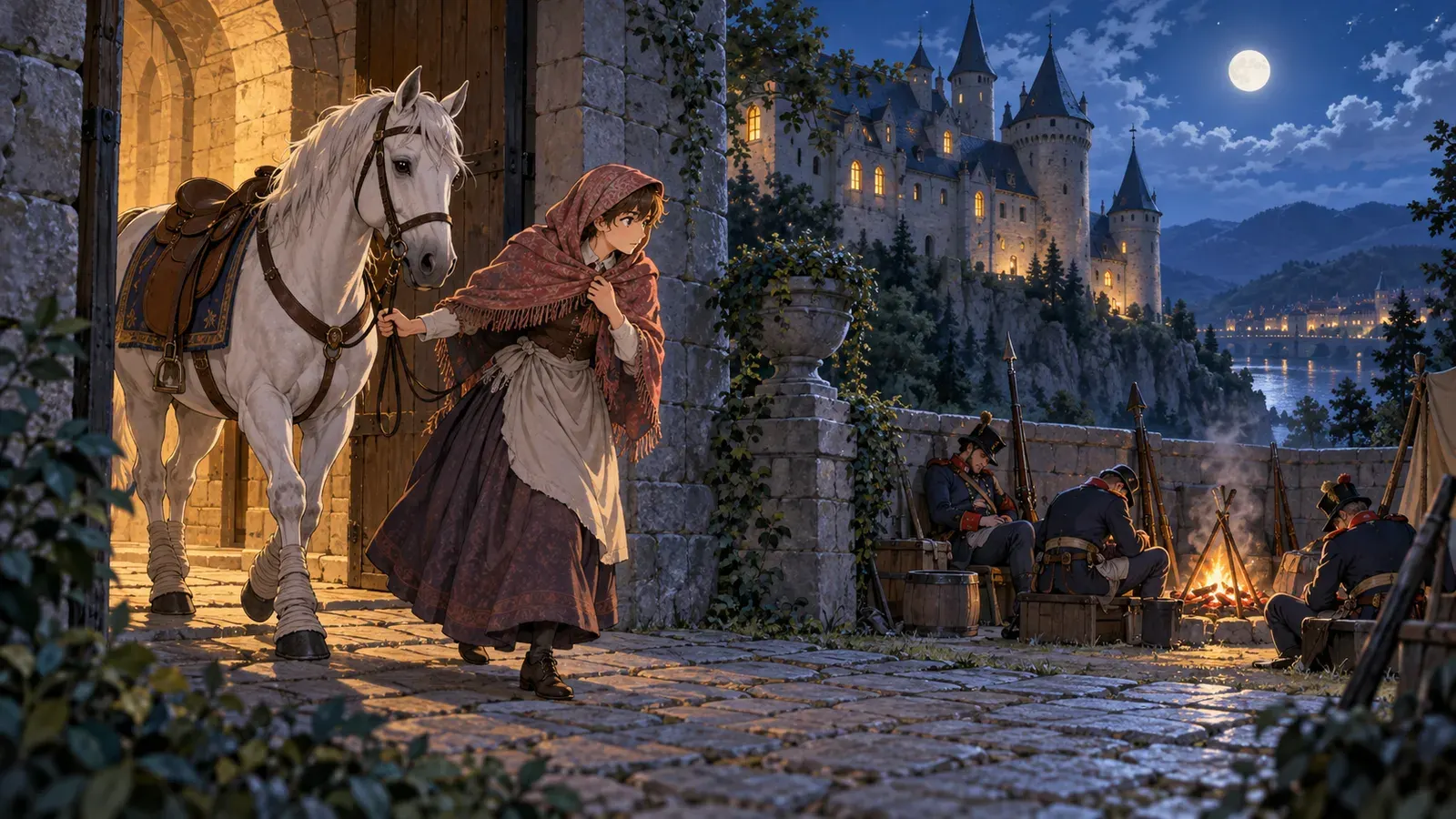
The master-thief went to the nearest town; there he bought the clothes of an old peasant woman, and put them on. Then he stained his face brown, and painted wrinkles on it as well, so that no one could have recognized him. Then he filled a small cask with old Hungary wine in which was mixed a powerful sleeping-drink. He put the cask in a basket, which he took on his back, and walked with slow and tottering steps to the count's castle. It was already dark when he arrived. He sat down on a stone in the court-yard and began to cough, like an asthmatic old woman, and to rub his hands as if he were cold. In front of the door of the stable some soldiers were lying round a fire; one of them observed the woman, and called out to her, "Come nearer, old mother, and warm thyself beside us. After all, thou hast no bed for the night, and must take one where thou canst find it." The old woman tottered up to them, begged them to lift the basket from her back, and sat down beside them at the fire. "What hast thou got in thy little cask, old lady?" asked one. "A good mouthful of wine," she answered. "I live by trade, for money and fair words I am quite ready to let you have a glass." "Let us have it here, then," said the soldier, and when he had tasted one glass he said, "When wine is good, I like another glass," and had another poured out for himself, and the rest followed his example. "Hallo, comrades," cried one of them to those who were in the stable, "here is an old goody who has wine that is as old as herself; take a draught, it will warm your stomachs far better than our fire."
名人泥棒は一番近くの町へ行き、年とった百姓女の服を買って、それを着ました。それから顔を茶色に染め、しわまで描きこんだので、もう誰にも見分けがつきませんでした。次に、小さなたるに年代物のハンガリー産ワインを詰め、そこに強い眠り薬を混ぜました。そのたるをかごに入れて背負うと、よぼよぼとおぼつかない足どりで伯爵のお城へ歩いていきました。着いたときには、もう暗くなっていました。名人泥棒は中庭の石に腰をおろすと、ぜんそく持ちのおばあさんのようにせきをして、寒そうに両手をこすりはじめました。馬小屋の戸の前では、兵隊たちがたき火の周りに寝そべっていました。そのうちの一人がおばあさんに気がついて、声をかけました。「もっとこっちへ来いよ、ばあさん。おれたちのそばで暖まっていきな。どうせ今夜寝る場所もないんだろう。寝られるところで寝るしかないじゃないか」おばあさんはよろよろと兵隊たちのところへ行き、背中のかごを下ろしてくれるように頼むと、みんなと並んでたき火のそばに座りました。「その小さなたるには、何が入っているんだい、ばあさん」と、一人が尋ねました。「おいしいワインですよ」と、おばあさんは答えました。「わたしはこれを売って暮らしているんです。お金を払って、やさしい言葉をかけてくださるなら、喜んで一杯さしあげますよ」「じゃあ、ここへ持ってきてくれ」と、兵隊は言いました。そして一杯飲んでみると、こう言いました。「うまい酒なら、もう一杯ほしくなる」兵隊はもう一杯ついでもらいました。ほかの兵隊たちも、それにならいました。「おうい、みんな」と、一人が馬小屋の中にいる仲間たちに呼びかけました。「ここに、自分と同じくらい年代物のワインを持ったばあさんがいるぞ。ひと口飲んでみろ。おれたちのたき火なんかより、ずっと腹の中が暖まるぞ」
The old woman carried her cask into the stable. One of the soldiers had seated himself on the saddled riding-horse, another held its bridle in his hand, a third had laid hold of its tail. She poured out as much as they wanted until the spring ran dry. It was not long before the bridle fell from the hand of the one, and he fell down and began to snore, the other left hold of the tail, lay down and snored still louder. The one who was sitting in the saddle, did remain sitting, but bent his head almost down to the horse's neck, and slept and blew with his mouth like the bellows of a forge. The soldiers outside had already been asleep for a long time, and were lying on the ground motionless, as if dead.
おばあさんは、たるを馬小屋の中へ運んでいきました。兵隊の一人は、くらをつけた伯爵の乗馬にまたがっていました。もう一人は手綱を手に持ち、三人目は馬のしっぽをつかんでいました。おばあさんは、兵隊たちがほしいだけワインをついでやり、とうとうたるは空っぽになりました。まもなく、一人の手から手綱が落ち、その兵隊はばったり倒れていびきをかきはじめました。もう一人もしっぽから手を放して横になり、もっと大きないびきをかきはじめました。くらにまたがっていた兵隊は、座ったままではいましたが、頭を馬の首すれすれまでたれて眠りこみ、鍛冶屋のふいごのように口からふうふう息を吹いていました。外の兵隊たちはとっくに眠りこんでいて、死んだように地面に横たわったまま、ぴくりともしませんでした。
When the master-thief saw that he had succeeded, he gave the first a rope in his hand instead of the bridle, and the other who had been holding the tail, a wisp of straw, but what was he to do with the one who was sitting on the horse's back? He did not want to throw him down, for he might have awakened and have uttered a cry. He had a good idea, he unbuckled the girths of the saddle, tied a couple of ropes which were hanging to a ring on the wall fast to the saddle, and drew the sleeping rider up into the air on it, then he twisted the rope round the posts, and made it fast. He soon unloosed the horse from the chain, but if he had ridden over the stony pavement of the yard they would have heard the noise in the castle. So he wrapped the horse's hoofs in old rags, led him carefully out, leapt upon him, and galloped off.
うまくいったと見てとると、名人泥棒は、手綱を持っていた兵隊の手に、手綱のかわりに縄を一本にぎらせ、しっぽを持っていた兵隊には、わらを一束にぎらせました。けれども、馬の背にまたがっている兵隊はどうしたらいいでしょう。下に投げ落とすわけにはいきません。目をさまして、大声をあげるかもしれないからです。そこで、名人泥棒はうまいことを思いつきました。くらの腹帯をはずして、壁の輪にさがっていた二本の縄をくらにしっかり結びつけると、眠っている兵隊をくらごと空中に引っぱり上げたのです。それから縄を柱に巻きつけて、しっかりとめました。馬を鎖からはずすのは、わけもありませんでした。けれども、中庭の石畳の上を馬に乗って行けば、その音がお城の中まで聞こえてしまいます。そこで名人泥棒は、馬のひづめに古いぼろ切れを巻きつけて、そっと外へ連れ出しました。それから馬に飛び乗って、全速力で走り去りました。
When day broke, the master galloped to the castle on the stolen horse. The count had just got up, and was looking out of the window. "Good morning, Sir Count," he cried to him, "here is the horse, which I have got safely out of the stable! Just look, how beautifully your soldiers are lying there sleeping; and if you will but go into the stable, you will see how comfortable your watchers have made it for themselves." The count could not help laughing, then he said, "For once thou hast succeeded, but things won't go so well the second time, and I warn thee that if thou comest before me as a thief, I will handle thee as I would a thief." When the countess went to bed that night, she closed her hand with the wedding-ring tightly together, and the count said, "All the doors are locked and bolted, I will keep awake and wait for the thief, but if he gets in by the window, I will shoot him."
夜が明けると、名人泥棒は盗んだ馬に乗って、お城へ駆けつけました。伯爵はちょうど起きたところで、窓から外を眺めていました。「おはようございます、伯爵さま」と、名人泥棒は伯爵に呼びかけました。「ほら、馬小屋からまんまと盗み出した馬ですよ!ごらんなさい、兵隊さんたちがあそこで、なんと気持ちよさそうに眠っていることか。馬小屋に行ってごらんになれば、番をしている人たちが、どんなにくつろいでいるかわかりますよ」伯爵は思わず笑ってしまいました。それから言いました。「今度はうまくいったな。だが、二度目はそうはいかんぞ。言っておくが、泥棒としてわしの前に現れたら、わしもおまえを泥棒として扱うからな」その夜、伯爵夫人は寝床に入ると、結婚指輪をはめた手をしっかりにぎりしめました。伯爵は言いました。「戸という戸には、みんな錠をおろしてかんぬきをかけてある。わしは起きていて、泥棒が来るのを待っていよう。もし窓から入ってきたら、撃ち殺してやる」
The master-thief, however, went in the dark to the gallows, cut a poor sinner who was hanging there down from the halter, and carried him on his back to the castle. Then he set a ladder up to the bedroom, put the dead body on his shoulders, and began to climb up. When he had got so high that the head of the dead man showed at the window, the count, who was watching in his bed, fired a pistol at him, and immediately the master let the poor sinner fall down, and hid himself in one corner. The night was sufficiently lighted by the moon, for the master to see distinctly how the count got out of the window on to the ladder, came down, carried the dead body into the garden, and began to dig a hole in which to lay it.
ところが名人泥棒は、暗やみの中を絞首台へ行き、そこにぶらさがっていたかわいそうな罪人を縄から切りおろすと、背負ってお城へ運んでいきました。そして寝室の窓にはしごをかけ、死体を肩にかついで登りはじめました。死んだ男の頭が窓からのぞくくらいの高さまで登ると、寝床で見張っていた伯爵がピストルを撃ちました。名人泥棒はすぐに罪人の死体を下に落として、自分は片すみに身をひそめました。月の光で夜はかなり明るかったので、名人泥棒には、伯爵が窓からはしごに出て下りてくるようすがはっきり見えました。伯爵は死体を庭に運んでいって、埋めるための穴を掘りはじめました。
"Now," thought the thief, "the favourable moment has come," stole nimbly out of his corner, and climbed up the ladder straight into the countess's bedroom. "Dear wife," he began in the count's voice, "the thief is dead, but, after all, he is my godson, and has been more of a scape-grace than a villain. I will not put him to open shame; besides, I am sorry for the parents. I will bury him myself before daybreak, in the garden that the thing may not be known, so give me the sheet, I will wrap up the body in it, and bury him as a dog buries things by scratching." The countess gave him the sheet. "I tell you what," continued the thief, "I have a fit of magnanimity on me, give me the ring too,—the unhappy man risked his life for it, so he may take it with him into his grave." She would not gainsay the count, and although she did it unwillingly she drew the ring from her finger, and gave it to him. The thief made off with both these things, and reached home safely before the count in the garden had finished his work of burying.
「さあ、今がちょうどいいときだ」と、名人泥棒は思いました。そして、すばやく片すみからぬけ出すと、はしごを登って、まっすぐ伯爵夫人の寝室へ入っていきました。「おまえ」と、名人泥棒は伯爵の声をまねて話しはじめました。「泥棒は死んだよ。だが、なんといっても、あれはわしの名付け子だ。悪党というより、いたずら者だったのだ。さらし者にはしたくない。それに、親たちもかわいそうだ。夜が明ける前に、わしが自分で庭に埋めてやろう。そうすれば、このことは誰にも知られずにすむ。だから、シーツをよこしなさい。それで死体を包んで、犬がものを埋めるように、土をかいて埋めてやるつもりだ」伯爵夫人はシーツを渡しました。「それからな」と、泥棒は続けました。「どうも気前のいい気分になってきた。指輪もよこしなさい。あの不幸な男は、この指輪のために命をかけたのだ。墓の中まで持っていかせてやろう」伯爵夫人は、伯爵にさからおうとはしませんでした。いやいやながら指から指輪を抜いて、渡しました。泥棒はその二つを持って逃げ出し、伯爵が庭で死体を埋め終わらないうちに、無事に家に帰り着きました。
What a long face the count did pull when the master came next morning, and brought him the sheet and the ring. "Art thou a wizard?" said he, "Who has fetched thee out of the grave in which I myself laid thee, and brought thee to life again?" "You did not bury me," said the thief, "but the poor sinner on the gallows," and he told him exactly how everything had happened, and the count was forced to own to him that he was a clever, crafty thief. "But thou hast not reached the end yet," he added, "thou hast still to perform the third task, and if thou dost not succeed in that, all is of no use." The master smiled and returned no answer.
次の朝、名人泥棒がやってきて、シーツと指輪を差し出すと、伯爵はなんとも情けない顔をしました。「おまえは魔法使いか」と、伯爵は言いました。「わしが自分の手で埋めた墓から、誰がおまえを連れ出して、生き返らせたのだ」「あなたが埋めたのは、わたしではありません」と、泥棒は答えました。「絞首台にぶらさがっていた、かわいそうな罪人ですよ」そして、何もかも起こったとおりに話して聞かせました。伯爵は、名人泥棒が利口でずるがしこい泥棒だということを、認めないわけにはいきませんでした。「だが、まだ終わりではないぞ」と、伯爵は言いそえました。「三つ目の仕事が残っている。それがうまくいかなかったら、これまでのことはみんなむだだ」名人泥棒はにっこり笑っただけで、何も答えませんでした。
When night had fallen he went with a long sack on his back, a bundle under his arms, and a lantern in his hand to the village-church. In the sack he had some crabs, and in the bundle short wax-candles. He sat down in the churchyard, took out a crab, and stuck a wax-candle on his back. Then he lighted the little light, put the crab on the ground, and let it creep about. He took a second out of the sack, and treated it in the same way, and so on until the last was out of the sack. Hereupon he put on a long black garment that looked like a monk's cowl, and stuck a gray beard on his chin. When at last he was quite unrecognizable, he took the sack in which the crabs had been, went into the church, and ascended the pulpit. The clock in the tower was just striking twelve; when the last stroke had sounded, he cried with a loud and piercing voice, "Hearken, sinful men, the end of all things has come! The last day is at hand! Hearken! Hearken! Whosoever wishes to go to heaven with me must creep into the sack. I am Peter, who opens and shuts the gate of heaven. Behold how the dead outside there in the churchyard, are wandering about collecting their bones. Come, come, and creep into the sack; the world is about to be destroyed!"
夜になると、名人泥棒は長い袋を背負い、包みを小わきにかかえ、手にはランタンを持って、村の教会へ出かけました。袋の中にはカニが何匹も入っていて、包みの中には短いろうそくが入っていました。名人泥棒は教会の墓地に座ると、カニを一匹取り出して、その背中にろうそくを一本立てました。それから小さな火をともしてカニを地面に置き、はいまわらせました。もう一匹取り出して同じようにし、袋の中のカニがみんな出てしまうまで、それを続けました。そのあと、修道士の服のような長い黒い衣を着こみ、あごには灰色のつけひげをつけました。すっかり誰だかわからない姿になると、カニの入っていた袋を持って教会に入り、説教壇に登りました。ちょうど塔の時計が十二時を打っているところでした。最後の鐘が鳴りおわると、名人泥棒は、大きなかん高い声で叫びました。「聞け、罪深い人々よ。この世の終わりが来たのだ!最後の審判の日が近づいている!聞け!聞け!わたしと一緒に天国へ行きたい者は、この袋の中に入るのだ。わたしはペテロ、天国の門を開け閉めする者である。見よ、外の墓地では、死者たちがさまよい歩いて、自分の骨を拾い集めているではないか。さあ、来るのだ、この袋に入りなさい。世界はまもなくほろびるのだ!」
The cry echoed through the whole village. The parson and clerk who lived nearest to the church, heard it first, and when they saw the lights which were moving about the churchyard, they observed that something unusual was going on, and went into the church. They listened to the sermon for a while, and then the clerk nudged the parson and said, "It would not be amiss if we were to use the opportunity together, and before the dawning of the last day, find an easy way of getting to heaven." "To tell the truth," answered the parson, "that is what I myself have been thinking, so if you are inclined, we will set out on our way." "Yes," answered the clerk, "but you, the pastor, have the precedence, I will follow." So the parson went first, and ascended the pulpit where the master opened his sack. The parson crept in first, and then the clerk. The master immediately tied up the sack tightly, seized it by the middle, and dragged it down the pulpit-steps, and whenever the heads of the two fools bumped against the steps, he cried, "We are going over the mountains." Then he drew them through the village in the same way, and when they were passing through puddles, he cried, "Now we are going through wet clouds." And when at last he was dragging them up the steps of the castle, he cried, "Now we are on the steps of heaven, and will soon be in the outer court." When he had got to the top, he pushed the sack into the pigeon-house, and when the pigeons fluttered about, he said, "Hark how glad the angels are, and how they are flapping their wings!" Then he bolted the door upon them, and went away.
その叫び声は、村じゅうに響きわたりました。教会の一番近くに住んでいた牧師と寺男が、まっさきにそれを聞きつけました。墓地のあちこちで明かりが動いているのを見ると、二人は何かただごとではないことが起こっていると思って、教会に入っていきました。しばらく説教に耳をかたむけていると、寺男が牧師をひじでつついて言いました。「この機会を、二人で逃す手はありませんな。最後の審判の日が来る前に、楽をして天国へ行けるのですから」「じつを言うと」と、牧師は答えました。「わたしもちょうどそう思っていたところです。あなたにその気があるのなら、出かけることにしましょう」「ええ」と、寺男は答えました。「でも、牧師さまのあなたが先です。わたしはあとからついていきます」そこで牧師が先に立って説教壇に登ると、名人泥棒が袋の口を開けました。まず牧師がもぐりこみ、それから寺男が入りました。名人泥棒はすぐに袋の口をしっかりしばり、袋の真ん中をつかんで、説教壇の階段を引きずりおろしました。二人のおろか者の頭が段にぶつかるたびに、名人泥棒は叫びました。「さあ、山を越えていくぞ」それから同じようにして、二人を引きずって村の中を通っていきました。水たまりを通るときには、「さあ、ぬれた雲の中を通っていくぞ」と叫びました。そして、とうとうお城の階段を引きずって登っていくときには、こう叫びました。「さあ、天国の階段まで来た。もうすぐ天国の前庭に着くぞ」上まで登りきると、名人泥棒は袋をハト小屋に押しこみました。ハトたちがばたばた飛びまわると、名人泥棒は言いました。「聞け、天使たちがどんなに喜んで、羽をばたばたさせていることか!」それから戸にかんぬきをかけて、立ち去りました。
Next morning he went to the count, and told him that he had performed the third task also, and had carried the parson and clerk out of the church. "Where hast thou left them?" asked the lord. "They are lying upstairs in a sack in the pigeon-house, and imagine that they are in heaven." The count went up himself, and convinced himself that the master had told the truth. When he had delivered the parson and clerk from their captivity, he said, "Thou art an arch-thief, and hast won thy wager. For once thou escapest with a whole skin, but see that thou leavest my land, for if ever thou settest foot on it again, thou may'st count on thy elevation to the gallows." The arch-thief took leave of his parents, once more went forth into the wide world, and no one has ever heard of him since.
次の朝、名人泥棒は伯爵のところへ行って、言いました。「三つ目の仕事もやりとげました。牧師と寺男を教会から運び出してきましたよ」「二人をどこへやったのだ」と、伯爵は尋ねました。「上のハト小屋の中に、袋に入ったまま転がっていますよ。自分たちは天国にいると思いこんでいます」伯爵は自分で上がっていって、名人泥棒の言ったことが本当だとたしかめました。牧師と寺男を袋から出してやると、伯爵は言いました。「おまえは泥棒の中の泥棒だ。賭けはおまえの勝ちだ。今度だけは、無事に放してやろう。だが、わしの領地からは出ていけ。もしまた一歩でも足を踏み入れたら、絞首台の上へご出世だと覚悟しておくがいい」名人泥棒は両親に別れを告げると、もう一度広い世の中へ出ていきました。それからというもの、名人泥棒のうわさを聞いた者は、誰もいません。