There are few Caliphesses. Women are Scheherazades by birth, predilection, instinct, and arrangement of the vocal cords. The thousand and one stories are being told every day by hundreds of thousands of viziers' daughters to their respective sultans. But the bowstring will get some of 'em yet if they don't watch out.
『アラビアン・ナイト』で、物語を聞く側の王さまをカリフという。だが、女のカリフというものは、めったにいない。女は、生まれつき、好みからも、本能からも、声帯のつくりからも、物語を語る側のシェヘラザードなのである。千と一つの物語は、毎日、何十万人もの大臣の娘たちによって、それぞれの王さまに語られている。だが、用心しないと、そのうちの何人かは、いずれ弓の弦で絞め殺されることになるだろう。
I heard a story, though, of one lady Caliph. It isn't precisely an Arabian Nights story, because it brings in Cinderella, who flourished her dishrag in another epoch and country. So, if you don't mind the mixed dates (which seem to give it an Eastern flavour, after all), we'll get along.
とはいえ、私は、女のカリフの話をひとつ聞いたことがある。正確には、アラビアン・ナイトの物語ではない。なにしろ、別の時代、別の国で雑巾を振るっていたシンデレラが出てくるのだから。時代がごちゃまぜになっていても気にしないでいただけるなら(そのほうが、かえって東洋の風味が出るようだし)、話を進めることにしよう。
In New York there is an old, old hotel. You have seen woodcuts of it in the magazines. It was built—let's see—at a time when there was nothing above Fourteenth Street except the old Indian trail to Boston and Hammerstein's office. Soon the old hostelry will be torn down. And, as the stout walls are riven apart and the bricks go roaring down the chutes, crowds of citizens will gather at the nearest corners and weep over the destruction of a dear old landmark. Civic pride is strongest in New Bagdad; and the wettest weeper and the loudest howler against the iconoclasts will be the man (originally from Terre Haute) whose fond memories of the old hotel are limited to his having been kicked out from its free-lunch counter in 1873.
ニューヨークに、古い、古いホテルがある。雑誌の木版画で見たことがおありだろう。建てられたのは、そうだな、十四丁目より北には、ボストンへ通じる昔の先住民の小道と、興行師ハマースタインの事務所くらいしかなかったころのことだ。じきに、この古い宿は取り壊されるだろう。がっしりした壁が引き裂かれ、レンガが滑り台をごうごうと落ちていくとき、近くの街角には市民が大勢集まって、懐かしい古い名所が壊されるのを嘆き悲しむだろう。このニューヨーク、新しいバグダッドの町の人々は、郷土愛がいちばん強いのだ。そして、取り壊す連中に向かって、いちばん涙を流し、いちばん大声でわめきたてるのは、たぶんこういう男だろう。もとはインディアナ州の田舎町の出身で、この古いホテルの懐かしい思い出といえば、一八七三年に、酒場のただの軽食を食べようとして、つまみ出されたことだけ、という男である。
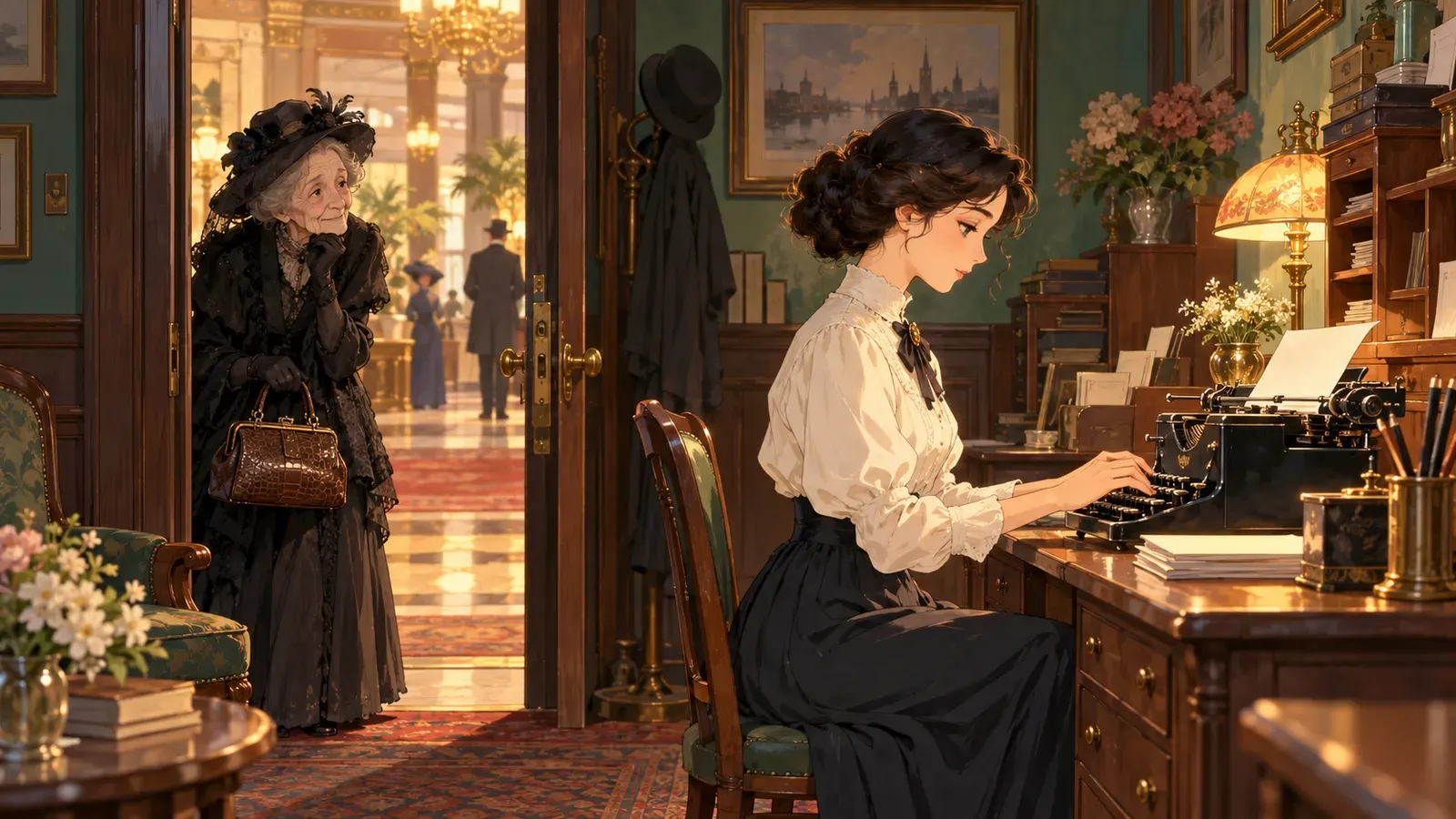
At this hotel always stopped Mrs. Maggie Brown. Mrs. Brown was a bony woman of sixty, dressed in the rustiest black, and carrying a handbag made, apparently, from the hide of the original animal that Adam decided to call an alligator. She always occupied a small parlour and bedroom at the top of the hotel at a rental of two dollars per day. And always, while she was there, each day came hurrying to see her many men, sharp-faced, anxious-looking, with only seconds to spare. For Maggie Brown was said to be the third richest woman in the world; and these solicitous gentlemen were only the city's wealthiest brokers and business men seeking trifling loans of half a dozen millions or so from the dingy old lady with the prehistoric handbag.
このホテルに、マギー・ブラウン夫人がいつも泊まっていた。ブラウン夫人は、六十歳の骨ばった女だった。すっかり色あせた黒い服を着て、手さげかばんを持っていた。そのかばんは、アダムがこの世で初めて「ワニ」と名づけた、その動物の皮で作ったのではないかと思えるほど古ぼけていた。夫人はいつも、ホテルの最上階の小さな居間と寝室を、一日二ドルで借りていた。そして夫人が泊まっているあいだは、毎日、大勢の男たちが、急ぎ足で夫人に会いにやって来た。鋭い顔つきの、心配そうな、一秒も無駄にできないといった男たちである。というのも、マギー・ブラウンは世界で三番目の金持ちの女だといわれていたのだ。この気をもんでいる紳士たちは、ほかでもない、この町いちばんの金持ちの株屋や実業家だった。大昔の化石のような手さげかばんを持った、このみすぼらしい老婦人から、ほんの六百万ドルかそこらを借りようとしていたのである。
The stenographer and typewriter of the Acropolis Hotel (there! I've let the name of it out!) was Miss Ida Bates. She was a hold-over from the Greek classics. There wasn't a flaw in her looks. Some old-timer paying his regards to a lady said: "To have loved her was a liberal education." Well, even to have looked over the black hair and neat white shirtwaist of Miss Bates was equal to a full course in any correspondence school in the country. She sometimes did a little typewriting for me, and, as she refused to take the money in advance, she came to look upon me as something of a friend and protégé. She had unfailing kindliness and a good nature; and not even a white-lead drummer or a fur importer had ever dared to cross the dead line of good behaviour in her presence. The entire force of the Acropolis, from the owner, who lived in Vienna, down to the head porter, who had been bedridden for sixteen years, would have sprung to her defence in a moment.
アクロポリス・ホテル(しまった! 名前を言ってしまった!)の速記係兼タイピストは、アイダ・ベイツ嬢だった。ギリシャの古典の世界から抜け出してきたような人で、顔立ちには、ひとつの欠点もなかった。昔、ある人が、ある婦人をたたえて、「あの人を愛したことは、それだけで立派な教養を身につけたに等しい」と言った。それにならえば、ベイツ嬢の黒髪と、こざっぱりした白いブラウスをひとわたり眺めるだけで、国じゅうのどの通信教育学校の全課程を修めたのにも匹敵した。ベイツ嬢は、ときどき私のために、ちょっとしたタイプ打ちをしてくれた。前払いでお金を受けとるのを断っていたので、私のことを、友だちで、いくらか目をかけてやる相手のように思うようになっていた。いつも変わらず親切で、気だてがよかった。ペンキの売りこみに来るセールスマンや毛皮の輸入業者でさえ、ベイツ嬢の前では、行儀の悪いまねをしようとはしなかった。いざとなれば、アクロポリスの従業員全員が、すぐさまベイツ嬢を守るために立ちあがっただろう。ウィーンに住んでいるホテルの持ち主から、十六年も寝たきりの門番頭にいたるまで、ひとり残らずである。
One day I walked past Miss Bates's little sanctum Remingtorium, and saw in her place a black-haired unit—unmistakably a person—pounding with each of her forefingers upon the keys. Musing on the mutability of temporal affairs, I passed on. The next day I went on a two weeks' vacation. Returning, I strolled through the lobby of the Acropolis, and saw, with a little warm glow of auld lang syne, Miss Bates, as Grecian and kind and flawless as ever, just putting the cover on her machine. The hour for closing had come; but she asked me in to sit for a few minutes in the dictation chair. Miss Bates explained her absence from and return to the Acropolis Hotel in words identical with or similar to these following:
ある日、ベイツ嬢の小さな仕事部屋、タイプライターの聖域の前を通りかかると、その席に、黒髪のひとりの人間が座っていた。まぎれもなく、ただの一個の人間である。左右の人差し指で、一本ずつキーをたたいていた。この世のものはすべて移り変わる、などと思いにふけりながら、私は通り過ぎた。次の日、私は二週間の休暇に出かけた。戻ってきてアクロポリスのロビーをぶらぶら歩いていると、ベイツ嬢がいた。相変わらずギリシャ彫刻のように美しく、親切で、欠点がひとつもなく、ちょうどタイプライターにカバーをかけているところだった。私は昔なじみに会ったような、温かい気持ちになった。もう終業時間だったが、ベイツ嬢は、口述筆記の客用の椅子に少し座っていって、と私を招き入れてくれた。そして、アクロポリス・ホテルをしばらく離れていたわけと、また戻ってきたわけを、だいたい次のような言葉で話してくれた。
"Well, Man, how are the stories coming?"
「ねえ、あんた、小説のほうはどんな具合?」
"Pretty regularly," said I. "About equal to their going."
「規則正しく戻ってくるよ」と私は言った。「送り出すのと同じくらいの速さでね」
"I'm sorry," said she. "Good typewriting is the main thing in a story. You've missed me, haven't you?"
「お気の毒に」とベイツ嬢は言った。「小説でいちばん大事なのは、上手なタイプ打ちなのよ。わたしがいなくて、困ったでしょう?」
"No one," said I, "whom I have ever known knows as well as you do how to space properly belt buckles, semi-colons, hotel guests, and hairpins. But you've been away, too. I saw a package of peppermint-pepsin in your place the other day."
「ぼくの知っている人の中で」と私は言った。「ベルトのバックルや、セミコロンや、ホテルの客や、ヘアピンを、きみほど上手に、ほどよい間隔に並べられる人はいないよ。でも、きみもいなかったじゃないか。このあいだ、きみの席に、ガムをくちゃくちゃかんでいそうな代わりの人が座っているのを見たよ」
"I was going to tell you all about it," said Miss Bates, "if you hadn't interrupted me.
「あんたが口をはさまなければ、全部話すつもりだったのよ」とベイツ嬢は言った。
"Of course, you know about Maggie Brown, who stops here. Well, she's worth $40,000,000. She lives in Jersey in a ten-dollar flat. She's always got more cash on hand than half a dozen business candidates for vice-president. I don't know whether she carries it in her stocking or not, but I know she's mighty popular down in the part of town where they worship the golden calf.
「もちろん、ここに泊まってるマギー・ブラウンのことは知ってるでしょう。あの人、四千万ドルも持ってるのよ。住まいはニュージャージーの、月十ドルのアパート。それでいて、いつだって、副大統領に立候補する実業家を六人集めたよりも、たくさんの現金を手もとに持ってるの。靴下の中に入れて持ち歩いてるのかどうかは知らないけど、お金を神さまみたいにあがめてるウォール街のあたりじゃ、すごい人気なのよ。
"Well, about two weeks ago, Mrs. Brown stops at the door and rubbers at me for ten minutes. I'm sitting with my side to her, striking off some manifold copies of a copper-mine proposition for a nice old man from Tonopah. But I always see everything all around me. When I'm hard at work I can see things through my side-combs; and I can leave one button unbuttoned in the back of my shirtwaist and see who's behind me. I didn't look around, because I make from eighteen to twenty dollars a week, and I didn't have to.
「でね、二週間ばかり前、ブラウン夫人がこの部屋の入口で立ち止まって、十分もわたしをじろじろ見てたの。わたしは横向きに座って、ネヴァダの鉱山町から来た感じのいいおじいさんのために、銅山の企画書の写しを何枚も打ってたところだった。でも、わたしはいつだって、まわりのことは何でも見えてるのよ。一生懸命仕事をしてるときでも、横髪の櫛のすきまからものが見えるし、ブラウスの背中のボタンをひとつはずしておけば、うしろに誰がいるかだって見えるの。振り向きはしなかったわ。週に十八ドルから二十ドルは稼いでるんだもの、振り向く必要なんかなかったの。
"That evening at knocking-off time she sends for me to come up to her apartment. I expected to have to typewrite about two thousand words of notes-of-hand, liens, and contracts, with a ten-cent tip in sight; but I went. Well, Man, I was certainly surprised. Old Maggie Brown had turned human.
「その晩、仕事じまいの時間に、あの人がわたしを部屋に呼んだの。約束手形だの、抵当だの、契約書だのを二千語ばかり打たされて、チップは十セントがせいぜいだろうと思ったけど、行ったのよ。そしたらね、あんた、本当にびっくりしたわ。マギー・ブラウンばあさんが、人間らしくなってたのよ。
"'Child,' says she, 'you're the most beautiful creature I ever saw in my life. I want you to quit your work and come and live with me. I've no kith or kin,' says she, 'except a husband and a son or two, and I hold no communication with any of 'em. They're extravagant burdens on a hard-working woman. I want you to be a daughter to me. They say I'm stingy and mean, and the papers print lies about my doing my own cooking and washing. It's a lie,' she goes on. 'I put my washing out, except the handkerchiefs and stockings and petticoats and collars, and light stuff like that. I've got forty million dollars in cash and stocks and bonds that are as negotiable as Standard Oil, preferred, at a church fair. I'm a lonely old woman and I need companionship. You're the most beautiful human being I ever saw,' says she. 'Will you come and live with me? I'll show 'em whether I can spend money or not,' she says.
「『あんた』とあの人は言うの。『あんたは、わたしがこれまでの人生で見た中で、いちばん美しい人だよ。仕事をやめて、わたしと一緒に暮らしておくれ。わたしには、身内なんて誰もいないんだよ』とあの人は言うの。『亭主と、息子が一人か二人いるだけでね。そいつらとは、まったく付き合っちゃいない。働き者の女にとっちゃ、金ばかりかかるお荷物だからね。あんたに、わたしの娘になってほしいんだよ。世間じゃ、わたしのことをけちだのしみったれだのと言うし、新聞は、わたしが自分で料理も洗濯もしてるなんて、うそっぱちを書きたてる。うそだよ』とあの人は続けたの。『洗濯物は外に出してるんだ。ハンカチと靴下とペチコートとカラーと、そういう軽いものは別だけどね。わたしは、現金と株と債券で、四千万ドル持ってるんだよ。どれも、教会のバザーに出しても、すぐ売れるくらい確かなものさ。わたしはさびしい年寄りで、話し相手がほしいんだ。あんたは、わたしがこれまでに見た中で、いちばん美しい人間だよ』とあの人は言うの。『わたしと一緒に暮らしてくれるかい? わたしがお金を使えないかどうか、世間のやつらに見せてやるよ』ってね。
"Well, Man, what would you have done? Of course, I fell to it. And, to tell you the truth, I began to like old Maggie. It wasn't all on account of the forty millions and what she could do for me. I was kind of lonesome in the world too. Everybody's got to have somebody they can explain to about the pain in their left shoulder and how fast patent-leather shoes wear out when they begin to crack. And you can't talk about such things to men you meet in hotels—they're looking for just such openings.
「ねえ、あんた、あんたならどうした? もちろん、わたしは飛びついたわ。それに、本当のことを言うと、わたし、マギーばあさんのことが好きになりはじめてたの。四千万ドルと、あの人がわたしにしてくれることのせいばかりじゃなかったのよ。わたしも、この世でなんとなくさびしかったの。誰だって、話を聞いてくれる人がほしいのよ。左の肩が痛むこととか、エナメルの靴はひびが入りはじめたらすぐだめになる、とかいうことをね。そういうことは、ホテルで会う男の人たちには話せないもの。あの人たちは、ちょうどそういう隙を狙ってるんだから。
"So I gave up my job in the hotel and went with Mrs. Brown. I certainly seemed to have a mash on her. She'd look at me for half an hour at a time when I was sitting, reading, or looking at the magazines.
「それで、わたしはホテルの仕事をやめて、ブラウン夫人と一緒に行ったの。あの人、たしかに、わたしにすっかり惚れこんでたみたい。わたしが座って本を読んだり、雑誌を眺めたりしてると、一度に三十分も、わたしを見つめてるのよ。
"One time I says to her: 'Do I remind you of some deceased relative or friend of your childhood, Mrs. Brown? I've noticed you give me a pretty good optical inspection from time to time.'
「一度、あの人に聞いてみたの。『わたし、亡くなったご親戚か、子どものころのお友だちにでも似てるんですか、ブラウンさん? ときどき、ずいぶんじっくりわたしをご覧になってるようだけど』
"'You have a face,' she says, 'exactly like a dear friend of mine—the best friend I ever had. But I like you for yourself, child, too,' she says.
「『あんたは』とあの人は言うの。『わたしの大事な友だちと、そっくりの顔をしてるんだよ。わたしにとって、いちばんの友だちとね。でも、あんた自身のことも好きなんだよ』ってね。
"And say, Man, what do you suppose she did? Loosened up like a Marcel wave in the surf at Coney. She took me to a swell dressmaker and gave her a la carte to fit me out—money no object. They were rush orders, and madame locked the front door and put the whole force to work.
「でね、あんた、あの人が何をしたと思う? ぱあっと気前がよくなったの。こてでかけた髪のウェーブが、海水浴の波でぺしゃんとゆるむみたいにね。わたしを一流の仕立て屋に連れていって、お金はいくらかかってもいいから、わたしに似合うものを一式そろえてくれって頼んだの。大急ぎの注文だったもんだから、マダムは表のドアに鍵をかけて、店の者を総動員して仕事にかからせたわ。
"Then we moved to—where do you think?—no; guess again—that's right—the Hotel Bonton. We had a six-room apartment; and it cost $100 a day. I saw the bill. I began to love that old lady.
「それから、わたしたちは引っ越したの。どこだと思う? 違うわ、もう一度当ててみて。そう、そのとおり、ホテル・ボントンよ。六部屋もあるスイートで、一日百ドルもしたの。わたし、請求書を見たのよ。わたし、あのおばあさんが大好きになりはじめたわ。
"And then, Man, when my dresses began to come in—oh, I won't tell you about 'em! you couldn't understand. And I began to call her Aunt Maggie. You've read about Cinderella, of course. Well, what Cinderella said when the prince fitted that 3½ A on her foot was a hard-luck story compared to the things I told myself.
「それからね、あんた、わたしのドレスが届きはじめたときときたら、ああ、話すのはよすわ! あんたにはわかりっこないもの。それで、わたし、あの人をマギーおばさんって呼ぶようになったの。もちろん、シンデレラのお話は読んだことがあるでしょ。王子さまに小さなガラスの靴をはかせてもらったとき、シンデレラは何て言ったかしらね。でも、そんなの、わたしがあのとき心の中でつぶやいたことにくらべたら、ただの不幸話みたいなもんだったわ。
"Then Aunt Maggie says she is going to give me a coming-out banquet in the Bonton that'll make moving Vans of all the old Dutch families on Fifth Avenue.
「それから、マギーおばさんは、ボントンで、わたしの社交界デビューの晩餐会を開いてやるって言うの。五番街の古いオランダ系の名家、ほら、ヴァン何とかっていう家の人たちを、みんな腰を抜かして引っ越しのヴァン、つまり荷馬車で逃げ出させるような晩餐会をね。
"'I've been out before, Aunt Maggie,' says I. 'But I'll come out again. But you know,' says I, 'that this is one of the swellest hotels in the city. And you know—pardon me—that it's hard to get a bunch of notables together unless you've trained for it.'
「『わたし、社交界になら前にも出たことがあるのよ、マギーおばさん』ってわたしは言ったの。『でも、もう一度出てあげるわ。でもね』ってわたしは言ったの。『ここは、この町でも指折りの一流ホテルなのよ。それに、ごめんなさいね、名士の人たちを大勢集めるのは、慣れてないと難しいのよ』
"'Don't fret about that, child,' says Aunt Maggie. 'I don't send out invitations—I issue orders. I'll have fifty guests here that couldn't be brought together again at any reception unless it were given by King Edward or William Travers Jerome. They are men, of course, and all of 'em either owe me money or intend to. Some of their wives won't come, but a good many will.'
「『そんなことは心配しなくていいよ、あんた』とマギーおばさんは言うの。『わたしは招待状なんか出しやしない。命令を出すんだよ。イギリスの国王か、ジェローム検事が開く宴会でもなけりゃ、二度と集められないような客を、ここに五十人呼んでみせるよ。もちろん、みんな男さ。どいつもこいつも、わたしに借金があるか、これから借りるつもりでいる連中だよ。奥さんたちの中には来ないのもいるだろうけど、来るのも大勢いるだろうよ』
"Well, I wish you could have been at that banquet. The dinner service was all gold and cut glass. There were about forty men and eight ladies present besides Aunt Maggie and I. You'd never have known the third richest woman in the world. She had on a new black silk dress with so much passementerie on it that it sounded exactly like a hailstorm I heard once when I was staying all night with a girl that lived in a top-floor studio.
「ねえ、あんたにも、あの晩餐会に来てほしかったわ。食器は、みんな金とカットグラスだったの。マギーおばさんとわたしのほかに、男の人が四十人くらいと、ご婦人が八人いたわ。世界で三番目の金持ちの女だなんて、とても思えなかったでしょうね。あの人は新しい黒い絹のドレスを着てたんだけど、それに飾りのひもやビーズがどっさりついてたもんだから、歩くたびにじゃらじゃら音がしたの。前に、最上階のアトリエに住んでる友だちのところに泊まったとき、屋根を打つ雹の音を聞いたけど、あれにそっくりだったわ。
"And my dress!—say, Man, I can't waste the words on you. It was all hand-made lace—where there was any of it at all—and it cost $300. I saw the bill. The men were all bald-headed or white-whiskered, and they kept up a running fire of light repartee about 3-per cents. and Bryan and the cotton crop.
「それから、わたしのドレスときたら! ねえ、あんた、あんたに言葉をむだづかいしたってしかたないわね。全部、手編みのレースで、と言っても、レースのあるところだけだけど、三百ドルもしたの。わたし、請求書を見たのよ。男の人たちは、みんなはげ頭か、白いほおひげで、国債の利率だの、政治家のブライアンだの、綿の収穫だのについて、気のきいたやりとりをひっきりなしにかわしてたわ。
"On the left of me was something that talked like a banker, and on my right was a young fellow who said he was a newspaper artist. He was the only—well, I was going to tell you.
「わたしの左には、銀行家みたいなしゃべり方をする何者かが座ってて、右には、新聞の挿絵画家だっていう若い人がいたの。その人だけが……そうね、あとで話すわ。
"After the dinner was over Mrs. Brown and I went up to the apartment. We had to squeeze our way through a mob of reporters all the way through the halls. That's one of the things money does for you. Say, do you happen to know a newspaper artist named Lathrop—a tall man with nice eyes and an easy way of talking? No, I don't remember what paper he works on. Well, all right.
「晩餐会が終わると、ブラウン夫人とわたしは、上のスイートへ戻ったの。廊下じゅう、新聞記者の群れを押しわけて進まなきゃならなかったわ。お金があると、そういうことにもなるのよね。ねえ、ひょっとして、ラスロップっていう新聞の挿絵画家を知らない? 背が高くて、すてきな目をしてて、気さくな話し方をする人なんだけど。ううん、どこの新聞で働いてるのかは覚えてないわ。まあ、いいわ。
"When we got upstairs Mrs. Brown telephones for the bill right away. It came, and it was $600. I saw the bill. Aunt Maggie fainted. I got her on a lounge and opened the bead-work.
「上へ戻ると、ブラウン夫人は、すぐに電話で請求書を持ってこさせたの。届いたら、六百ドルだったわ。わたし、請求書を見たのよ。マギーおばさんは気絶しちゃったの。わたしはあの人を長椅子に寝かせて、ビーズ飾りのついたドレスの胸もとをゆるめてあげたわ。
"'Child,' says she, when she got back to the world, 'what was it? A raise of rent or an income-tax?'
「『あんた』とあの人は、気がつくと言ったの。『いまのは何だったんだい? 家賃の値上げかい、それとも所得税かい?』
"'Just a little dinner,' says I. 'Nothing to worry about—hardly a drop in the bucket-shop. Sit up and take notice—a dispossess notice, if there's no other kind.'
「『ちょっとした晩餐会の代金よ』ってわたしは言ったの。『心配することなんかないわ。あなたの財産からしたら、バケツの一滴、いえ、株のいかさま屋のバケツの一滴にもならないわよ。さあ、起きて、よく見てちょうだい。見るものがほかになけりゃ、立ち退き通知でもね』
"But say, Man, do you know what Aunt Maggie did? She got cold feet! She hustled me out of that Hotel Bonton at nine the next morning. We went to a rooming-house on the lower West Side. She rented one room that had water on the floor below and light on the floor above. After we got moved all you could see in the room was about $1,500 worth of new swell dresses and a one-burner gas-stove.
「でもね、あんた、マギーおばさんがどうしたと思う? すっかりおじけづいちゃったのよ! 次の朝の九時には、わたしをせきたててホテル・ボントンを引きはらったの。わたしたちは、ウェスト・サイドの下町の下宿屋に移ったわ。あの人が借りたのは、水を使うには下の階まで行かなきゃならないし、明かりは上の階からもれてくるだけっていう部屋をひとつきり。引っ越しがすんだら、部屋の中に見えるものといえば、千五百ドル分ばかりの新しい豪華なドレスと、一口のガスこんろだけだったわ。
"Aunt Maggie had had a sudden attack of the hedges. I guess everybody has got to go on a spree once in their life. A man spends his on highballs, and a woman gets woozy on clothes. But with forty million dollars—say, I'd like to have a picture of—but, speaking of pictures, did you ever run across a newspaper artist named Lathrop—a tall—oh, I asked you that before, didn't I? He was mighty nice to me at the dinner. His voice just suited me. I guess he must have thought I was to inherit some of Aunt Maggie's money.
「マギーおばさんは、急に損が怖くなって、守りに入っちゃったのね。誰だって、一生に一度は、羽目をはずしてお金を使わずにはいられないものなんでしょうね。男はそれをハイボールでやって、女は服に酔っぱらうの。でも、四千万ドルも持っててよ。ねえ、あれを絵にでもしておきたかったわ……でも、絵といえば、ラスロップっていう新聞の挿絵画家に会ったことはない? 背の高い……あら、それはさっき聞いたわよね? あの人、晩餐会のとき、わたしにすごく親切にしてくれたの。あの人の声が、わたしにぴったりだったのよ。きっと、わたしがマギーおばさんのお金を少しは相続するんだろうと思ったんでしょうね。
"Well, Mr. Man, three days of that light-housekeeping was plenty for me. Aunt Maggie was affectionate as ever. She'd hardly let me get out of her sight. But let me tell you. She was a hedger from Hedgersville, Hedger County. Seventy-five cents a day was the limit she set. We cooked our own meals in the room. There I was, with a thousand dollars' worth of the latest things in clothes, doing stunts over a one-burner gas-stove.
「でね、あんた、あの間借りの自炊暮らしは、三日でたくさんだったわ。マギーおばさんは、相変わらず優しかったの。わたしを、ほとんど目の届かないところへは行かせなかったわ。でも、言わせてもらうわね。あの人は、しみったれ郡しみったれ村生まれの、筋金入りのしみったれだったのよ。一日七十五セントが、あの人の決めた上限だったの。わたしたちは、部屋で自分たちの食事を作ったわ。わたしときたら、千ドル分の最新流行の服を持ってるくせに、一口のガスこんろの上で、曲芸みたいに料理をしてたってわけ。
"As I say, on the third day I flew the coop. I couldn't stand for throwing together a fifteen-cent kidney stew while wearing, at the same time, a $150 house-dress, with Valenciennes lace insertion. So I goes into the closet and puts on the cheapest dress Mrs. Brown had bought for me—it's the one I've got on now—not so bad for $75, is it? I'd left all my own clothes in my sister's flat in Brooklyn.
「さっきも言ったけど、三日目に、わたしは鳥かごから逃げ出したの。高級レースの縁飾りのついた百五十ドルの部屋着を着て、十五セントの腎臓のシチューをこしらえるなんて、我慢できなかったのよ。それで戸棚に入って、ブラウン夫人が買ってくれた中で、いちばん安いドレスを着たの。いま着てるのがそれよ。七十五ドルにしては悪くないでしょ? 自分の服は、全部ブルックリンの姉のアパートに置いてきちゃってたの。
"'Mrs. Brown, formerly "Aunt Maggie,"' says I to her, 'I'm going to extend my feet alternately, one after the other, in such a manner and direction that this tenement will recede from me in the quickest possible time. I am no worshipper of money,' says I, 'but there are some things I can't stand. I can stand the fabulous monster that I've read about that blows hot birds and cold bottles with the same breath. But I can't stand a quitter,' says I. 'They say you've got forty million dollars—well, you'll never have any less. And I was beginning to like you, too,' says I.
「『ブラウンさん、もとの「マギーおばさん」』ってわたしは言ったの。『わたし、これから、足を交互に、片方ずつ前に出していくつもりよ。このおんぼろアパートが、できるだけ早くわたしから遠ざかっていくような具合と方向にね。わたしは、お金を拝むような人間じゃないわ』ってわたしは言ったの。『でも、どうしても我慢できないことってあるの。熱い鳥料理と冷えたワインを、同じ息で吹き出すっていう、本で読んだ伝説の化けものなら、まだ我慢できるわ。でも、途中で投げ出す人には我慢できないの』ってわたしは言ったの。『あなたは四千万ドル持ってるって話だけど、まあ、それより少なくなることは決してないでしょうよ。わたし、あなたのことが好きになりかけてたのにね』ってね。
"Well, the late Aunt Maggie kicks till the tears flow. She offers to move into a swell room with a two-burner stove and running water.
「そしたら、もと・マギーおばさんは、涙を流して、足をばたばたさせるの。水道つきで、二口のこんろのある、しゃれた部屋に移るからって言うのよ。
"'I've spent an awful lot of money, child,' says she. 'We'll have to economize for a while. You're the most beautiful creature I ever laid eyes on,' she says, 'and I don't want you to leave me.'
「『ずいぶんたくさんお金を使っちまったんだよ、あんた』とあの人は言うの。『しばらくは節約しなきゃならないんだ。あんたは、わたしがこれまでに見た中で、いちばん美しい人だよ』とあの人は言うの。『あんたに出ていってほしくないんだよ』
"Well, you see me, don't you? I walked straight to the Acropolis and asked for my job back, and I got it. How did you say your writings were getting along? I know you've lost out some by not having me to type 'em. Do you ever have 'em illustrated? And, by the way, did you ever happen to know a newspaper artist—oh, shut up! I know I asked you before. I wonder what paper he works on? It's funny, but I couldn't help thinking that he wasn't thinking about the money he might have been thinking I was thinking I'd get from old Maggie Brown. If I only knew some of the newspaper editors I'd—"
「で、ごらんのとおりよ。わたしはまっすぐアクロポリスへ歩いていって、仕事に戻してくれって頼んで、戻してもらったの。あんたの書きものは、どんな具合だって言ってたっけ? わたしがタイプを打ってあげなかったせいで、少しは損したんでしょうね。挿絵をつけてもらうことはあるの? そうそう、ところで、新聞の挿絵画家で、ひょっとして……ああ、もう、黙ってて! さっきも聞いたのはわかってるわよ。あの人、どこの新聞で働いてるのかしら? おかしな話だけど、わたし、どうしてもこう思えてしかたがないの。わたしがマギー・ブラウンばあさんからお金をもらえるつもりでいる、とあの人が思っていたかもしれない。でも、あの人は、本当はそんなお金のことなんか考えてなかったんじゃないかって。新聞の編集長を誰か知ってたら、わたし……」
The sound of an easy footstep came from the doorway. Ida Bates saw who it was with her back-hair comb. I saw her turn pink, perfect statue that she was—a miracle that I share with Pygmalion only.
戸口のほうから、気さくな足音が聞こえてきた。アイダ・ベイツは、うしろ髪の櫛のすきまから、それが誰なのかを見た。完璧な彫像のようなベイツ嬢の顔が、ほんのりばら色に染まるのを、私は見た。彫像が命を得て頬を染めるという奇跡を見たのは、私のほかには、ギリシャ神話のピグマリオンくらいのものだろう。
"Am I excusable?" she said to me—adorable petitioner that she became. "It's—it's Mr. Lathrop. I wonder if it really wasn't the money—I wonder, if after all, he—"
「失礼してもいいかしら?」とベイツ嬢は私に言った。すっかり、かわいらしくお願いする娘になっていた。「あの、ラスロップさんなの。ひょっとしたら、本当にお金目当てじゃなかったのかしら。ひょっとしたら、結局、あの人は……」
Of course, I was invited to the wedding. After the ceremony I dragged Lathrop aside.
もちろん、私は結婚式に招かれた。式がすむと、私はラスロップをわきへ引っぱっていった。
"You are an artist," said I, "and haven't figured out why Maggie Brown conceived such a strong liking for Miss Bates—that was? Let me show you."
「きみは画家のくせに」と私は言った。「マギー・ブラウンがなぜ、もとのベイツ嬢をあんなに気に入ったのか、まだわからないのかい? 見せてあげよう」
The bride wore a simple white dress as beautifully draped as the costumes of the ancient Greeks. I took some leaves from one of the decorative wreaths in the little parlour, and made a chaplet of them, and placed them on née Bates' shining chestnut hair, and made her turn her profile to her husband.
花嫁は、古代ギリシャの衣装のように美しいひだを寄せた、簡素な白いドレスを着ていた。私は、小さな客間に飾ってあった花輪から葉を何枚かとって冠を作り、旧姓ベイツ嬢の、つややかな栗色の髪にのせた。そして、横顔を夫のほうへ向けさせた。
"By jingo!" said he. "Isn't Ida's a dead ringer for the lady's head on the silver dollar?"
「こりゃ驚いた!」とラスロップは言った。「アイダの横顔は、一ドル銀貨に刻まれた自由の女神の横顔に、そっくりじゃないか!」