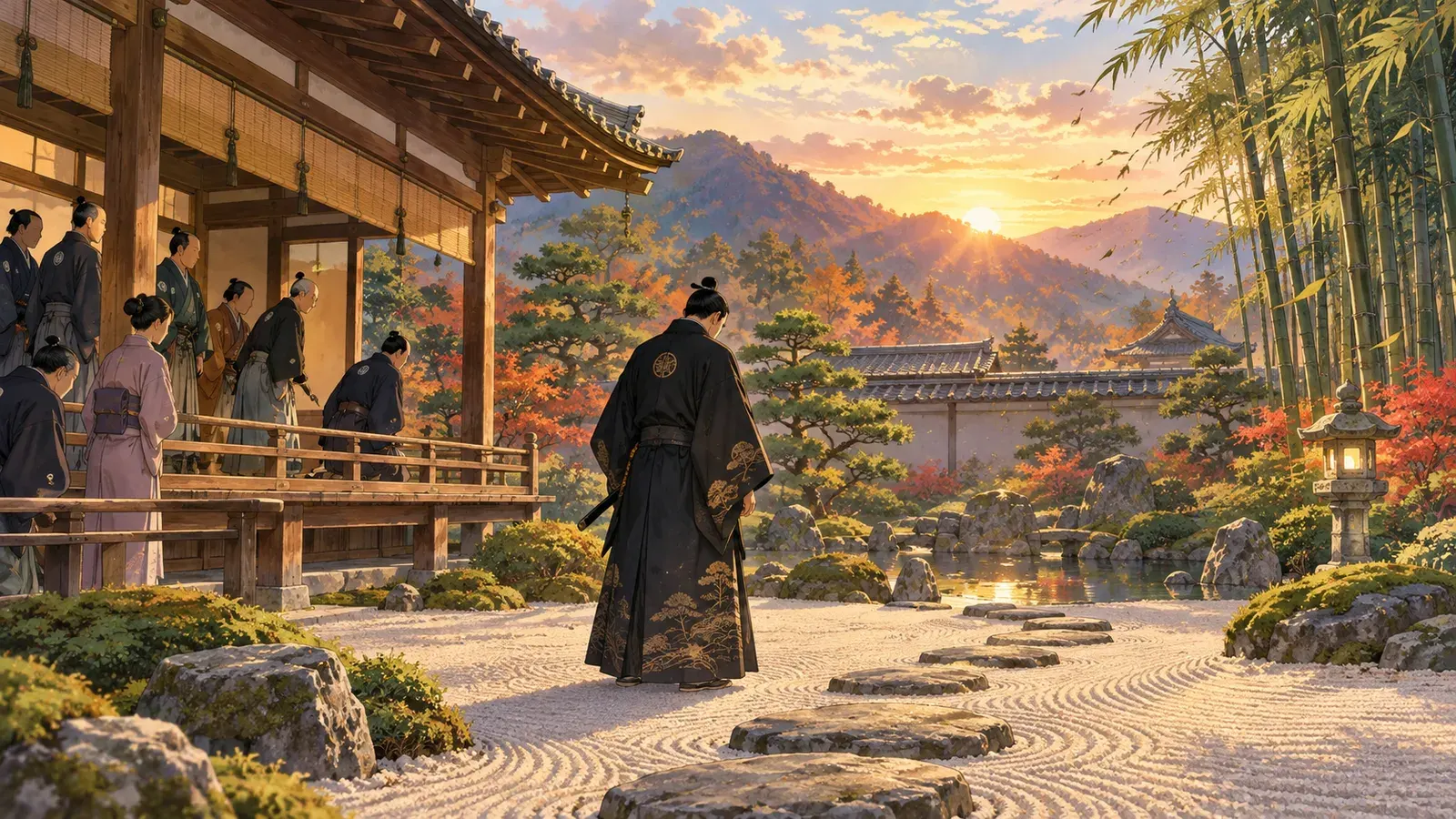
It had been ordered that the execution should take place in the garden of the yashiki. So the man was taken there, and made to kneel down in a wide sanded space crossed by a line of tobi-ishi, or stepping-stones, such as you may still see in Japanese landscape-gardens. His arms were bound behind him. Retainers brought water in buckets, and rice-bags filled with pebbles; and they packed the rice-bags round the kneeling man,—so wedging him in that he could not move. The master came, and observed the arrangements. He found them satisfactory, and made no remarks.
処刑は、屋敷の庭で行うよう命じられていた。男は庭へ引き立てられ、砂を敷いた広い場所にひざまずかされた。砂の上には、今でも日本の庭園でよく見かけるような飛び石が、一列に並んでいた。男は両腕を後ろ手に縛られていた。家来たちが手桶で水を運び、小石をつめた米俵を持ってきた。そして、ひざまずいた男のまわりに米俵をぎっしり積み上げ、身動きひとつできないように、しっかりとはさみこんだ。主人がやってきて、その支度をあらためた。主人は満足したようすで、何も言わなかった。
Suddenly the condemned man cried out to him:—
そのとき、罪人が主人に向かって、いきなり叫んだ。
"Honored Sir, the fault for which I have been doomed I did not wittingly commit. It was only my very great stupidity which caused the fault. Having been born stupid, by reason of my Karma, I could not always help making mistakes. But to kill a man for being stupid is wrong,—and that wrong will be repaid. So surely as you kill me, so surely shall I be avenged;—out of the resentment that you provoke will come the vengeance; and evil will be rendered for evil."...
「お殿さま、私がこうして死罪になった過ちは、わざとしたことではございません。ただ私がひどく愚かだったために、しでかしてしまったのです。前の世の因縁で、愚か者に生まれついたのですから、どうしてもしくじらずにはいられなかったのです。けれども、愚かだからといって人を殺すのはまちがっております。そのまちがいには、必ず報いがありましょう。あなたさまが私を殺すなら、私は必ず仇を討ちます。あなたさまが私に抱かせた恨みが、たたりとなって返っていくのです。悪には悪が返されるのです」……
If any person be killed while feeling strong resentment, the ghost of that person will be able to take vengeance upon the killer. This the samurai knew. He replied very gently,—almost caressingly:—
強い恨みを抱いたまま殺された者は、幽霊になって、殺した相手にたたることができる。侍はそれを知っていた。侍は、たいそうおだやかに、ほとんどなだめるように答えた。
"We shall allow you to frighten us as much as you please—after you are dead. But it is difficult to believe that you mean what you say. Will you try to give us some sign of your great resentment—after your head has been cut off?"
「死んだあとなら、好きなだけわしらをおどかすがよい。だが、おまえが本気でそう言っているとは、どうも信じがたい。首を斬られたあとで、その大きな恨みのしるしを、何か見せてくれるというのか」
"Assuredly I will," answered the man.
「必ず見せてやる」と男は答えた。
"Very well," said the samurai, drawing his long sword;—"I am now going to cut off your head. Directly in front of you there is a stepping-stone. After your head has been cut off, try to bite the stepping-stone. If your angry ghost can help you to do that, some of us may be frightened... Will you try to bite the stone?"
「よかろう」侍は長い刀を抜きながら言った。「これから、おまえの首を斬る。おまえのすぐ前に、飛び石がある。首を斬られたら、その飛び石にかみついてみよ。おまえの怒れる霊がそれをやってのけたら、わしらの中にも、こわがる者が出るかもしれんぞ……。石にかみついてみるか」
"I will bite it!" cried the man, in great anger,—"I will bite it!—I will bite"—
「かみついてやる!」男はかっとなって叫んだ。「かみついてやる! かみつい――」
There was a flash, a swish, a crunching thud: the bound body bowed over the rice sacks,—two long blood-jets pumping from the shorn neck;—and the head rolled upon the sand. Heavily toward the stepping-stone it rolled: then, suddenly bounding, it caught the upper edge of the stone between its teeth, clung desperately for a moment, and dropped inert.
刃がひらめき、ひゅっと空を切り、ざくりと鈍い音がした。縛られた体は、米俵の上に前のめりに倒れた。切られた首からは、二すじの血が長く噴き出した。頭が砂の上に転がった。頭はごろりごろりと重たげに、飛び石のほうへ転がっていった。そして、いきなり跳ね上がると、石の上のふちに歯でかみつき、一瞬必死にしがみついた。それから、ぽとりと落ちて、動かなくなった。
None spoke; but the retainers stared in horror at their master. He seemed to be quite unconcerned. He merely held out his sword to the nearest attendant, who, with a wooden dipper, poured water over the blade from haft to point, and then carefully wiped the steel several times with sheets of soft paper... And thus ended the ceremonial part of the incident.
誰も口をきかなかった。家来たちはただ、ぞっとして主人の顔を見つめた。主人は、まるで平気なようすだった。いちばん近くにいた家来に、刀を差し出しただけだった。家来は木の柄杓で、刀身に柄もとから切っ先まで水をかけ、それからやわらかい紙で、何度も念入りに刃をぬぐった……。こうして、この出来事の儀式めいた部分は終わった。
For months thereafter, the retainers and the domestics lived in ceaseless fear of ghostly visitation. None of them doubted that the promised vengeance would come; and their constant terror caused them to hear and to see much that did not exist. They became afraid of the sound of the wind in the bamboos,—afraid even of the stirring of shadows in the garden. At last, after taking counsel together, they decided to petition their master to have a Ségaki-service performed on behalf of the vengeful spirit.
それから何か月ものあいだ、家来や召使いたちは、幽霊が出るのではないかと、たえずおびえて暮らした。約束されたたたりが来ることを、誰ひとり疑わなかった。いつもびくびくしていたので、ありもしないものを、いろいろと見たり聞いたりした。竹やぶを吹きぬける風の音にもおびえ、庭で影が動くのにさえおびえた。とうとうみなで相談して、恨みを残した霊のために施餓鬼の供養をしてくれるよう、主人に願い出ることにした。
"Quite unnecessary," the samurai said, when his chief retainer had uttered the general wish... "I understand that the desire of a dying man for revenge may be a cause for fear. But in this case there is nothing to fear."
家老がみなの願いを申し述べると、侍は言った。「まったく無用だ……。死にぎわの者が仇を討ちたいと願えば、それがおそろしいことになるかもしれぬ。それはわしにもわかる。だが今度の場合は、何もおそれることはない」
The retainer looked at his master beseechingly, but hesitated to ask the reason of the alarming confidence.
家老はすがるような目で主人を見た。だが、どうしてそれほど自信があるのか、そのわけをたずねるのはためらった。
"Oh, the reason is simple enough," declared the samurai, divining the unspoken doubt. "Only the very last intention of the fellow could have been dangerous; and when I challenged him to give me the sign, I diverted his mind from the desire of revenge. He died with the set purpose of biting the stepping-stone; and that purpose he was able to accomplish, but nothing else. All the rest he must have forgotten... So you need not feel any further anxiety about the matter."
「なに、わけは簡単なことだ」侍は、家老が口に出さない疑いを見ぬいて言った。「危ないのは、あやつがいちばん最後に念じたことだけだったのだ。わしは、しるしを見せてみよと挑んで、あやつの心を仇討ちからそらしてやった。あやつは、飛び石にかみついてやろうと一心に念じて死んだ。そしてそれは、やりとげることができた。だが、ほかのことは何ひとつできぬ。ほかのことは、みな忘れてしまったはずだ……。だから、このことで、もう何も案ずることはない」
—And indeed the dead man gave no more trouble. Nothing at all happened.
――そして本当に、死んだ男はそれきり何のたたりもしなかった。何ひとつ、起こらなかったのである。