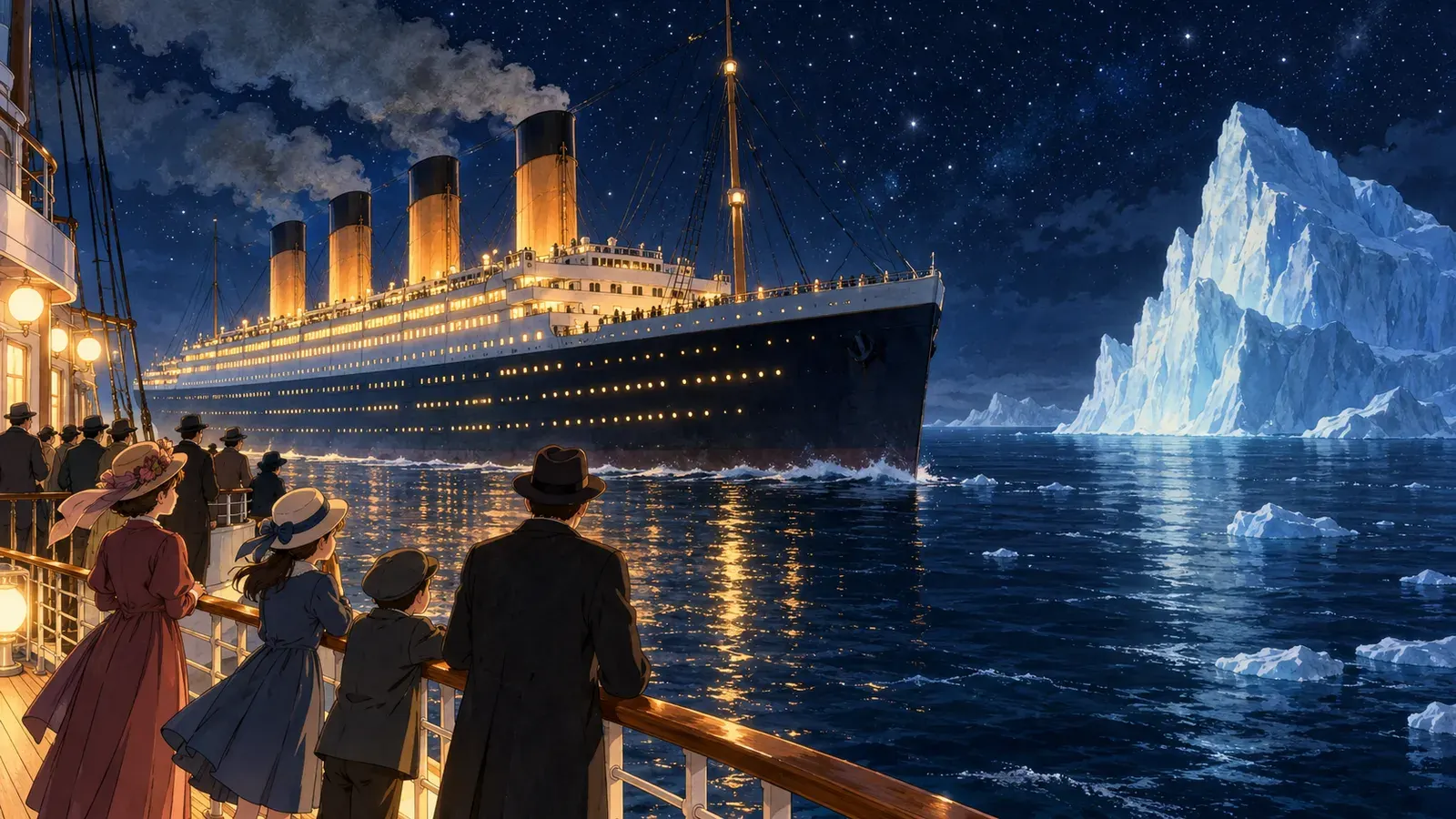
In April 1912, one of the largest ships in the world left the port of Southampton in England. Its name was the Titanic. It was going to New York on its very first trip. Some people believed that it was almost impossible to sink. Five days later, it was at the bottom of the Atlantic Ocean.
1912年4月、世界でも指おりの大きな船が、イギリスのサウサンプトン港を出航しました。タイタニック号です。これが初めての航海で、行き先はニューヨークでした。この船はまず沈むことはない、と信じる人もいました。ところが5日後、船は大西洋の海の底に沈んでいたのです。
The Titanic was built in Belfast, in what is now Northern Ireland. It was about 269 meters long, more than two and a half times as long as a soccer field. On board there were restaurants, a swimming pool, a gym and beautiful wooden staircases. First-class passengers were some of the richest people in the world. But most passengers were in second and third class. Many of them were families who were moving to America to start a new life.
タイタニック号は、今の北アイルランドにあるベルファストで造られました。長さは約269メートル。サッカー場の2.5倍以上もあります。船内にはレストランやプール、ジム、木でできた美しい階段がありました。一等船室の客は、世界でも有数の大金持ちたちでした。けれども、乗客の大部分は二等と三等の客です。その多くは、新しい生活を始めるためにアメリカへ移り住もうとしている家族でした。
There were about 2,200 people on the ship, including the crew. Among them was one Japanese passenger, a government worker named Masabumi Hosono. He had been studying railways in Europe, and he was on his way home to Japan.
船には、乗組員もふくめて約2200人が乗っていました。その中に、日本人の乗客が一人いました。細野正文という役人です。ヨーロッパで鉄道の調査をして、日本へ帰るところでした。
During the trip, the ship received several radio messages from other ships. They warned that there was ice in the area. But the Titanic kept moving fast. The night of April 14 was clear and calm, with no moon. The sea was very flat. This made it harder to see ice, because there were no waves breaking around it.
航海の途中、タイタニック号はほかの船から何度か無線の連絡を受けました。この海域に氷がある、という警告です。それでもタイタニック号は、速度を落とさずに進みつづけました。4月14日の夜は晴れて風もなく、月は出ていませんでした。海は鏡のように平らでした。そのせいで、かえって氷が見えにくくなっていたのです。氷のまわりで波がくだけて白く見える、ということがなかったからです。
At about 11:40 at night, a lookout high on the ship saw a huge iceberg straight ahead. He rang a bell and called the officers. The crew tried to turn the ship, but it was too late. The iceberg scraped along the right side of the ship and opened holes below the water.
夜の11時40分ごろ、船の高い見張り台にいた見張りが、真正面に巨大な氷山を見つけました。見張りは鐘を鳴らし、航海士たちに知らせました。乗組員は船の向きを変えようとしましたが、まにあいませんでした。氷山は船の右側をこすりながら通りすぎ、水面の下にいくつもの穴をあけました。
At first, many passengers did not feel much. Some people even played with pieces of ice that had fallen on the deck. But Thomas Andrews, one of the men who had designed the ship, quickly understood the truth. Water was coming into too many sections. The Titanic would sink within a few hours.
初めは、多くの乗客がほとんど何も感じませんでした。甲板に落ちてきた氷のかけらで遊ぶ人までいたほどです。けれども、船を設計した一人であるトーマス・アンドリューズには、すぐに事の重大さが分かりました。水が入りこんでいる区画が、あまりにも多すぎる。タイタニック号は、あと数時間で沈んでしまうだろう。
Then came the worst problem. The ship had only twenty lifeboats. They could carry about 1,200 people, only about half of the people on board. The law at that time did not require more. At first, some lifeboats left half empty, because people did not believe the ship was really sinking. The rule was "women and children first," so many men stayed behind.
そして、何より深刻な問題がありました。救命ボートが20そうしかなかったのです。乗れるのは約1200人。乗っている人のおよそ半分にすぎません。当時の法律では、それ以上積む必要はなかったのです。初めのうちは、船が本当に沈むとはだれも信じなかったので、半分空のまま出ていったボートもありました。決まりは「女性と子どもが先」でした。そのため、多くの男性が船に残りました。
The radio operators sent calls for help. A ship called the Carpathia heard them and rushed through the icy sea, but it was about 100 kilometers away. Another ship was much closer, but its radio operator had gone to bed, so no one on board heard the calls.
無線係は、救助を求める信号を送りつづけました。カルパチア号という船がそれを受け取り、氷の海を全速力で駆けつけましたが、約100キロも離れていました。もっとずっと近くにいた船もありました。けれども、その船の無線係はもう寝てしまっていたので、だれも救助の信号を聞かなかったのです。
At about 2:20 in the morning on April 15, the Titanic broke apart and sank. The water was below zero degrees. More than 1,500 people died. The Carpathia arrived about two hours later and rescued around 700 people from the lifeboats. Masabumi Hosono was one of them. He had found a place in a lifeboat near the end. On the ship, he wrote down what he saw that night, and his record still exists today.
4月15日の午前2時20分ごろ、タイタニック号は二つに裂けて沈みました。海の水は0度を下回る冷たさでした。1500人以上が亡くなりました。カルパチア号は約2時間後に到着し、救命ボートから約700人を助け上げました。細野正文も、その一人でした。最後のほうで、救命ボートに乗りこめたのです。細野は助けられた船の上で、その夜見たことを書きとめました。その記録は今も残っています。
The disaster shocked the world, and it changed the rules of the sea. In 1914, many countries agreed on new safety rules. Ships had to carry enough lifeboats for everyone on board. Radios had to be watched all day and all night. A special ice patrol was started to watch for icebergs in the North Atlantic. These rules have saved many lives since then.
この大惨事は世界に衝撃を与え、海の決まりを変えました。1914年、多くの国が新しい安全規則を取り決めました。船は、乗っている全員が乗れるだけの救命ボートを積まなければならなくなりました。無線は、昼も夜も休まず聞いていなければならなくなりました。北大西洋では、氷山を見張る特別なパトロールも始まりました。これらの規則は、それから今までに、数えきれないほどの命を救ってきました。
For many years, no one knew exactly where the Titanic was. Then, in 1985, a team of American and French scientists found it almost four kilometers under the sea. The ship was in two large pieces. Today, it lies quietly in the dark, slowly being eaten away by tiny living things. It reminds us that no machine is too big to fail, and that safety rules are written for a reason.
長いあいだ、タイタニック号が海のどこに沈んでいるのか、だれにも分かりませんでした。ところが1985年、アメリカとフランスの科学者のチームが、海面から4キロ近い深さの海の底で船を見つけました。船は大きく二つに分かれていました。今も船は暗い海の底に静かに横たわり、小さな生き物たちに少しずつ食べられています。どんなに大きな機械でも、こわれることはある。安全のための規則には、それだけの理由がある。タイタニック号は、そのことをわたしたちに教えてくれます。