In many countries, students bring lunch from home or buy it at the school cafeteria. In Japan, most elementary and junior high schools have kyushoku, or school lunch. And it has a special style.
多くの国では、生徒は家から昼食を持ってくるか、学校の食堂で買って食べます。日本では、ほとんどの小学校と中学校に「給食」があります。しかも、その給食には独特のやり方があるのです。
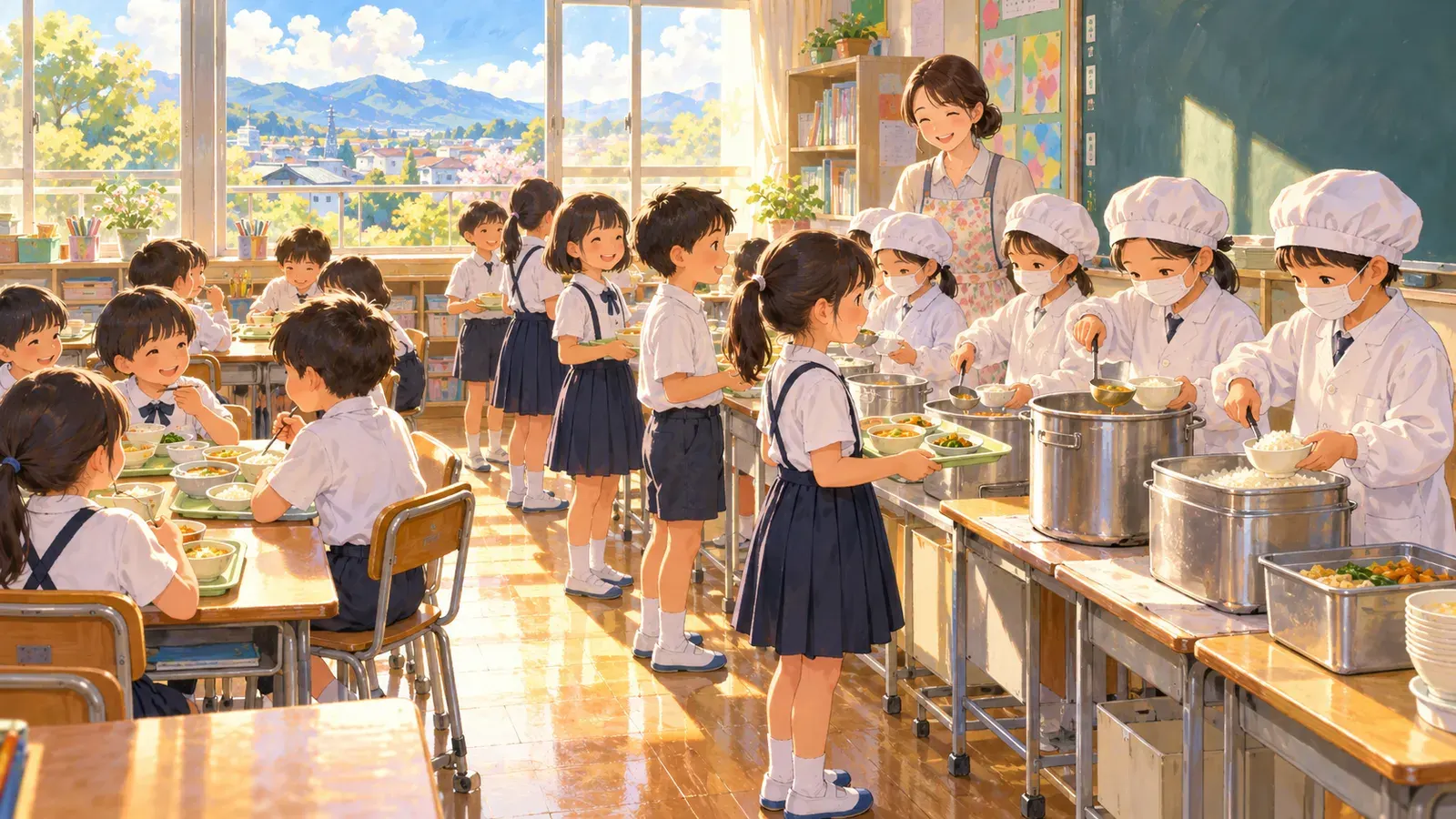
At most schools, there is no cafeteria. The students eat in their own classroom. And who brings the food? The students do! Every week, some students are the lunch helpers. They put on white coats, white caps, and masks. They carry big pots of food from the kitchen to the classroom.
ほとんどの学校には食堂がありません。生徒は自分の教室で食べます。では、だれが料理を運ぶのでしょう? 生徒たちです! 毎週、何人かの生徒が給食当番になります。当番は白い服を着て、白い帽子とマスクをつけます。そして、給食室から教室まで、料理の入った大きななべを運ぶのです。
Then the helpers serve the food. They put rice, soup, and other dishes on plates for each classmate. Usually there is a carton of milk, too. Everyone waits until all the food is ready. Then they put their hands together and say "Itadakimasu" at the same time. The teacher eats the same food with the students.
それから、当番が料理を配ります。ご飯やスープ、そのほかのおかずを、クラスメート一人ひとりの食器によそいます。たいてい、パックの牛乳もつきます。全員の分がそろうまで、みんなで待ちます。そろったら手を合わせて、声をそろえて「いただきます」と言います。先生も生徒と一緒に、同じものを食べます。
The menu changes every day. It may be curry and rice, fish, noodles, or local food from the area. Visitors from other countries are often surprised. The food is healthy, warm, and delicious.
献立は毎日変わります。カレーライスの日もあれば、魚や麺類の日、その土地の郷土料理の日もあります。外国から来た人は、よく驚きます。給食は体によくて、温かくて、おいしいのです。
After lunch, the students say "Gochisosama." Then they carry the dishes back. In many schools, students fold their milk cartons flat for recycling. After that, students often clean their classroom and the school, too.
食べ終わると、みんなで「ごちそうさま」と言い、食器を返しに運びます。多くの学校では、リサイクルのために牛乳パックを開いて平らにします。そのあと、生徒が教室や学校の掃除をすることもよくあります。
In Japan, lunch is not just a time to eat. It is also a time to learn to work together, and to thank the people who made the food.
日本では、給食はただ食べるだけの時間ではありません。みんなで力を合わせることを学び、料理を作ってくれた人たちに感謝する時間でもあるのです。