Today, the bicycle seems like a simple machine. You sit, you push the pedals, and you go. But the first bicycle was very different. It took people about seventy years to make the bike we know.
今では、自転車はごく簡単な乗り物に思えます。サドルに座って、ペダルをこげば進みます。でも、最初の自転車はまったく違うものでした。わたしたちの知っている自転車ができるまでには、70年ほどかかったのです。
In 1817, a German man named Karl Drais made a strange new machine. It had two wooden wheels and a seat, but it had no pedals! To move, the rider sat on the seat and pushed the ground with his feet, like walking or running. People called it a running machine. It was faster than walking. Today, small children ride balance bikes, and they are almost the same idea!
1817年、カール・ドライスというドイツ人が、奇妙な新しい乗り物を作りました。木の車輪が2つと座席はありますが、ペダルがありません! 乗る人は座席に座り、歩いたり走ったりするように、足で地面を蹴って進んだのです。人々はこれを「走る機械」と呼びました。歩くよりは速く進めました。今、小さな子どもたちがペダルのない「バランスバイク」に乗っていますが、これとほとんど同じ仕組みです!
In the 1860s, people in France had a new idea. They put pedals on the front wheel. Now riders could keep their feet off the ground. But these bikes were made of wood and iron, and the roads were rough. Riding one shook your whole body. In English, people called them boneshakers.
1860年代、フランスで新しい工夫が生まれました。前の車輪にペダルをつけたのです。これで、乗る人は足を地面から浮かせたまま進めるようになりました。ところが、この自転車は木と鉄でできていて、道はでこぼこでした。乗ると、全身がガタガタとゆさぶられます。そこで英語では「ボーンシェイカー(骨ゆすり)」と呼ばれました。
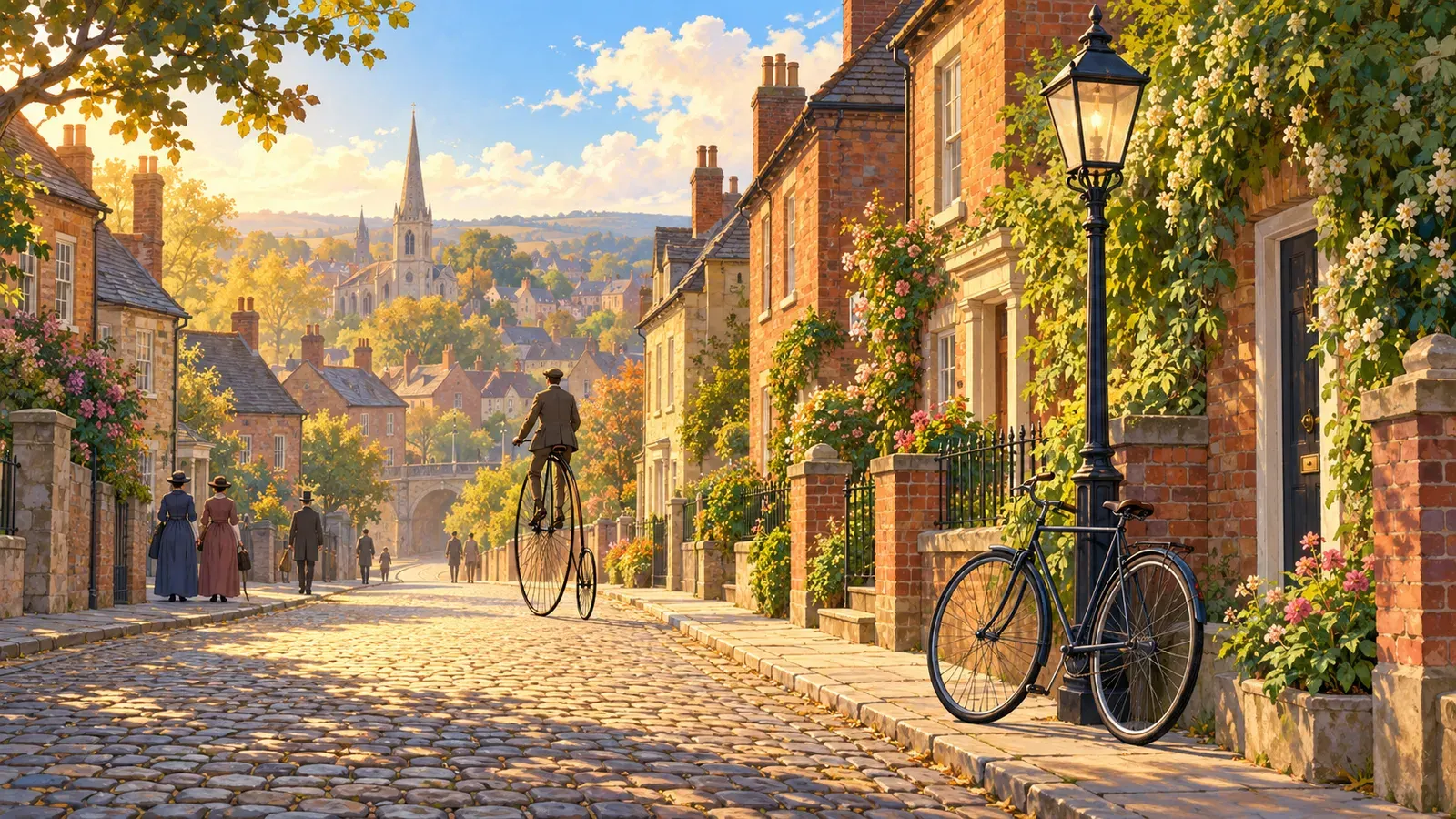
Next came a very funny-looking bike. With pedals on the front wheel, one turn of the pedals made one turn of the wheel. So a bigger front wheel meant more speed. People wanted to go faster, so front wheels became bigger and bigger. In England, people called this bike the penny-farthing. Its big front wheel and small back wheel looked like a big coin and a small coin side by side.
次に登場したのは、とても変わった形の自転車でした。ペダルが前輪についていると、ペダルを1回転させれば、前輪も1回転します。つまり、前輪が大きいほどスピードが出るのです。人々はもっと速く走りたかったので、前輪はどんどん大きくなっていきました。イギリスでは、この自転車を「ペニー・ファージング」と呼びました。大きな前輪と小さな後輪が、大きな硬貨と小さな硬貨を並べたように見えたからです。
But the penny-farthing was dangerous. The rider sat high in the air. If the front wheel hit a stone, the rider could fly forward and fall on his head.
けれども、ペニー・ファージングは危険でした。乗る人は、ずっと高いところに座っていました。前輪が石にぶつかれば、前に投げ出されて、頭から落ちてしまうこともあったのです。
In 1885, an Englishman named John Kemp Starley made a better bike. Its two wheels were almost the same size, and a chain connected the pedals to the back wheel. It was easier to ride and much safer, so people called this kind of bike the safety bicycle. Most bikes today still have this same shape.
1885年、ジョン・ケンプ・スターレーというイギリス人が、もっとよい自転車を作りました。2つの車輪はほとんど同じ大きさで、ペダルと後輪はチェーンでつながれていました。乗りやすく、ずっと安全だったので、このような自転車は「セーフティ型自転車(安全自転車)」と呼ばれました。今の自転車も、ほとんどがこれと同じ形をしています。
There was one more problem. The tires were made of hard rubber, so the ride was still bumpy. In 1888, a man named John Boyd Dunlop wanted to make his young son's tricycle more comfortable. So he made tires filled with air. Soon, air-filled tires were on bicycles everywhere.
でも、まだ問題がひとつ残っていました。タイヤが硬いゴムでできていたので、乗るとまだガタガタしたのです。1888年、ジョン・ボイド・ダンロップという人が、幼い息子の三輪車をもっと乗り心地よくしてやりたいと考えました。そこで、空気を入れたタイヤを作ったのです。空気入りのタイヤは、たちまち世界中の自転車に使われるようになりました。
Bicycles changed people's lives. They were cheap and fast, and they did not need food like a horse. People could go to work, visit friends, or explore the countryside on their own. Many women found new freedom on bicycles, too.
自転車は、人々の暮らしを変えました。値段が安くて速く、馬のように餌もいりません。人々は自分の力で、仕事に行ったり、友だちを訪ねたり、田舎を探検したりできるようになったのです。また、自転車によって新しい自由を手に入れた女性もたくさんいました。
So next time you ride your bike, remember: it took many people and many ideas to make it.
今度自転車に乗るときには、思い出してください。この乗り物ができるまでには、たくさんの人の、たくさんのアイデアが必要だったのです。