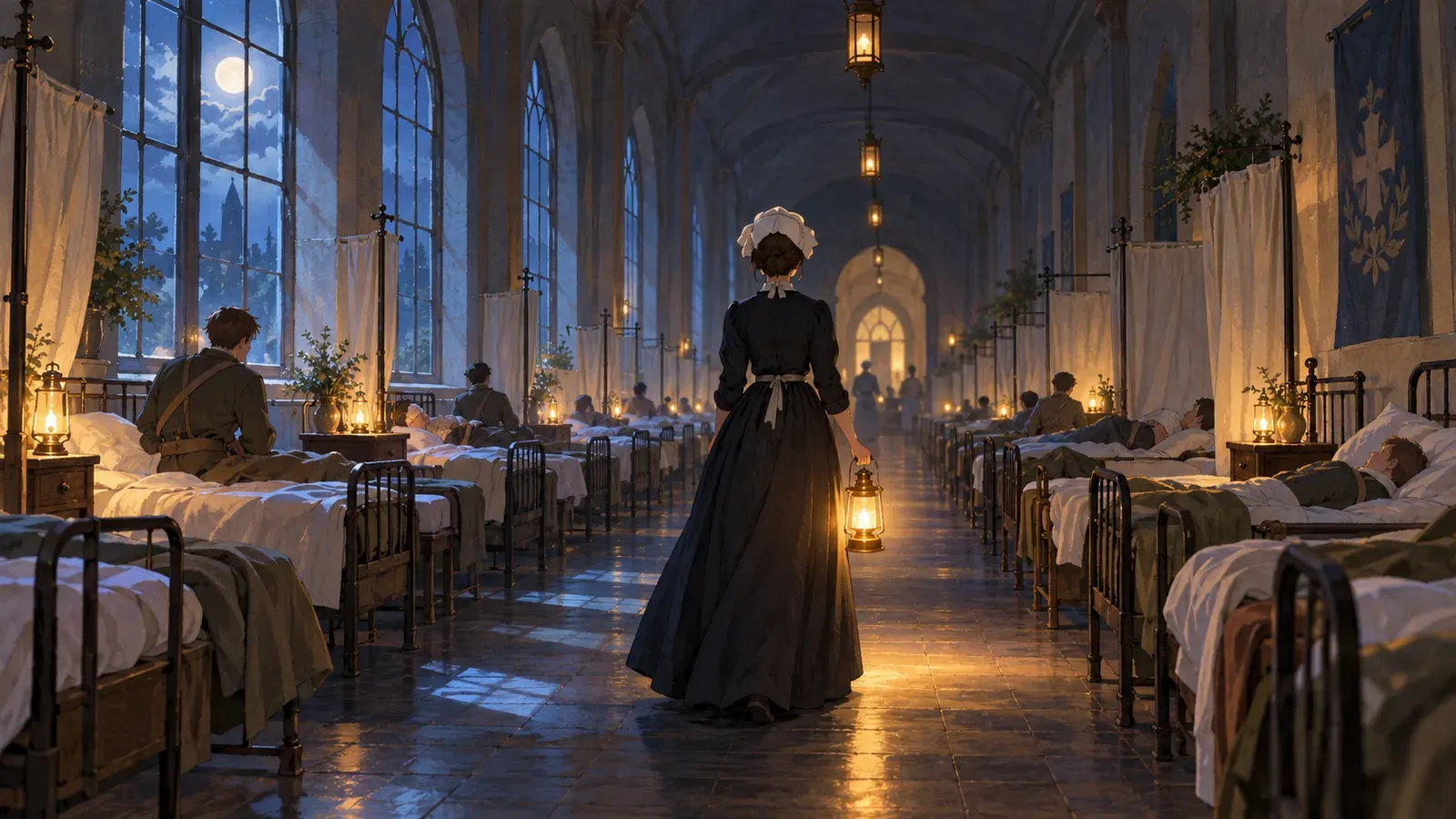
In the winter of 1854, in a huge army hospital near the city now called Istanbul, a woman walked slowly between long rows of sick and wounded soldiers. She carried a small lamp. It was late at night, and most of the doctors had gone to bed, but she wanted to check on the men one more time. Soon, newspapers in Britain were calling her "the Lady with the Lamp." Her name was Florence Nightingale.
1854年の冬のことです。今はイスタンブールと呼ばれる都市の近くに、巨大な陸軍病院がありました。そこには、病気やけがをした兵士たちが、長い列になって横たわっていました。その列のあいだを、一人の女性がゆっくりと歩いていきます。手には小さなランプを持っていました。夜もふけ、医者たちはほとんど寝てしまっていましたが、女性はもう一度だけ、兵士たちの様子を見て回りたかったのです。やがて、イギリスの新聞は、この女性を「ランプの貴婦人」と呼ぶようになりました。フローレンス・ナイチンゲールです。
Florence was born in 1820 into a rich British family. She was named after the city where she was born, Florence, in Italy. Her parents expected her to marry well and live a comfortable life. But as a teenager, Florence felt that she had a special purpose. She later wrote that she believed God was calling her to serve. Over time, she became sure that her purpose was to care for the sick.
フローレンスは1820年、イギリスの裕福な家に生まれました。名前は、生まれた土地であるイタリアの都市フィレンツェ(英語でフローレンス)からとったものです。両親は、娘がよい家にとつぎ、何不自由なく暮らすことを望んでいました。ところが10代のころ、フローレンスは、自分には特別な使命があると感じるようになります。神が、人に仕えるようにと自分を呼んでいる。のちにフローレンスは、そう信じていたと書いています。そしてしだいに、自分の使命は病人の世話をすることだと確信するようになりました。
Her family was horrified. In those days, nursing was not considered a respectable job for a woman from a wealthy family. Hospitals were often dirty, and nurses had little training. For years, Florence argued with her parents. She studied on her own, reading reports about hospitals and public health. Finally, in 1851, she went to Germany to train as a nurse at a religious community in a town called Kaiserswerth. Two years later, she became the head of a small hospital for women in London.
家族は青くなりました。当時、看護は、裕福な家の娘がするようなまともな仕事とは思われていなかったのです。病院は不潔なところが多く、看護師もほとんど訓練を受けていませんでした。フローレンスは何年も両親と言い争いました。そのかたわら、病院や公衆衛生についての報告書を読んで、独学で勉強を続けました。そしてついに1851年、ドイツのカイザースヴェルトという町へ行き、キリスト教の施設で看護の訓練を受けたのです。2年後には、ロンドンにある女性のための小さな病院の責任者になりました。
In 1854, Britain and France joined a war against Russia, which became known as the Crimean War. Newspaper reporters sent shocking reports home about how badly wounded British soldiers were being treated. The government asked Nightingale to lead a group of nurses to the main British army hospital at Scutari, across the water from Constantinople, the city that is now Istanbul. In November 1854, she arrived with thirty-eight nurses.
1854年、イギリスとフランスはロシアとの戦争に加わりました。のちにクリミア戦争と呼ばれる戦争です。戦地の新聞記者たちは、けがをしたイギリス兵がどれほどひどい扱いを受けているかを伝える、衝撃的な記事を本国に送りました。そこで政府は、ナイチンゲールに看護師たちを率いて戦地へ行ってほしいと頼みました。行き先は、スクタリにあるイギリス陸軍の中心となる病院です。スクタリは、コンスタンティノープル(今のイスタンブール)から海をはさんだ向かい側にありました。1854年11月、ナイチンゲールは38人の看護師とともに到着しました。
What they found was terrible. The hospital was built over broken sewers. There were rats and insects everywhere, and there was not enough clean water, soap, blankets or food. Many soldiers were lying in dirty clothes on the floor. In fact, far more men were dying from diseases such as cholera and typhus than from their wounds in battle.
そこで目にしたのは、ひどいありさまでした。病院は、こわれた下水道の上に建っていました。ネズミや虫がどこにでもいて、きれいな水も、石けんも、毛布も、食べ物も足りません。多くの兵士が、汚れた服のまま床に寝かされていました。じつは、戦いで負った傷よりも、コレラやチフスなどの病気で死ぬ兵士のほうが、はるかに多かったのです。
Nightingale and her nurses went to work. They cleaned, washed clothes, organized kitchens to make proper food, and wrote letters for soldiers who could not write. Nightingale used her own money and money collected by a newspaper to buy supplies. At first, some army doctors did not welcome her at all, but she slowly won their trust. She worked extremely long hours, and at night, she made her famous rounds with her lamp.
ナイチンゲールと看護師たちは、さっそく仕事に取りかかりました。そうじをし、服を洗い、台所を整えてきちんとした食事を作り、字の書けない兵士のために手紙を代わりに書きました。必要な品物は、自分のお金や、ある新聞社が集めた募金で買いそろえました。初めのうち、陸軍の医者の中には、ナイチンゲールをまったく歓迎しない人もいました。それでも少しずつ、信頼を勝ち取っていったのです。ナイチンゲールは、とてつもなく長い時間働きました。そして夜になると、あの有名なランプを手に見回りをしたのです。
Still, the death rate stayed very high through the first winter. It began to fall sharply after March 1855, when a government team called the Sanitary Commission arrived. The team cleaned out the sewers and improved the ventilation, letting fresh air into the building. Nightingale learned an important lesson from this. Kindness and hard work were not enough. Clean water, fresh air and good drains could save more lives than almost anything else.
それでも、最初の冬のあいだ、死ぬ兵士の割合はとても高いままでした。それががくんと下がりはじめたのは、1855年3月に、政府の「衛生委員会」の一行が到着してからのことです。一行は下水道を掃除し、建物の風通しをよくして、新鮮な空気が入るようにしました。ナイチンゲールは、ここから大切なことを学びました。思いやりと勤勉だけでは足りない。きれいな水と新鮮な空気、そしてしっかりした排水設備。これほど多くの命を救えるものは、ほかにほとんどないのだ、と。
After the war, Nightingale came home a national hero, but she avoided public attention. Instead, she started a new battle, this time with numbers. She had collected detailed records of when and why soldiers had died. With the help of a statistician named William Farr, she studied these records carefully. To show her results clearly, she made colorful diagrams shaped like circles divided into wedges. One look at them showed that most of the deaths had been caused by diseases that could have been prevented. Her charts helped persuade the government to improve hospitals and health conditions for soldiers. In 1858, she became the first woman member of the Royal Statistical Society.
戦争が終わると、ナイチンゲールは国民的な英雄として帰国しました。けれども、人前に出ることは避けました。そのかわりに始めたのが、新しい戦いです。今度の武器は数字でした。ナイチンゲールは、兵士がいつ、何が原因で死んだのかを、くわしく記録していました。そして、ウィリアム・ファーという統計学者の手を借りて、その記録をていねいに分析しました。結果をはっきり伝えるために、円をいくつものくさび形に区切った、色あざやかなグラフも作りました。それを一目見れば、死者のほとんどが、防げたはずの病気で亡くなっていたことが分かります。このグラフが決め手となって、政府は兵士のための病院や衛生の状態を改めることになりました。1858年、ナイチンゲールは王立統計協会で初めての女性会員になりました。
In 1860, she started a training school for nurses at St Thomas' Hospital in London. It was one of the first professional schools of its kind, and nurses trained there spread her methods around the world. She also wrote a short book, Notes on Nursing, which explained in plain language how to keep sick people clean, warm, well fed and in fresh air. The book was written for ordinary women caring for family members at home, and it sold very well.
1860年、ナイチンゲールはロンドンの聖トマス病院に、看護師を育てる学校を開きました。こうした専門の学校としては、最も早い時期のもののひとつです。ここで学んだ看護師たちが、ナイチンゲールのやり方を世界中に広めていきました。ナイチンゲールはまた、『看護覚え書』という短い本も書きました。病人を清潔にし、体を温め、しっかり食べさせ、新鮮な空気の中で過ごさせるにはどうすればよいか。それを、分かりやすい言葉で説明した本です。家で家族の看病をしているふつうの女性たちに向けて書かれたもので、とてもよく売れました。
Surprisingly, Nightingale herself was too ill to leave her bed for much of her later life. Doctors today think she may have suffered from a long-lasting illness that she caught during the war. Even so, she continued to work from her room, writing thousands of letters and reports and advising government officials. She died in 1910, at the age of ninety.
意外なことに、ナイチンゲール自身は、人生の後半のほとんどを病気のためベッドの上で過ごしました。今の医師たちは、戦争中にかかった病気が長く続いていたのではないかと考えています。それでもナイチンゲールは、自分の部屋で仕事を続けました。何千通もの手紙や報告書を書き、政府の役人たちに助言をしたのです。1910年、90歳で亡くなりました。
Today, International Nurses Day is celebrated every year on May 12, her birthday. Nightingale is remembered not only as a kind nurse with a lamp, but also as a determined reformer who used facts and numbers to change the world. Her life shows that caring for people sometimes means more than comfort. It can also mean collecting the evidence and fighting for change.
今では、ナイチンゲールの誕生日である5月12日が、毎年「国際看護師の日」になっています。ナイチンゲールは、ランプを手にしたやさしい看護師としてだけ記憶されているのではありません。事実と数字を武器に世の中を変えた、強い意志をもつ改革者としても記憶されているのです。人を思いやるとは、ときに、ただなぐさめること以上の意味をもちます。証拠を集め、変えるために戦うことでもあるのです。ナイチンゲールの一生は、そのことを教えてくれます。