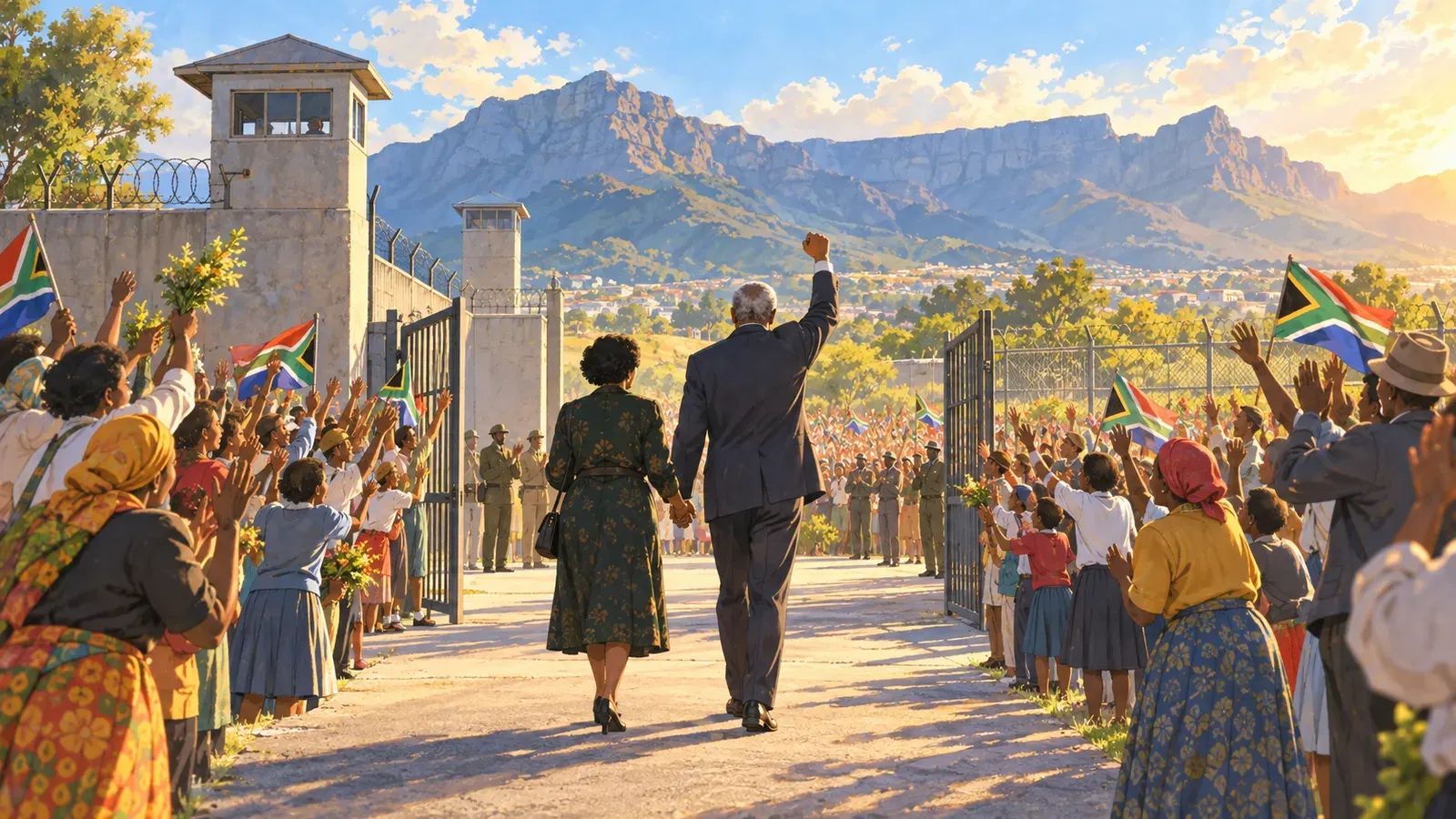
On February 11, 1990, thousands of people waited outside a prison near Cape Town, South Africa. Millions more watched on television around the world. In the afternoon, a tall, gray-haired man walked out through the prison gate, holding his wife's hand. He raised his fist in the air, and the crowd cheered. Nelson Mandela was free after twenty-seven years in prison. He was seventy-one years old.
1990年2月11日、南アフリカのケープタウン近くの刑務所の外で、何千人もの人々が待っていました。世界中で、さらに何百万人もの人がテレビの前で見守っていました。午後、背が高く白髪まじりの男性が、妻の手を握って、刑務所の門から歩み出てきました。男性がこぶしを高く掲げると、群衆から歓声がわき起こりました。ネルソン・マンデラが、27年間の獄中生活を終えて、自由の身になったのです。71歳でした。
Mandela was born on July 18, 1918, in a small village in the Eastern Cape of South Africa. His family belonged to the Xhosa people, and his father was an adviser to the local king. His birth name was Rolihlahla. It means pulling the branch of a tree, but people sometimes say that it means troublemaker. On his first day at school, his teacher gave him an English name, as was common at that time: Nelson.
マンデラは1918年7月18日、南アフリカの東ケープ州の小さな村で生まれました。一家はコサ人で、父親はその土地の王の相談役でした。生まれたときの名前は、ロリシュラシュラです。「木の枝を引っぱる」という意味ですが、「騒ぎを起こす人」という意味だといわれることもあります。学校に通いはじめた最初の日、先生が英語の名前をつけてくれました。当時はよくあることでした。その名前が「ネルソン」です。
When Nelson was about nine, his father died. He was raised by a powerful chief, the regent of the Thembu people. At the chief's home, he watched meetings where everyone was allowed to speak, and the leader listened carefully before making a decision. Mandela later said that he learned a lot about leadership there. He was a good student, and he went on to the University of Fort Hare, one of the few universities for Black students. But he was sent away after taking part in a student protest.
9歳ごろ、ネルソンは父親を亡くしました。そして、テンブ人の摂政をつとめる、力のある首長のもとで育てられました。首長の家では、話し合いの場が開かれていました。そこでは誰でも発言が許され、首長は皆の話にじっくり耳を傾けてから、物事を決めていました。マンデラはそれを見て、指導者のあり方について多くを学んだ、とのちに語っています。マンデラは優秀な生徒で、黒人が通える数少ない大学の一つ、フォートヘア大学に進みました。けれども、学生の抗議活動に加わったため、大学を追われてしまいました。
In 1941, to escape a marriage that had been arranged for him, Mandela ran away to Johannesburg. There, he saw the hard lives of Black workers in the city. He studied law, and in 1944 he joined the African National Congress, or ANC, a group that fought for the rights of Black South Africans.
1941年、マンデラは、自分のために決められた結婚から逃れるため、ヨハネスブルグへ逃げ出しました。そこで目にしたのは、都会で働く黒人たちの苦しい暮らしでした。マンデラは法律を学び、1944年、アフリカ民族会議(ANC)に加わりました。南アフリカの黒人の権利のために戦う団体です。
In 1948, the government introduced a system called apartheid, which means apartness. Under apartheid, people were divided by race. Black South Africans, who were the large majority, could not vote. They were forced to live in separate areas, use separate schools, hospitals and beaches, and carry passes to move around their own country. The best land and jobs were kept for white people.
1948年、政府はアパルトヘイトという制度を始めました。アパルトヘイトとは「分離」という意味です。この制度のもとで、人々は人種によって分けられました。南アフリカの人口の大部分を占める黒人には、選挙権がありませんでした。住む地域も、学校も、病院も、海岸も、白人とは別にされました。自分の国の中を移動するのにさえ、通行証を持ち歩かなければなりませんでした。いちばんよい土地と仕事は、白人のものとされていました。
In 1952, Mandela and his friend Oliver Tambo opened the first law firm in South Africa run by Black lawyers. Every day, people came to them with stories of unfair treatment. Mandela also helped to lead peaceful campaigns against apartheid laws. The government answered with arrests and bans.
1952年、マンデラは友人のオリバー・タンボと二人で、法律事務所を開きました。南アフリカで初めての、黒人の弁護士による法律事務所です。毎日、不公平な扱いを受けた人たちが相談にやって来ました。マンデラは、アパルトヘイトの法律に反対する平和的な運動を率いるのにも力を貸しました。これに対して政府は、人々を逮捕し、活動を禁止しました。
In 1960, at a town called Sharpeville, police opened fire on a crowd of protesters and killed sixty-nine people. Soon after, the ANC was banned. Mandela and other leaders came to believe that peaceful protest alone was no longer enough. In 1961, he helped to create an armed group that attacked government buildings and power lines. They tried to avoid killing people, but it was a serious decision, and the government called him a terrorist.
1960年、シャープビルという町で、警察が抗議する群衆に向けて発砲し、69人が殺されました。その後まもなく、ANCは活動を禁じられました。マンデラやほかの指導者たちは、平和的な抗議だけでは、もう足りないと考えるようになりました。1961年、マンデラは武装組織の結成にかかわりました。政府の建物や送電線を攻撃する組織です。人の命を奪わないように気をつけてはいましたが、それは重い決断でした。政府は、マンデラをテロリストと呼びました。
In 1962, Mandela was arrested. At his trial in 1964, he gave a long speech from the dock. He explained that he had fought against white domination and also against Black domination, and that he hoped for a free society where all people could live together as equals. He said that he was ready to die for this ideal. He was sentenced to life in prison.
1962年、マンデラは逮捕されました。1964年の裁判で、マンデラは被告席から長い演説をしました。自分は白人による支配と戦ってきた。そして、黒人による支配とも戦ってきた。望んでいるのは、すべての人が対等な立場でともに暮らせる、自由な社会だ。マンデラはそう説明しました。そして、この理想のためなら死ぬ覚悟もできている、と述べたのです。言い渡されたのは、終身刑でした。
Mandela spent eighteen of his twenty-seven prison years on Robben Island, a windy island off the coast of Cape Town. His cell was tiny, with a mat on the floor for a bed. Every day, the prisoners were made to break rocks in a limestone quarry. The glare of the bright white stone damaged his eyes for the rest of his life. At first, he was allowed only one visitor and one letter every six months.
27年間の獄中生活のうち18年を、マンデラはロベン島で過ごしました。ケープタウンの沖合にある、風の強い島です。独房はとても狭く、床に敷いたマットがベッドの代わりでした。囚人たちは毎日、石灰岩の石切り場で岩を割る作業をさせられました。真っ白な石のまぶしい照り返しで目を痛め、マンデラはその後一生、目の不調に苦しみました。初めのうちは、面会も手紙も、6か月にたった一度しか許されませんでした。
Yet Mandela did not let prison destroy him. He studied, exercised every morning and discussed ideas with other prisoners, so that the island was sometimes called a university. He even learned Afrikaans, the language of many of his guards, so that he could understand them better. Slowly, some of the guards came to respect him.
それでもマンデラは、刑務所に心をくじかれはしませんでした。勉強をし、毎朝体を鍛え、ほかの囚人たちと議論を重ねました。そのため、この島はときに「大学」と呼ばれたほどです。マンデラは、看守の多くが話すアフリカーンス語まで学びました。看守たちのことを、もっとよく理解するためです。やがて、看守の中にも、マンデラを尊敬する人が少しずつ現れはじめました。
Outside, the world was changing. People in many countries protested against apartheid, and South Africa faced heavy pressure from other nations. In 1990, the new president, F. W. de Klerk, ended the ban on the ANC and released Mandela. The two men, once enemies, worked together to end apartheid. In 1993, they shared the Nobel Peace Prize.
刑務所の外では、世界が変わりつつありました。多くの国の人々がアパルトヘイトに抗議し、南アフリカはほかの国々から強い圧力を受けていました。1990年、新しい大統領のF・W・デクラークは、ANCの活動禁止を解き、マンデラを釈放しました。かつては敵同士だった二人は、アパルトヘイトを終わらせるために手を取り合いました。1993年、二人はそろってノーベル平和賞を受けました。
In April 1994, South Africa held its first election in which people of all races could vote. Many Black South Africans, some of them very old, waited for hours in long lines to vote for the first time in their lives. The ANC won, and Mandela became the country's first Black president.
1994年4月、南アフリカで初めて、すべての人種の人が投票できる選挙が行われました。たくさんの黒人の人々が、生まれて初めての一票を投じるために、長い列に何時間も並びました。中には、かなりのお年寄りもいました。選挙はANCが勝ち、マンデラは南アフリカで初めての黒人の大統領になりました。
Many people feared that Black South Africans would take revenge. But Mandela chose forgiveness. He invited one of his former prison guards to his inauguration, and he worked to bring all South Africans together. In 1995, when South Africa hosted the Rugby World Cup, he walked onto the field wearing the green shirt of the national team, a team that had long been a symbol of white South Africa. The mostly white crowd began to chant his name.
黒人たちが白人に仕返しをするのではないか。多くの人がそう恐れていました。けれども、マンデラが選んだのは、許すことでした。かつて刑務所で自分を見張っていた看守の一人を、大統領の就任式に招きました。そして、南アフリカのすべての人を一つにまとめようと力を尽くしました。1995年、南アフリカでラグビーのワールドカップが開かれたとき、マンデラは代表チームの緑のジャージを着て、グラウンドに歩み出ました。このチームは長いあいだ、白人の南アフリカの象徴とされてきたチームです。観客のほとんどは白人でしたが、その観客たちが、声をそろえてマンデラの名を呼びはじめたのです。
Mandela served only one term as president and stepped down in 1999. He died in 2013 at the age of ninety-five. Today, his birthday, July 18, is Nelson Mandela International Day, when people are asked to spend time helping others. His life shows that a person can suffer great injustice and still choose to build peace instead of hate.
マンデラは大統領を1期だけ務め、1999年に退きました。そして2013年、95歳で亡くなりました。今では、マンデラの誕生日の7月18日は「ネルソン・マンデラ国際デー」になっています。この日には、人のために時間を使おう、と呼びかけられています。ひどい不正に苦しめられても、人は憎しみではなく、平和を築く道を選ぶことができる。マンデラの一生は、そのことを示しています。
 ▶