Minakata Kumagusu was one of the most unusual geniuses Japan has ever had. He studied plants, animals, folk tales, and religion. He read books in many languages, and he wrote for one of the world's most famous science magazines. Yet he never finished university and never had a regular job. Above all, he loved a strange living thing that most people have never heard of, the slime mold.
南方熊楠は、日本が生んだ天才の中でも、とびきり型破りな人でした。研究したのは、植物、動物、民話、宗教。いくつもの言葉で本を読み、世界でもっとも有名な科学雑誌の一つに論文を書きました。それなのに、大学を卒業したこともなければ、決まった仕事についたこともありません。そして何よりも愛したのが、粘菌という奇妙な生き物でした。たいていの人は、名前を聞いたこともないでしょう。
He was born in 1867 in Wakayama, the son of a hardware dealer. Even as a small child, he loved books more than anything. It is said that he would visit the homes of families who owned a large illustrated encyclopedia, read it there, memorize the pages, and then go home and write them down from memory. Over several years, he made his own copy of the whole set of more than one hundred volumes.
熊楠は1867年、和歌山の金物屋の息子として生まれました。小さいころから、何より本が好きでした。大きな絵入りの百科事典を持っている家を訪ねては、それを読ませてもらい、ページを暗記しました。そして家に帰ってから、覚えた内容を書き出したといわれています。こうして数年がかりで、100冊以上もある百科事典を、まるごと自分の手で写しとったのです。
In 1884, he entered a school in Tokyo that prepared students for the university. Among his classmates were Natsume Soseki and Masaoka Shiki, who later became famous writers. But Kumagusu was not interested in regular classes. He spent his time collecting plants and reading in libraries, and he failed his exams. He soon left the school.
1884年、熊楠は東京の大学予備門に入りました。大学に進むための学校です。同級生には、のちに有名な作家となる夏目漱石や正岡子規がいました。けれども熊楠は、ふつうの授業には興味がありませんでした。植物を集めたり、図書館で本を読んだりしてばかりいて、試験に落ちてしまいました。まもなく、熊楠は学校を辞めました。
In 1886, at nineteen, he sailed to the United States. He entered an agricultural college in Michigan but left after a short time. Then he traveled and studied on his own. He collected lichens and fungi in Michigan and Florida, and he even went to Cuba, where, it is said, he traveled with a circus for a while to pay his way.
1886年、19歳の熊楠は、船でアメリカへ渡りました。ミシガン州の農業大学に入りましたが、すぐに辞めてしまいました。それからは、旅をしながら独学で研究を続けました。ミシガンやフロリダで地衣類や菌類(きのこやかびの仲間)を集め、キューバにまで足をのばしました。キューバでは、旅費を稼ぐため、しばらくサーカス団と一緒に旅をしたといわれています。
In 1892, he moved to London. He was poor and had no position, but he had an amazing memory and knew many languages. In 1893, he sent an article to the science magazine Nature about how the peoples of East Asia had named groups of stars. It was printed and praised. Over the following years, more than fifty of his articles appeared in Nature.
1892年、熊楠はロンドンに移りました。お金もなく、何の肩書きもありませんでした。けれども、驚くほどの記憶力があり、たくさんの言葉を知っていました。1893年、熊楠は科学雑誌『ネイチャー』に論文を送りました。東アジアの人々が星座にどんな名前をつけてきたか、という内容です。この論文は掲載され、高く評価されました。その後も、熊楠の論文は50本以上も『ネイチャー』に載りました。
He also did research at the British Museum, reading and copying rare books from many countries. There he met Sun Yat-sen, who later became a leader of the revolution in China, and the two became close friends. But Kumagusu had a hot temper. In the reading room, he fought with a man who insulted him, and later he caused another angry quarrel there. After that, he was finally banned from the museum.
熊楠は大英博物館でも研究をしました。いろいろな国の珍しい本を読んでは、書き写したのです。そこで、のちに中国の革命の指導者となる孫文と出会い、二人は親しい友人になりました。けれども熊楠は、ひどく気の短い人でした。閲覧室で、自分をばかにした男とけんかをし、のちにまた、激しい口論の騒ぎを起こしました。とうとう熊楠は、博物館への出入りを禁じられてしまいました。
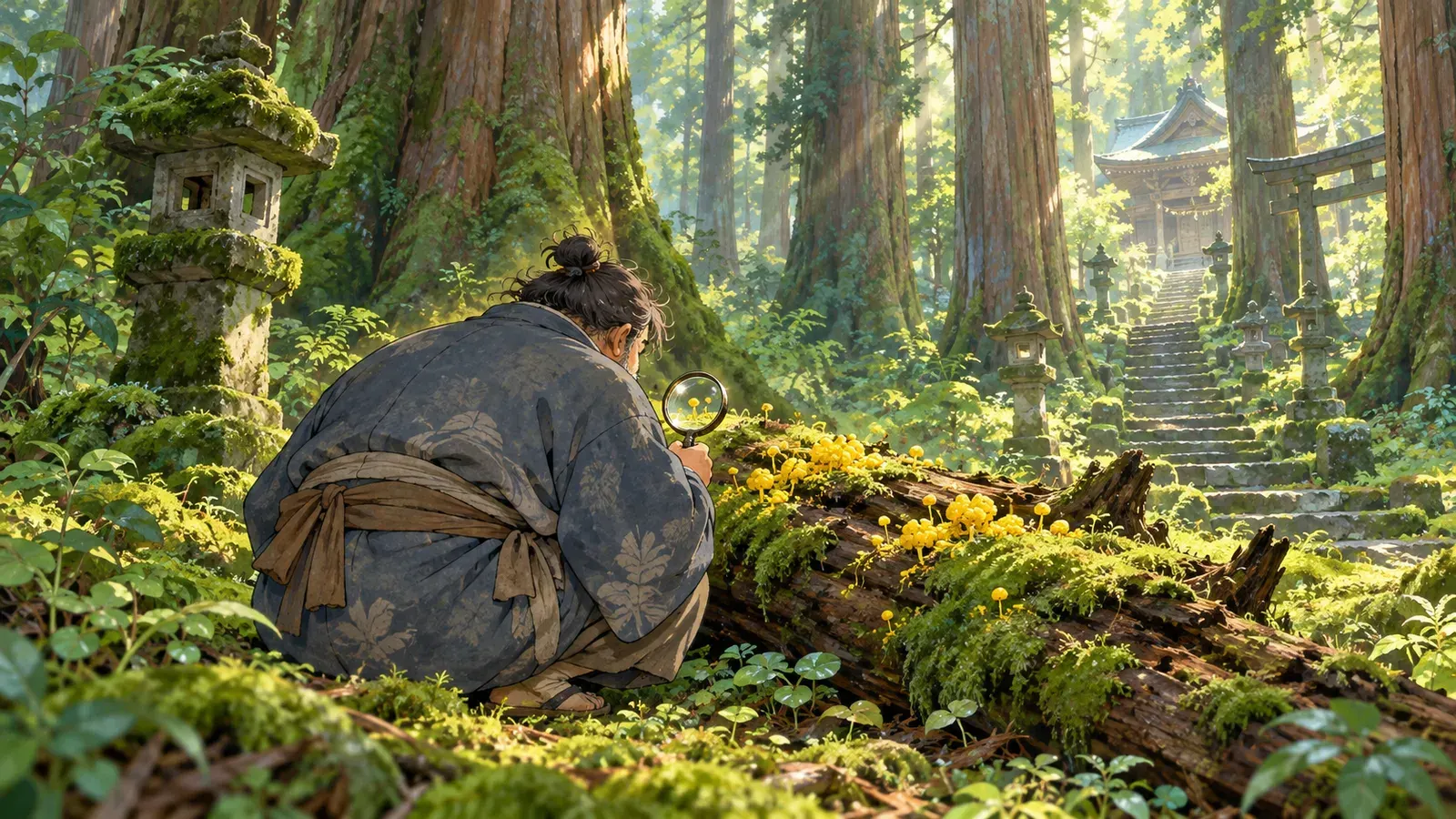
In 1900, he returned to Japan, and later he settled in Tanabe, a quiet town by the sea in Wakayama. There, he spent his days in the forests, collecting and studying slime molds, fungi, and plants. Slime molds are very strange. Sometimes they move and eat like animals, and sometimes they make spores like fungi. Kumagusu believed they could teach us something about the meaning of life itself.
1900年、熊楠は日本に帰り、やがて和歌山の海辺の静かな町、田辺に落ち着きました。そこで毎日のように森に入り、粘菌や菌類、植物を集めては研究しました。粘菌は、とても不思議な生き物です。あるときは動物のように動きまわってえさを食べ、あるときはきのこのように胞子を作ります。粘菌を調べれば、生命とはそもそも何なのかが見えてくるはずだ。熊楠はそう信じていました。
Then, in 1906, the government started a new policy. Small village shrines all over Japan were to be combined, so that each village would have only one. When a shrine was closed, the forest around it was often cut down and the wood was sold. These shrine forests had been protected for hundreds of years, and many rare plants and animals lived only there.
そんななか、1906年に国が新しい方針を打ち出しました。全国の村々にある小さな神社をまとめて、一つの村に神社を一つだけにするというのです(神社合祀)。神社がなくなると、その周りの森が切り倒され、木材として売られることがよくありました。神社の森は、何百年も守られてきた森です。そこにしかいない、珍しい動物や植物もたくさんいました。
Kumagusu was furious. He understood that everything in a forest is connected: the trees, the plants, the insects, the birds, the water, and the people who live nearby. If you destroy one part, you hurt the whole. He was one of the first people in Japan to use the word ecology to explain this idea. He wrote letters and articles, and he asked famous scholars for help.
熊楠は激しく怒りました。森の中では、すべてがつながっている。木も、草も、虫も、鳥も、水も、そして近くに住む人々も。どこか一つを壊せば、全体が傷つく。熊楠には、それが分かっていたのです。この考えを説明するのに「エコロジー」という言葉を使った、日本でもっとも早い人の一人が熊楠でした。熊楠は手紙や論文を書き、有名な学者たちにも助けを求めました。
In 1910, he became so angry that he forced his way into a meeting related to the policy, and he was put in jail for eighteen days. It is said that while he was in jail, he found a new slime mold there. When he was told he could go home, he wanted to stay a little longer to keep studying it.
1910年、熊楠は怒りのあまり、この方針にかかわる会合に押しかけ、18日間、牢に入れられました。その牢の中で、熊楠は新しい粘菌を見つけたといわれています。そして、もう帰ってよいと言われると、研究を続けたいから、もう少しここにいたい、と思ったそうです。
His long fight helped to change minds. In 1920, the policy was officially stopped. Some of the old forests and great trees he fought for still stand today. It is said that some of the trees along the Kumano pilgrimage roads, which are now a World Heritage site, were saved because of his efforts.
熊楠の長い戦いは、人々の考えを少しずつ変えていきました。1920年、この方針は正式に取りやめになりました。熊楠が守ろうとした古い森や大木の中には、今も残っているものがあります。今では世界遺産になっている熊野古道ぞいの木々の中にも、熊楠の働きのおかげで残ったものがあるといわれています。
In 1929, Emperor Showa, who was also a biologist, visited the Tanabe area. Kumagusu was invited to give a talk on board the emperor's ship. He presented the emperor with specimens of slime molds. Famously, he did not put them in a fine wooden box but in a large caramel box. The emperor never forgot this unusual scholar.
1929年、生物学者でもあった昭和天皇が、田辺のあたりを訪れました。熊楠は招かれて、天皇の乗る船の上で講義をしました。そして、粘菌の標本を天皇に献上しました。有名な話ですが、熊楠は標本を立派な木の箱ではなく、大きなキャラメルの箱に入れて差し上げたのです。天皇は、この風変わりな学者のことを、ずっと忘れませんでした。
Kumagusu died in 1941 in Tanabe. He never became a professor, and he did not care about fame or money. He simply followed his curiosity wherever it led him, from the stars in the night sky to the tiny slime molds on a rotten log.
熊楠は1941年、田辺で亡くなりました。教授になることもなく、名声にもお金にも興味を持ちませんでした。夜空の星から、腐った木の上の小さな粘菌まで、ただ好奇心のおもむくままに、どこまでも追いかけていったのです。
Today, people around the world talk about protecting ecosystems and the variety of life on earth. Kumagusu saw the importance of this more than a hundred years ago. His life shows that true learning does not need a classroom, and that a curious mind can see connections that others miss.
今、世界中の人が、生態系や、地球に生きる生き物の多様さを守ろうと話し合っています。熊楠は100年以上も前に、その大切さに気づいていました。本当の学びに、教室はいらない。好奇心を持って見れば、ほかの人が見逃すつながりが見えてくる。熊楠の一生は、そう教えてくれます。