This is a story told by a patient in a hospital for people with troubles of the mind. He is known as Patient Number Twenty-three. He is over thirty, but he looks younger. He will tell this story to anyone who visits him, and he always ends it the same way. I have tried to write it down just as he told it to me.
これは、心の病をかかえた人のための病院にいる、ある患者が語った話だ。その患者は「第二十三号」と呼ばれている。年は三十を過ぎているが、もっと若く見える。第二十三号は、たずねてくる人にはだれにでもこの話をし、いつも同じところで話を終える。わたしは、第二十三号がわたしに語ったとおりに、それを書きとめてみた。
Three years ago, in summer, I set out to climb Mount Hotaka, starting from Kamikochi. As you know, the mountains there are often covered in thick fog. That morning, the fog was so heavy that I could not see the path. I sat down on a rock by the river to eat my lunch and wait for it to clear.
三年前の夏、わたしは上高地から穂高山へ登ろうと出かけた。知ってのとおり、あのあたりの山はよく深い霧におおわれる。その朝は霧があまりに深くて、道が見えなかった。わたしは川のそばの岩に腰を下ろして弁当を食べ、霧が晴れるのを待つことにした。
Then I felt that someone was watching me. I turned around, and there, behind a tree, stood a kappa. A kappa, as everyone in Japan knows, is a creature from the old stories that lives in rivers. It was about one meter tall, with a beak like a bird, a shell on its back, and a round, flat dish on the top of its head. It looked at me with great surprise. I jumped up and chased it.
すると、だれかに見られているような気がした。ふり返ると、木のかげに河童が一匹立っていたのだ。河童というのは、日本人ならだれでも知っているとおり、昔話に出てくる、川に住む生きものだ。背の高さは一メートルほど。鳥のようなくちばしがあり、背中には甲羅、頭のてっぺんには丸くて平たい皿があった。河童はひどくおどろいたように、わたしを見ていた。わたしは飛び上がって、河童を追いかけた。
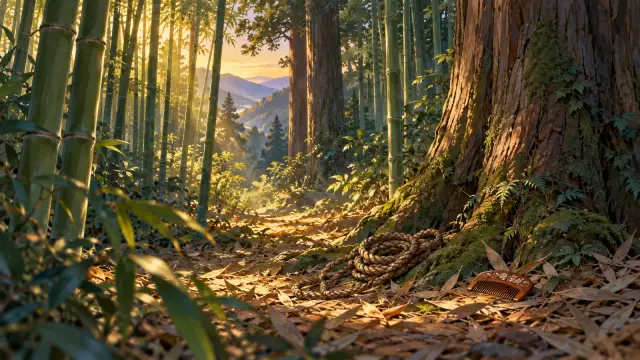
The kappa ran very fast through the tall bamboo grass. I ran after it for a long time. Then, suddenly, the ground disappeared under my feet. I fell into a deep, dark hole. I remember a flash of light in my head, and then nothing.
河童は背の高い笹の中を、ものすごい速さで走っていった。わたしは長いあいだ、そのあとを追いかけた。すると、いきなり足もとの地面が消えたのだ。わたしは深くて暗い穴の中へ落ちていった。頭の中で光がひらめいたのをおぼえているが、そのあとは何もわからない。
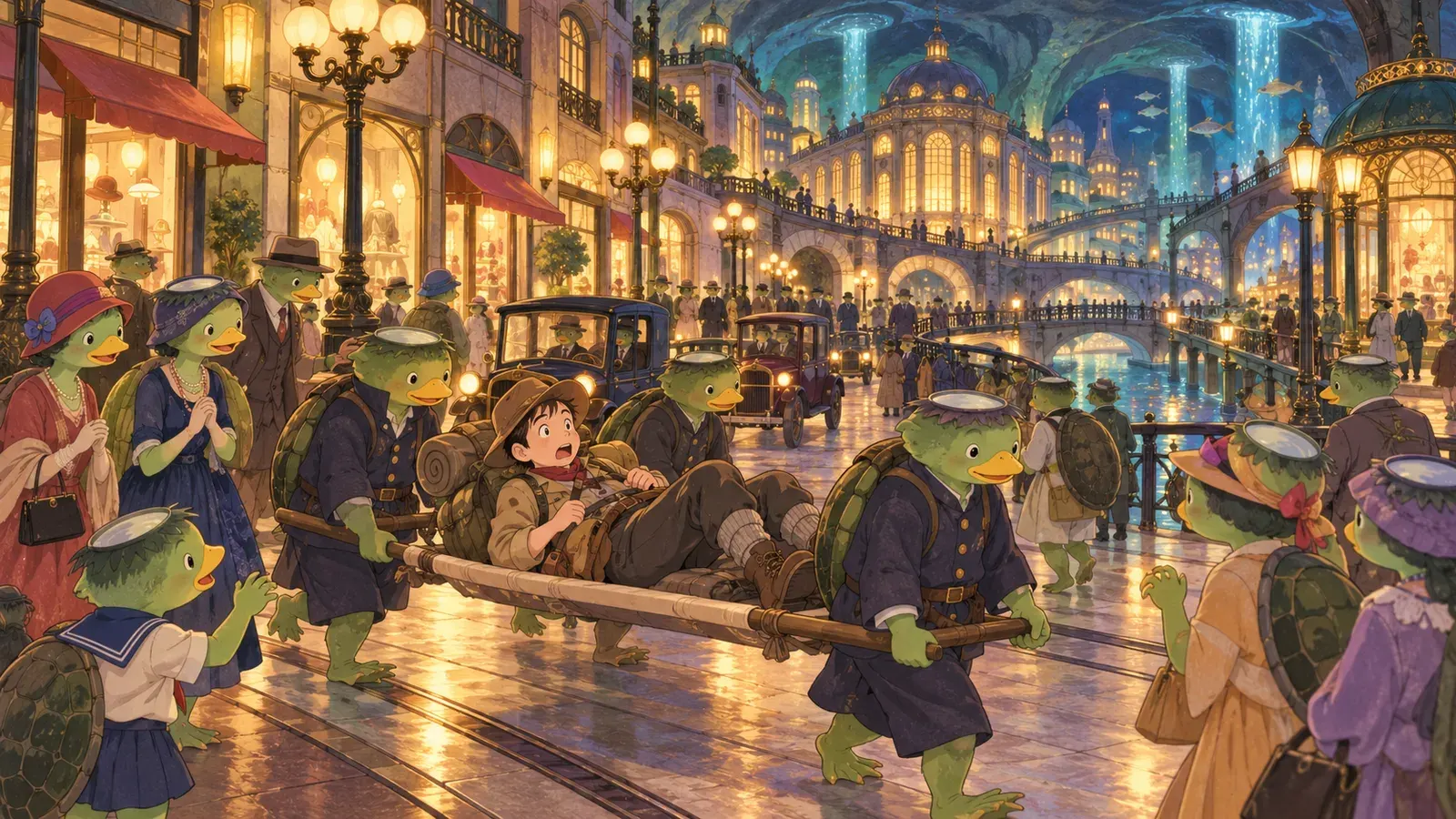
When I woke up, I was lying on my back, surrounded by a crowd of kappas. One of them, who wore glasses, was kneeling beside me and listening to my chest. He was Chack, a doctor. Another, who had first brought me there, was Bag, a fisherman. They put me on a stretcher and carried me through the streets of a large town. The streets looked just like the Ginza in Tokyo, with shops and cars and electric lights. I was in the country of the kappas.
目を覚ますと、わたしはあおむけに寝ていて、まわりを河童たちが大勢取り囲んでいた。そのうちの一匹、めがねをかけた河童が、わたしのそばにひざまずいて胸の音を聞いていた。医者のチャックだ。わたしを最初にそこへ運んできたもう一匹は、漁師のバッグだった。河童たちはわたしを担架に乗せ、大きな町の通りを運んでいった。通りには店や自動車や電灯があって、東京の銀座にそっくりだった。わたしは、河童の国に来ていたのだ。
I was given a small house and the special title of "protected resident." Kappas came to visit me every day, because a human was a very rare thing for them. Little by little, I learned their language and their customs. And the more I learned, the stranger they seemed to me.
わたしは小さな家をあたえられ、「特別保護住民」という身分をもらった。河童たちにとって人間はとてもめずらしいものだったので、毎日河童たちがわたしをたずねてきた。少しずつ、わたしは河童の言葉やならわしをおぼえた。そして、知れば知るほど、河童たちは奇妙に思えてきたのだ。
The skin of a kappa changes color to match its surroundings, just like a chameleon. In the green grass, a kappa becomes green. Next to a gray rock, it turns gray. But the strangest thing about kappas was not their bodies. It was the way they thought. Kappas laugh at the things that we humans take seriously, and they take seriously the things that we laugh at. When I talked to them about justice or humanity, they held their stomachs and laughed until they cried.
河童の皮膚は、カメレオンのように、まわりに合わせて色が変わる。緑の草の中では緑色になり、灰色の岩のそばでは灰色になるのだ。けれども、河童のいちばん奇妙なところは体ではなかった。ものの考え方だったのだ。河童は、わたしたち人間がまじめに考えることを笑い、わたしたちが笑うことをまじめに考えるのだ。わたしが正義や人道について話すと、河童たちは腹をかかえて、涙が出るほど笑いころげた。
Their way of being born was even stranger. One day, I visited Bag's house when his wife was about to have a baby. Bag put his mouth close to his wife's large belly, as if he were speaking on the telephone. Then he said in a loud voice, "Think carefully before you answer. Do you want to be born into this world, or not?"
河童の生まれ方は、さらに奇妙だった。ある日、バッグの奥さんに子どもが生まれそうだというので、わたしはバッグの家をたずねた。バッグは、まるで電話でもかけるように、奥さんの大きなおなかに口を近づけた。そして、大きな声で言った。「よく考えてから返事をしなさい。おまえはこの世界に生まれてきたいか、それともいやか」
A small voice answered from inside. "I don't want to be born. Life in this world looks terrible to me." Bag scratched his head and looked embarrassed. Doctor Chack, who was there, gave the mother some medicine. Her large belly slowly became small again, like a balloon losing its air. Everyone seemed to think this was perfectly natural.
中から、小さな声が答えた。「ぼくは生まれたくありません。この世界で生きていくなんて、ひどいことに思えます」バッグは頭をかいて、困ったような顔をした。そこにいた医者のチャックが、母親に何か薬をあたえた。すると、大きなおなかは空気のぬけていく風船のように、だんだん小さくなっていった。だれもがそれを、ごくあたりまえのことだと思っているようだった。
I made many friends in that country. There was Tok, a poet with long hair, who believed in free love and never married. There was Mag, a philosopher, who spent his days in a dark room writing a book called "The Words of a Fool." There was Craback, a great musician. And there was Gael, the president of a glass company, a fat and rich kappa who was very proud of his money.
わたしはあの国で、たくさんの友だちをつくった。長い髪をした詩人のトックは、自由恋愛を信じていて、決して結婚しなかった。哲学者のマッグは、うす暗い部屋で一日じゅう『阿呆の言葉』という本を書いていた。偉大な音楽家のクラバックもいた。それから、ガラス会社の社長のゲエルもいた。太った金持ちの河童で、自分の財産を大いに自慢にしていた。
Love in the kappa country was also upside down. There, it was the female kappas who chased the males. Once I saw a poor young male kappa running down the street as fast as he could, with a female kappa running after him and shouting his name. Her mother and father were running behind her, cheering her on. At last she caught him, and he fell into her arms, completely exhausted. Tok told me that this happened every day. "That is why I will never marry," he said, shaking his long hair.
河童の国では、恋もさかさまだった。あの国では、雌の河童のほうが雄の河童を追いかけるのだ。あるとき、かわいそうな若い雄の河童が、全速力で通りを逃げていくのを見た。そのうしろを、雌の河童が雄の名前を呼びながら追いかけていた。さらにそのうしろでは、雌の河童の母親と父親が走りながら、娘をはげましていた。とうとう雌の河童は雄の河童をつかまえ、雄の河童はすっかりへとへとになって、その腕の中に倒れこんだ。トックの話では、こんなことは毎日起こっているそうだ。「だからぼくは決して結婚しないのさ」と、トックは長い髪をふりながら言った。
Mag the philosopher was the quietest of my friends. He lived alone and thought all day long. His book was full of short, strange sayings. Many of them seemed foolish when I first read them, but when I thought about them later, they often seemed wise. Mag himself never laughed. "A kappa who thinks too much is never happy," he once told me, "but a kappa who never thinks is not really alive."
哲学者のマッグは、わたしの友だちの中でいちばん無口だった。ひとりで暮らし、一日じゅう考えごとをしていた。マッグの本は、短くて奇妙な言葉でいっぱいだった。初めて読むと、ばかげて見えるものがたくさんあった。けれども、あとで考えてみると、かしこい言葉に思えることがよくあったのだ。マッグ自身は、決して笑わなかった。「考えすぎる河童は決して幸せになれない」と、マッグはあるとき言った。「だが、まったく考えない河童は、本当に生きているとは言えないのだ」
One night, I went with Tok to a concert of Craback's music. The hall was full. In the middle of a beautiful piece, a police officer at the back of the hall suddenly stood up and shouted, "Stop playing!" Craback stopped. The audience became angry, and they shouted and threw bottles at the officer. Tok explained to me calmly. "Anyone can understand what a painting or a book is saying, so in this country they are never banned. But music is different. A police officer can never be sure what a piece of music means. So, just to be safe, they stop it."
ある晩、わたしはトックと一緒に、クラバックの音楽会に行った。会場は満員だった。美しい曲の途中で、会場のうしろにいた警官がとつぜん立ち上がって、「演奏中止!」とさけんだ。クラバックは演奏をやめた。聴衆は怒り出し、警官に向かってどなったり、びんを投げつけたりした。トックは落ち着いて、わたしに説明してくれた。「絵や本が何を言っているかは、だれにでもわかる。だから、この国では決して禁止されないんだ。でも、音楽はちがう。警官には、ある曲がどういう意味なのか、決してはっきりとはわからない。だから、念のために止めてしまうのさ」
One day, Gael explained to me how the kappas' factories worked. "These days, machines can do almost everything," he said. "So every month, about forty or fifty thousand workers lose their jobs. But we don't have any problems with them." "What happens to them?" I asked. "We have a law," said Gael, smoking a cigar. "Workers who lose their jobs are killed and made into meat. Then we eat them. It is much kinder than letting them starve, don't you think?"
ある日、ゲエルが河童の国の工場のしくみを説明してくれた。「近ごろは、機械がほとんど何でもしてくれますからね」と、ゲエルは言った。「それで毎月、四、五万匹の職工が仕事を失うのです。でも、わたしたちは少しも困りません」「その職工たちはどうなるのですか」と、わたしはたずねた。「法律があるのです」と、ゲエルは葉巻をふかしながら答えた。「仕事を失った職工は、殺して肉にするのです。それを、みんなで食べるのですよ。飢え死にさせるより、ずっと親切だと思いませんか」
I could not believe my ears. I felt sick, and I could not eat any more of my dinner. But Gael only laughed. "In your country, too, the poor are often left to suffer and die. Our way is simply more honest," he said. I could not think of an answer. Was he really so different from the rich people of my own country?
わたしは、自分の耳が信じられなかった。気分が悪くなり、夕食をそれ以上食べられなかった。けれども、ゲエルは笑うばかりだった。「あなたの国だって、貧しい者はしばしば苦しんだまま見捨てられて、死んでいくでしょう。わたしたちのやり方のほうが、正直なだけですよ」と、ゲエルは言った。わたしには、返す言葉が思いつかなかった。ゲエルは本当に、わたしの国の金持ちたちとそれほどちがっていただろうか。
Over time, I grew tired of the kappas' country. Their laws, their thinking and their laughter began to frighten me. I wanted to go back to the human world. Bag told me about a very old kappa who lived alone at the edge of the town. People said he knew the way back.
時がたつにつれ、わたしは河童の国にうんざりしてきた。河童たちの法律も、考え方も、笑い方も、わたしにはおそろしくなってきたのだ。わたしは人間の世界に帰りたくなった。バッグが、町のはずれにひとりで住んでいる、とても年をとった河童のことを教えてくれた。その河童なら帰り道を知っている、という話だった。
When I found his small house, I was surprised. The kappa inside looked like a child of twelve or thirteen. "I am over a hundred years old," he told me with a smile. "I was born with white hair, and I have grown younger ever since. That is why I am so happy. I have seen old age first, and now I am enjoying my youth." He showed me a rope ladder that hung down from a hole in the ceiling. "If you climb that, you will go back to your world. But you may regret it."
その河童の小さな家を見つけたとき、わたしはおどろいた。中にいた河童は、十二、三歳の子どものように見えたのだ。「わたしは百歳を過ぎているのですよ」と、その河童はほほえんで言った。「わたしは白髪頭で生まれて、それからずっと若返ってきたのです。だから、わたしはこんなに幸せなのです。先に年寄りの時代を見て、今は若い時代を楽しんでいるのですからね」河童は、天井の穴からぶら下がっている縄ばしごを見せてくれた。「あれを登れば、あなたの世界にもどれます。でも、後悔するかもしれませんよ」
I did not listen to his warning. I climbed up the ladder, and at last I came out into the human world again. But I soon found that he had been right. After living with the kappas, I could not stand the smell of human beings. Their skin, their faces and their talk all seemed ugly and strange to me. I could not work. My business failed. Every day, I wanted to go back to the country of the kappas.
わたしは、その忠告を聞かなかった。縄ばしごを登って、とうとうわたしは人間の世界にまた出てきた。けれども、まもなくあの河童の言ったとおりだとわかった。河童たちと暮らしたあとでは、わたしは人間のにおいにがまんできなくなっていたのだ。人間の皮膚も、顔も、話しぶりも、すべて醜く奇妙に思えた。わたしは働けなくなった。商売も失敗した。毎日毎日、河童の国に帰りたいと思った。
One day, I decided to go back. I left home and went to the station to catch a train to the mountains. But some police officers caught me there and brought me to this hospital. They say that I am sick. But I know what I saw.
ある日、わたしは帰ろうと決心した。家を出て、山へ行く汽車に乗るために駅へ行った。ところが、そこで警官たちにつかまって、この病院に連れてこられたのだ。みんなは、わたしが病気だと言う。でも、自分がこの目で何を見たのか、わたしはちゃんと知っているのだ。
Even here, my kappa friends come to see me at night. Doctor Chack has come several times to check on my health. Bag the fisherman has come to say hello. Gael and Mag have come to talk with me in the moonlight.
ここにいても、河童の友だちは夜になると、わたしに会いに来てくれる。医者のチャックは何度もやって来て、わたしの体を診てくれた。漁師のバッグも、あいさつに来てくれた。ゲエルやマッグも、月の光の中でわたしと話をしに来てくれた。
This is the point where Patient Number Twenty-three always ends his story. Then he smiles happily and points to the empty table beside his bed. "Look," he says. "A kappa friend brought me these beautiful black lilies last night. Aren't they lovely?"
第二十三号は、いつもここで話を終える。それからうれしそうにほほえんで、ベッドのそばの何もないテーブルを指さすのだ。「ごらんなさい」と、第二十三号は言う。「ゆうべ、河童の友だちがこの美しい黒百合を持ってきてくれたのです。きれいでしょう?」
But of course, there is nothing at all on the table.
けれども、もちろん、テーブルの上には何ひとつないのだ。