 約15分
 全訳つき
 まずは原文をチェック
 音声は準備中です。もうしばらくお待ちください。
 お道具箱
 読書ラウンジ
This is the story of an old woman.
これは、ある老女の話である。
It was around November that we promised to sell my hina dolls to an American in Yokohama. Hina dolls are the beautiful dolls that Japanese families set out for the Girls' Festival in March. Our family shop was called Kinokuniya, and for generations we had handled money for the great lords. So my dolls were very fine. The empress doll's crown had real coral in it, and the emperor doll's belt was embroidered with our family crests.
ひな人形を横浜のアメリカ人に売る約束ができたのは、十一月ごろのことでございます。ひな人形というのは、三月のひな祭りに日本の家で飾る、美しい人形のことです。わたしの家は紀の国屋という店で、代々、大名がたのお金の御用をつとめておりました。ですから、わたしのひな人形も、たいそう見事なものでございました。女びなの冠には本物のさんごが入っておりましたし、男びなの帯には、家の紋が刺しゅうしてございました。
Since we were ready to sell even those, you can guess how poor my father had become. After the fall of the Tokugawa government, the lords never paid back most of the money they had borrowed from us. On top of that, our house burned down more than once, and all of my father's new businesses failed. By then, we had already sold almost everything of value just to live.
そんなひなまで売ろうというのですから、父がどれほど苦しかったか、おわかりになるでしょう。徳川さまの世が終わってから、大名がたは、わたしどもから借りたお金を、ほとんど返してくださいませんでした。そのうえ、家は何度も火事にあい、父の始めた新しい商売も、みな失敗に終わりました。そのころにはもう、目ぼしい品は、暮らしのためにあらかた売り払ってしまっていたのでございます。
It was Marusa, an antique dealer, who told my father to sell the dolls. He was a bald old man with a funny tattoo right in the middle of his head. But my father felt sorry for me, a girl of only fifteen, and he did not want to sell them.
ひなを売ったらと父に勧めたのは、丸佐という骨董屋でした。頭のまん中に、おかしな入れ墨のある、はげ頭のおじいさんでございます。けれども父は、まだ十五のわたしをかわいそうに思ったのでしょう、ひなを手放したがりませんでした。
It was my brother Eikichi who made him sell them in the end. He was eighteen then, with a hot temper. He was a modern young man who loved politics and never put down his English reader. He said that dolls were old-fashioned and useless. But if we sold them, we could get through the end of the year, so even my old-fashioned mother could not say much against it. And me? I was a tomboy, and I was not as sad as you might think. My father had promised to buy me a purple satin obi.
とうとう売らせたのは、兄の英吉でございます。兄はそのころ十八で、かんしゃく持ちでした。政治が好きで、英語の読本を手から離したことのない、新しがりの若者でございます。ひななんて古くさくて役に立たない、と兄は申しました。けれども、ひなを売れば年が越せるのですから、昔気質の母も、あまり強いことは言えなかったのでしょう。わたしですか? わたしはおてんばでしたから、思ったほどは悲しくもございませんでした。ひなを売ったら紫じゅすの帯を買ってやると、父が約束してくれておりましたので。
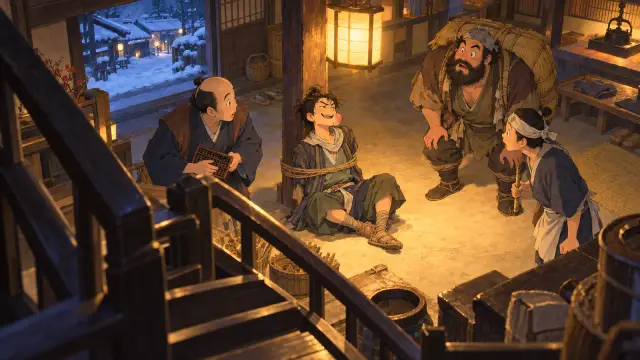
After our third fire, we lived in our storehouse, a thick-walled building that had not burned, and used a little shed built against it as our shop. The night after the promise was made, Marusa came and gave my father half of the price, and I brought them tea.
三度目の火事のあと、わたしどもは焼け残った土蔵に住み、それにさしかけて建てた小屋を店にしておりました。約束のできた次の晩、丸佐がやって来て、父に代金の半分を渡しました。わたしは二人にお茶を出しました。
Then I went back into the storehouse. Against the wall were piled thirty or so wooden boxes: the doll boxes, ready to be handed over at any time. In the dim light of a paper lantern, my mother was sewing, and my brother was studying his English book. But when I looked at my mother, I saw that her eyes were full of tears.
それから、わたしは土蔵へもどりました。壁ぎわには、三十ばかりの箱が積んでありました。いつでも引き渡せるようにした、ひなの箱でございます。うす暗い行灯の明かりで、母は縫い物をし、兄は英語の本を調べておりました。ところが、ふと母の顔を見ると、母は目にいっぱい涙をためていたのでございます。
I sat down by my brother without looking at her. He glanced at my mother and me, gave a strange laugh, and went back to his English book. I had never hated him so much. I thought he was making fun of our mother, so I hit him on the back as hard as I could. He slapped me on the side of my head. "You stupid girl!"
わたしは母を見ないようにして、兄のそばに座りました。兄は母とわたしを見比べると、妙な笑い方をして、また英語の本を読みはじめました。わたしはこのときほど、兄を憎らしいと思ったことはございません。お母さんをばかにしている、と思ったのです。わたしは力いっぱい、兄の背中をぶってやりました。すると兄は、わたしの横っつらをぴしゃりとたたきました。「わからず屋!」
Of course I burst into tears, and my brother and mother argued in low, trembling voices. But when my father came in, my brother fell silent at once. Nobody frightened us more than our quiet father. That night it was decided that the dolls would leave at the end of the month. I believe the price was thirty yen, which was a lot of money in those days.
わたしはもちろん泣き出しました。兄と母は、ふるえる低い声で言い合いをいたしました。けれども父が入ってくると、兄はたちまち黙ってしまいました。無口な父ほど、わたしたちにこわいものはなかったのでございます。その晩、ひなは月末に引き渡すことに決まりました。売り値は、たしか三十円だったと思います。それでも当時としては、ずいぶん高いお金でございました。
As the day came closer, I began to feel sad about parting with my dolls after all. I only wanted to set them out and look at them once more before they went to strangers: the emperor and empress, the five musicians, the cherry and orange trees, the little lacquered furniture. But my stubborn father would not allow it. "Once we have taken the money, they belong to someone else. You must not touch other people's things."
その日が近づくにつれて、わたしはやはり、ひなと別れるのがつらくなってまいりました。ただ、人手に渡る前に、もう一度だけ飾って、よく見ておきたかったのです。内裏びな、五人ばやし、左近の桜、右近の橘、小さな蒔絵の道具。けれども、がんこな父は許してくれません。「一度お金を受け取ったからには、人さまのものだ。人さまのものは、いじるもんじゃない。」
Near the end of the month, on a very windy day, my mother became ill. She had a small boil on her lower lip, and by noon her lip was swollen up like a red sweet potato, and her eyes shone with fever. Even my calm father stood speechless at the sight of her. "Eikichi! Go and get Dr. Honma!" he cried. But my brother had already run out into the wind.
月末も近い、ひどく風の強い日のことでございます。母が具合を悪くいたしました。下くちびるに小さなはれものができていたのですが、お昼ごろには、そのくちびるが赤いさつまいものようにはれあがり、目は熱でぎらぎら光っておりました。ふだんは物に動じない父でさえ、母の顔を見たときには、しばらく口もきけずにおりました。「英吉! 本間さんを呼んで来い!」と父は叫びました。けれども兄は、もうそのときには、大風の中へ飛び出していたのでございます。
It was a dangerous boil on the face. An operation could have cured it, but in those days, that was out of the question for us. The doctor could only give her herbal medicine and put leeches on her to draw out the bad blood. Every day, my father made the medicine by her pillow, and my brother went out to buy leeches. And I secretly went to the little Inari shrine nearby to pray for her a hundred times. For a while, nobody even looked at the doll boxes.
それは、顔にできる、たちの悪いはれものでした。手術さえできれば、恐ろしい病気ではなかったのでしょう。けれども当時のわたしどもには、手術どころの話ではございません。お医者さまにできるのは、せんじ薬を飲ませたり、ヒルに悪い血を吸わせたりすることだけでした。父は毎日、枕もとで薬をせんじ、兄は毎日、ヒルを買いに出かけました。わたしは兄に知られないように、近所のお稲荷さまへ、お百度を踏みに通いました。しばらくは、誰もひなの箱に目をやる者はおりませんでした。
Then came the twenty-ninth of November, the day before the dolls were to leave. I wanted so badly to open the boxes one last time. But my mother was worse than ever, and I had no courage to talk about dolls. In the afternoon, when she fell asleep, I went quietly to the shop. "Father, please, just this once..." But he would not even listen. "Eikichi! Go to Marusa's today and bring back the lamp I asked him to buy."
そして十一月二十九日、いよいよひなと別れる前の日になりました。わたしはどうしても、もう一度箱を開けてみたくてたまりません。けれども母の病気はいっそう重くなっていて、ひなのことなど、とても口に出す勇気はございませんでした。午後になって母が眠ると、わたしはそっと店へ出ていきました。「ねえ、お父さん、一生のお願いだから……」けれども父は、相手にもしてくれません。「英吉! 今日のうちに丸佐へ行って、頼んでおいたランプを持って来てくれ。」
"Be quiet!" my father shouted when I begged again. I went back inside, very discouraged. My mother had woken up. "You asked your father for something unreasonable again, didn't you? I am sick like this, so you must be good." I began to cry. "Mother, I don't want anything. I only want... before we sell the dolls..."
もう一度せがむと、父は「うるさい!」とわたしをしかりつけました。わたしはすっかりしょげて、奥へもどりました。母は目をさましておりました。「また何か、お父さんに無理を言ったのだろう? わたしはこの通りの体だから、おとなしくしなけりゃいけませんよ。」わたしは泣き出してしまいました。「お母さん、わたし、何も欲しいものはないの。ただ……お雛さまを売る前にね……」
Then my brother came in behind me. "You stupid girl! Is it the dolls again? Who cares about some dolls?" "They're not your dolls!" I shouted back. He grabbed my collar and pulled me down. But my mother raised her head from the pillow, gasping, and scolded him with tears in her eyes. "It's not only Otsuru you hate. You hate me, don't you? Otherwise, why would you want to sell the dolls while I'm sick, and bully poor Otsuru?"
すると、いつのまにか兄がうしろに立っておりました。「わからず屋! またお雛さまのことか。たかがお雛さまぐらい!」「兄さんのお雛さまじゃないでしょう!」と、わたしも言い返しました。兄はわたしの襟首をつかんで、引き倒しました。けれども母が、枕から頭をもたげて、あえぎあえぎ、涙をためて兄をしかりました。「お前が憎いのは、お鶴だけじゃないだろう? お前はわたしが憎いのだろう? そうでなけりゃ、わたしが病気だというのに、お雛さまを売りたがったり、罪もないお鶴をいじめたりするはずがないじゃないか。」
"Mother!" my brother cried. He stood by her pillow and hid his face in his arm. My brother never shed a tear even when our parents died. Later, through many years in politics, he never showed any weakness, even until he was taken to a mental hospital. But at that moment, he began to sob. My mother gave a long sigh and laid her head back on the pillow without another word.
「お母さん!」兄はそう叫ぶと、枕もとに突っ立ったまま、腕で顔をかくしました。兄は、のちに父と母が死んだときにも、涙ひとつこぼさなかった人です。長いあいだ政治に奔走し、精神病院に送られるまで、一度も弱みを見せたことのない人でした。その兄が、このときばかりは、すすり泣きを始めたのでございます。母は長いため息をついて、それきり何も言わずに、また枕に頭をつけました。
An hour later, Tokuzo, a young rickshaw puller who often came to our shop, offered me a ride through the town. In those days, a rickshaw ride was as exciting for children as a car ride is now. My mother smiled with her eyes closed and said, "How nice," so I jumped in.
一時間ほどたって、店によく出入りしていた若い車夫の徳蔵が、お嬢さんを人力車にお乗せして、町をひと回りさせてほしいと言ってきました。当時の子どもにとって、人力車に乗るのは、今で言えば自動車に乗せてもらうくらいうれしいことでございました。母が目を閉じたまま、ほほえんで「上等だね」と言ってくれたので、わたしは人力車に飛び乗りました。
On the way home, we met my brother carrying a new lamp. He gave me the lamp to take home, and I took it without a word, because I was still angry. Then he put his hand on the rickshaw and said quietly, "Otsuru, don't talk to Father about the dolls again. He won't let you look at them, and it's not only because he has taken the money. If we look at them, we will all find it harder to let them go. Do you understand?"
帰り道、新しいランプをさげた兄に出会いました。兄はランプをわたしに渡して、先に持って帰ってくれと言いました。わたしはまだ腹が立っておりましたので、黙って受け取りました。すると兄は人力車に手をかけて、小声でこう申しました。「お鶴、またお父さんにお雛さまのことなんぞ言うんじゃないぞ。お父さんが見ちゃいけないと言うのは、お金を受け取ったからばかりじゃない。見れば、みんな手放すのがつらくなるからだ。わかったか。」
I heard a kindness in his voice that I had never heard before. But then, in his usual way, he added roughly, "Well, say it if you want. But you'll get hurt."
兄の声には、いつにない優しさがこもっておりました。けれども兄は、すぐまたいつもの調子で、乱暴にこうつけ加えたのです。「そりゃあ、言いたけりゃ言ってもいい。そのかわり、痛い目にあうと思え。」
That night, dinner in the storehouse seemed brighter than usual, because the new lamp was shining instead of the dim old one. "It's bright. It's like day," my father said happily. "It's almost too bright," said my mother, with a look almost like worry. "Everything seems too bright at first," said my brother cheerfully. "Lamps, Western learning, everything. But you get used to it." My mother ate nothing that night, but now and then she praised the bright lamp, with something like a smile on her swollen lips.
その晩、土蔵での夕飯は、いつもより華やかな気がいたしました。うす暗い古い明かりのかわりに、新しいランプが輝いていたからでございます。「明るいな。昼のようだな」と、父は満足そうに申しました。「まぶしすぎるくらいですね」と言った母の顔には、ほとんど不安に近い色が浮かんでおりました。「何でも初めはまぶしすぎるんですよ」と、兄ははしゃいで言いました。「ランプでも、西洋の学問でも。でも、慣れてしまえば同じことです。」母はその晩、何も口にしませんでした。それでも時々、ランプの明るいことをほめておりました。あのはれあがったくちびるに、ほほえみらしいものさえ浮かべながら。
After everyone went to bed, I could not sleep. Tomorrow my dolls would be gone forever. Should I take them out alone while everyone was asleep? Should I hide one of them somewhere? I even wished there would be another fire, so that the dolls would burn before they went to strangers. But I was still a child, and soon I fell asleep.
みんなが寝てしまっても、わたしはなかなか寝つけませんでした。明日になれば、ひなはもう永久に行ってしまうのです。みんなが寝ているうちに、そっと一人で出してみようか。それとも、あの中の一つだけ、どこかへ隠しておこうか。今夜もう一度火事があればいい、そうすれば人手に渡る前に、ひなも焼けてしまう。そんなことまで考えました。けれども、そこはまだ子どもでございます。いつのまにか眠ってしまいました。
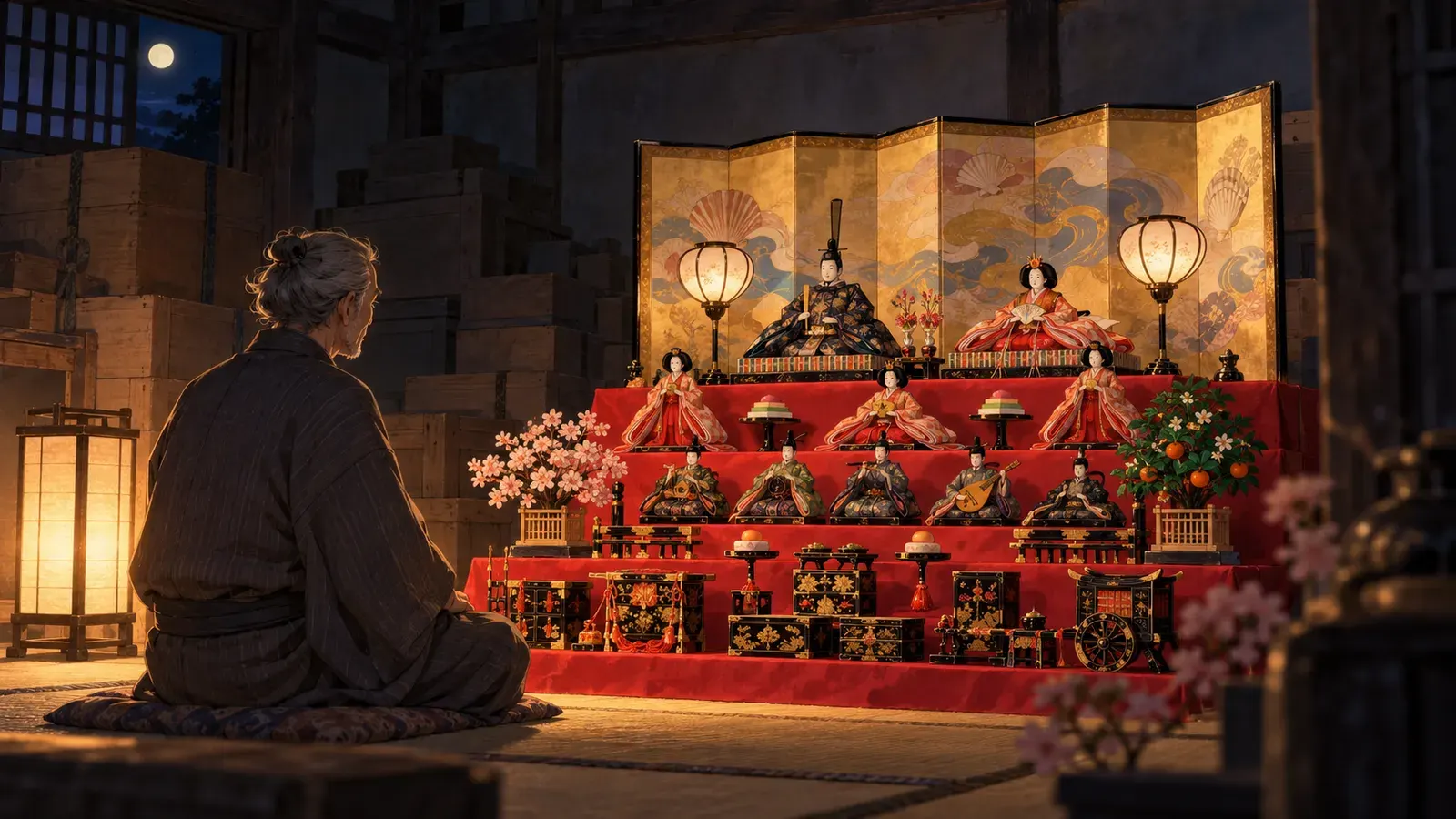
I do not know how long I slept. Suddenly I woke up and heard someone moving in the storehouse, which was lit by the dim paper lantern. By my pillow sat my father alone, in his nightclothes, with the side of his face toward me. My father! And in front of him, my dolls were set out, the dolls I had not seen since the last festival.
どのくらい眠ったのでしょうか。ふと目がさめると、うす暗い行灯をともした土蔵の中で、誰かが動いているような物音がいたします。見ると、わたしの枕もとに、寝間着のままの父が一人、こちらに横顔を向けて座っておりました。父が! そして父の前には、わたしのひなが並べてあったのでございます。この前のお節句から、一度も見ていなかったひなが。
I thought I was dreaming. Hardly breathing, I watched. In the faint light of the lantern, I saw the emperor doll holding his ivory baton, the empress doll with jewels hanging from her crown, the orange tree and the cherry tree, the court ladies, the screen painted with shells, the colorful balls of thread, and my father's face in profile...
夢かと思いました。わたしはほとんど息もつかずに、じっと見守っておりました。おぼつかない行灯の光の中に、象牙の笏をかまえた男びなを、冠から玉飾りを垂らした女びなを、右近の橘を、左近の桜を、官女たちを、貝づくしのびょうぶを、色糸の手まりを、そうしてまた父の横顔を……。
Was it really a dream? Did I want to see the dolls so badly that I made up a vision without knowing it? Even now, I sometimes cannot say whether it was real. But I did see my old father that night, alone, looking at the dolls. That much is certain. So even if it was a dream, I have no regrets.
あれは本当に夢だったのでしょうか。ひなを見たいと思うあまり、知らず知らずのうちに作り出した幻ではなかったのでしょうか。わたしは今でも、本当だったのかどうか、自分でも返事に困ることがございます。けれどもあの夜ふけ、ひとりでひなをながめている年老いた父を、わたしは見たのです。これだけは確かでございます。ですから、たとえ夢であったとしても、わたしは少しも悔やみはいたしません。
With my own eyes, I saw a father who was no different from me. A father who was weak and soft... and yet so dignified.
わたしは目のあたりに、わたしと少しも変わらない父を見たのでございます。弱くて、情にもろい……そのくせ、おごそかな父を。
The author began writing this story, "The Hina Dolls," several years ago. He has finished it now partly because, a few days ago, in the drawing room of an Englishman in Yokohama, he saw a little red-haired girl playing with the head of an old hina doll. The dolls in this story, too, may now be lying in a toy box with lead soldiers and rubber dolls, suffering the same sad fate.
作者がこの『雛』の話を書きかけたのは、何年か前のことである。それを今書き上げたのは、数日前、横浜のあるイギリス人の客間で、古いひなの首をおもちゃにしている赤い髪の少女に出会ったからでもある。この話に出てくるひなも、今は鉛の兵隊やゴムの人形と一緒におもちゃ箱にころがって、同じ憂き目を見ているのかもしれない。
 3段落目に「how poor my father had become」(父がどれほど貧しくなったか)とあります。人形が壊れたのではありません。

 原田英語の究極の英単語帳(CEFR-J 6,868語)
 聞くだけモードで、文字を見ずに内容がわかるか試す。
 1文リピートで音読・シャドーイングも。

 名作文学