


 約15分
 全訳つき
 まずは原文をチェック
 音声は準備中です。もうしばらくお待ちください。
 お道具箱
 読書ラウンジ
One evening near the end of the year, I was walking with a friend, a critic, under the bare willow trees toward Kanda Bridge. Both of us were gloomy and hardly spoke. At the Otemachi streetcar stop, my friend glanced at the people waiting in the cold. Suddenly he shivered and murmured, "That reminds me of Mr. Mori."
年の暮れのある夕方、私は友人の批評家と二人で、葉の落ちた柳の並木の下を、神田橋のほうへ歩いていた。二人とも気が沈んでいて、ほとんど口をきかなかった。大手町の停留所で、友人は、寒そうに電車を待つ人々をちらりと見た。そして急に身ぶるいを一つすると、ひとりごとのようにつぶやいた。「毛利先生のことを思い出す。」
"Who is Mr. Mori?" "A teacher at my middle school. Haven't I told you about him?" Instead of answering, I silently pulled down the brim of my hat. This is the story he told me as we walked.
「毛利先生って、誰だい。」「僕の中学の先生さ。まだ君には話したことがなかったかな。」私は返事をするかわりに、黙って帽子のつばを下げた。これから書くのは、そのとき友人が歩きながら話してくれた話である。
About ten years ago, when I was in the third year of middle school, our young English teacher died suddenly during the winter holidays. So the school asked an old man named Mr. Mori to take his classes for a while.
十年ほど前、僕が中学の三年生だったときのことだ。英語を教えていた若い先生が、冬休みの間に急に亡くなってしまった。そこで学校は、毛利先生という老人に、しばらくその授業を受け持ってもらうことにした。
I can still see Mr. Mori clearly as he came in on his first day. He was very short, and his bald head shone like an ostrich egg. He wore an old morning coat, so faded that you almost forgot it had once been black. On his dirty collar was a bright purple necktie, spread out like the wings of a moth. No wonder we could hardly stop laughing.
最初の日、教室に入ってきた毛利先生の姿は、今でもはっきりと目に浮かぶ。先生はひどく背が低く、はげ頭はダチョウの卵のように光っていた。着ているのは古いモーニングで、もとは黒かったことを忘れてしまいそうなほど色あせている。うす汚れた襟には、派手な紫のネクタイが、翼を広げた蛾のように結ばれていた。僕たちが笑いをこらえきれなかったのも、無理はない。
But Mr. Mori climbed onto the platform calmly, smiled kindly with his pale round face, and called out in a high, sharp voice, "Gentlemen!" No teacher had ever called us "gentlemen" before. We waited for a great speech. But Mr. Mori only looked around the room and said nothing. His mouth twitched nervously, and in his gentle eyes, like the eyes of a farm animal, there was a restless light, as if he wanted to beg us for something.
ところが毛利先生は、悠然と教壇に上がると、血色の悪い丸顔に人のよさそうな笑みを浮かべ、かん高い声で「諸君」と呼びかけた。それまで僕たちを「諸君」と呼んだ先生は、一人もいなかった。僕たちは、何か大演説が始まるのだろうと待ちかまえた。しかし毛利先生は、教室を見回したまま、何も言わない。口もとが神経質にぴくぴく動き、家畜のようにおとなしい目の中には、落ち着かない光がゆれていた。まるで、僕たちに何かを哀願したがっているかのようだった。
"Gentlemen," he said again. "From now on, I will teach you the Choice Reader." Then he sat down suddenly, like a spring that had snapped. His English pronunciation was clear, and he seemed proud of it.
「諸君」と、先生はもう一度言った。「これから私が、諸君にチョイス・リーダーを教えることになりました。」そして、ばねがはずれたように、いきなり椅子に腰を下ろしてしまった。先生の英語の発音ははっきりしていて、先生自身もそれが自慢らしかった。
But when he began to translate into Japanese, we started laughing. He hardly seemed to know any Japanese words, or at least he could not remember them. "So Robinson Crusoe decided to keep... that strange animal, you know... the one with the red face... What? Monkey? Yes, yes, a monkey."
ところが、先生が日本語に訳しはじめると、僕たちは笑い出した。先生は日本語をほとんど知らないようだった。少なくとも、とっさには思い出せないらしい。「そこでロビンソン・クルーソーは、飼うことにしました。あの妙な動物を、ほら……顔の赤い……何、猿? そうそう、その猿です。」
Every time he got stuck, he held his bald head in both hands and put his face down on the desk in shame. His small body seemed to shrink like a balloon losing its air. Our laughter grew bolder, until even the front row laughed openly. Even now, when I remember those cruel voices, I want to cover my ears.
つかえるたびに、先生ははげ頭を両手でかかえ、面目なさそうに机に顔を伏せた。小さな体が、空気の抜けたゴム風船のように縮んで見えた。僕たちの笑い声はだんだん大胆になり、とうとう一番前の席からも、おおっぴらに笑い声が上がるようになった。今でもあの意地の悪い笑い声を思い出すと、耳をふさぎたくなる。
Still, Mr. Mori bravely went on until the bugle sounded for the break. Then he walked out calmly, as if he had forgotten the terrible battle. Behind him came a storm of laughter. And I, the class leader, was proudly pointing out his mistakes to my classmates, though I was not sure they were mistakes at all.
それでも毛利先生は、休み時間のらっぱが鳴るまで、勇敢に訳読を続けた。そして、今のさんざんな悪戦苦闘など忘れてしまったように、落ち着きはらって出ていった。そのあとから、嵐のような笑い声が起こった。組長だった僕までが、級友たちに先生の誤訳を得意げに指摘していたのだ。それが本当に誤訳なのかどうか、たいしてわかってもいなかったのに。
A few days later, some of us were sitting in the winter sun near the gym bars. Mr. Tanba, a heavily built English teacher who loved sports, jumped down from a bar and joined us. "Well, what do you think of Mr. Mori?" he asked. Some of us complained. "Well, for a term or so, it doesn't matter who teaches you," laughed Mr. Tanba. "So he'll teach us for only one term?" one boy asked.
それから数日後、僕たちは何人かで、鉄棒のそばの冬の日だまりに座っていた。運動好きで太った英語の丹波先生が、鉄棒から飛び下りて、僕たちの中に入ってきた。「どうだね、毛利先生は」と丹波先生はきいた。僕たちの何人かが不満を言うと、丹波先生は笑った。「なに、一学期やそこいら、誰に教わったって同じことさ。」「じゃあ、毛利先生は一学期だけしか教えないんですか」と、一人がたずねた。
Mr. Tanba avoided the question. "Mr. Mori is an old-fashioned man. This morning on the streetcar, he kept calling out, 'Conductor! Conductor!'" We all laughed, and Mr. Tanba got excited too. "Even better, that hat of his is an antique..."
丹波先生はその問いにはわざと答えず、こう言った。「毛利先生は古い人だからね。今朝も電車の中で、『車掌、車掌』って呼んでいたっけ。」僕たちはみんな笑い、丹波先生も調子に乗ってきた。「それよりさ、あの帽子が骨董品だぜ……」
Just then, Mr. Mori appeared at the entrance of the school building nearby, wearing that very bowler hat. Some little first-year boys who were playing there hurried to bow to him. Mr. Mori stood on the stone steps in the sunshine, raised his hat, and bowed back with a smile. We felt a kind of shame, and our laughter stopped.
ちょうどそのとき、すぐそばの校舎の入口に、毛利先生が、その古い山高帽をかぶって姿を現した。入口で遊んでいた小さな一年生たちが、われ先にと先生にお辞儀をした。毛利先生は、日の当たる石段の上に立ち、山高帽を上げて、にこにこと礼を返した。僕たちは一種の恥ずかしさを感じて、笑い声をひそめた。
Mr. Tanba was so embarrassed that he stuck out his tongue, shouted "One, two!" and swung his heavy body up onto the bar against the winter sky. We laughed at this funny cover-up, and we cheered and clapped.
丹波先生はすっかりきまりが悪くなり、ぺろりと舌を出すと、「一、二!」と叫んで、冬の青空に向かって、太った体を鉄棒の上へ振り上げた。このこっけいな照れかくしに、僕たちは笑い、はやしたてて拍手をした。
As I clapped, I began to hate Mr. Tanba. But that did not mean I felt sorry for Mr. Mori. My clapping was also a way of showing our scorn for him. There stood Mr. Mori on the stone steps like a winter fly enjoying the sun, quietly watching the little boys play. At the time, it was just something to laugh at, but for some reason, I cannot forget that scene now.
拍手をしながら、僕は丹波先生を憎みはじめた。だからといって、毛利先生に同情したわけではない。僕の拍手は、毛利先生に対する僕たちの軽べつを示すものでもあったのだ。石段の上には、あいかわらず毛利先生が、日なたぼっこをする冬のハエのように立っていて、一年生たちの遊ぶのをじっと見守っていた。当時は笑いの種にすぎなかったその光景が、なぜか今になってみると、どうしても忘れられない。
Less than a week later, on a snowy morning, Mr. Mori was teaching us Longfellow's poem "A Psalm of Life," standing by the red-hot stove. Nobody was listening. Suddenly he began to talk about life, moving his arms up and down like a bird without feathers.
それから一週間もたたない、雪の降る朝のことだった。毛利先生は、真っ赤に燃えるストーブのそばに立って、ロングフェローの詩「人生の賛歌」を教えていた。誰も聞いてはいなかった。すると先生は急に、羽根のない鳥のように両手を上げ下げしながら、人生について話しはじめた。
"Gentlemen, you do not understand life yet. People like us understand it, and there is much pain in it. I have two children, you see. I must send them to school, and then... um... school fees? Yes, school fees are needed..."
「諸君には、まだ人生はわからない。我々になると、人生がわかる。わかるが、苦しいことが多いです。これで私にも、子どもが二人ある。学校へ上げなければならない。上げれば……ええと……学資? そうだ、学資が要るでしょう……」
We only saw the funny side and began to giggle. Then the judo boy next to me stood up like a tiger. "Sir, we come here to learn English. If you will not teach us English, I am going to the gym."
僕たちはおかしいところばかりに目がいって、くすくす笑い出した。すると、僕の隣にいた柔道の選手が、虎のような勢いで立ち上がった。「先生、僕たちは英語を教えていただくために、授業に出ているんです。英語を教えていただけないなら、僕は体操場へ行きます。」
Mr. Mori stood by the stove with his mouth half open, as if struck by lightning. Then that begging look flashed in his eyes, and he bowed his bald head again and again. "No, I was wrong. You come here to learn English. It was wrong of me not to teach you English. I deeply apologize." He said it with a smile that looked almost like crying.
毛利先生は、雷に打たれたように、口を半分開けたまま、ストーブのそばに棒立ちになった。やがてその目に、あの哀願するような色がさっとひらめいた。そして先生は、何度も何度もはげ頭を下げた。「いや、これは私が悪かった。なるほど諸君は、英語を習うために来ている。その諸君に英語を教えないのは、私が悪かった。重々あやまります。」泣いているような笑顔だった。
But to me then, this pitiful scene only showed what a poor sort of teacher he was. I thought he only wanted to keep his job, and that he taught only for a living. So I despised not only his clothes and his English, but also the man himself.
けれども当時の僕には、この気の毒な光景も、先生のさもしい教師根性をさらけ出したものとしか思えなかった。先生は職を失いたくないだけで、生活のために教えているのだ、と僕は思った。こうして僕は、先生の服装や英語の力ばかりでなく、人柄までも軽べつするようになった。
Mr. Mori struggled on with the poem. "Life is real, life is earnest." His high, choked voice as he read these words, with sweat on his pale face, still remains in my ears. The cries of millions of suffering people were hidden in that voice, but they were too deep for our young ears. Many of us yawned openly. Yet Mr. Mori stood straight before the stove, waving the book and crying out, "Life is real, life is earnest..."
毛利先生は、その詩の訳読を続けた。「Life is real, life is earnest.(人生は真実だ、人生は真剣だ)」青ざめた顔に汗をにじませて、この言葉を読みあげた先生の、のどのつまりそうなかん高い声は、今も僕の耳に残っている。その声の中には、何百万という苦しむ人々の叫びがひそんでいた。けれども、それは若い僕たちの耳に届くには、あまりにも深いものだった。おおっぴらにあくびをする者も、少なくなかった。それでも毛利先生は、ストーブの前でまっすぐに立ち、本を振りまわしながら叫び続けた。「Life is real, life is earnest……」
So when his term ended, we were not sorry at all, and over the next seven or eight years, I almost forgot him.
だから、一学期が終わって先生がいなくなっても、僕たちは少しも残念に思わなかった。それから七、八年の間に、僕は先生のことをほとんど忘れてしまった。
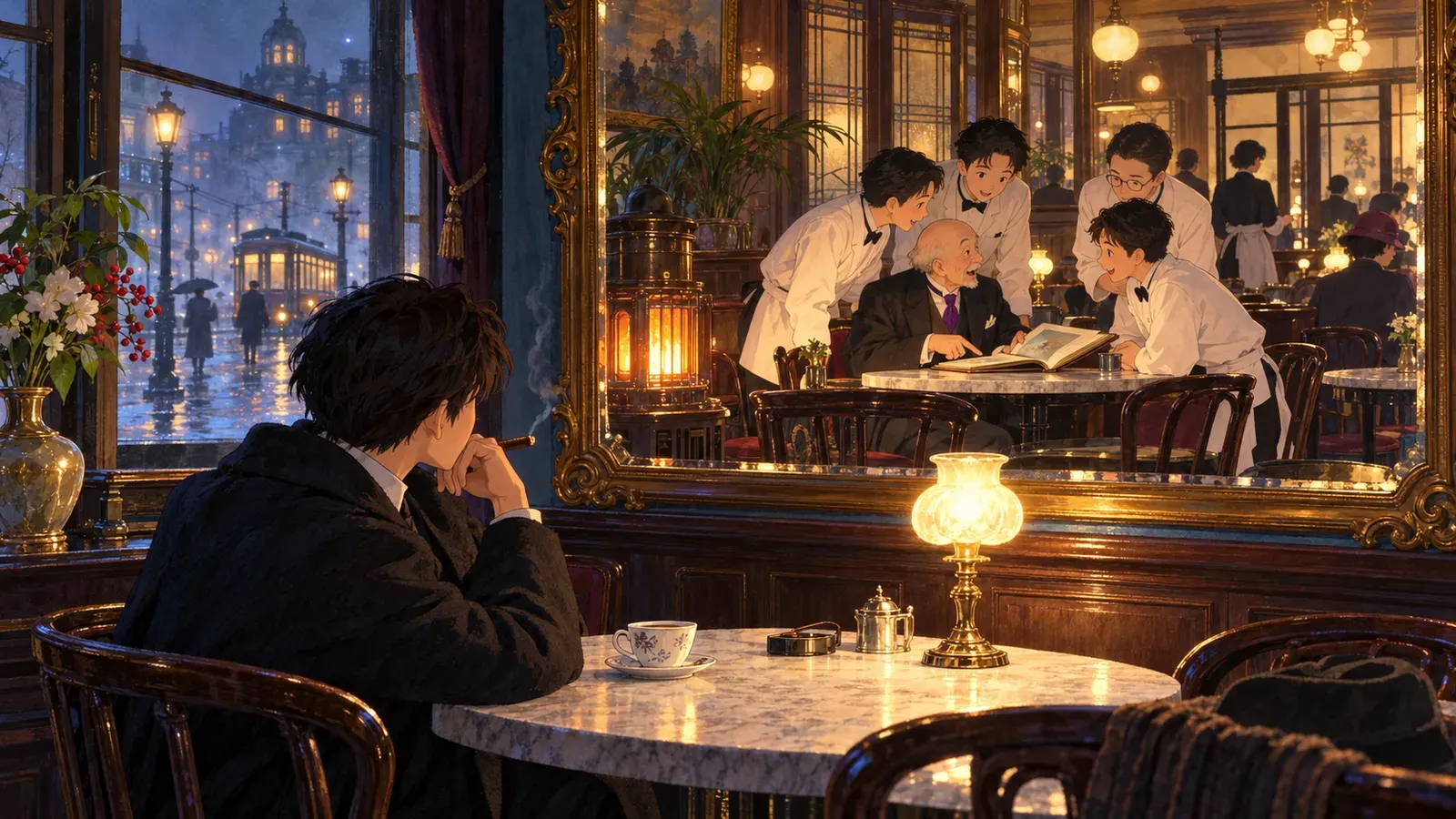
Then, in the year I finished university, on a misty evening in early December, I went alone into a café in Kanda. It was empty. I sat in front of a wall mirror, ordered coffee and lit a cigar. Feeling gloomy, I gazed at the mirror.
そして、大学を卒業した年の、十二月の初めの霧の深い晩のことだ。僕は神田のあるカフェに、一人で入った。客は一人もいなかった。壁にはめこんだ鏡の前に座り、コーヒーを頼んで、葉巻に火をつけた。気分がふさいでいたので、鏡の中をぼんやりとながめていた。
In it, I could see a gas heater and three or four waiters standing around it. Among them, a customer was sitting at a table. He showed me only the side of his face, but I knew him at once: the head like an ostrich egg, the ancient morning coat, and that forever purple necktie. It was our Mr. Mori. Time, which carries everything away, had done nothing to him.
鏡には、ガスストーブと、そのまわりに立っている三、四人の給仕が映っていた。その間に、一人の客がテーブルについている。横顔しか見えなかったが、僕にはすぐにわかった。ダチョウの卵のようなはげ頭、古ぼけたモーニング、そして永遠に紫のネクタイ。我が毛利先生だった。すべてを押し流す時の流れも、この先生だけはどうすることもできなかったのだ。
He was busily explaining something to the waiters in that same high voice. "Look, Napoleon is a person's name, so we call it a noun. And right after the noun comes... do you know what this is?" "A relative... a relative noun," one waiter stammered. "A relative noun? There is no such thing. A relative pronoun! It takes the place of the noun Napoleon. You see?"
先生は、あのかん高い声で、何やら給仕たちにせわしく説明していた。「いいかね、ナポレオンというのは人の名前だから、これを名詞という。それから、名詞のすぐあとにあるのは……何だか知っているかね。」「関係……関係名詞」と、給仕の一人がどもりながら答えた。「関係名詞? 関係名詞というものはない。関係代名詞だ! ナポレオンという名詞の代わりになるんだよ。いいかね。」
An open reader lay on the table, and he kept tapping the page with his finger, just as he used to. But the waiters were not like us schoolboys long ago. They stood shoulder to shoulder, listening eagerly with shining eyes.
テーブルの上には読本が一冊開いてあり、先生は昔と同じように、しきりにそのページを指でつついていた。けれども給仕たちは、昔の僕たち中学生とはちがっていた。みな肩を寄せ合い、目を輝かせて、熱心に耳をかたむけていた。
Warm feelings for Mr. Mori rose in my heart. Should I go and greet him? But he would surely not remember me. And I remembered the cruel laughter we had thrown at him. I decided that the best way to respect him was not to tell him who I was.
毛利先生に対するあたたかい気持ちが、胸にわいてきた。いっそ、あそこへ行ってあいさつしようか。けれども先生は、きっと僕のことなど覚えていないだろう。それに僕は、あのころ先生に浴びせかけた意地の悪い笑い声を思い出した。名乗ったりしないほうが、ずっと先生を尊敬することになる、と僕は思い直した。
When my coffee was finished, I stood up quietly. At that moment, he turned his pale round face toward me, and for an instant our eyes met in the mirror. As I had expected, he did not know me. There was only that sad look in his eyes, as if he were always begging for something.
コーヒーを飲み終えると、僕はそっと立ち上がった。そのとき、先生があの血色の悪い丸顔をこちらに向けた。ほんの一瞬、鏡の中で、先生の目と僕の目が出会った。思ったとおり、先生は僕に気づかなかった。そこにあったのは、いつも何かを哀願しているような、あの痛ましいまなざしだけだった。
At the counter, I asked the head waiter, "Did the café ask that man to teach here?" "No, nobody asked him. He just comes every night and teaches like that. They say he's an old English teacher whom no school will hire anymore, so he probably comes to kill time. He sits here all night with one cup of coffee, so we're not very happy about it."
勘定場で、僕は給仕頭にたずねた。「あの人は、このカフェに頼まれて教えているのかね。」「いいえ、頼んだわけじゃありません。毎晩やって来ては、ああやって教えているんです。もう年寄りの英語の先生で、どこも雇ってくれないそうですから、たぶんひまつぶしに来るんでしょう。コーヒー一杯で一晩じゅう座りこまれるんですから、こっちはあまりありがたくもありませんよ。」
Ah, Mr. Mori. Now, for the first time, I felt that I understood his brave character. If there is such a thing as a born teacher, he was surely one. For him, teaching English was like breathing. If he were forced to stop, he would wither like a plant without water. That was why he came to this café every night.
ああ、毛利先生。今こそ僕は、先生のけなげな人柄が初めてわかったような気がした。生まれながらの教育者というものがあるとすれば、先生こそそれだろう。先生にとって英語を教えることは、息をするのと同じなのだ。むりにやめさせれば、水をなくした植物のように、たちまちしおれてしまうにちがいない。だから先生は、毎晩このカフェにやって来るのだ。
It was certainly not to kill time. And when we said that he taught only for a living, we were completely wrong. Yet through it all, he stayed calm in his purple necktie and bowler hat, and went on teaching, braver than Don Quixote. Still, his eyes sometimes showed a sad flash, begging for sympathy from his students, and perhaps from the whole world.
それは決して、ひまつぶしなどではない。僕たちが、先生は生活のために教えているのだと決めつけたのも、まったくのまちがいだった。それでも先生は、紫のネクタイと山高帽に身を固め、悠然とかまえて、ドン・キホーテよりも勇ましく教え続けてきた。けれども、その目にはときどき、生徒たちに、いや、おそらくは世の中全体に、同情を求めるような痛ましい光がひらめいていた。
Not knowing whether to cry or laugh, I hid my face in the collar of my coat and hurried out. Behind me, under the bright, cold light, Mr. Mori was still teaching the eager waiters. "It takes the place of a noun, so we call it a pronoun. You see? A pronoun. All right..."
泣いていいのか笑っていいのかわからないまま、僕は外套の襟に顔をうずめて、急いでカフェを出た。うしろでは、明るく寒々とした電灯の光の下で、毛利先生がまだ熱心な給仕たちに英語を教えていた。「名に代わる詞だから、代名詞という。ね。代名詞。よろしいかね……」
 7段落目に「he could not remember them」(日本語の単語を思い出せなかった)とあります。英語の発音は明瞭でした。

 原田英語の究極の英単語帳(CEFR-J 6,868語)
 聞くだけモードで、文字を見ずに内容がわかるか試す。
 1文リピートで音読・シャドーイングも。




 名作文学