


 約14分
 全訳つき
 まずは原文をチェック
 音声は準備中です。もうしばらくお待ちください。
 お道具箱
 読書ラウンジ
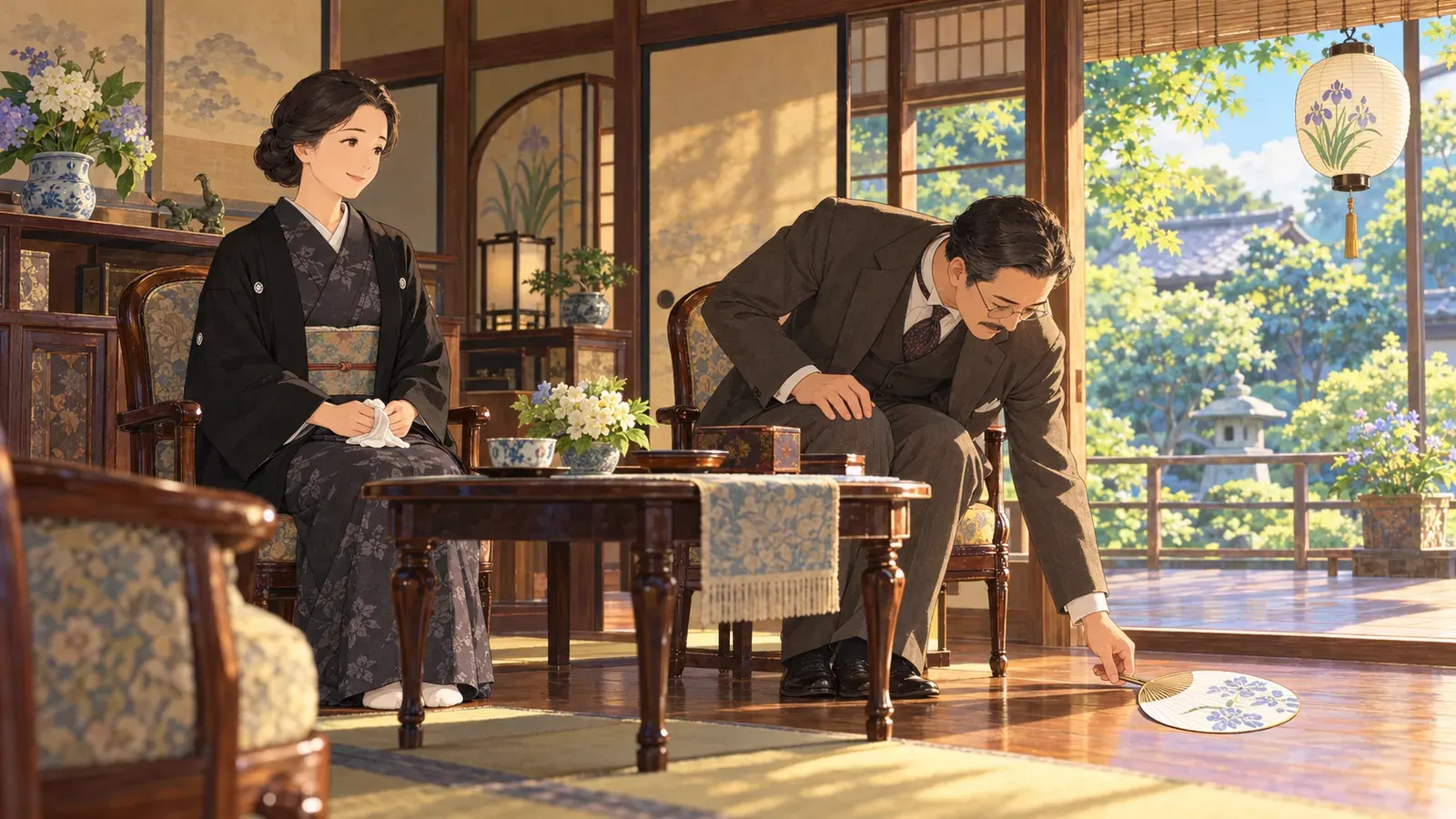
Professor Hasegawa Kinzo of the Law College of Tokyo Imperial University was sitting in a cane chair on his veranda, reading Strindberg's book on the art of the theater. His own field was colonial policy, so this may seem a little strange. But the professor was famous as a teacher too. Whenever he had time, he read the books his students cared about, and some of his students wrote essays on Ibsen and Strindberg.
東京帝国法科大学教授、長谷川謹造先生は、ベランダの籐椅子に腰をかけて、ストリンドベリの『作劇術』を読んでいた。先生の専門は植民政策なので、これは少し妙に思えるかもしれない。けれども先生は、教育家としても名高い人だった。ひまさえあれば、学生たちが関心を持っている本に目を通す。教え子の中には、イプセンやストリンドベリの評論を書く者もいたのである。
Each time he finished a chapter, he put the yellow book on his knee and looked at the Gifu lantern hanging from the veranda roof. A Gifu lantern is a light paper lantern with painted pictures. Strangely, whenever he looked at it, his thoughts left Strindberg and went to his wife, who had bought it with him. He had married her in America while he was studying there, so she was American. But she loved Japan just as much as he did, and the lantern showed her taste more than his own.
一章読み終えるたびに、先生は黄色い表紙の本をひざの上に置き、ベランダの軒につるした岐阜提灯をながめた。岐阜提灯とは、絵の描かれた軽い紙の提灯である。不思議なことに、それを見るとすぐ、先生の考えはストリンドベリを離れ、一緒にその提灯を買った奥さんのほうへ移っていく。先生は留学中にアメリカで結婚した。だから奥さんはアメリカ人である。けれども日本を愛することにかけては、先生と少しも変わらない。あの提灯も、先生の好みというより、むしろ奥さんの好みのあらわれだった。
The professor believed that in the last fifty years, Japan had made great progress in material things, but almost none in spirit. To save it, he thought, there was only one way: bushido, the old moral code of the samurai. Bushido was not just a narrow island morality. Parts of it even agreed with the Christian spirit of the West. Through bushido, East and West could understand each other better, and he hoped to become a bridge between them. So he was glad when his wife, the lantern and Japanese culture came together in his mind in a kind of harmony.
先生の信じるところでは、日本はこの五十年で、物の面ではめざましく進歩した。だが心の面では、ほとんど進歩していない。これを救う道はただ一つ、昔の侍の道徳である武士道しかない、と先生は考えた。武士道は、島国の狭い道徳などではない。その中には、西洋のキリスト教の精神と通じ合うものさえある。武士道によって、東洋と西洋はもっとよく理解し合えるはずだ。先生は、自分がその間にかかる橋になりたいと願っていた。だから、奥さんと提灯と日本の文化とが、心の中である調和を保って浮かんでくるのは、先生にとってうれしいことだった。
But soon he noticed that his thoughts were drifting far from Strindberg. He shook his head a little crossly and went back to the small print. The passage he had reached said this: "When an actor finds a good way to show a common feeling and succeeds with it, he tends to use it again and again, whether it fits the moment or not, because it is easy and it works. That is what we call a mannerism."
けれども、やがて先生は、考えがストリンドベリからずいぶん遠くへそれていることに気がついた。ちょっといまいましそうに頭を振って、また細かい活字に目をもどす。ちょうど読みかけたところには、こう書いてあった。「俳優が、ごくありふれた感情を表すうまい方法を見つけ、それで成功すると、場面に合っていようといまいと、何度でもその手を使いたがる。楽だし、うまくいくからだ。それがすなわち『型』である。」
In truth, the professor knew almost nothing about the theater, so he had no opinions of his own about Strindberg's ideas. Just then, a maid came to tell him that he had a visitor. The card she brought said "Nishiyama Atsuko." He could not remember anyone of that name. He put the card in the book as a bookmark, left the book on the chair, and went to meet the visitor.
実のところ、先生は芝居のことをほとんど何も知らなかった。だからストリンドベリの考えについても、自分の意見というものはなかった。ちょうどそのとき、小間使いが来て、客の訪れを告げた。差し出された名刺には「西山篤子」とあった。そういう名前の人は思い出せなかった。先生は名刺をしおりがわりに本にはさむと、それを籐椅子の上に置いて、客に会いに行った。
When he entered the drawing room, a woman of about forty rose from her chair. She wore an elegant dark summer kimono with a thin black jacket, and her hair was done up in the style of a married woman. She had a round face and looked like a wise mother. The professor felt that he had seen her somewhere before.
応接室に入ると、四十がらみの婦人が椅子から立ち上がった。上品な暗い色の夏の着物に、黒の薄い羽織を重ね、髪は既婚の女性らしく丸髷に結っている。丸顔で、いかにも賢い母親らしい人だった。先生は、どこかでこの顔を見たことがあるような気がした。
"I am Hasegawa," he said kindly. "I am the mother of Nishiyama Kenichiro," she answered in a clear voice, and bowed politely.
「長谷川です」と、先生は愛想よく言った。「西山憲一郎の母でございます」と、婦人ははっきりした声で名乗り、丁寧にお辞儀をした。
The professor remembered Kenichiro well. He was one of the students who wrote about Ibsen and Strindberg, and he often came to talk about ideas. This spring, he had gone into the university hospital with a serious illness, and the professor had visited him once or twice. No wonder the woman looked familiar. She looked just like that lively young man with thick eyebrows.
憲一郎のことなら、先生もよく覚えていた。イプセンやストリンドベリの評論を書く学生の一人で、よく思想の話をしに先生のところへやって来た。その憲一郎が、この春、重い病気で大学病院に入院したので、先生も一、二度見舞いに行ったことがある。婦人の顔に見覚えがあったのも、不思議ではない。あの眉の濃い、元気のいい青年に、そっくりなのである。
As she sat down, she took something white out of her sleeve. It was probably a handkerchief. The professor offered her a Korean fan, and the maid brought tea. "How is Nishiyama?" he asked. "Is he getting better?"
椅子に腰をおろすとき、婦人はたもとから白いものを取り出した。手巾(ハンケチ)だろう。先生は朝鮮うちわをすすめ、小間使いがお茶を運んできた。「西山君はいかがです」と先生はたずねた。「よくなっていますか。」
The woman put her hands together on her knees and paused. Then she said in a calm, smooth voice, "In fact, I have come about my son. I am afraid he has passed away. You were very kind to him while he was alive..."
婦人はひざの上で両手を重ね、少し間をおいた。それから、落ち着いた、なめらかな声でこう言った。「実は、今日は息子のことでうかがったのでございます。あれも、とうとういけませんでした。生きております間は、先生にたいへんお世話になりまして……」
Just then the professor was raising his teacup to his lips. He thought she was too shy to drink, so he had decided to drink first. The cup had not yet reached his mustache when her words startled him. Should he drink the tea or not? For one moment, this question troubled him, quite apart from the young man's death. Then he swallowed half the tea in one gulp, frowned, and said in a choked voice, "Oh, that is..."
ちょうどそのとき、先生は茶わんを口へ運ぼうとしていた。婦人が遠慮して飲まないのだと思い、自分が先に飲んでみせようとしたのだ。ところが、茶わんがまだ口ひげに届かないうちに、婦人の言葉が先生をぎょっとさせた。茶を飲んだものか、飲まないものか。青年の死とはまったく別に、一瞬、この迷いが先生の心をわずらわせた。それから先生は、半分ほどの茶をがぶりと飲み、少し眉をひそめて、むせるような声で「そりゃあ」と言った。
"He often spoke of you in the hospital, so I came to tell you and to thank you," she said. "Not at all," said the professor sadly, picking up his fan. "He was just at the age when life begins. When did he die?"
「病院におりました間も、よく先生のお話をしておりましたので、お知らせかたがた、お礼を申し上げようと思いまして」と婦人は言った。「いや、どういたしまして」と、先生はうちわを手に取りながら、沈んだ声で言った。「ちょうど、これからという年でしたのに。なくなられたのは、いつです。」
"Yesterday was his seventh-day memorial." "This is truly a surprise." "We did all we could, so we must accept it. Still, I cannot help complaining sometimes."
「昨日が、ちょうど初七日でございました。」「いや、実に意外でした。」「できるだけのことはいたしましたので、あきらめるほかはございません。それでも、つい愚痴が出てしまいまして。」
As they talked, the professor noticed something surprising. Nothing in the woman's manner showed that she was talking about her son's death. There were no tears in her eyes, and her voice was the same as usual. There was even a smile at the corners of her mouth. Anyone who saw her without hearing her words would think she was talking about everyday matters.
話しているうちに、先生は意外なことに気がついた。婦人の様子には、自分の息子の死を語っているらしいところが少しもないのである。目には涙もたまっていない。声もいつもの通りだ。そのうえ、口もとにはほほえみさえ浮かんでいる。話を聞かずに姿だけ見ていたら、誰でも、この人はふだんの世間話をしているとしか思わないだろう。
Long ago, when the professor was studying in Berlin, the German emperor Wilhelm the First died. That day, as soon as he returned to his lodging house, the two children of the house threw their arms around his neck and burst into tears. "Our grandfather the emperor has died," they sobbed. The professor was amazed that even children grieved so much for their ruler. As a Japanese man and a believer in bushido, he had often been surprised at how openly Western people showed their feelings. Now he felt the same wonder the other way around: why did this woman not cry?
昔、先生がベルリンに留学していたころ、ドイツ皇帝ヴィルヘルム一世が亡くなった。その日、先生が下宿に帰るなり、下宿の子ども二人が先生の首に抱きついて、わっと泣き出した。「おじいさまの陛下が、おなくなりになったんですって」と、二人はしゃくりあげた。子どもまでが君主の死をこれほど悲しむのかと、先生は驚いた。日本人であり武士道の信者である先生は、西洋の人が感情をあけっぴろげに表すのに、何度も驚かされてきたのだ。いま先生は、それと同じくらい不思議に思っていた。ただし今度は逆で、この婦人がなぜ泣かないのかが不思議だったのである。
Soon a second discovery followed. While they were talking, the Korean fan slipped from the professor's hand and fell onto the floor. He leaned forward and reached down. The fan lay under the small table, near the woman's white tabi socks.
まもなく、第二の発見が続いた。話をしているうちに、朝鮮うちわが先生の手からすべって、床に落ちたのである。先生は身を乗り出して、下へ手をのばした。うちわは小さなテーブルの下、婦人の白足袋のそばに落ちていた。
At that moment, he happened to see her lap. On it lay her hands, holding the handkerchief, and they were trembling hard. She was gripping the handkerchief so tightly with both hands that she almost tore it apart, as if she were trying to hold down her strong feelings. The crumpled silk was moving between her slender fingers as if a light breeze were blowing it. The woman was smiling with her face, but in fact, she had been crying with her whole body all along.
そのとき、先生の目に、ふと婦人のひざが見えた。ひざの上には、手巾を持った両手がのっている。その手が、はげしくふるえていた。婦人は両手で、手巾を引き裂かんばかりに固くにぎりしめていた。こみあげる感情を、むりにおさえようとしているかのようだった。しわくちゃになった絹の手巾が、細い指の間で、そよ風に吹かれてでもいるように揺れている。婦人は、顔でこそ笑っていたが、実はさっきから、全身で泣いていたのである。
When the professor picked up the fan and raised his head, there was a new look on his face. It was a complicated look. There was deep respect, as if he had seen something he should not see. There was also a certain satisfaction at feeling this respect. And both were a little exaggerated, like acting.
うちわを拾って顔を上げたとき、先生の顔には、今までにない表情が浮かんでいた。それは複雑な表情だった。そこには、見てはならないものを見てしまったときのような、深い敬意があった。そういう敬意を感じている自分への、ある満足もあった。そしてその両方が、芝居のように少し大げさになっていた。
"I understand your sorrow," he said in a low, warm voice, "even though I have no children myself." "Thank you. But whatever we say, he will not come back," said the woman, bowing her head a little. Her bright face was still full of a gentle smile.
「いや、お心のうちは、私のような子どものない者にも、よくわかります」と、先生は低い、心のこもった声で言った。「ありがとうございます。けれども、今さら何を申しましても、帰らないことでございますから」と、婦人は少し頭を下げた。その晴れやかな顔には、あいかわらず、おだやかなほほえみが浮かんでいた。
Two hours later, after a bath and dinner, the professor sat in the cane chair on the veranda again. The long summer evening was still faintly light. He had picked up his Strindberg, but he had not read a single page. His head was still full of Mrs. Nishiyama's brave behavior.
それから二時間後、湯に入り、夕食をすませた先生は、またベランダの籐椅子に腰をおろした。長い夏の夕暮れは、まだうっすらと明るい。ストリンドベリも手に取ってはみたが、まだ一ページも読んでいない。先生の頭は、西山夫人のけなげなふるまいで、まだいっぱいだったのである。
At dinner, he had told his wife the whole story and praised it as the bushido of Japanese women. His wife, who loved Japan, listened with deep sympathy, and that pleased him. Now his wife, the woman and the lantern came into his mind together, with a moral meaning behind them. He decided to write about today's event for a magazine that had asked him for a piece called "Letters to the Young People of Today."
夕食のとき、先生は奥さんに一部始終を話して聞かせ、それを日本の女の武士道だとほめたたえた。日本を愛する奥さんは、深く心を動かされて聞いてくれた。先生にはそれがうれしかった。いま、奥さんと、あの婦人と、提灯とが、ある道徳的な意味を帯びて、そろって心に浮かんでくる。先生は、ある雑誌から「現代の青年に与うる書」という題で原稿を頼まれていた。そこで、今日の出来事を書いて送ることにした。
Then he opened the book at the page where he had put the card. Just then, the maid lit the lantern above him, so the small print was easy to read. Without much interest, he let his eyes fall on the page. Strindberg wrote:
それから先生は、名刺をはさんでおいたページを開いた。ちょうどそのとき、小間使いが来て頭の上の提灯をともしたので、細かい活字も楽に読める。先生は、別に読む気もなく、ぼんやりとページに目を落とした。ストリンドベリはこう書いていた。
"When I was young, people talked about Madame Heiberg's handkerchief, which probably came from Paris. It was a double kind of acting: her face smiled while her hands tore her handkerchief in two. Today we call that an affectation."
「私の若いころ、人々はハイベルク夫人の手巾の話をしたものだ。たぶんパリから伝わったものだろう。それは、顔ではほほえみながら、手では手巾を二つに引き裂くという、二重の演技だった。それを今、われわれは臭味(メッツヘン)、つまり型にはまったわざとらしさと名づける。」
The professor put the open book on his knee. The card with the name Nishiyama Atsuko still lay in the middle of the page. But what filled his mind now was not the woman, his wife or Japanese culture. It was something he could not name, something that threatened to break their peaceful harmony.
先生は、開いたままの本をひざの上に置いた。西山篤子という名刺が、まだページのまん中にのっている。けれども、いま先生の心をしめているのは、もうあの婦人ではない。奥さんでも、日本の文化でもない。それらのおだやかな調和をこわそうとする、得体の知れない何ものかである。
Of course, an acting method was not the same as real-life morals. Yet there was something in what he had read that disturbed his relaxed mood. Bushido, and its mannerism...
もちろん、芝居の演出法と、実生活の道徳とは別のものだ。それでも、いま読んだところには、先生ののんびりした気分をかき乱す何かがあった。武士道と、そしてその型と……。
The professor shook his head two or three times, as if annoyed. Then he raised his eyes and began to stare at the bright light of the Gifu lantern, painted with autumn flowers and grasses.
先生は、不愉快そうに二、三度頭を振った。それから上目づかいになって、秋草を描いた岐阜提灯の明るい灯を、じっとながめはじめた。
 10段落目に「I am afraid he has passed away.」(息子は亡くなりました)とあります。

 原田英語の究極の英単語帳(CEFR-J 6,868語)
 聞くだけモードで、文字を見ずに内容がわかるか試す。
 1文リピートで音読・シャドーイングも。

 名作文学