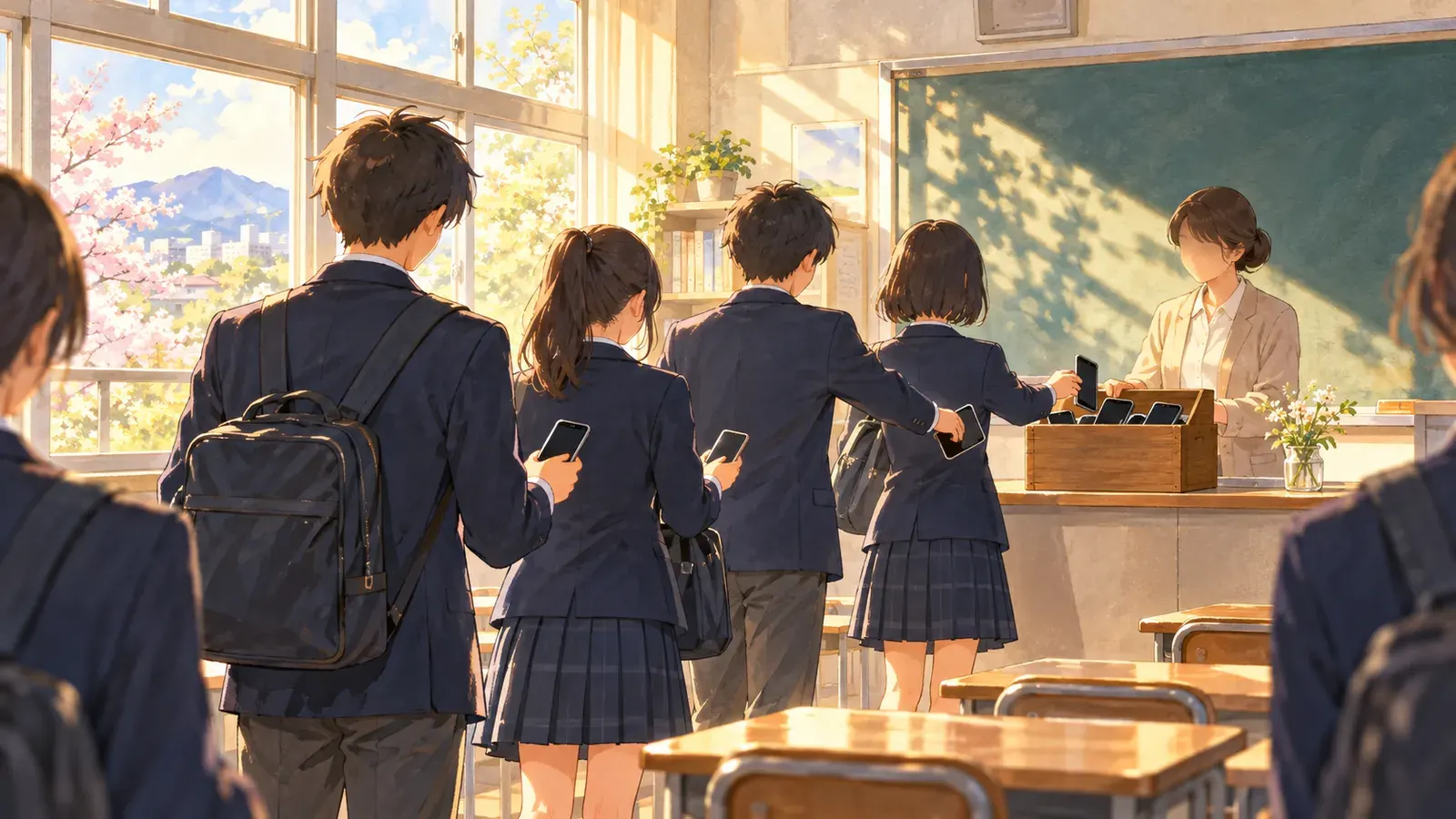
Almost every high school student in Japan has a smartphone. Many junior high school students have one, too. Phones are very useful. We can call our families, check train times, and find answers to questions in a few seconds. But should students use phones at school? This question is often in the news.
日本の高校生のほとんど全員がスマートフォンを持っています。中学生にも持っている人がたくさんいます。スマホはとても便利です。家族に電話をしたり、電車の時刻を調べたり、疑問の答えを数秒で見つけたりできます。でも、生徒は学校でスマホを使うべきなのでしょうか。この問題はよくニュースになります。
Some countries made strong rules. In France, students in elementary and junior high schools cannot use their phones at school. The Netherlands and many other countries now keep phones out of classrooms, too. In 2023, a report by UNESCO said that phones in class can stop students from paying attention to their lessons.
厳しいルールを作った国もあります。フランスでは、小学生と中学生は学校でスマホを使うことができません。オランダをはじめ多くの国でも、今では教室にスマホを持ちこませないようにしています。2023年には、ユネスコの報告書が、授業中のスマホは生徒が授業に集中するのをさまたげることがある、と述べました。
People who want rules say that phones take away our attention. When a phone makes a sound, it is very hard not to look at it. Some teachers say that students talk to each other more at lunch when their phones are put away. Rules may also help to stop online bullying during the school day.
ルールが必要だと考える人たちは、スマホに集中力をうばわれると言います。スマホが鳴ったら、見ないでいるのはとても難しいものです。スマホをしまっておくと、昼休みに生徒どうしがよく話すようになる、と言う先生もいます。ルールがあれば、学校にいる間のネットいじめを防ぐのにも役立つかもしれません。
But other people say that phones can help students learn. With a phone, students can look up new words, take pictures of the blackboard, and use learning apps. Parents also feel safer when their children can call them after school, especially when there is an earthquake or a big storm. In Japan, the government changed its rules a little in 2020. Now some junior high schools let students bring phones, but the school and the parents must agree on rules first.
しかし、スマホは学習に役立つと言う人もいます。スマホがあれば、新しい単語を調べたり、黒板の写真をとったり、学習アプリを使ったりできます。また、子どもが放課後に電話をかけてこられれば、親も安心です。地震や大きな嵐のときはなおさらです。日本では2020年に、政府が方針を少し変えました。今では、生徒がスマホを持ってくるのを認める中学校もあります。ただし、その前に学校と保護者がルールを決めておかなければなりません。
Many schools are now looking for a middle way. Students can bring their phones, but they must turn them off and keep them in their bags during class. Sometimes teachers ask students to use their phones for a lesson. Other schools ask students to make the rules together, so that everyone understands why the rules are important.
今、多くの学校が、両方のよいところを生かした、中間のやり方を探しています。生徒はスマホを持ってきてもよいけれど、授業中は電源を切ってかばんに入れておく、というやり方です。授業でスマホを使うよう、先生が指示することもあります。生徒たちに一緒にルールを作らせる学校もあります。そうすれば、なぜそのルールが大切なのかを、みんなが理解できるからです。
The real question may not be "phones or no phones." It may be "How can we use phones well?" Smartphones are a big part of life today. Students need to learn how to control their phones, and not to be controlled by them.
本当の問題は「スマホありか、なしか」ではなく、「どうすればスマホを上手に使えるか」なのかもしれません。スマートフォンは、今の暮らしに欠かせないものです。生徒は、スマホにふり回されるのではなく、スマホを使いこなす方法を身につける必要があります。
What do you think? Some people say schools should ban phones, because students can study better and talk with friends more without them. Others say students should be allowed to use phones, because they are useful tools for learning and important for safety.
あなたはどう思いますか。学校はスマホを禁止するべきだ、と言う人もいます。スマホがないほうが、生徒はよく勉強できるし、友達ともたくさん話せるからです。一方、生徒がスマホを使うのを認めるべきだ、と言う人もいます。スマホは学習に便利な道具であり、安全のためにも大切だからです。