My name is Robinson Crusoe. I was born in the city of York, in England, in 1632. Ever since I was a boy, I wanted to go to sea. My father wanted me to study law and live a quiet, safe life. "If you go to sea," he said with tears in his eyes, "you will be sorry, and there will be no one to help you." But I did not listen.
わたしの名前は、ロビンソン・クルーソーといいます。一六三二年、イギリスのヨークという町で生まれました。わたしは子どものころからずっと、船に乗って海へ出たいと思っていました。父はわたしに法律を学ばせて、静かで安全な人生を送らせたがっていました。「もし海に出たら」と、父は目に涙を浮かべて言いました。「おまえはきっと後悔する。そのとき、助けてくれる者は誰もいないのだぞ」けれども、わたしは耳を貸しませんでした。
My life at sea was full of trouble. On my first voyage a terrible storm nearly sank the ship. On another, pirates captured me, and I was a slave in North Africa for two years before I escaped in a small boat. A kind Portuguese captain took me to Brazil, where I became a farmer and grew rich. But I was never happy for long. When some friends asked me to join a trading voyage to Africa, I agreed.
わたしの海での暮らしは、苦難の連続でした。最初の航海では、恐ろしい嵐で船が沈みかけました。別の航海では海賊につかまり、北アフリカで二年間、奴隷として働かされたあと、小さな舟で逃げ出しました。親切なポルトガル人の船長がわたしをブラジルへ連れていってくれ、わたしはそこで農園を開いて裕福になりました。けれども、幸せな気持ちが長く続いたことはありませんでした。友人たちから、アフリカへの貿易の航海に加わらないかと誘われると、わたしは引き受けてしまいました。
On the thirtieth of September, 1659, a great storm drove our ship onto the rocks. We tried to escape in a small boat, but a huge wave turned it over. I was thrown onto the shore half dead. When I looked around, I was alone. All my companions were drowned. I never saw them again, except three of their hats, one cap, and two shoes that were not a pair.
一六五九年九月三十日、大嵐がわたしたちの船を岩場へ打ちつけました。わたしたちは小舟で逃げようとしましたが、巨大な波が舟をひっくり返しました。わたしは半分死んだようになって、岸に打ち上げられました。あたりを見回すと、わたしは一人きりでした。仲間はみな、おぼれ死んでしまったのです。仲間たちの姿を見ることは、二度とありませんでした。見つかったのは、帽子が三つ、縁なし帽がひとつ、それに左右そろっていない靴が二つだけでした。
That first night I slept in a tree, because I was afraid of wild animals. In the morning I saw that the ship had been lifted off the rocks by the tide and was standing not far from the shore. I swam out to it. On board I found bread, rice, cheese and dried meat, and also guns, gunpowder, tools, nails, rope and sails. I made a raft from pieces of wood and carried everything to the land.
最初の夜、わたしは野獣が怖かったので、木の上で眠りました。朝になると、船が潮に持ち上げられて岩から離れ、岸からそう遠くないところに浮かんでいるのが見えました。わたしは船まで泳いでいきました。船の中には、パン、米、チーズ、干し肉があり、銃や火薬、道具、くぎ、ロープ、帆もありました。わたしは木切れでいかだを作り、それらを全部陸へ運びました。
I made more than ten trips. I also saved the ship's dog and two cats. I found some money, too, but I laughed at it. "What use are you to me here?" I said. Still, I took it with me.
わたしは十回以上も船と岸を行き来しました。船の犬と、二匹のネコも助け出しました。お金も見つけましたが、わたしは思わず笑ってしまいました。「ここで、おまえが何の役に立つというのだ?」とわたしは言いました。それでも、そのお金は持ち帰りました。
I built my home against a rock, with a little cave behind it. Around it I built a strong fence of sharp wooden posts, and I went in and out over it with a ladder. Then I put up a large wooden post on the beach. Every day I cut a mark on it with my knife, so that I would not lose track of the days.
わたしは岩を背にして住まいを造りました。奥には小さな洞穴がありました。まわりには、先のとがった木の杭で頑丈な柵をめぐらし、はしごでそれを乗り越えて出入りしました。それから、浜辺に大きな木の柱を立てました。日にちがわからなくならないように、毎日ナイフでその柱に刻み目を入れたのです。
Slowly I learned to live on the island. I hunted wild goats, and later I caught some young ones and kept them, so that I had milk, meat and cheese. One day I emptied an old bag that had held chicken food. A few weeks later, I was amazed to see green plants growing there. It was barley and rice! I saved the seeds, and after a few years I had enough to make my own bread.
わたしは少しずつ、島で暮らすすべを身につけていきました。野生のヤギを狩り、のちには子ヤギを何頭かつかまえて飼ったので、乳や肉やチーズが手に入るようになりました。ある日、わたしはニワトリのえさが入っていた古い袋の中身を捨てました。数週間後、そこに緑の芽が生えているのを見て、わたしはびっくりしました。大麦と米だったのです! わたしは種を取っておき、数年後には、自分でパンを焼けるほどの量がとれるようになりました。
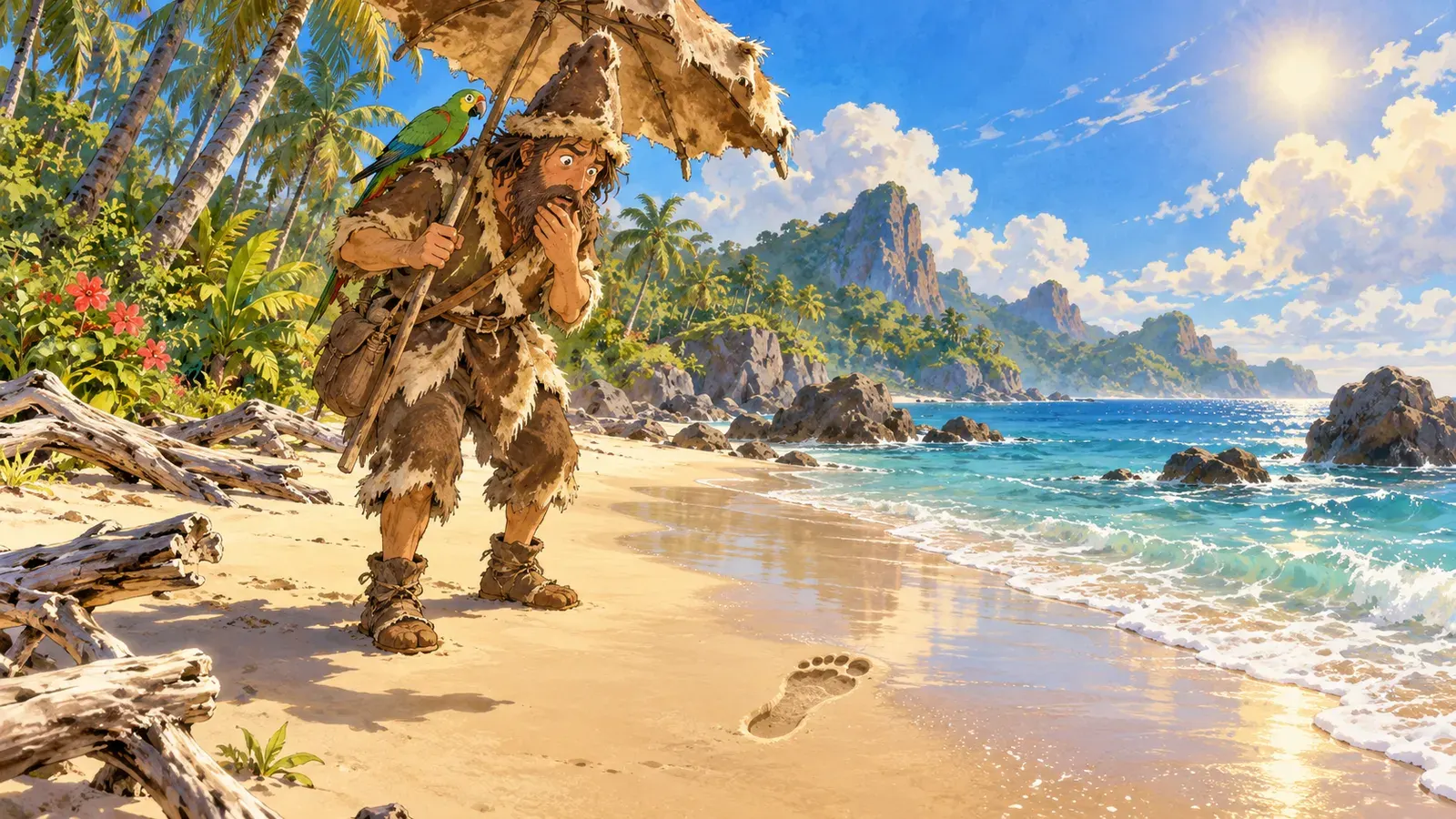
I made clothes and a hat from goatskins, and a big umbrella to keep off the sun and rain. I also caught a young parrot and taught him to talk. His name was Poll. "Poor Robin Crusoe!" he would cry. "Where are you? Where have you been?"
わたしはヤギの皮で服と帽子を作り、日ざしや雨をよけるための大きな傘も作りました。それから、若いオウムをつかまえて、言葉を教えました。名前はポルといいました。ポルはよく、こう叫んだものです。「かわいそうなロビン・クルーソー! どこにいるの? どこへ行っていたの?」
I found a Bible among the things from the ship, and I read it every day. I began to thank God for all the good things I had, instead of crying about the things I did not have. My life became calm and even happy.
船から運んだ品物の中に聖書があったので、わたしは毎日それを読みました。わたしは、持っていないものを嘆くかわりに、自分が持っているよいものすべてについて、神に感謝するようになりました。わたしの暮らしは穏やかになり、幸せとさえ言えるものになりました。
Then, after fifteen years, something happened that filled me with terror. One day, walking on the beach, I saw the print of a man's bare foot in the sand. I stood there as if I had been hit by lightning.
ところが、十五年たったころ、わたしを恐怖でいっぱいにする出来事が起こりました。ある日、浜辺を歩いていると、砂の上に、人間のはだしの足跡がひとつあるのを見つけたのです。わたしは雷に打たれたように、その場に立ちつくしました。
I listened and looked around, but I could see no one. I ran home like a frightened rabbit, and for many nights I could not sleep. Later I found the remains of a fire on the far side of the island. I understood that people from other islands sometimes came there in canoes to kill their prisoners.
わたしは耳をすまし、あたりを見回しましたが、誰の姿も見えませんでした。わたしはおびえたウサギのように家へ逃げ帰り、何晩も眠れませんでした。のちに、島の反対側で、たき火のあとを見つけました。ほかの島々の人たちがときどきカヌーでそこへやって来て、捕虜を殺しているのだとわかりました。
Many years went by. Then one morning I saw five canoes on the beach. A group of men was standing around a fire with two prisoners. Suddenly one of the prisoners broke free and ran toward my side of the island. Two men ran after him. I rushed out with my gun and saved him, and the others ran away in fear.
何年もの月日が過ぎました。そしてある朝、浜辺に五そうのカヌーが止まっているのが見えました。男たちの一団が、二人の捕虜を連れて、たき火のまわりに立っていました。突然、捕虜の一人が縄を振りほどいて逃げ出し、島のこちら側へ走ってきました。二人の男がそのあとを追いかけてきます。わたしは銃を持って飛び出し、その捕虜を助けました。ほかの者たちは、恐れをなして逃げていきました。
The young man knelt before me and put my foot on his head. It was his way of saying, "I will be your servant forever." I named him Friday, because that was the day I saved him.
若者はわたしの前にひざまずき、わたしの足を自分の頭の上にのせました。それが、「わたしはいつまでもあなたの召使いです」という意味のしぐさだったのです。わたしは若者をフライデーと名づけました。助けた日が金曜日だったからです。
Friday was clever, cheerful and kind. I taught him to speak English, and he taught me many things about the sea and the islands. He became my dearest friend. For the first time in twenty-five years, I was not alone.
フライデーは賢く、明るく、やさしい若者でした。わたしはフライデーに英語を教え、フライデーはわたしに、海や島々のことをたくさん教えてくれました。フライデーは、わたしのいちばん大切な友になりました。二十五年ぶりに、わたしはひとりぼっちではなくなったのです。
At last, after twenty-seven years, an English ship came to the island. But its sailors had taken control of the ship, and they planned to leave their captain on my island. Friday and I helped the captain fight them, and together we won back his ship. In thanks, he offered to take us home.
そしてついに、二十七年たったころ、一隻のイギリス船が島にやって来ました。ところがその船では、船員たちが船を乗っ取り、船長をわたしの島に置き去りにしようとしていたのです。フライデーとわたしは船長に力を貸して船員たちと戦い、一緒に船を取り戻しました。そのお礼に、船長はわたしたちを故郷へ連れて帰ろうと言ってくれました。
On the nineteenth of December, 1686, I left my island forever. I had lived there for twenty-seven years, two months and nineteen days. I took with me my goatskin hat, my umbrella, my parrot, and the money I had laughed at so long ago. And of course, I took my faithful friend Friday.
一六八六年十二月十九日、わたしは自分の島を永遠に離れました。わたしはそこで、二十七年と二か月と十九日を過ごしたのでした。わたしはヤギ皮の帽子と傘とオウム、そして、ずっと昔に笑ったあのお金を持っていきました。そしてもちろん、忠実な友フライデーも一緒でした。
When I reached England, I had been away for thirty-five years. My parents had died, and nobody knew me. But I learned that my farm in Brazil had done well all those years, and that I was now a rich man. Still, I sometimes dreamed of my island and the long, quiet years I had spent there.
イギリスに着いたとき、故郷を離れてから三十五年がたっていました。両親はすでに亡くなり、わたしを知る者は誰もいませんでした。けれども、ブラジルのわたしの農園がその間ずっとうまくいっていて、わたしは今では金持ちになっていることがわかりました。それでもわたしは、ときどきあの島と、そこで過ごした長く静かな年月を夢に見るのです。