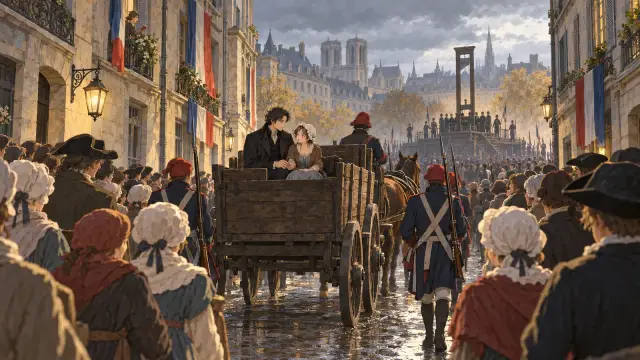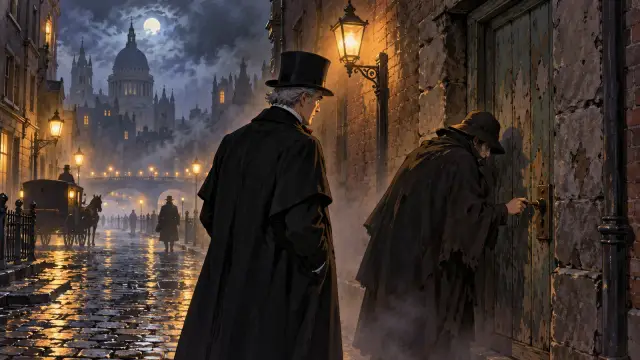
In October 1815, a man with a heavy stick and a soldier's bag walked into the little town of Digne in the south of France. His name was Jean Valjean. Long ago he had broken a baker's window and stolen a loaf of bread for his sister's hungry children. For that crime, and for trying to escape, he had spent nineteen years as a prisoner in the galleys. Now he was free, but the yellow passport he had to show everywhere told people that he was a dangerous man. No inn would give him a bed.
1815年10月、重い杖をつき、兵隊の背嚢を背負った男が、南フランスの小さな町ディーニュにやってきた。男の名はジャン・ヴァルジャン。ずっと昔、パン屋の窓ガラスを割って、パンを一つ盗んだことがあった。姉の子どもたちが腹をすかせていたからだ。その罪と、脱走をくわだてた罪のために、19年ものあいだ、徒刑場で囚人として過ごした。今は自由の身だった。しかし、どこへ行っても見せなければならない黄色い通行証が、この男は危険人物だと人々に知らせていた。泊めてくれる宿は一軒もなかった。
Only the old Bishop of Digne opened his door. He gave Valjean supper on silver plates and a clean white bed. In the night, Valjean stole the silver and ran away. The next morning the police brought him back, but the bishop said calmly that the silver had been a gift, and he handed Valjean his two silver candlesticks as well. "Never forget that you have promised to use this silver to become an honest man," he said quietly. "Jean Valjean, my brother, you no longer belong to evil, but to good."
ただ一人、ディーニュの年老いた司教だけが戸を開けてくれた。司教はヴァルジャンに銀の食器で夕食をふるまい、清潔な白いベッドを用意した。ところが夜のうちに、ヴァルジャンは銀の食器を盗んで逃げた。翌朝、警官たちが彼を連れもどしてきた。しかし司教は、あの銀の食器は差し上げたものだと落ち着いて言い、そのうえ二本の銀の燭台まで手わたした。「忘れてはいけませんよ。この銀を使って正直な人間になると、あなたは約束したのです」と司教は静かに言った。「ジャン・ヴァルジャン、わが兄弟よ。あなたはもう悪のものではなく、善のものなのです」
Valjean left the town in a daze. That afternoon, almost without thinking, he put his foot on a silver coin that a little boy had dropped, and the boy ran off crying. A moment later Valjean came to his senses. He searched the empty fields and shouted for the boy, but it was too late. He sat down on a rock and wept for the first time in nineteen years. From that day on, he decided, he would live the way the bishop had asked.
ヴァルジャンはぼうぜんとしたまま町を出た。その日の午後、ほとんど何も考えないまま、幼い男の子が落とした銀貨を足でふみつけてしまった。男の子は泣きながら走り去った。少したって、ヴァルジャンははっと我に返った。人けのない野原を探しまわり、大声で男の子を呼んだが、もう遅かった。ヴァルジャンは岩に腰をおろし、19年ぶりに涙を流した。その日から、司教に言われたとおりに生きようと心に決めた。
Years passed. In the northern town of Montreuil-sur-Mer, a stranger called Monsieur Madeleine started a factory that made black glass beads. The factory brought work to the whole town, and Madeleine gave his money to hospitals and schools. At last the grateful people made him their mayor. No one knew that he was Jean Valjean.
年月が流れた。北フランスの町モントルイユ・シュル・メールで、マドレーヌ氏と呼ばれるよそ者が、黒いガラス玉をつくる工場を始めた。工場のおかげで町じゅうに仕事が生まれ、マドレーヌ氏は病院や学校にお金を寄付した。やがて、感謝した町の人々は彼を市長に選んだ。その人がジャン・ヴァルジャンだとは、誰も知らなかった。
Only one man watched him with suspicion. It was Javert, the police inspector, a tall, hard man who believed that the law was everything and that a criminal could never change. One day an old man named Fauchelevent was trapped under a heavy cart in the mud. The mayor crawled beneath it and lifted it on his back, and the old man was saved. Javert watched with narrowed eyes. He had known only one man with such strength, a prisoner in the galleys at Toulon.
ただ一人、疑いの目で市長を見ている男がいた。警部のジャヴェールである。背が高く、冷たくかたい男で、法律こそがすべてであり、罪人は決して変わらないと信じていた。ある日、フォーシュルヴァンという老人が、ぬかるみで重い荷車の下じきになった。市長は荷車の下にもぐりこみ、背中で持ち上げた。老人は助かった。ジャヴェールは目を細めてそれを見ていた。これほどの怪力の持ち主を、彼は一人しか知らなかった。トゥーロンの徒刑場にいた、ある囚人である。
Among the workers in the factory was a young woman named Fantine. She had a little daughter, Cosette, whom she had left with an innkeeper and his wife, the Thénardiers, in a village near Paris. Every month she sent them money for the child. But when the other women found out that she had a daughter and no husband, she was dismissed from the factory. The mayor never knew.
工場で働く人々の中に、ファンティーヌという若い女がいた。ファンティーヌにはコゼットという幼い娘がいて、パリに近い村で宿屋を営むテナルディエ夫婦にあずけていた。そして毎月、娘のためにお金を送っていた。ところが、夫もいないのに娘がいることをほかの女工たちに知られ、ファンティーヌは工場をくびになってしまった。市長はそのことを知らなかった。
The Thénardiers asked for more and more money. Fantine sold her beautiful hair, and then her two front teeth. At last, with nothing else to sell, she was forced into a shameful life on the streets. One winter night a rich young man pushed snow down her back to tease her, and when she struck him, Javert arrested her and gave her six months in prison.
テナルディエ夫婦は、もっと金を、もっと金をと言ってきた。ファンティーヌは美しい髪を売り、次には前歯を二本売った。とうとう売るものが何もなくなり、街角に立つ恥ずかしい暮らしに追いこまれた。ある冬の夜、金持ちの若い男がからかって、彼女の背中に雪を押しこんだ。ファンティーヌがその男をたたくと、ジャヴェールは彼女をつかまえ、禁錮6か月を言いわたした。
At that moment the mayor came into the police station. He had heard everything. "Set this woman free," he said. Fantine, who blamed him for losing her job, spat in his face. Madeleine only wiped his face and repeated the order. Javert, shaking with anger, had to obey, and the mayor took the sick woman to the hospital and promised to bring her daughter to her.
ちょうどそのとき、市長が警察署に入ってきた。一部始終を聞いていたのだ。「この女を放してやりなさい」と市長は言った。職を失ったのはこの市長のせいだと思いこんでいたファンティーヌは、その顔につばを吐きかけた。マドレーヌ氏は顔をぬぐっただけで、同じ命令をくり返した。ジャヴェールは怒りにふるえながらも、従うしかなかった。市長は病気のファンティーヌを病院に入れ、娘を連れてきてあげようと約束した。
Not long afterwards, Javert came to the mayor's office and asked to be dismissed. He had secretly reported to Paris that Madeleine was really the convict Jean Valjean. "But I was wrong," he said stiffly. "The real Jean Valjean has been found. He is an old man called Champmathieu, and he will be tried tomorrow at Arras. Several former prisoners have recognized him, and he will go to the galleys for life."
それからまもなく、ジャヴェールが市長室にやってきて、自分を免職にしてほしいと願い出た。マドレーヌ市長の正体は徒刑囚ジャン・ヴァルジャンだと、ひそかにパリへ報告していたのだという。「ですが、わたしの間違いでした」とジャヴェールは硬い口調で言った。「本物のジャン・ヴァルジャンが見つかったのです。シャンマチューという老人で、明日アラスで裁判にかけられます。昔の囚人仲間が何人も、あいつにまちがいないと言っています。一生、徒刑場から出られないでしょう」
That night Madeleine did not sleep. If he kept silent, an innocent man would be punished, but he himself could go on doing good for the whole town, and for Fantine. If he spoke, he would lose everything. He walked up and down his room until dawn. In the end he got into a carriage and drove through the cold to Arras.
その夜、マドレーヌは眠らなかった。黙っていれば、罪のない男が罰を受ける。だが自分は、町じゅうの人々のために、そしてファンティーヌのために、善いことを続けられる。名乗り出れば、すべてを失う。マドレーヌは夜明けまで部屋の中を行ったり来たりした。そして最後には馬車に乗りこみ、寒さの中をアラスへ向かった。
The courtroom was crowded. The old man stood there, confused, saying again and again that he did not understand. Then a voice rang out. "Let him go. I am Jean Valjean." Everyone turned.
法廷は人でいっぱいだった。老人はわけがわからない様子で立ちつくし、何のことかさっぱりわからないと、くり返すばかりだった。そのとき、声が響きわたった。「その人を放してください。わたしがジャン・ヴァルジャンです」人々はいっせいにふり向いた。
The mayor stood up, pale but calm, and reminded the witnesses of small secrets from their days in the galleys that only Valjean could know. Then he bowed and walked out, and no one dared to stop him.
市長が立ち上がっていた。顔は青ざめていたが、落ち着いていた。市長は証人たちに、徒刑場にいたころのちょっとした秘密を次々に言い当ててみせた。ヴァルジャンでなければ知るはずのないことばかりだった。それから一礼して法廷を出ていった。引きとめようとする者は一人もいなかった。
He hurried back to Fantine, but Javert came to arrest him at her bedside. When Fantine understood the truth, and knew that her child was not coming, the shock was too much for her weak heart. She died that same morning. Valjean knelt by the bed and whispered something in her ear. It is said that the dead woman seemed to smile.
ヴァルジャンはファンティーヌのもとへ急いで帰った。しかし、その枕もとへジャヴェールが逮捕しにやってきた。ファンティーヌは本当のことを知り、娘が来ないこともさとった。その衝撃に、弱った心臓は耐えられなかった。ファンティーヌはその朝のうちに息を引きとった。ヴァルジャンはベッドのそばにひざまずき、彼女の耳もとで何かをささやいた。死んだファンティーヌが、ほほえんだように見えたという。
Valjean was sent back to the galleys. One day, on a warship at Toulon, he climbed high into the ropes to save a sailor who was hanging there in danger. After pulling the man to safety, he fell into the sea and disappeared. The newspapers reported that the convict Jean Valjean had drowned. In fact, he had swum away under the water.
ヴァルジャンはふたたび徒刑場に送られた。ある日、トゥーロンの軍艦で、綱にぶら下がって危ない目にあっている水夫を助けようと、高いところまでよじのぼった。水夫を安全なところへ引き上げたあと、ヴァルジャンは海に落ちて姿を消した。新聞は、徒刑囚ジャン・ヴァルジャンが溺れ死んだと報じた。だが本当は、水の中を泳いで逃げのびていたのである。
On Christmas Eve, 1823, in the dark woods outside the village of Montfermeil, a little girl was carrying a bucket of water that was almost as heavy as she was. It was Cosette. The Thénardiers made her work like a servant from morning till night and dressed her in rags, while their own daughters played with dolls. Tonight they had sent her alone to the spring in the forest. She was so frightened of the dark that she could hardly breathe.
1823年のクリスマス・イブ。モンフェルメイユ村のはずれの暗い森の中を、一人の少女が、自分の体と同じくらい重い水桶を運んでいた。コゼットである。テナルディエ夫婦はコゼットを朝から晩まで召使いのように働かせ、ぼろを着せていた。自分たちの娘には人形で遊ばせておきながら。今夜も、たった一人で森の泉まで水をくみに行かされたのだ。暗やみがこわくて、コゼットは息をするのもやっとだった。
Suddenly the bucket became light. A large hand had taken hold of the handle. Cosette looked up and saw a tall man in a yellow coat walking beside her, and strangely, she was not afraid.
とつぜん、水桶が軽くなった。大きな手が取っ手をつかんでいたのだ。見上げると、黄色い上着を着た背の高い男が、横を歩いていた。ふしぎなことに、コゼットはこわいと思わなかった。
"How old are you, little one?" he asked.
「おじょうちゃん、いくつだい?」と男はたずねた。
"Eight, sir."
「八つです」
"And who sent you out for water at this time of night?"
「こんな夜ふけに、誰が水くみに行かせたんだね?」
"Madame Thénardier." The man was silent for a moment. Then he carried the bucket all the way to the inn.
「テナルディエのおかみさんです」男はしばらく黙っていた。それから、宿屋までずっと水桶を運んでいった。
That evening he bought Cosette the most beautiful doll in the village, a doll she had gazed at through a shop window for months. The next morning he paid the Thénardiers fifteen hundred francs and took her away with him. For the first time in her life, someone held her hand gently. And for the first time in his life, Jean Valjean knew what it was to love someone.
その晩、男はコゼットに、村でいちばん美しい人形を買ってやった。コゼットが何か月も店の窓ごしにながめていた人形だった。翌朝、男はテナルディエ夫婦に1500フランを払い、コゼットを連れて去った。生まれてはじめて、誰かがコゼットの手をやさしくにぎってくれた。そしてジャン・ヴァルジャンもまた、生まれてはじめて、人を愛するということを知ったのだった。
In Paris, Javert found their trail again. One night, chased through the dark streets, Valjean climbed a high wall with Cosette and dropped into a garden. It belonged to a convent, and its gardener was old Fauchelevent, the man he had saved from under the cart. Fauchelevent hid them, and for years Valjean worked in the convent garden while Cosette went to the convent school.
パリで、ジャヴェールはふたたび二人の足どりをつかんだ。ある夜、暗い通りを追われたヴァルジャンは、コゼットを連れて高い塀をよじのぼり、向こう側の庭に飛びおりた。そこは修道院の庭で、庭師はあのフォーシュルヴァン老人だった。かつてヴァルジャンが荷車の下から助け出した男である。フォーシュルヴァンは二人をかくまってくれた。それから何年も、ヴァルジャンは修道院の庭で働き、コゼットは修道院の学校に通った。
Time passed, and Cosette grew into a lovely young woman. After they left the convent, she and her father, as she called him, often walked in the Luxembourg Gardens. There a poor young man named Marius saw her, and the two fell in love, at first only with their eyes, and later through secret meetings in the garden of her house. When Valjean found out, he felt a sudden fear. Cosette was all he had in the world.
時が流れ、コゼットは愛らしい娘に成長した。修道院を出てからは、「お父さま」と呼ぶヴァルジャンと一緒に、よくリュクサンブール公園を散歩した。そこでコゼットを見かけたのが、マリユスという貧しい青年だった。二人は恋に落ちた。はじめは目と目を見かわすだけだったが、やがてコゼットの家の庭で、こっそり会うようになった。それを知ったとき、ヴァルジャンは急に恐ろしくなった。この世でヴァルジャンが持っているものは、コゼットだけだったのだ。
In June 1832, an uprising broke out in Paris. Young men built barricades of furniture and paving stones across the narrow streets. Marius joined them, ready to die, because he believed that Cosette was leaving for England. When Valjean read a farewell letter that Marius had written to her, he understood everything. That evening, in the uniform of the National Guard, he went to the barricade himself.
1832年6月、パリで暴動が起きた。若者たちは家具や敷石を積み上げて、狭い通りにバリケードを築いた。マリユスも死ぬ覚悟で仲間に加わった。コゼットがイギリスへ行ってしまうと思いこんでいたからだ。マリユスがコゼットにあてた別れの手紙を読んで、ヴァルジャンはすべてをさとった。その夕方、ヴァルジャンは国民軍の軍服を着て、自分もバリケードへ向かった。
The rebels had caught a spy, and the spy was Javert. Valjean asked to be the one to kill him, and the leader agreed. He led Javert behind the barricade, where no one could see them, and cut the ropes. "You are free," he said, and he even told Javert his address. When Javert had gone, Valjean fired his pistol into the air.
反乱者たちはスパイを一人つかまえていた。そのスパイこそジャヴェールだった。ヴァルジャンは、この男の始末は自分にまかせてほしいと願い出て、リーダーの許しを得た。ヴァルジャンはジャヴェールを、誰にも見えないバリケードの裏へ連れていき、縄を切った。「あなたは自由だ」と言い、自分の住所まで教えた。ジャヴェールが立ち去ると、ヴァルジャンはピストルを空に向けて撃った。
The soldiers attacked at dawn, and one by one the young men fell. Marius was badly wounded and lost consciousness. Valjean lifted him onto his shoulders, pulled up an iron grating in the street and climbed down into the sewers of Paris. For hours he struggled through the darkness, through filthy water up to his chest, carrying the young man who was about to take Cosette away from him.
夜明けに兵隊たちが攻めてきた。若者たちは一人、また一人と倒れていった。マリユスも深い傷を負い、気を失った。ヴァルジャンはマリユスを肩にかつぎ、通りの鉄格子を引き上げて、パリの下水道へおりていった。何時間ものあいだ、胸までつかる汚れた水の中を、暗やみをかき分けて進んだ。かついでいるのは、もうすぐコゼットを自分から奪っていく若者だった。
When at last he came out by the river, Javert was waiting there. Valjean did not try to run. "Let me take this young man home to his grandfather," he said, "and then do what you like with me."
ようやく川べりに出ると、そこにジャヴェールが待っていた。ヴァルジャンは逃げようとしなかった。「この若者を、祖父の家まで送らせてください」とヴァルジャンは言った。「そのあとは、どうにでもしてください」
Javert agreed. At the door of Valjean's own house he said quietly, "Go up. I will wait for you here." But when Valjean looked out of the window a little later, the street was empty.
ジャヴェールは承知した。ヴァルジャンの家の戸口まで来ると、ジャヴェールは静かに言った。「上がっていい。ここで待っている」しかし少したってヴァルジャンが窓から外を見ると、通りには誰もいなかった。
All his life Javert had believed that the law was always right and that criminals were always evil. Now a convict had spared his life, and he himself had let a convict go free. He could not bear the confusion in his heart. That night he went to the bridge over the Seine and threw himself into the dark river.
ジャヴェールは生涯、法律は常に正しく、罪人は常に悪だと信じてきた。それなのに、徒刑囚に命を助けられ、自分もまた徒刑囚を見のがしてしまった。心の中の混乱に、ジャヴェールは耐えられなかった。その夜、彼はセーヌ川の橋へ行き、暗い川に身を投げた。
Marius recovered, and in February 1833 he married Cosette. Valjean gave her the fortune he had saved, six hundred thousand francs. But after the wedding, he told Marius the truth about his past. Marius was shocked, and little by little, coldly, he kept Cosette away from the old man. Alone in his small room, Valjean grew weaker every day.
マリユスは回復し、1833年2月、コゼットと結婚した。ヴァルジャンは、ためてきた60万フランの財産をコゼットに贈った。しかし結婚式のあと、ヴァルジャンは自分の過去をマリユスに打ち明けた。マリユスは衝撃を受けた。そして少しずつ、冷ややかに、コゼットをこの老人から遠ざけていった。小さな部屋にひとり残されたヴァルジャンは、日に日に弱っていった。
Then one day a man came to Marius hoping to sell him a secret. Without meaning to, he revealed the truth. The man who had carried Marius through the sewers on the night of the barricade, and saved his life, was Jean Valjean. Marius turned white. "Cosette," he cried, "we must go to him at once!"
ところがある日、秘密を売りつけようと、一人の男がマリユスのもとにやってきた。男は、自分でもそうと気づかずに真実をもらしてしまった。バリケードの夜、マリユスをかついで下水道を抜け、命を救ったのは、ジャン・ヴァルジャンだったのだ。マリユスは真っ青になった。「コゼット、すぐにあの人のところへ行こう!」
They found the old man in his room, dying. Cosette fell on her knees beside him and sobbed, "Father!" Marius begged him to forgive them. Valjean smiled and took their hands. "It is nothing to die," he said softly. "It is terrible not to live."
二人が部屋をたずねると、老人は死の床にあった。コゼットはそばにひざまずき、「お父さま!」と泣きじゃくった。マリユスは、どうか許してくださいと頼んだ。ヴァルジャンはほほえんで、二人の手をとった。「死ぬのは何でもない」とヴァルジャンは静かに言った。「生きられないのが恐ろしいのだ」
On the table stood the two silver candlesticks that the bishop had given him long ago, and their candles were burning. "I don't know if the man who gave them to me is pleased with me up there," Valjean whispered. "I have done what I could." He told Cosette her mother's name, Fantine, and asked her never to forget it. "Love each other always," he said. "There is hardly anything else in the world but that."
テーブルの上には、昔、司教から贈られた二本の銀の燭台が立ち、ろうそくが燃えていた。「これをくださった方が、天国でわたしのことを喜んでくださっているかどうか、わからない」とヴァルジャンはささやいた。「できるだけのことはしたつもりだ」ヴァルジャンはコゼットに、母親の名はファンティーヌだと教え、決して忘れないでおくれと頼んだ。「いつまでも愛し合うんだよ」とヴァルジャンは言った。「この世には、それよりほかに大切なことは、ほとんどないのだから」
He leaned back, and the light of the candles fell on his face. The night was dark and without stars. Somewhere in the darkness, perhaps, a great angel stood with open wings, waiting for his soul.
ヴァルジャンは体を後ろにもたせかけた。ろうそくの光がその顔を照らした。星のない、暗い夜だった。その闇のどこかで、大きな天使が翼を広げ、彼の魂を待っていたのかもしれない。