Yukawa Hideki was born in Tokyo in 1907. His family name at that time was Ogawa. When he was a baby, the family moved to Kyoto, where his father became a professor of geology at Kyoto University.
湯川秀樹は1907年、東京で生まれました。そのころの名字は小川でした。秀樹が赤ん坊のとき、一家は京都に移りました。父が京都大学で地質学の教授になったのです。
Hideki was a very quiet boy. He did not like to speak in front of people. It is said that his family called him Iwan-chan, a nickname that means something like Little Mister I Won't Say, because he so often kept silent.
秀樹は、とても無口な少年でした。人前で話すのが苦手でした。あまりにだまってばかりいるので、家族からは「イワンちゃん」と呼ばれていたといわれています。「言わん(言わない)ちゃん」というような意味のあだ名です。
His grandfather taught him to read Chinese classics when he was only about five. He did not understand the meaning at first, but he learned to love books. He read many kinds of books, from Japanese novels to science.
秀樹がまだ5歳くらいのころから、祖父が中国の古典の読み方を教えてくれました。初めは意味がわかりませんでしたが、おかげで本が好きになりました。日本の小説から科学の本まで、いろいろな本を読みました。
In high school, he began to read about the new physics coming from Europe. Scientists there were finding strange rules in the world of very small things, like atoms and the parts inside them. Yukawa was fascinated. He entered Kyoto Imperial University, studied physics, and graduated in 1929.
高校生になると、ヨーロッパから届いた新しい物理学の本を読むようになりました。ヨーロッパの科学者たちは、原子や、原子の中にあるもっと小さな粒など、ごく小さなものの世界に、不思議な法則を次々に見つけていました。秀樹はすっかり夢中になりました。京都帝国大学に進んで物理学を学び、1929年に卒業しました。
In 1932, he married Yukawa Sumi and took her family name. From then on, he was Yukawa Hideki. He taught at Kyoto and later at Osaka University.
1932年、秀樹は湯川スミと結婚し、妻の家の名字を名のりました。こうして、湯川秀樹となったのです。京都で、のちには大阪大学で教えました。
At that time, scientists had a big question. The center of an atom, the nucleus, is made of protons and neutrons. Protons all have a positive charge, so they push each other away. Then why does the nucleus not fly apart? Some strong force must hold it together. But what was it?
そのころ、科学者たちは大きな謎をかかえていました。原子の中心にある原子核は、陽子と中性子でできています。陽子はどれもプラスの電気を帯びているので、たがいに押しのけ合います。それなら、なぜ原子核はばらばらに飛び散らないのでしょうか。何か強い力が、原子核をつなぎとめているはずです。では、それはいったい何なのか。
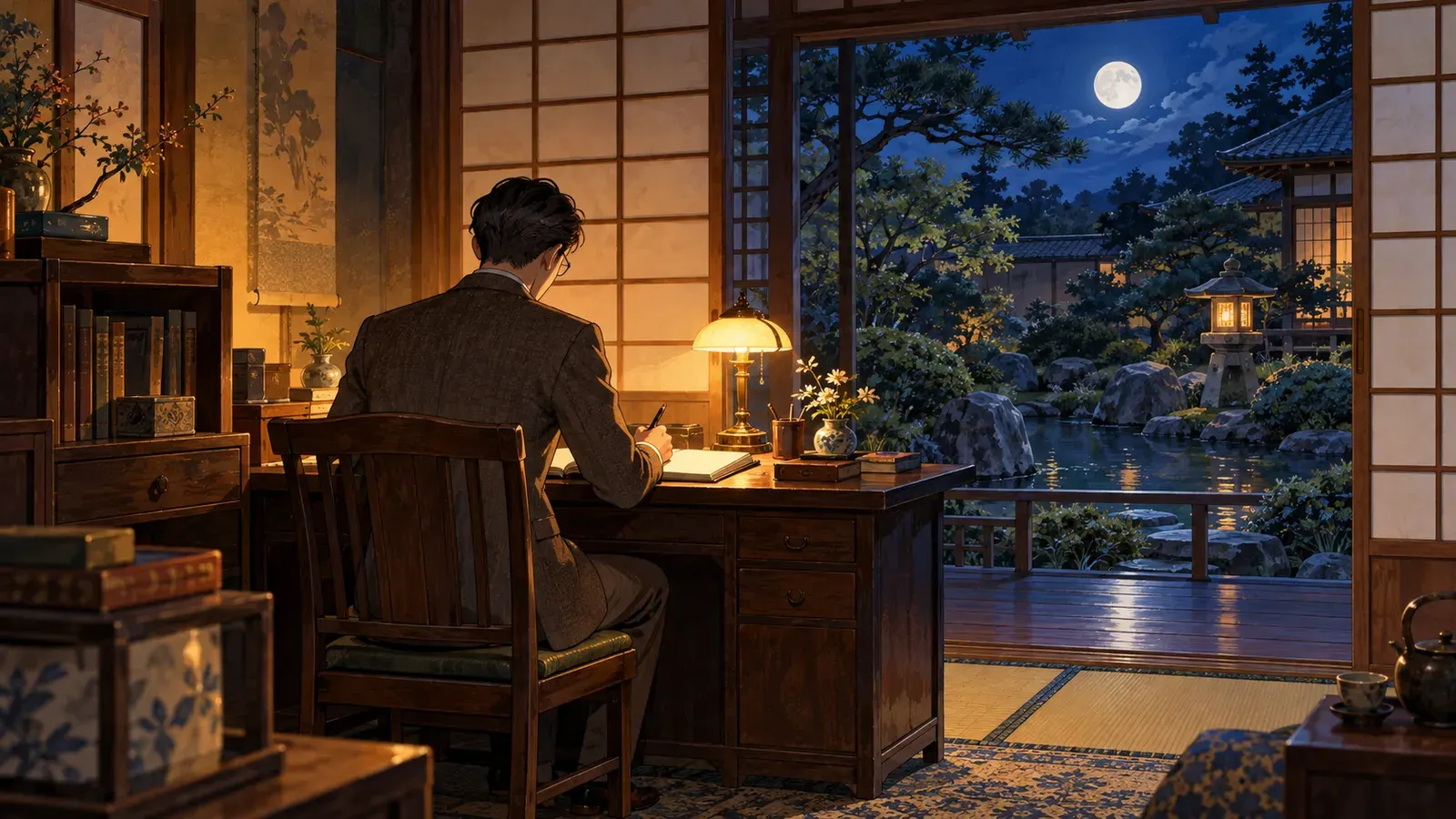
Yukawa thought about this for a long time. It is said that ideas often came to him at night, so he kept a notebook by his bed. In 1934, he had an idea. Maybe there was an unknown particle that moved between protons and neutrons and held them together, like glue. He even calculated that it should be about two hundred times heavier than an electron. He published his theory in 1935. This particle was later called the meson.
湯川は長いあいだ、この問題を考えつづけました。アイデアは夜にひらめくことが多かったので、枕もとにノートを置いていたといわれています。1934年、湯川はある考えにたどり着きました。陽子と中性子のあいだを行き来して、のりのように両者を結びつけている、未知の粒子があるのではないか。その粒子の重さは電子のおよそ200倍のはずだ、ということまで計算で割り出しました。1935年、湯川はこの理論を発表しました。この粒子は、のちに「中間子」と呼ばれるようになりました。
Many scientists did not believe him at first. No one had seen such a particle. But in 1947, a British scientist, Cecil Powell, found it in cosmic rays coming from space. Yukawa's idea was right.
初めのうちは、多くの科学者が湯川の説を信じませんでした。そんな粒子を見た人は、誰もいなかったからです。ところが1947年、イギリスの科学者セシル・パウエルが、宇宙から降りそそぐ宇宙線の中に、その粒子を見つけました。湯川の考えは正しかったのです。
In 1949, Yukawa received the Nobel Prize in Physics. He was the first Japanese person to win a Nobel Prize. Japan had lost the war only four years before, and many people were poor and tired. The news gave the whole country hope and pride.
1949年、湯川はノーベル物理学賞を受賞しました。ノーベル賞を受けた、初めての日本人です。日本が戦争に負けてから、まだ4年しかたっていませんでした。多くの人が貧しく、疲れきっていました。このニュースは、国じゅうに希望と誇りをもたらしました。
Yukawa knew the terrible power of the atomic bomb. After the war, he worked for peace. In 1955, he signed the Russell-Einstein Manifesto, a famous statement that warned the world about nuclear weapons. He spoke out for peace until he died in 1981.
湯川は、原子爆弾の恐ろしい力をよく知っていました。戦後は、平和のために力を注ぎました。1955年には、ラッセル=アインシュタイン宣言に署名しました。核兵器の危険を世界に訴えた、有名な声明です。1981年に亡くなるまで、湯川は平和を訴えつづけました。
Yukawa was a quiet boy who did not talk much. But he thought deeply and patiently, and his quiet thinking changed physics. His life shows that you do not have to be loud to change the world.
湯川は、あまりしゃべらない、物静かな少年でした。けれども、深く、ねばり強く考えました。その静かな思考が、物理学を変えたのです。世界を変えるのに、大きな声はいらない。湯川の一生は、そのことを教えてくれます。