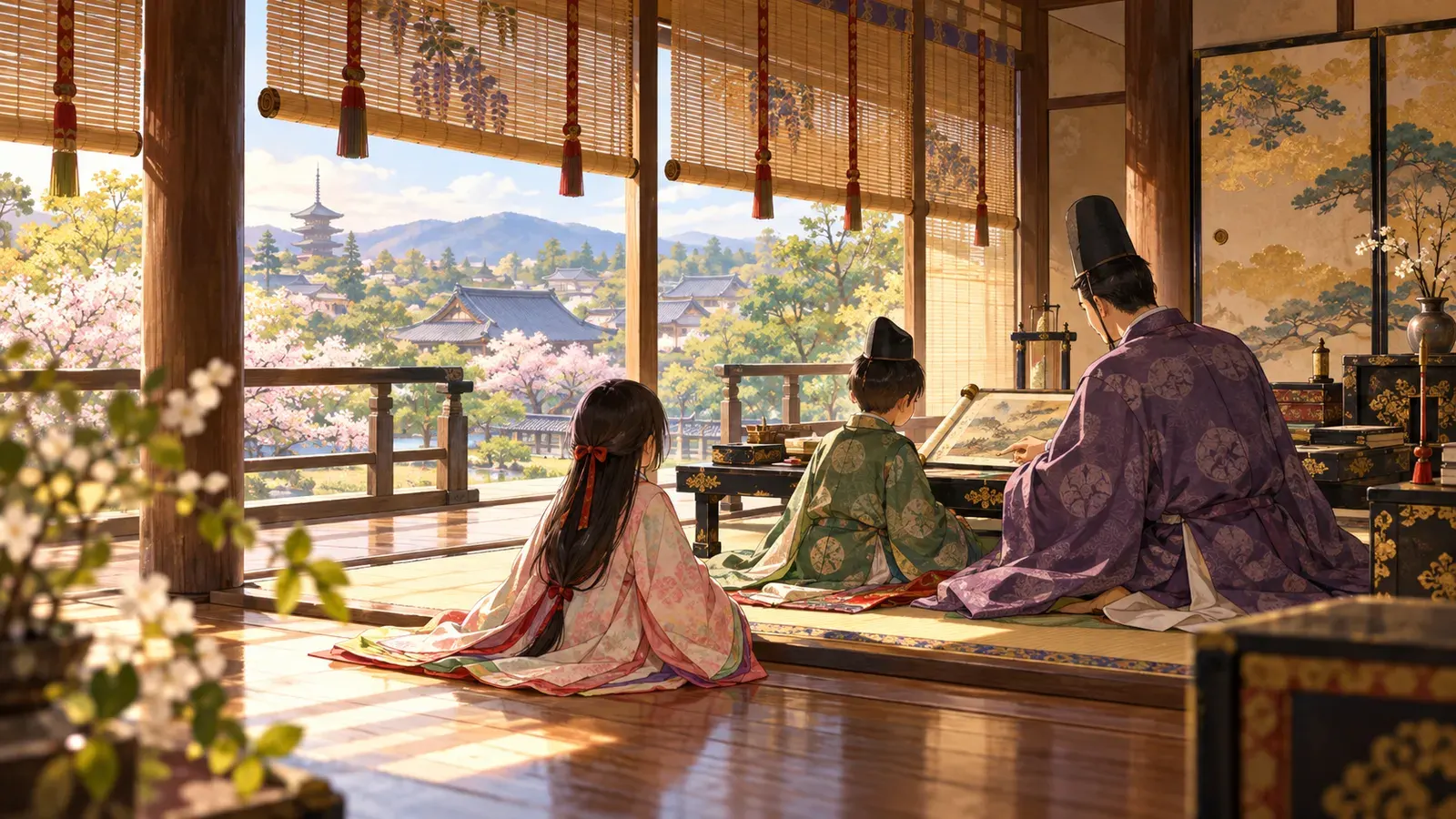
About one thousand years ago, a girl lives in Kyoto. We do not know her real name. Today, we call her Murasaki Shikibu.
今からおよそ千年前、京の都に一人の女の子が住んでいました。本当の名前は、わかっていません。今、わたしたちはこの人を紫式部と呼んでいます。
Her father reads old Chinese books. He is very smart.
お父さんは、中国の古い書物を読む人でした。とても頭のいい人です。
One day, her father teaches her brother. The Chinese book is hard. Her brother reads it again and again. But he cannot remember it.
ある日、お父さんは、息子に勉強を教えていました。中国の書物はむずかしく、男の子は何度も何度も読みました。それでも、なかなか覚えられません。
The girl sits near them. Her father teaches only her brother. She only listens. But she learns the hard parts faster than her brother!
女の子は、そばに座っていました。お父さんが教えていたのは、きょうだいだけです。女の子は、ただ聞いていただけでした。それなのに、むずかしいところを、きょうだいより早く覚えてしまったのです!
Her father says, "What bad luck! Why is this child not a boy?"
お父さんは、こう嘆きました。「ああ、運が悪い! どうしてこの子は男の子ではないのだろう。」
At that time, Chinese books are for boys. People think girls do not need them.
そのころ、中国の書物は男の子が学ぶものでした。女の子には必要ない、とみんな思っていたのです。
The girl grows up. She writes a long, long story. It is The Tale of Genji.
女の子は大人になり、長い長い物語を書きました。それが『源氏物語』です。
Later, she writes about her father's words in her diary. And her story? People still read it after one thousand years. They read it in many languages, too.
のちに紫式部は、このときのお父さんの言葉を、日記に書き残しました。では、物語のほうはどうなったでしょう? 千年たった今も、人々に読まれています。たくさんの国の言葉に訳されて、読まれているのです。