Kano Jigoro was born in 1860 in Mikage, which is now part of Kobe. He was a smart boy who loved to study. But he was small and weak. When he went to school in Tokyo, bigger boys often bullied him.
嘉納治五郎は1860年、御影(今の神戸市の一部)で生まれました。勉強が大好きな、頭のいい少年でした。けれども、体は小さく、ひ弱でした。東京の学校に通っていたころは、体の大きな少年たちによくいじめられました。
Jigoro wanted to become strong. He heard about jujutsu, an old Japanese art of fighting without weapons. At that time, many people thought jujutsu was old-fashioned, and it was hard to find a teacher. But Jigoro kept looking, and at last he found one.
治五郎は強くなりたいと思いました。そんなとき、柔術のことを耳にしました。武器を使わずに戦う、日本の古い武術です。当時、柔術は時代おくれだと考える人が多く、教えてくれる先生もなかなか見つかりませんでした。それでも治五郎は探しつづけ、ついに先生を見つけました。
He practiced very hard, even while he studied at Tokyo University. He learned from more than one school of jujutsu. He thought about each move carefully, like a scientist. Why does this throw work? How can a small person throw a big person?
東京大学で学ぶあいだも、治五郎は熱心に稽古を続けました。一つの流派だけでなく、いくつもの柔術の流派から学びました。そして、一つひとつの技を、科学者のようにじっくり考えました。この投げ技は、なぜ決まるのか。小さな人が大きな人を投げるには、どうすればよいのか。
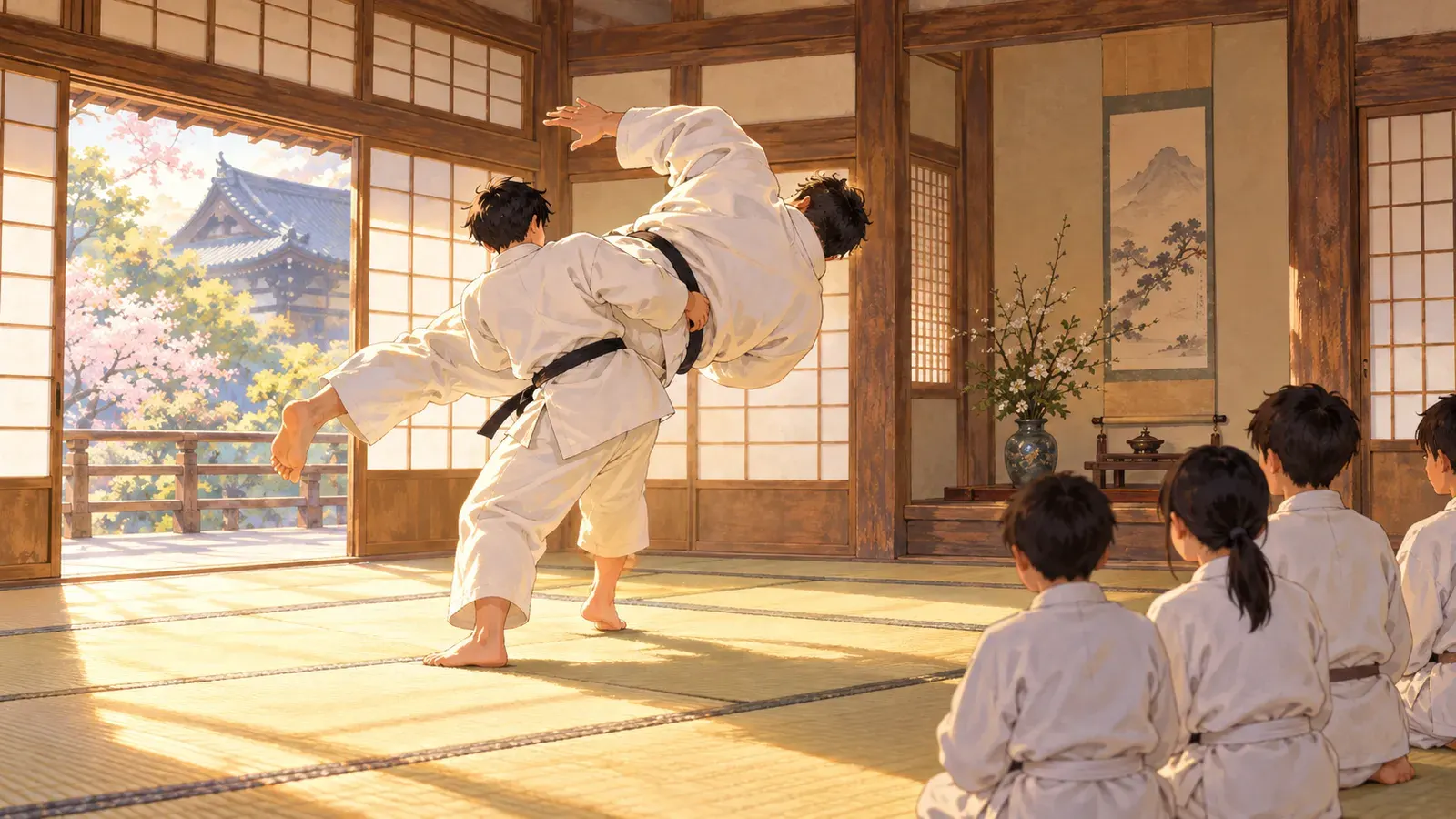
He found an answer. When a strong person pushes you, do not push back. Pull instead, and use his power against him. In 1882, when he was only twenty-one, he opened a small school in a room at a temple in Tokyo. There were only nine students at first. He called his new art judo, the gentle way. The school was named the Kodokan.
治五郎は答えを見つけました。力の強い相手に押されたら、押し返してはいけません。逆に引いて、相手の力をそのまま利用するのです。1882年、治五郎はわずか21歳で、東京のお寺の一室に小さな道場を開きました。初めの門人は、たった9人でした。治五郎はこの新しい武道を「柔道」と名づけました。「柔らかい道」という意味です。道場の名前は講道館としました。
Kano made judo safer than the old jujutsu. He took out dangerous moves and taught students how to fall without getting hurt. He also taught that judo was not only for fighting. It was for training the body and the mind. He liked to teach two big ideas. Use your energy in the best way, and help each other so that everyone can grow together.
治五郎は、柔道を昔の柔術より安全なものにしました。危ない技を取りのぞき、けがをしない倒れ方(受け身)を教えたのです。また、柔道は戦うためだけのものではない、とも教えました。体と心をきたえるためのものだ、というのです。治五郎が好んで説いた大きな考えが、二つあります。自分の力をいちばんよい形で使うこと。そして、たがいに助け合い、みんなで一緒に伸びていくことです。
Kano was also a great teacher at school. For many years, he was the head of a school in Tokyo that trained teachers. He also welcomed students from China and helped them study in Japan.
治五郎は、学校の教育者としてもすぐれていました。長年にわたって、東京にある教師を育てる学校の校長をつとめました。中国からの留学生を受け入れ、日本で学べるように手助けもしました。
In 1909, he became the first Asian member of the International Olympic Committee. In 1912, he led Japan's first Olympic team to the Games in Stockholm. Later, he worked hard to bring the Olympics to Tokyo. In 1938, he died on a ship on his way home from an Olympic meeting in Egypt.
1909年、治五郎はアジア人として初めて、国際オリンピック委員会の委員になりました。1912年には、日本初のオリンピック選手団を率いて、ストックホルム大会に参加しました。その後は、東京にオリンピックを呼ぶために力を尽くしました。1938年、エジプトでのオリンピックの会議から帰る途中、船の上で亡くなりました。
Kano never saw the Olympics in Tokyo. But in 1964, the Tokyo Olympics were held, and judo became an Olympic sport for the first time. Today, millions of people practice judo all around the world.
治五郎は、東京オリンピックを見ることはできませんでした。けれども1964年、東京オリンピックが開かれ、柔道は初めてオリンピックの競技になりました。今では、世界中で何百万人もの人が柔道に取り組んでいます。
Kano started as a small, weak boy. He did not try to become bigger than everyone else. He found a smarter way. And his way is still helping people, big and small, everywhere.
治五郎は、もとは小さくてひ弱な少年でした。誰よりも大きくなろうとはしませんでした。もっと賢いやり方を見つけたのです。そのやり方は今も、世界のあちこちで、大きな人にも小さな人にも役立っています。
 ▶