For forty years, from 1984 to 2024, the face of Fukuzawa Yukichi looked out from Japan's ten-thousand-yen note. Many Japanese people know him as the founder of Keio University and the author of a famous book that begins with words about equality. But who was he, and why did his ideas matter so much? His life covers the end of the samurai age and the birth of modern Japan, and it shows both the hopes and the problems of that time.
1984年から2024年までの40年間、福沢諭吉の顔は、日本の一万円札に印刷されていました。多くの日本人は、福沢を慶應義塾大学の創立者として、また、平等について語る言葉で始まる有名な本の著者として知っています。では、福沢とはどんな人で、その考えはなぜそれほど大きな意味を持ったのでしょうか。福沢の生涯は、武士の時代の終わりから近代日本の誕生までにまたがっています。そこには、その時代の希望と問題の両方が映し出されているのです。
Fukuzawa was born in Osaka in January 1835. His father, Hyakusuke, was a low-ranking samurai of the Nakatsu domain in Kyushu. He worked in the domain's office in Osaka, handling money and rice. He loved books and learning, but because of his low rank, he could never rise to an important position. He died when Yukichi was only about one year old, and the family returned to Nakatsu.
福沢は1835年1月、大坂で生まれました。父の百助は、九州の中津藩に仕える身分の低い武士でした。大坂にある藩の役所で、お金や米を扱う仕事をしていました。百助は書物と学問を愛していましたが、身分が低いために、重要な役につくことはできませんでした。諭吉がわずか1歳ほどのときに百助は亡くなり、一家は中津に帰りました。
In Nakatsu, Yukichi grew up feeling the weight of the class system. Children of high-ranking families looked down on children of low-ranking ones, even at school and at play, however able they were. Years later, in his autobiography, he wrote that his father had hoped to make him a Buddhist priest, because in a temple, even the son of a fish seller could rise to the highest rank. When he thought of this, he wrote, he felt angry for his father, and he called the feudal system of family rank "my father's enemy."
中津で育つうちに、諭吉は身分制度の重さを肌で感じました。身分の高い家の子は、身分の低い家の子を見下していました。学校でも遊びの場でも、どんなに才能があっても、それは変わりませんでした。のちに福沢は自伝の中で、父は自分を僧にしたがっていた、と書いています。寺に入れば、魚屋の息子でもいちばん高い位にまでのぼれるからです。そのことを思うと、父のために腹が立ってならない、と福沢は書きました。そして、家柄で身分が決まる仕組み(門閥制度)を「親の敵」と呼んだのです。
As a boy, he was not afraid to question old beliefs. According to his autobiography, his older brother once scolded him for stepping on a piece of paper with their lord's name written on it. Yukichi then secretly stepped on a paper charm from a shrine, to see whether the gods would punish him. Nothing happened. He also secretly replaced the sacred stone inside a small shrine with an ordinary one, and then watched people come to pray to it. These stories come from memories he wrote down when he was old, but they show how he wanted to be seen: as someone who trusted reason, not fear.
少年のころから、諭吉は古い信仰を疑うことを恐れませんでした。自伝によると、あるとき、殿様の名前が書かれた紙を踏んで、兄にしかられたことがありました。そこで諭吉は、こっそり神社のお札を踏んでみました。神様のばちが当たるかどうか、確かめようとしたのです。何も起こりませんでした。小さな祠にご神体として祭られていた石を、こっそりただの石と取りかえ、人々がそれを拝みに来るのをながめていたこともありました。こうした話は年をとってから書いた思い出にもとづくものですが、福沢が自分をどう見てほしかったかはよく分かります。恐れではなく、理性を信じる人間として見てほしかったのです。
He started serious study fairly late, at about fourteen, but he learned quickly. In 1854, at the age of nineteen, he went to Nagasaki to study Dutch, then the main European language used for Western learning in Japan. The next year, he entered Tekijuku, the school of the doctor Ogata Koan in Osaka. The students there lived together, studied day and night, and argued about ideas from Dutch books on medicine, physics, and chemistry. Fukuzawa soon became the head student.
本格的に勉強を始めたのは14歳ごろと遅めでしたが、諭吉はみるみる力をつけました。1854年、19歳のとき、長崎へ行ってオランダ語を学びました。当時の日本では、西洋の学問を学ぶのに、おもにオランダ語が使われていたのです。翌年には、大坂にある医者の緒方洪庵の塾、適塾に入りました。塾生たちは共同で暮らし、昼も夜も勉強し、医学や物理学、化学についてのオランダの本の内容を議論し合いました。福沢はまもなく、塾頭になりました。
Life at Tekijuku was rough and poor, but full of energy. According to Fukuzawa, the students once borrowed a rare new Dutch book on physics from a powerful lord, but only for a few days. Knowing they might never see it again, they took turns copying the chapter on electricity by hand, day and night, and finished just before the book had to be returned.
適塾の暮らしは荒っぽく、貧しいものでしたが、活気にあふれていました。福沢によると、あるとき塾生たちは、ある大名から、新しく出た珍しいオランダの物理学の本を借りることができました。ただし、借りられるのはほんの数日です。二度と見られないかもしれないと思った塾生たちは、交代で、電気について書かれた章を手で書き写しました。昼も夜も休まず写しつづけ、本を返さなければならない直前に、ようやく写し終えたのです。
In 1858, his domain sent him to Edo to teach Dutch to young samurai. This small school later became Keio Gijuku. The next year, he visited Yokohama, which had just opened as a port for foreign trade. To his shock, he could not read the signs on the shops or understand the foreigners. Their language was English, not Dutch.
1858年、福沢は藩の命令で江戸に出て、若い武士たちにオランダ語を教えることになりました。この小さな塾が、のちの慶應義塾です。翌年、福沢は、外国との貿易のために開港したばかりの横浜を訪れました。ところが、店の看板が読めず、外国人の言葉も分かりません。福沢は大きな衝撃を受けました。そこで使われていたのは、オランダ語ではなく英語だったのです。
All his years of study suddenly seemed useless. But instead of giving up, he started again from the beginning and began to teach himself English.
何年もかけた勉強が、急に役に立たないものに思えました。けれども福沢はあきらめず、一からやり直して、英語を独学で学びはじめました。
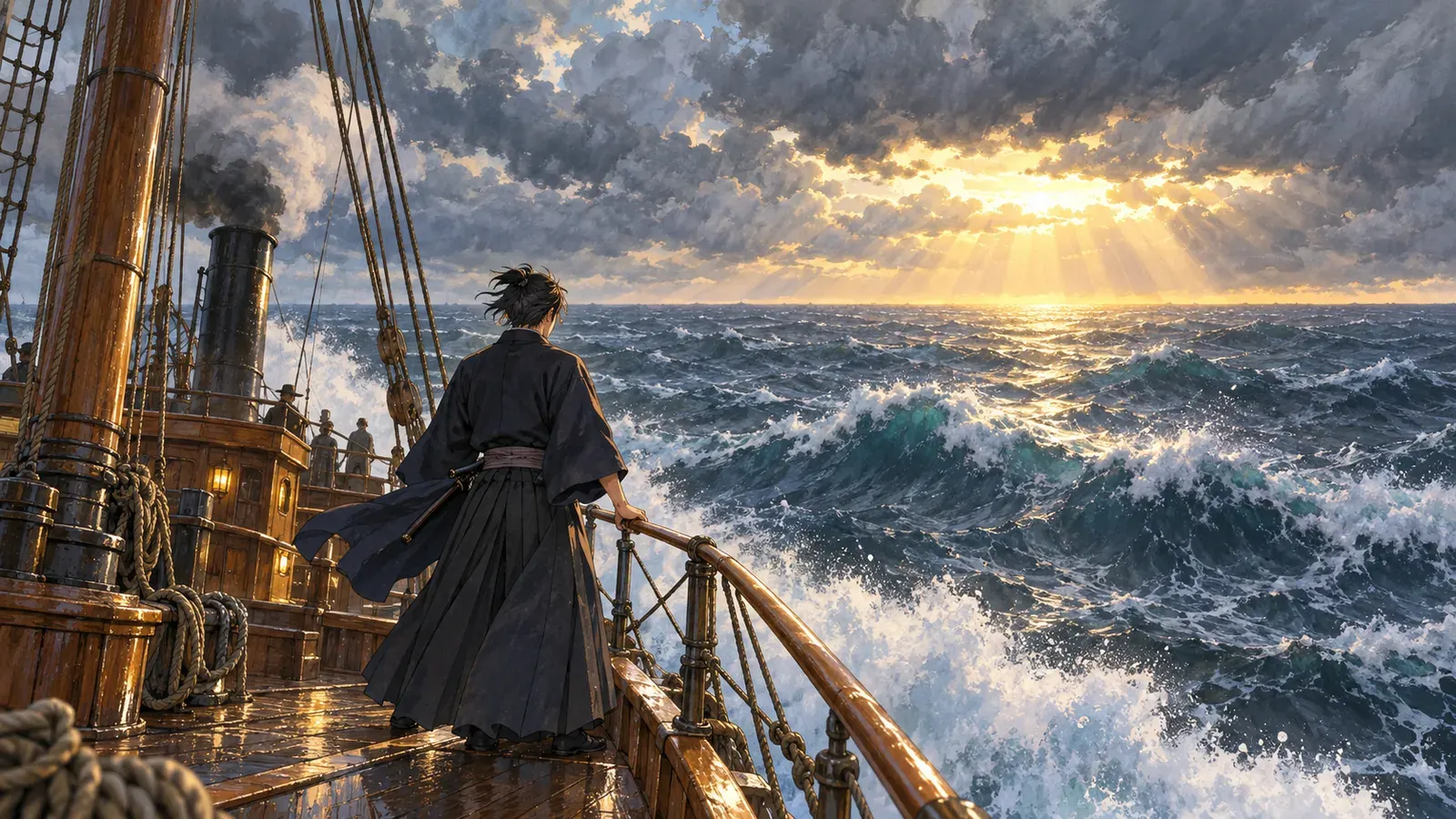
In 1860, he got the chance of a lifetime. The shogunate sent the ship Kanrin Maru across the Pacific to the United States, and Fukuzawa joined as a servant of the commander, Kimura Yoshitake. Katsu Kaishu and John Manjiro were also on board.
1860年、福沢に一生に一度の機会がめぐってきました。幕府が咸臨丸という船を、太平洋を越えてアメリカへ送ることになったのです。福沢は、一行をひきいる木村喜毅の従者として船に乗りこみました。勝海舟とジョン万次郎も一緒でした。
The voyage took more than a month, through heavy storms, and many on board were badly seasick. In San Francisco, he and Manjiro bought copies of Webster's English dictionary.
航海は1か月以上もかかりました。ひどい嵐にあい、船の上では多くの人が激しい船酔いに苦しみました。サンフランシスコで、福沢と万次郎は、ウェブスターの英語の辞書を買い求めました。
Fukuzawa was not very surprised by the machines and technology, which he already knew from books. What surprised him more was society. When he asked what had become of the descendants of George Washington, people answered without much interest. In Japan, the descendants of a great founder like Tokugawa Ieyasu were treated with deep respect. In America, ordinary people did not seem to care.
機械や技術には、福沢はそれほど驚きませんでした。本を読んで、すでに知っていたからです。それよりも驚いたのは、社会のありようでした。ジョージ・ワシントンの子孫は今どうしているのか、とたずねても、人々はあまり関心のない様子で答えたのです。日本では、徳川家康のような偉大な創始者の子孫は、深く敬われていました。ところがアメリカでは、ふつうの人々はまるで気にかけていないようでした。
In 1862, he travelled to Europe as a translator with a mission from the shogunate, visiting countries such as France, Britain, the Netherlands, and Russia. He went to the United States again in 1867. Each time, he asked questions and took careful notes, not only about hospitals and factories but also about how banks, elections, and newspapers actually worked. His book Seiyo Jijo, or Conditions in the West, which began to appear in 1866, explained these things in plain Japanese and became a bestseller.
1862年、福沢は幕府の使節団の翻訳係としてヨーロッパに渡り、フランス、イギリス、オランダ、ロシアなどの国々を訪れました。1867年には、もう一度アメリカにも行きました。そのたびに福沢は質問を重ね、丹念にメモをとりました。病院や工場だけではありません。銀行や選挙、新聞が実際にどう動いているのかも、調べて書きとめたのです。1866年から出版が始まった『西洋事情』は、こうしたことを分かりやすい日本語で説明し、ベストセラーになりました。
In 1868, the shogunate fell, and war broke out between the new government and supporters of the old one. In Edo, the new government's army attacked the shogun's supporters at Ueno, and the sound of guns could be heard across the city. According to his own account, on that same day Fukuzawa calmly went on with his lecture on an American economics textbook by Francis Wayland. Whatever happened in the world outside, he told his students, the school would continue, and learning would not stop. That year, he named his school Keio Gijuku, after the name of the era.
1868年、幕府が倒れ、新しい政府と旧幕府を支持する人々とのあいだで戦争が起こりました。江戸では、新政府軍が上野にこもる旧幕府側の人々を攻撃し、鉄砲の音が町じゅうに響きました。福沢自身の記録によると、まさにその日、福沢は落ち着きはらって講義を続けていました。フランシス・ウェーランドというアメリカ人が書いた、経済学の教科書の講義です。外の世の中で何が起ころうと、この塾は続けるし、学問は止まらない。福沢は塾生たちにそう語りました。この年、福沢は年号にちなんで、塾を慶應義塾と名づけました。
After the Meiji Restoration, the new government wanted to use his knowledge and offered him positions. He refused them all. He believed that Japan needed people who could think and act independently, outside the government, and he wanted to be one of them.
明治維新のあと、新しい政府は福沢の知識を役立てようとして、役職につくよう求めました。福沢は、そのすべてを断りました。日本には、政府の外で、自分で考えて行動できる人間が必要だ。福沢はそう信じ、自分もそういう人間の一人でありたいと思っていたのです。
In 1872, he published the first part of Gakumon no Susume, or An Encouragement of Learning. It begins with a famous sentence: "Heaven does not create one person above another, nor one person below another, it is said." Many people remember only this part.
1872年、福沢は『学問のすゝめ』の初編を出版しました。この本は、有名な一文で始まります。「天は人の上に人を造らず人の下に人を造らずと言えり」。多くの人が覚えているのは、この部分だけです。
But Fukuzawa's point was that, even though people are born equal, in real life there are great differences between the wise and the foolish, the rich and the poor. The difference, he argued, comes from learning. He did not mean only reading old classics. He meant practical learning that helps people in daily life. The book came out in seventeen parts until 1876, and it was read by an enormous number of people.
けれども、福沢が言いたかったのは、その先でした。人は生まれたときは平等なのに、実際の世の中では、賢い人と愚かな人、金持ちと貧しい人とのあいだに大きな違いがある。その違いは学問から生まれるのだ、と福沢は説いたのです。福沢の言う学問とは、昔の古典を読むことだけではありません。毎日の暮らしに役立つ、実際的な学問のことでした。この本は1876年までに17編が出され、とてつもなく多くの人に読まれました。
For Fukuzawa, the goal of learning was independence. A person who could think and earn a living without help would not need to bow to anyone. And a country made of such people would be able to stand on its own in the world. "When each person is independent, the country will be independent," he wrote. These words sum up his whole belief.
福沢にとって、学問の目的は独立でした。自分で考え、人の助けを借りずに生計を立てられる人は、誰にも頭を下げる必要がありません。そして、そういう人たちでできた国は、世界の中で自分の力で立っていけるはずです。「一身独立して一国独立する」と福沢は書きました。この言葉に、福沢の信念のすべてがこめられています。
He also wrote about the position of women, which was unusual for a man of his time. He criticized the custom of men keeping several partners, argued that husband and wife should respect each other as equals, and believed that girls should receive an education as well as boys. In 1882, he started a newspaper, Jiji Shinpo, which became one of the most influential papers of the period.
福沢はまた、女性の地位についても書きました。当時の男性としては珍しいことです。男性が妻のほかに何人もの女性を持つ習わしを批判し、夫と妻は対等な立場でたがいに敬い合うべきだと主張しました。男の子と同じように、女の子も教育を受けるべきだとも考えていました。1882年には『時事新報』という新聞を創刊しました。この新聞は、当時もっとも影響力のある新聞の一つになりました。
But his ideas about Asia have a darker side. Fukuzawa supported young reformers in Korea who wanted to modernize their country. When their attempt to take power failed in 1884, he hid one of their leaders, Kim Ok-gyun, at his home. After this failure, his newspaper became sharply critical of China and Korea.
けれども、アジアについての福沢の考えには、暗い面もあります。福沢は、自分の国を近代化しようとする朝鮮の若い改革派を支援していました。1884年、改革派は政権をにぎろうとして失敗します。福沢は、その指導者の一人、金玉均を自分の家にかくまいました。この失敗のあと、福沢の新聞は、中国と朝鮮をきびしく批判するようになりました。
In 1885, it printed an unsigned article now known as Datsu-A Ron, or "Leaving Asia." It said that Japan should not wait for its neighbors to modernize, but should leave Asia behind and join the Western nations. Historians still debate whether Fukuzawa himself wrote it. But he did strongly support the war with China in 1894, and in Korea and China he is often remembered as a man whose ideas helped to justify Japan's expansion.
1885年、『時事新報』は署名のない社説をのせました。今では「脱亜論」として知られる文章です。日本は隣の国々が近代化するのを待つべきではない。アジアを離れ、西洋の国々の仲間に入るべきだ。社説はそう主張していました。これを福沢自身が書いたのかどうかは、今も歴史家のあいだで議論があります。けれども、1894年の日清戦争を福沢が強く支持したことは確かです。そのため韓国や中国では、福沢は、日本の勢力拡大を正当化する手助けをした人物として記憶されることが多いのです。
In 1898, he suffered a stroke. He recovered for a time, but in 1901, at the age of sixty-six, he died in Tokyo. His school grew into Keio University, one of the leading private universities in Japan.
1898年、福沢は脳卒中で倒れました。一時は回復しましたが、1901年、66歳で東京で亡くなりました。福沢の塾は慶應義塾大学へと発展し、今では日本を代表する私立大学の一つになっています。
Fukuzawa Yukichi hated the system that had held his father back, and he spent his life trying to open the doors of learning to everyone. He was not perfect, and some of his views about other Asian countries are hard to accept today. But his central message still speaks to us: learn for yourself, think for yourself, and stand on your own feet. That is what he meant by learning, and it is the reason his face once appeared on the money in so many people's wallets.
福沢諭吉は、父の行く手をはばんだ制度を憎み、学問の扉をすべての人に開こうとして一生を送りました。完璧な人ではありませんでしたし、ほかのアジアの国々についての考えには、今では受け入れがたいものもあります。それでも、その中心にあるメッセージは、今も私たちの心に届きます。自分で学び、自分で考え、自分の足で立て。それこそが、福沢の言う学問でした。そしてそれこそが、大勢の人の財布の中のお札に、かつて福沢の顔があった理由なのです。