Imagine a great cook who cannot taste food, or a painter who cannot see colors. Something like this happened to Ludwig van Beethoven. He was one of the greatest composers in history, but he slowly lost his hearing.
味がわからない一流の料理人や、色が見えない画家を想像してみてください。ルートヴィヒ・ヴァン・ベートーヴェンの身に起きたのは、それに近いことでした。ベートーヴェンは歴史上もっとも偉大な作曲家の一人です。ところが、その耳は少しずつ聞こえなくなっていったのです。
Beethoven was born in 1770 in Bonn, a city in Germany. His father was a singer. He saw that his son had a great talent, and he wanted him to become famous like the young Mozart. He made the boy practice for hours. It is said that he sometimes woke Ludwig up at night to play for his friends. His father also drank too much, and life at home was hard.
ベートーヴェンは1770年、ドイツのボンという町で生まれました。お父さんは歌手でした。お父さんは、息子にすばらしい才能があると気づき、幼いころのモーツァルトのように有名にしたいと考えました。そして、何時間も練習させました。夜中にルートヴィヒを起こして、友人たちの前で弾かせることもあったといわれています。お父さんはお酒を飲みすぎることもあり、家での暮らしはつらいものでした。
When he was twenty-one, Beethoven moved to Vienna, the city of music. He studied with the famous composer Joseph Haydn. Soon, people in Vienna were talking about the young pianist. He played with great power and feeling, and he could make up new music on the spot.
21歳のとき、ベートーヴェンは音楽の都ウィーンに移り、有名な作曲家ヨーゼフ・ハイドンに学びました。まもなく、この若いピアニストはウィーンで評判になりました。その演奏は力強く、気持ちがこもっていました。その場で新しい曲を作って弾くこともできたのです。
But in his late twenties, something terrible began. Beethoven heard ringing and buzzing in his ears. Little by little, his hearing got worse. For a musician, this was a nightmare. He stopped going to parties, because he did not want people to know. He felt very lonely.
ところが、20代の終わりごろ、恐ろしいことが始まりました。耳の中で、キーンとかブーンとかいう音が鳴るようになったのです。聴力は、少しずつ落ちていきました。音楽家にとって、これは悪夢でした。人に知られたくなかったので、パーティーにも行かなくなりました。ベートーヴェンは、ひどく孤独でした。
In 1802, when he was thirty-one, Beethoven wrote a long letter to his brothers. In it, he said that he had even thought about ending his life. But he decided to live, because he still had so much music inside him. He wanted to give it to the world first.
1802年、31歳のベートーヴェンは、弟たちにあてて長い手紙を書きました。その中で、自分で命を絶つことさえ考えた、と打ち明けています。それでも、ベートーヴェンは生きることを選びました。自分の中には、まだたくさんの音楽があったからです。まずはそれを世界に届けたい、と思ったのです。
After this, Beethoven wrote some of his most powerful music. His Fifth Symphony begins with four famous notes that almost everyone knows. He wrote piano sonatas, an opera and many other works. As his hearing became weaker, people wrote their words in notebooks so that he could read them.
このあと、ベートーヴェンは、もっとも力強い作品のいくつかを書きました。交響曲第5番は、ほとんど誰もが知っている、あの有名な四つの音で始まります。ピアノ・ソナタやオペラなど、ほかにもたくさんの作品を書きました。耳が聞こえにくくなってからは、周りの人がノートに言葉を書き、ベートーヴェンはそれを読んで話をしました。
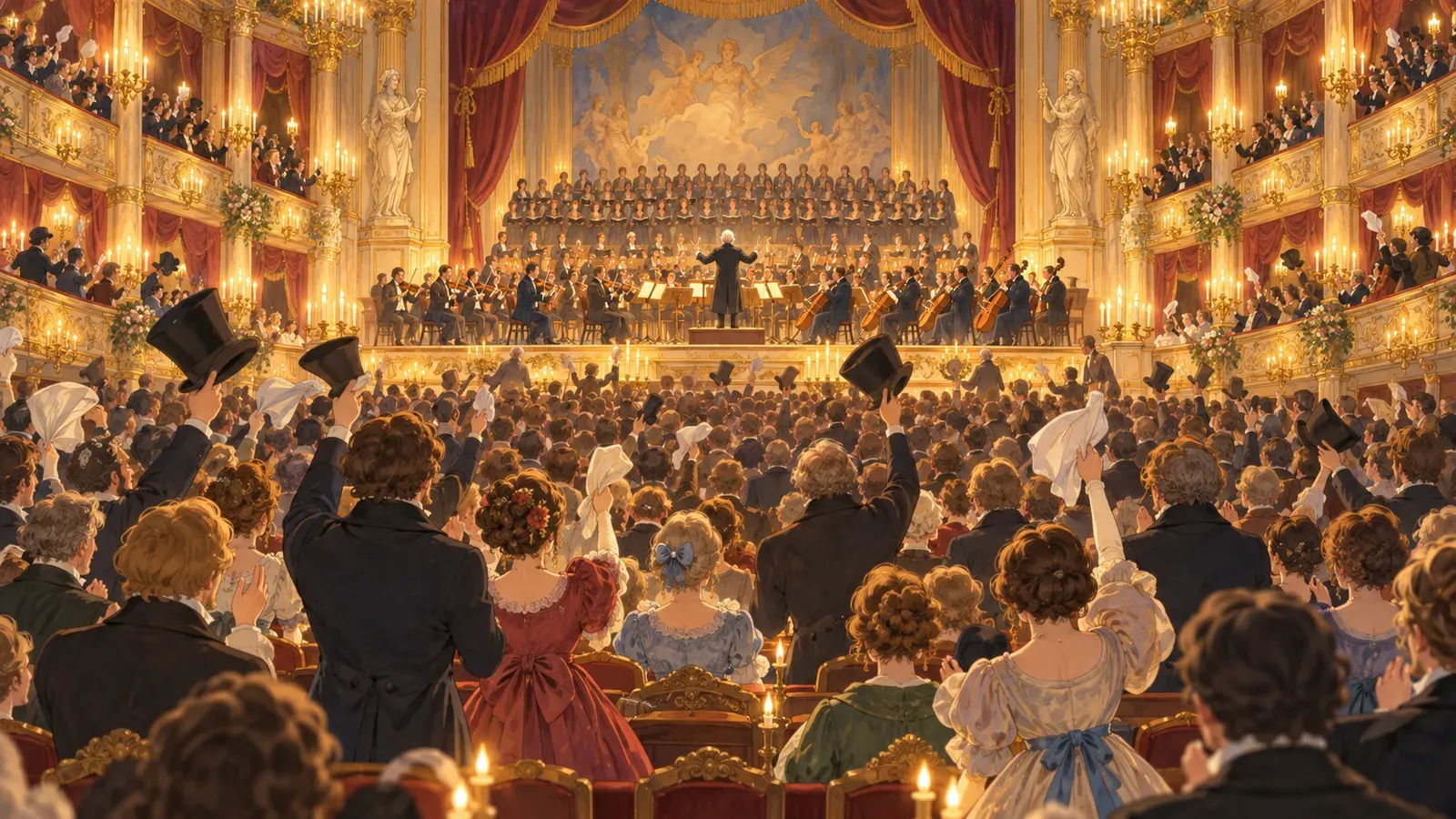
In 1824, his Ninth Symphony was played for the first time in Vienna. By then, Beethoven was almost completely deaf. He stood on the stage with the orchestra. When the music ended, the crowd clapped and cheered loudly. But Beethoven could not hear them. It is said that a singer gently turned him around so that he could see the people waving their hats and hands.
1824年、ウィーンで交響曲第9番が初めて演奏されました。そのころには、ベートーヴェンの耳は、ほとんどまったく聞こえなくなっていました。ベートーヴェンは、オーケストラと一緒に舞台に立っていました。曲が終わると、観客は大きな拍手と歓声を送りました。けれども、ベートーヴェンにはそれが聞こえませんでした。そこで一人の歌手が、帽子や手を振る人々の姿が見えるように、そっとベートーヴェンの体を観客のほうへ向けてあげたと伝えられています。
Beethoven died in Vienna in 1827. Thousands of people came to his funeral to say goodbye.
ベートーヴェンは1827年、ウィーンで亡くなりました。葬儀には何千人もの人が集まり、別れを告げました。
Today, his Ninth Symphony is loved everywhere, especially in Japan. Its last part, the Ode to Joy, is sung by large choirs every December. In Japan, the whole symphony was first played in 1918 by German prisoners of war in a camp in Tokushima. Now the music of the Ode to Joy, without words, is also the official anthem of Europe.
今では、交響曲第9番は世界中で、とりわけ日本で愛されています。最後の楽章の「歓喜の歌」は、毎年12月になると、大合唱団によって歌われます。日本で初めてこの交響曲が全曲演奏されたのは1918年のことです。演奏したのは、徳島の収容所にいたドイツ人の捕虜たちでした。今では「歓喜の歌」のメロディーは、歌詞をつけずに、ヨーロッパの公式の歌にもなっています。
Beethoven lost the thing he needed most. But he did not give up. He heard the music in his heart and wrote it down for us.
ベートーヴェンは、いちばん必要なものを失いました。それでも、あきらめませんでした。心の中で音楽を聴き、それを書き留めて、私たちに残してくれたのです。