月の裏側にウサギの模様がないのはなぜ?中国の探査機が持ち帰った石で新説
Far-Side Rocks Offer a New Answer to the Moon's Two Faces
びっくり度 中学生 160語 / 高校生 305語宇宙月お月見
3行でわかる!このニュース
- 月のウサギに見える黒い模様は、地球から見える側に集まり、見えない裏側にはほとんど無い
- 中国の探査機が、見えない裏側の石を初めて地球に持ち帰り、南京大学のチームが調べた
- 新しい説:大昔、月をおおっていたとけた岩の動きで、裏側の地面だけが厚くなった
なぜ話題?南京大学のチームが、嫦娥6号が持ち帰った月の裏側の石を調べた研究(学術誌 National Science Review)を発表。10月中旬に ScienceDaily・EurekAlert などで「月の2つの顔のナゾが解けたかもしれない」と報じられた。10月23日は十三夜
中学生レベル(英検3級〜準2級・CEFR A1〜A2)・160語・約1分
The Mystery of the Moon's Two Sides
語彙レベル(CEFR-J)
A181.1%A213.2%B15%B20%外0.6%
0:00 / --:--
この記事の声:イギリス英語・女性声は日によって、アメリカ・イギリス・オーストラリア英語、男性・女性が入れかわります
MP3をダウンロード(中学生版・タイトルから本文まで)
Scientists in China may have solved an old mystery about the Moon. The Moon always shows the same side to Earth. The side we never see from Earth is called the far side.
中国の科学者たちが、月の古いナゾを解いたかもしれません。月は、地球にいつも同じ面を向けています。地球から見えないほうの面は、「裏側」と呼ばれています。
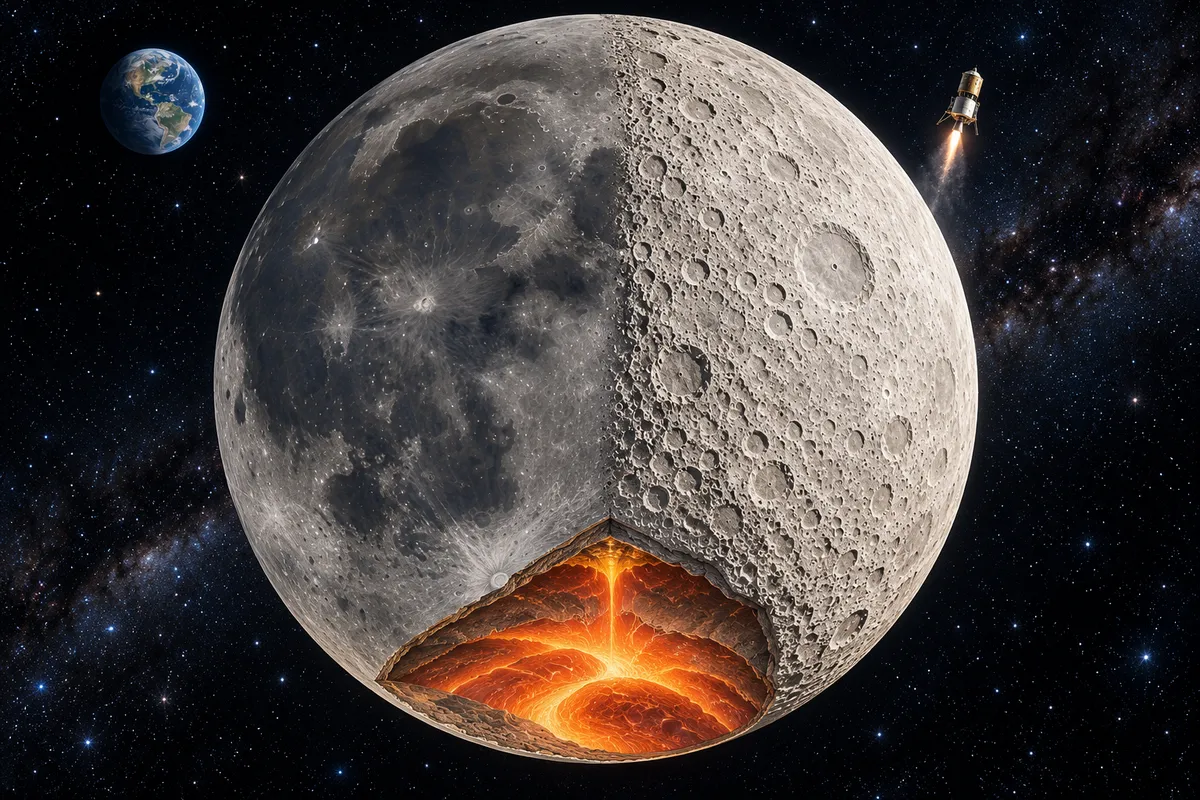
The two sides look very different. Dark areas cover about one third of the near side. In Japan, people say these dark areas look like a rabbit making rice cakes. On the far side, they cover only about one percent.
表と裏は、見た目がまったくちがいます。地球から見える表側は、全体の約3分の1が黒っぽい部分です。日本では、この黒っぽい模様が、もちをつくウサギに見えると言われています。ところが裏側では、黒っぽい部分は約1%しかありません。
In 2024, China's Chang'e-6 spacecraft brought back the first rocks from the far side. A team at Nanjing University compared them with rocks from the near side. Some of those rocks came from America's Apollo missions.
2024年、中国の探査機「嫦娥(じょうが)6号」が、裏側から初めて石を持ち帰りました。南京大学のチームが、その石を表側の石とくらべました。表側の石の中には、アメリカのアポロ計画で持ち帰ったものもありました。
Long ago, the young Moon was covered with an ocean of melted rock. The team says the two sides of this ocean had different temperatures. Because of this, light rock moved to the far side and made its surface layer thicker. The study was published in the journal National Science Review.
大昔、できたばかりの月は、とけた岩の海におおわれていました。チームによると、この海は表側と裏側で温度がちがっていました。そのせいで、軽い岩が裏側へ動き、裏側の表面の層が厚くなったといいます。この研究は、学術誌「ナショナル・サイエンス・レビュー」にのりました。
WORDSこの記事の単語(8語)
- mysteryA2名ナゾsomething that people cannot explainHow the cat got out is a mystery.ネコがどうやって外に出たのかはナゾだ。
- sideA1名面、側one of the two halves of somethingWrite your name on this side of the paper.紙のこちら側に名前を書いてください。
- calledA1動~と呼ばれるgiven a certain nameThis flower is called a sunflower.この花はヒマワリと呼ばれている。
- coverA1動おおう、(広さを)占めるto be over the top of somethingSnow covers the mountain in winter.冬には雪が山をおおう。
- spacecraft外名宇宙船、探査機a machine that travels into spaceThe spacecraft landed on Mars.その探査機は火星に着陸した。
- comparedA2動くらべたlooked at two things to find differencesWe compared the prices at two shops.私たちは2つの店の値段をくらべた。
- meltedB1形とけたturned into liquid because of heatThe melted ice made a small pool.とけた氷が小さな水たまりになった。
- temperaturesA2名温度how hot or cold something isTemperatures will fall tonight.今夜は気温が下がるだろう。
単語の横の A1A2B1B2 は、その単語のむずかしさです(A1 がいちばんやさしく、B2 がいちばん難しい。外 はリストにない語)。ほかの単語のレベルも調べる
レベルの出典:『CEFR-J Wordlist Version 1.6』 東京外国語大学投野由紀夫研究室. (URL: https://www.cefr-j.org/download.html より 2026年8月ダウンロード)
GRAMMAR文法ポイント:受け身(be動詞 + 過去分詞)
is called は「~と呼ばれている」。本文の The side we never see from Earth is called the far side. がその例。主語の The side we never see from Earth は「私たちが地球から決して見ない面」で、side のうしろに(which)we never see が続いて説明している。
- This bird is called a crow in English.この鳥は英語でクロウ(カラス)と呼ばれている。
- English is spoken in many countries.英語は多くの国で話されている。
GAMESゲームで復習しよう
THINK考えてみよう・話してみよう
日本語訳はぼかしてあります。タップすると見えます。
- What shape do you see in the Moon?あなたには月の模様が何の形に見えますか。
- If you could go to the far side of the Moon, what would you like to do there?もし月の裏側に行けたら、そこで何をしてみたいですか。
PRINT中学生版ワークシート(無料)
本文・単語・クイズ・並べかえ・穴うめ・英作文と解答つき。授業・宿題・自習にどうぞ。
高校生レベル(英検2級〜準1級・CEFR B1〜B2)・305語・約3分
Rocks From the Far Side Point to an Ancient Ocean of Magma
語彙レベル(CEFR-J)
A168.4%A219.1%B15.9%B21.3%外5.3%
0:00 / --:--
この記事の声:イギリス英語・女性声は日によって、アメリカ・イギリス・オーストラリア英語、男性・女性が入れかわります
MP3をダウンロード(高校生版・タイトルから本文まで)
Researchers at Nanjing University in China may have explained why the two faces of the Moon look so different, using the first rocks ever collected from the far side. Their study was published in the journal National Science Review, and science news sites reported it in mid-October.
中国の南京大学の研究者たちが、月の裏側で初めて集められた石を使って、月の2つの顔がなぜこんなにちがって見えるのかを説明できたかもしれません。研究は学術誌「ナショナル・サイエンス・レビュー」にのり、10月中旬に科学ニュースのサイトで報じられました。
Because the Moon spins once for every trip it makes around Earth, the same side always faces us. Dark plains, formed by ancient lava, cover about a third of this near side. In Japan, people describe these patches as a rabbit pounding rice cakes. Many people in Europe see a face instead. The far side, by contrast, has thicker crust and very few dark plains, which cover only about 1 percent of its surface.
月は地球のまわりを1周する間に1回だけ自転するので、いつも同じ面が地球を向いています。大昔の溶岩でできた黒っぽい平原が、この表側の約3分の1をおおっています。日本では、この模様が、もちをつくウサギにたとえられます。ヨーロッパでは、かわりに人の顔に見るという人が多くいます。それに対して裏側は、地殻(表面の岩の層)が厚く、黒っぽい平原はほとんどなく、表面の約1%しかありません。
China's Chang'e-6 mission landed inside the huge South Pole-Aitken basin on the far side and returned its samples to Earth in June 2024. The Nanjing team studied several kinds of far-side rock and compared them with near-side samples from the Apollo and Chang'e-5 missions. Basalts from the far side turned out to be chemically similar to some Apollo basalts, suggesting that the mantle below both sides is much the same. The far-side crust, however, contained more magnesium.
中国の嫦娥6号は、裏側の巨大な南極エイトケン盆地の中に着陸し、2024年6月に試料を地球に持ち帰りました。南京大学のチームは、裏側の何種類かの岩を調べ、アポロ計画と嫦娥5号が持ち帰った表側の試料とくらべました。裏側の玄武岩は、アポロの玄武岩の一部と成分がよく似ていました。これは、両側の地下のマントルがほぼ同じであることを示しています。ところが、裏側の地殻にはマグネシウムが多く含まれていました。
To explain this, the team looked back to a time when the young Moon was covered by a deep ocean of magma. After the Moon locked one face toward Earth, the two sides of that ocean had different temperatures, the team said. That difference drove slow sideways currents, which carried light crust rock toward the far side and leftover melted rock toward the near side.
これを説明するために、チームは、若い月が深いマグマの海におおわれていた時代にさかのぼって考えました。チームによると、月が片方の面を地球に向けたまま固定されると、マグマの海の表側と裏側で温度に差ができました。その温度差がゆっくりとした横向きの流れを生み、軽い地殻の岩を裏側へ、残ったとけた岩を表側へ運んだといいます。
Scientists have proposed other causes in the past, such as a giant collision or heating caused by Earth's pull. The new study adds evidence from the far side itself. However, reports describe it as a possible answer rather than a final one.
これまでにも科学者は、巨大な衝突や、地球に引っぱられて生じた熱など、別の原因を考えてきました。新しい研究は、裏側そのものからの証拠を加えました。ただし報道は、最終的な答えではなく「答えの候補」として伝えています。
WORDSこの記事の単語(10語)
- collectedA1動集められたbrought together from different placesThe rocks were collected on a mountain.その石は山で集められた。
- plainsB1名平原large areas of flat landCows eat grass on the wide plains.広い平原で牛が草を食べている。
- ancientA2形大昔の、古代のfrom a very long time agoWe visited an ancient temple in Nara.私たちは奈良の古いお寺をおとずれた。
- by contrastA2熟それに対してused to show a big differenceTokyo is busy. By contrast, my town is quiet.東京はにぎやかだ。それに対して、私の町は静かだ。
- crust外名地殻(表面の岩の層)the hard outside layer of a planetEarthquakes happen when the crust moves.地震は地殻が動くと起こる。
- samplesA2名試料、サンプルsmall amounts taken to study somethingThe doctor took a blood sample.医者は血液のサンプルをとった。
- similarA2形似ているalmost the same as something elseMy bag is similar to yours.私のかばんはあなたのに似ている。
- droveA1動(力となって)動かした、引き起こしたwas the force that made something happenStrong winds drove the fire across the hill.強い風で火は丘の向こうへ広がった。
- proposedB2動提案した、(考えを)出したgave an idea for others to think aboutShe proposed a new plan for the festival.彼女は文化祭の新しい案を出した。
- evidenceA2名証拠facts that show something is trueThere is no evidence that he took the money.彼がそのお金をとったという証拠はない。
単語の横の A1A2B1B2 は、その単語のむずかしさです(A1 がいちばんやさしく、B2 がいちばん難しい。外 はリストにない語)。ほかの単語のレベルも調べる
レベルの出典:『CEFR-J Wordlist Version 1.6』 東京外国語大学投野由紀夫研究室. (URL: https://www.cefr-j.org/download.html より 2026年8月ダウンロード)
GRAMMAR文法ポイント:may have + 過去分詞(~したかもしれない)
may have explained は「(すでに)説明できたかもしれない」。過去のことについて「たぶん~した」と推量するときの形。本文の Researchers ... may have explained why the two faces of the Moon look so different がその例。must have ~(~したにちがいない)、can't have ~(~したはずがない)とあわせて入試の定番。
- He may have missed the bus.彼はバスに乗りおくれたのかもしれない。
- She must have studied hard for the test.彼女はテストのためにいっしょうけんめい勉強したにちがいない。
GAMESゲームで復習しよう
THINK考えてみよう・話してみよう
日本語訳はぼかしてあります。タップすると見えます。
- Why do you think people in different countries see different shapes in the Moon?国によって、月の模様がちがう形に見えるのはなぜだと思いますか。
- Some scientists say rocks from space should be shared with researchers around the world. Do you agree? Why?宇宙から持ち帰った石は世界中の研究者と分け合うべきだ、という科学者もいます。あなたは賛成ですか。理由も答えよう。
PRINT高校生版ワークシート(無料)
本文・単語・クイズ・並べかえ・穴うめ・英作文と解答つき。授業・宿題・自習にどうぞ。
PICK UP WORD
the far side of the Moon
月の裏側
地球から見えない面。英語では the far side(遠いほうの面)と言い、見える面は the near side。昔は the dark side(暗い側)とも呼ばれたが、裏側にも表側と同じように日光は当たる。月の黒い部分は maria(マリア=ラテン語で「海」)と呼ばれる。
原田英語の 世界の行事・祝日ナビ
十三夜をもっとくわしく由来と歴史・世界の祝い方・やさしい英語(音声・クイズ)・授業で使えるワークシート原田英語のサイトでもっと
VIDEO動画でも見てみよう
出典・参考にした情報
この記事は、下の報道・発表で事実を確かめたうえで、原田英語が中学生・高校生向けに英語と日本語で書きおろしたオリジナル記事です(文章の転載・翻訳ではありません)。くわしく知りたい人は元の情報も読んでみよう。著作権と出典の考え方
- Chang’e-6 farside samples unravel the origin of the Moon’s nearside-farside dichotomyEurekAlert!(Science China Press)(2026-10)
- Scientists may have finally solved the mystery of the Moon’s two facesScienceDaily(2026-10-14)
- Lunar farside-nearside asymmetry formation during magma ocean solidificationNational Science Review(2026-07-13)
- Why the Far Side of the Moon is so Different from the Near Side?Houston Museum of Natural Science(2019-06)