原田英語の時事英語ジュニア|英語ニュース ワークシート(高校生レベル)
Class ____ No. ____ Name ____________________
月の裏側にウサギの模様がないのはなぜ?中国の探査機が持ち帰った石で新説
Rocks From the Far Side Point to an Ancient Ocean of Magma
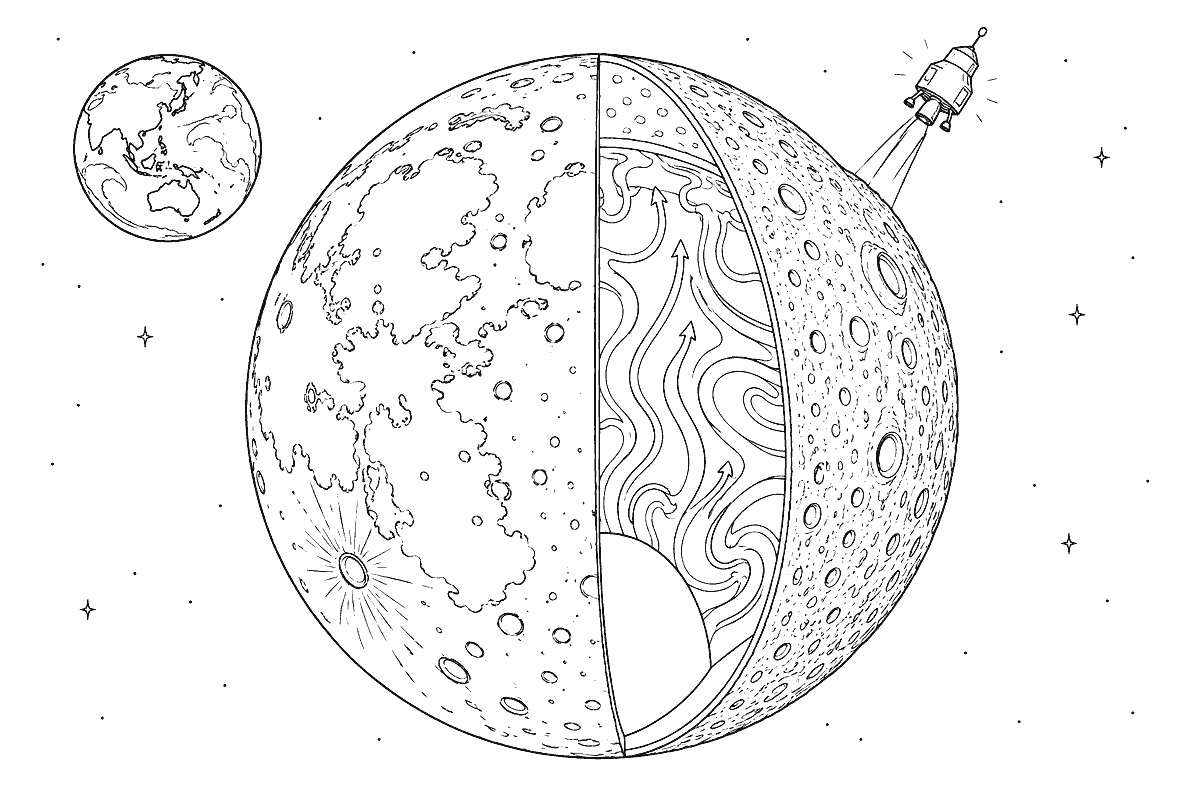
1Researchers at Nanjing University in China may have explained why the two faces of the Moon look so different, using the first rocks ever collected from the far side. Their study was published in the journal National Science Review, and science news sites reported it in mid-October.
2Because the Moon spins once for every trip it makes around Earth, the same side always faces us. Dark plains, formed by ancient lava, cover about a third of this near side. In Japan, people describe these patches as a rabbit pounding rice cakes. Many people in Europe see a face instead. The far side, by contrast, has thicker crust and very few dark plains, which cover only about 1 percent of its surface.
3China's Chang'e-6 mission landed inside the huge South Pole-Aitken basin on the far side and returned its samples to Earth in June 2024. The Nanjing team studied several kinds of far-side rock and compared them with near-side samples from the Apollo and Chang'e-5 missions. Basalts from the far side turned out to be chemically similar to some Apollo basalts, suggesting that the mantle below both sides is much the same. The far-side crust, however, contained more magnesium.
4To explain this, the team looked back to a time when the young Moon was covered by a deep ocean of magma. After the Moon locked one face toward Earth, the two sides of that ocean had different temperatures, the team said. That difference drove slow sideways currents, which carried light crust rock toward the far side and leftover melted rock toward the near side.
5Scientists have proposed other causes in the past, such as a giant collision or heating caused by Earth's pull. The new study adds evidence from the far side itself. However, reports describe it as a possible answer rather than a final one.
Words 単語
| collectedA1 | 動 | 集められたbrought together from different places |
| plainsB1 | 名 | 平原large areas of flat land |
| ancientA2 | 形 | 大昔の、古代のfrom a very long time ago |
| by contrastA2 | 熟 | それに対してused to show a big difference |
| crust外 | 名 | 地殻(表面の岩の層)the hard outside layer of a planet |
| samplesA2 | 名 | 試料、サンプルsmall amounts taken to study something |
| similarA2 | 形 | 似ているalmost the same as something else |
| droveA1 | 動 | (力となって)動かした、引き起こしたwas the force that made something happen |
| proposedB2 | 動 | 提案した、(考えを)出したgave an idea for others to think about |
| evidenceA2 | 名 | 証拠facts that show something is true |
単語のレベル:CEFR-J(『CEFR-J Wordlist Version 1.6』 東京外国語大学投野由紀夫研究室. (URL: https://www.cefr-j.org/download.html より 2026年8月ダウンロード))
1. Reading Quiz 本文の内容に合うものを選ぼう
Why does the same side of the Moon always face Earth?
A. Because the Moon does not spin at allB. Because the far side is heavierC. Because the Moon spins once for every trip around EarthD. Because Earth blocks the far side
What do many people in Europe see in the dark patches?
A. A faceB. A rabbitC. A rice cakeD. A basin
What did the far-side basalts suggest?
A. The far side has more dark plains.B. The rocks came from Earth.C. The Moon once had water oceans.D. The mantle below both sides is much the same.
According to the team, what carried light crust rock toward the far side?
A. A giant collisionB. Slow sideways currents in the magma oceanC. Strong winds on the MoonD. Earth's water
How do reports describe the new study?
A. As the final answerB. As a mistakeC. As a possible answerD. As a study about Earth
2. True or False 正しければ T、違っていれば F
( ) The far side has thicker crust than the near side.
( ) Chang'e-6 returned its samples to Earth in June 2024.
( ) The far-side crust contained less magnesium.
( ) No one had suggested any other cause before this study.
3. Fill in the Blanks 下の語から選んで空らんをうめよう(形を変えずに)
drovesamplessimilarcrustplainscollected
That difference _____ slow sideways currents, which carried light crust rock toward the far side and leftover melted rock toward the near side.
Basalts from the far side turned out to be chemically _____ to some Apollo basalts, suggesting that the mantle below both sides is much the same.
Dark _____, formed by ancient lava, cover about a third of this near side.
Researchers at Nanjing University in China may have explained why the two faces of the Moon look so different, using the first rocks ever _____ from the far side.
The far side, by contrast, has thicker _____ and very few dark plains, which cover only about 1 percent of its surface.
China's Chang'e-6 mission landed inside the huge South Pole-Aitken basin on the far side and returned its _____ to Earth in June 2024.
4. Word Order 語を並べかえて正しい文にしよう
( far-side / however, / The / magnesium / more / crust, / contained ) .
( instead / face / a / people / Europe / in / Many / see ) .
( new / from / the / adds / itself / evidence / side / The / study / far ) .
5. Think and Write 英語で答えてみよう
Why do you think people in different countries see different shapes in the Moon?(国によって、月の模様がちがう形に見えるのはなぜだと思いますか。)
Some scientists say rocks from space should be shared with researchers around the world. Do you agree? Why?(宇宙から持ち帰った石は世界中の研究者と分け合うべきだ、という科学者もいます。あなたは賛成ですか。理由も答えよう。)
Answers 解答
1. (1) C (2) A (3) D (4) B (5) C
2. (1) T (2) T (3) F (4) F
3. (1) drove (2) similar (3) plains (4) collected (5) crust (6) samples
4.
- The far-side crust, however, contained more magnesium.
- Many people in Europe see a face instead.
- The new study adds evidence from the far side itself.
全文訳
1中国の南京大学の研究者たちが、月の裏側で初めて集められた石を使って、月の2つの顔がなぜこんなにちがって見えるのかを説明できたかもしれません。研究は学術誌「ナショナル・サイエンス・レビュー」にのり、10月中旬に科学ニュースのサイトで報じられました。
2月は地球のまわりを1周する間に1回だけ自転するので、いつも同じ面が地球を向いています。大昔の溶岩でできた黒っぽい平原が、この表側の約3分の1をおおっています。日本では、この模様が、もちをつくウサギにたとえられます。ヨーロッパでは、かわりに人の顔に見るという人が多くいます。それに対して裏側は、地殻(表面の岩の層)が厚く、黒っぽい平原はほとんどなく、表面の約1%しかありません。
3中国の嫦娥6号は、裏側の巨大な南極エイトケン盆地の中に着陸し、2024年6月に試料を地球に持ち帰りました。南京大学のチームは、裏側の何種類かの岩を調べ、アポロ計画と嫦娥5号が持ち帰った表側の試料とくらべました。裏側の玄武岩は、アポロの玄武岩の一部と成分がよく似ていました。これは、両側の地下のマントルがほぼ同じであることを示しています。ところが、裏側の地殻にはマグネシウムが多く含まれていました。
4これを説明するために、チームは、若い月が深いマグマの海におおわれていた時代にさかのぼって考えました。チームによると、月が片方の面を地球に向けたまま固定されると、マグマの海の表側と裏側で温度に差ができました。その温度差がゆっくりとした横向きの流れを生み、軽い地殻の岩を裏側へ、残ったとけた岩を表側へ運んだといいます。
5これまでにも科学者は、巨大な衝突や、地球に引っぱられて生じた熱など、別の原因を考えてきました。新しい研究は、裏側そのものからの証拠を加えました。ただし報道は、最終的な答えではなく「答えの候補」として伝えています。
文法ポイント:may have + 過去分詞(~したかもしれない)
may have explained は「(すでに)説明できたかもしれない」。過去のことについて「たぶん~した」と推量するときの形。本文の Researchers ... may have explained why the two faces of the Moon look so different がその例。must have ~(~したにちがいない)、can't have ~(~したはずがない)とあわせて入試の定番。
出典:EurekAlert!(Science China Press)、ScienceDaily、National Science Review、Houston Museum of Natural Science ほか(記事は原田英語の時事英語ジュニアのオリジナル)|https://www.haradaeigo.com/jijieigo-junior/news/2026-10-15-moon-two-faces-change6/