電車で寝るのはなぜ?日本人の睡眠時間が世界調査で4年連続最下位
Short Nights and Train Naps in Japan
びっくり度 中学生 157語 / 高校生 301語日本文化電車睡眠
3行でわかる!このニュース
- 13か国の睡眠調査で、日本の睡眠時間は4年連続の最下位
- 日本でいちばん多い答えは一晩6時間。全体では7〜8時間が最多
- 研究者によると、電車のいねむりは夜の寝不足を取り戻す役目も
なぜ話題?Google サジェストに「電車 寝る」「日本人 睡眠時間 世界」が並ぶ。今年の世界睡眠調査で、日本の睡眠時間は4年連続の最下位
中学生レベル(英検3級〜準2級・CEFR A1〜A2)・157語・約1分
Why Do People Sleep on Trains in Japan?
語彙レベル(CEFR-J)
A180.8%A212.2%B11.3%B21.9%外3.8%
0:00 / --:--
この記事の声:オーストラリア英語・女性声は日によって、アメリカ・イギリス・オーストラリア英語、男性・女性が入れかわります
MP3をダウンロード(中学生版・タイトルから本文まで)
Japanese people sleep the least among 13 countries, a world survey found this year. Japan came last for the fourth year in a row. The survey was done by ResMed, a company that makes medical machines for sleep.
日本の人は13か国の中でいちばん眠る時間が短いことが、今年の世界の調査でわかりました。日本は4年続けて最下位でした。調査をしたのは、眠りのための医療の機械を作っている会社、レスメドです。
About 30,000 people answered the survey. In Japan, the most common answer was six hours of sleep a night. Across all 13 countries, seven to eight hours was the most common.
およそ3万人が調査に答えました。日本でいちばん多かった答えは、「一晩に6時間」でした。13か国全体では、7〜8時間がいちばん多い答えでした。
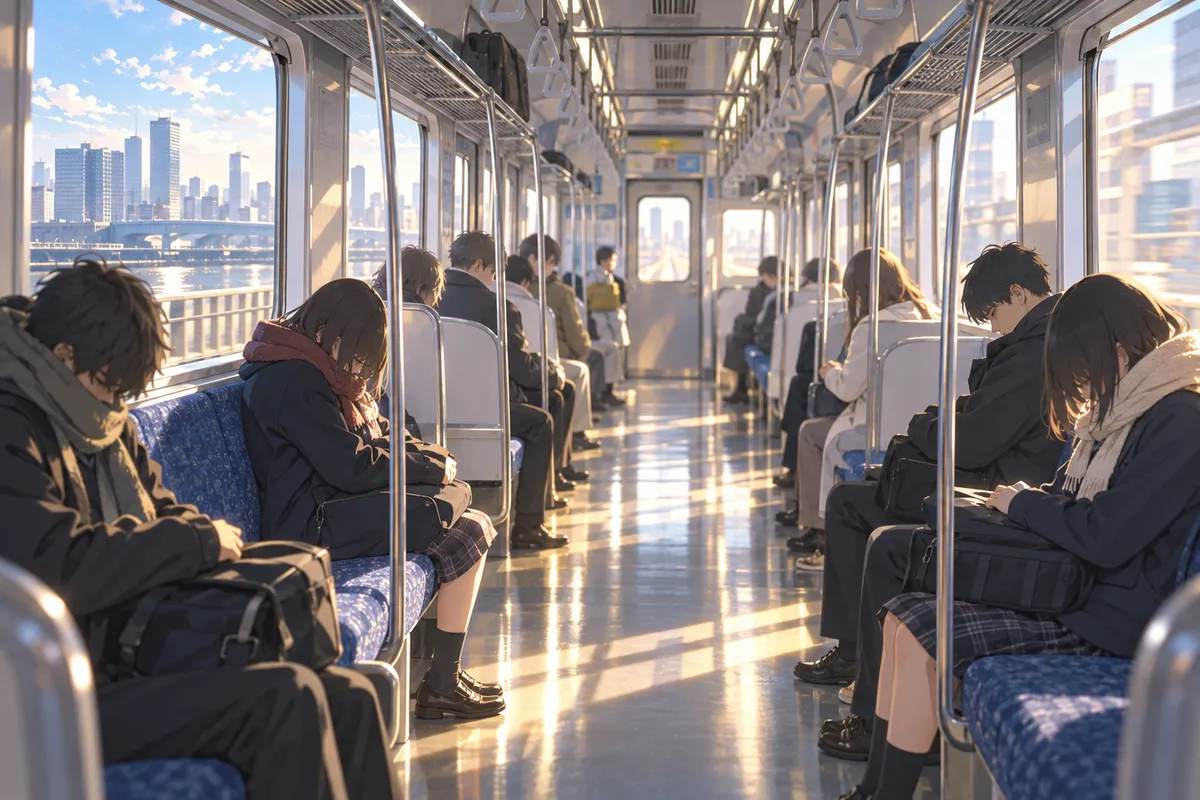
In Japan, it is common to see people asleep on trains. This habit has a name, inemuri. It means falling asleep in a place like a train, not in your bed.
日本では、電車の中で眠っている人をよく見かけます。このならわしには「いねむり」という名前があります。ふとんの中ではなく、電車のような場所で眠ってしまうことです。
Brigitte Steger, a researcher at the University of Cambridge, has studied inemuri for many years. She wrote that a nap on the train helps people make up for lost sleep at night. She also found that most sleeping passengers wake up just before their station. Many people told her they were only closing their eyes to relax.
イギリスのケンブリッジ大学の研究者、ブリギッテ・シテーガさんは、いねむりを長いあいだ研究してきました。シテーガさんは、電車でのうたた寝は、夜に足りなかった眠りをおぎなう助けになると書きました。また、眠っている乗客のほとんどは、おりる駅の少し前に目をさますこともわかりました。「目を閉じて休んでいるだけ」とシテーガさんに話した人もたくさんいました。
WORDSこの記事の単語(8語)
- surveyA1名調査、アンケートa set of questions asked to many peopleOur class did a survey about breakfast.私たちのクラスは朝ごはんについてのアンケートをとった。
- in a rowA1熟続けて、連続でone after another without a breakIt rained for three days in a row.3日続けて雨がふった。
- commonA2形よくある、ふつうのhappening often or seen in many placesSato is a common name in Japan.佐藤は日本でよくある名字だ。
- habitA1名習慣、ならわしsomething you do again and againReading before bed is a good habit.寝る前に本を読むのはよい習慣だ。
- researcherB1名研究者a person who studies something to learn new factsThe researcher studies sea animals.その研究者は海の生き物を研究している。
- make up forA1熟~をおぎなう、取り戻すto get back something you lost or missedI studied on Sunday to make up for lost time.むだにした時間を取り戻すために、日曜日に勉強した。
- passengersA2名乗客people who ride on a train, bus or planeThe bus had only five passengers.そのバスには乗客が5人しかいなかった。
- relaxA2動くつろぐ、休むto rest and feel calmI like to relax in the bath.私はおふろでくつろぐのが好きだ。
単語の横の A1A2B1B2 は、その単語のむずかしさです(A1 がいちばんやさしく、B2 がいちばん難しい。外 はリストにない語)。ほかの単語のレベルも調べる
レベルの出典:『CEFR-J Wordlist Version 1.6』 東京外国語大学投野由紀夫研究室. (URL: https://www.cefr-j.org/download.html より 2026年8月ダウンロード)
GRAMMAR文法ポイント:現在完了の継続(have / has + 過去分詞 + for ~)
「(今まで)ずっと~している」を表す。for のあとに期間を置く。本文の Brigitte Steger ... has studied inemuri for many years. は「長いあいだ(今も)いねむりを研究してきた」。
- I have lived in Osaka for ten years.私は10年間ずっと大阪に住んでいる。
- She has played the piano since she was six.彼女は6歳のときからずっとピアノをひいている。
GAMESゲームで復習しよう
THINK考えてみよう・話してみよう
日本語訳はぼかしてあります。タップすると見えます。
- How many hours do you sleep on a school night?学校がある日の夜、あなたは何時間眠っていますか?
- Do you ever sleep on a train or a bus? Why?あなたは電車やバスで眠ることがありますか?それはなぜですか?
PRINT中学生版ワークシート(無料)
本文・単語・クイズ・並べかえ・穴うめ・英作文と解答つき。授業・宿題・自習にどうぞ。
高校生レベル(英検2級〜準1級・CEFR B1〜B2)・301語・約3分
Japan Ranks Last in Sleep Again
語彙レベル(CEFR-J)
A177.9%A212.6%B13.9%B21.8%外3.9%
0:00 / --:--
この記事の声:オーストラリア英語・女性声は日によって、アメリカ・イギリス・オーストラリア英語、男性・女性が入れかわります
MP3をダウンロード(高校生版・タイトルから本文まで)
Japan has come last in a global sleep survey for the fourth year in a row. The survey was carried out by ResMed, a company that makes medical devices for people with sleep and breathing problems. Around 30,000 people in 13 countries took part between December 2025 and January 2026, including 1,500 in Japan.
世界の睡眠調査で、日本が4年連続の最下位になりました。調査を行ったのは、睡眠や呼吸に問題をかかえる人のための医療機器をつくる会社、レスメドです。2025年12月から2026年1月にかけて、13か国の約3万人が参加し、そのうち1500人が日本の人でした。
In Japan, the most common answer was six hours of sleep a night. Across all 13 countries, the most common range was seven to eight hours. About 8% of Japanese respondents said they did not sleep deeply on a single night of the week, compared with 5% worldwide. Only 63% in Japan knew that good sleep can help people stay healthy longer, while the global figure was 84%.
日本でいちばん多かった答えは「一晩に6時間」でした。13か国全体では、7〜8時間がもっとも多い層でした。日本の回答者の約8%が「1週間のうち、ぐっすり眠れた夜は1日もない」と答えました。世界全体では5%でした。質のよい睡眠が健康でいられる期間をのばすと知っていた人は、日本では63%にとどまり、世界全体では84%でした。
Passengers asleep in their seats are a common sight on Japanese trains. In Japanese, the habit is called inemuri. The word combines i, meaning being present, and nemuri, meaning sleep. It describes sleep that happens in a social setting, such as a crowded train, rather than in bed.
座席で眠っている乗客は、日本の電車ではよく見かける光景です。日本語では、このならわしを「居眠り(いねむり)」と呼びます。この言葉は、「その場にいる」という意味の「居(い)」と、「眠り」を組み合わせたものです。ふとんの中ではなく、混んだ電車のような、人のいる場で眠ることを表します。
Brigitte Steger, who teaches Japanese studies at the University of Cambridge, has researched sleep in Japan since the 1990s. In a 2013 paper on commuter trains, she wrote that inemuri helps people make up for sleep they miss at night. She also found that most sleeping passengers wake up shortly before their station, because part of their mind stays on the ride. Many people told her they were not really asleep but were only resting their eyes.
ケンブリッジ大学で日本研究を教えるブリギッテ・シテーガさんは、1990年代から日本の睡眠を研究してきました。通勤電車についての2013年の論文で、シテーガさんは、いねむりは夜に足りない睡眠をおぎなう助けになると書いています。また、眠っている乗客のほとんどは、おりる駅の少し前に目をさますこともわかりました。意識の一部が、電車に乗っていることに向いたままだからです。「本当は眠っていない。目を休めているだけ」と話した人も多くいました。
Closing your eyes is also a way to avoid looking at strangers in a packed car, she wrote. Still, sleepers are expected to follow some rules. Snoring with an open mouth is seen as bad manners. Most sleepers also try not to rest their heads on the shoulder of the person next to them.
目を閉じることは、満員の車両で知らない人と目を合わせないための方法でもある、とシテーガさんは書いています。それでも、眠る人にはいくつかのルールが求められます。口を開けていびきをかくのは、マナーが悪いと見られます。また、ほとんどの人は、となりの人の肩に頭をのせないように気をつけています。
WORDSこの記事の単語(10語)
- carried outA1熟(調査などを)行ったdid a planned piece of workOur school carried out a survey on phone use.私たちの学校はスマホの使い方について調査を行った。
- devicesB1名機器、装置machines or tools made for a special jobPlease turn off all electronic devices.電子機器の電源はすべて切ってください。
- in a rowA1熟連続でone after another without a breakOur team won five games in a row.私たちのチームは5連勝した。
- respondents外名回答者people who answer the questions in a surveyHalf of the respondents said they liked cats.回答者の半分がネコが好きだと答えた。
- sightA1名光景、ながめsomething that you seeCherry blossoms are a common sight in April.桜は4月によく見られる光景だ。
- combinesB1動組み合わせるputs two or more things togetherThis dish combines rice and curry.この料理はご飯とカレーを組み合わせたものだ。
- settingB1名場、環境the place and situation where something happensA library is a quiet setting for study.図書館は勉強するのに静かな場所だ。
- make up forA1熟~をおぎなう、取り戻すto give back what was lost or missingHe worked late to make up for the lost time.彼はむだにした時間を取り戻すために遅くまで働いた。
- shortlyB1副少し(前・後に)、まもなくa short time before or afterThe movie starts shortly after six.映画は6時を少し過ぎたころに始まる。
- strangersA2名知らない人people you have never met beforeDon't open the door to strangers.知らない人にドアを開けてはいけない。
単語の横の A1A2B1B2 は、その単語のむずかしさです(A1 がいちばんやさしく、B2 がいちばん難しい。外 はリストにない語)。ほかの単語のレベルも調べる
レベルの出典:『CEFR-J Wordlist Version 1.6』 東京外国語大学投野由紀夫研究室. (URL: https://www.cefr-j.org/download.html より 2026年8月ダウンロード)
GRAMMAR文法ポイント:be expected to + 動詞の原形(~することを求められる・~するものとされる)
expect(期待する・当然と考える)の受け身。「まわりから~するのが当然だと思われている」というニュアンス。本文の sleepers are expected to follow some rules は「眠る人はいくつかのルールを守るものとされている」。
- Students are expected to arrive by 8:30.生徒は8時30分までに登校することになっている。
- Guests are expected to take off their shoes at the door.お客さんは玄関で靴をぬぐものとされている。
GAMESゲームで復習しよう
THINK考えてみよう・話してみよう
日本語訳はぼかしてあります。タップすると見えます。
- Do you think it is OK to sleep on trains? Give your reasons.電車で眠るのはよいことだと思いますか?理由を述べよう。
- People in Japan sleep less than people in many other countries. What could schools or companies do about it?日本の人は、ほかの多くの国の人より眠る時間が短いです。学校や会社は何ができると思いますか?
PRINT高校生版ワークシート(無料)
本文・単語・クイズ・並べかえ・穴うめ・英作文と解答つき。授業・宿題・自習にどうぞ。
PICK UP WORD
inemuri
居眠り(いねむり)
研究者のシテーガさんは、「居(その場にいる)」+「眠り」と説明している。ベッドで寝る sleep とはちがい、人のいる場でうとうとすること。英語でふつうに言うなら doze off(うとうとする)や take a nap(ひと眠りする)。
原田英語のサイトでもっと
出典・参考にした情報
この記事は、下の報道・発表で事実を確かめたうえで、原田英語が中学生・高校生向けに英語と日本語で書きおろしたオリジナル記事です(文章の転載・翻訳ではありません)。くわしく知りたい人は元の情報も読んでみよう。著作権と出典の考え方
- 57%が睡眠対策を「放置」、寝不足でも6割が無理に出勤…睡眠時間が4年連続で世界最短の"不眠列島・日本"を救う技術東洋経済オンライン(2026-03-26)
- 日本人の睡眠時間は4年連続世界最下位…レスメド「世界睡眠調査2026」が示す「眠れない日本」の実態とはデイリースポーツ(2026-04-03)
- レスメド世界睡眠調査(2026)ResMed(レスメド)(2026-03-10)
- Negotiating Gendered Space on Japanese Commuter Trainselectronic journal of contemporary japanese studies(Brigitte Steger, University of Cambridge)(2013-10-06)