原田英語の時事英語ジュニア|英語ニュース ワークシート(高校生レベル)
Class ____ No. ____ Name ____________________
電車で寝るのはなぜ?日本人の睡眠時間が世界調査で4年連続最下位
Japan Ranks Last in Sleep Again
1Japan has come last in a global sleep survey for the fourth year in a row. The survey was carried out by ResMed, a company that makes medical devices for people with sleep and breathing problems. Around 30,000 people in 13 countries took part between December 2025 and January 2026, including 1,500 in Japan.
2In Japan, the most common answer was six hours of sleep a night. Across all 13 countries, the most common range was seven to eight hours. About 8% of Japanese respondents said they did not sleep deeply on a single night of the week, compared with 5% worldwide. Only 63% in Japan knew that good sleep can help people stay healthy longer, while the global figure was 84%.
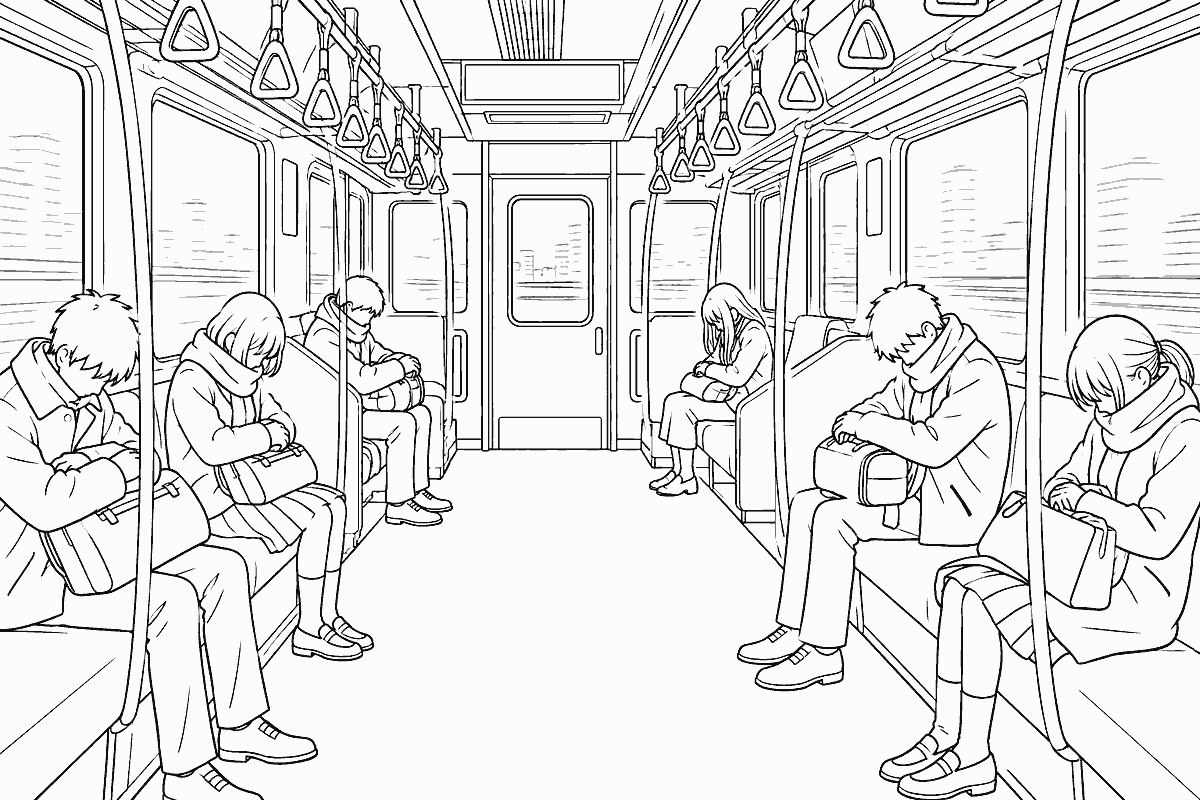
3Passengers asleep in their seats are a common sight on Japanese trains. In Japanese, the habit is called inemuri. The word combines i, meaning being present, and nemuri, meaning sleep. It describes sleep that happens in a social setting, such as a crowded train, rather than in bed.
4Brigitte Steger, who teaches Japanese studies at the University of Cambridge, has researched sleep in Japan since the 1990s. In a 2013 paper on commuter trains, she wrote that inemuri helps people make up for sleep they miss at night. She also found that most sleeping passengers wake up shortly before their station, because part of their mind stays on the ride. Many people told her they were not really asleep but were only resting their eyes.
5Closing your eyes is also a way to avoid looking at strangers in a packed car, she wrote. Still, sleepers are expected to follow some rules. Snoring with an open mouth is seen as bad manners. Most sleepers also try not to rest their heads on the shoulder of the person next to them.
Words 単語
| carried outA1 | 熟 | (調査などを)行ったdid a planned piece of work |
| devicesB1 | 名 | 機器、装置machines or tools made for a special job |
| in a rowA1 | 熟 | 連続でone after another without a break |
| respondents外 | 名 | 回答者people who answer the questions in a survey |
| sightA1 | 名 | 光景、ながめsomething that you see |
| combinesB1 | 動 | 組み合わせるputs two or more things together |
| settingB1 | 名 | 場、環境the place and situation where something happens |
| make up forA1 | 熟 | ~をおぎなう、取り戻すto give back what was lost or missing |
| shortlyB1 | 副 | 少し(前・後に)、まもなくa short time before or after |
| strangersA2 | 名 | 知らない人people you have never met before |
単語のレベル:CEFR-J(『CEFR-J Wordlist Version 1.6』 東京外国語大学投野由紀夫研究室. (URL: https://www.cefr-j.org/download.html より 2026年8月ダウンロード))
1. Reading Quiz 本文の内容に合うものを選ぼう
Who carried out the sleep survey?
A. A university in JapanB. ResMed, a medical device companyC. The Japanese governmentD. A railway company
What was the most common answer in Japan?
A. Five hours a nightB. Seven to eight hours a nightC. Six hours a nightD. Nine hours a night
What does the part i in inemuri mean?
A. Being presentB. SleepC. TrainD. Night
According to Steger, why do most sleeping passengers wake up before their station?
A. An alarm on the train wakes them.B. Part of their mind stays on the ride.C. Other passengers wake them up.D. They set alarms on their phones.
What is seen as bad manners for sleepers on trains?
A. Closing their eyesB. Sitting in their seatsC. Holding a bagD. Snoring with an open mouth
2. True or False 正しければ T、違っていれば F
( ) Japan has ranked last in the survey for four years in a row.
( ) In Japan, 84% of people knew that good sleep can help people stay healthy longer.
( ) Steger's paper on commuter trains came out in 2013.
( ) Most sleepers rest their heads on their neighbors' shoulders.
3. Fill in the Blanks 下の語から選んで空らんをうめよう(形を変えずに)
shortlycombinesrespondentsdevicessightsetting
It describes sleep that happens in a social _____, such as a crowded train, rather than in bed.
The survey was carried out by ResMed, a company that makes medical _____ for people with sleep and breathing problems.
The word _____ i, meaning being present, and nemuri, meaning sleep.
She also found that most sleeping passengers wake up _____ before their station, because part of their mind stays on the ride.
About 8% of Japanese _____ said they did not sleep deeply on a single night of the week, compared with 5% worldwide.
Passengers asleep in their seats are a common _____ on Japanese trains.
4. Word Order 語を並べかえて正しい文にしよう
( inemuri / Japanese, / In / the / is / called / habit ) .
( to / expected / rules / sleepers / some / follow / Still, / are ) .
( with / is / Snoring / seen / bad / manners / an / as / open / mouth ) .
5. Think and Write 英語で答えてみよう
Do you think it is OK to sleep on trains? Give your reasons.(電車で眠るのはよいことだと思いますか?理由を述べよう。)
People in Japan sleep less than people in many other countries. What could schools or companies do about it?(日本の人は、ほかの多くの国の人より眠る時間が短いです。学校や会社は何ができると思いますか?)
Answers 解答
1. (1) B (2) C (3) A (4) B (5) D
2. (1) T (2) F (3) T (4) F
3. (1) setting (2) devices (3) combines (4) shortly (5) respondents (6) sight
4.
- In Japanese, the habit is called inemuri.
- Still, sleepers are expected to follow some rules.
- Snoring with an open mouth is seen as bad manners.
全文訳
1世界の睡眠調査で、日本が4年連続の最下位になりました。調査を行ったのは、睡眠や呼吸に問題をかかえる人のための医療機器をつくる会社、レスメドです。2025年12月から2026年1月にかけて、13か国の約3万人が参加し、そのうち1500人が日本の人でした。
2日本でいちばん多かった答えは「一晩に6時間」でした。13か国全体では、7〜8時間がもっとも多い層でした。日本の回答者の約8%が「1週間のうち、ぐっすり眠れた夜は1日もない」と答えました。世界全体では5%でした。質のよい睡眠が健康でいられる期間をのばすと知っていた人は、日本では63%にとどまり、世界全体では84%でした。
3座席で眠っている乗客は、日本の電車ではよく見かける光景です。日本語では、このならわしを「居眠り(いねむり)」と呼びます。この言葉は、「その場にいる」という意味の「居(い)」と、「眠り」を組み合わせたものです。ふとんの中ではなく、混んだ電車のような、人のいる場で眠ることを表します。
4ケンブリッジ大学で日本研究を教えるブリギッテ・シテーガさんは、1990年代から日本の睡眠を研究してきました。通勤電車についての2013年の論文で、シテーガさんは、いねむりは夜に足りない睡眠をおぎなう助けになると書いています。また、眠っている乗客のほとんどは、おりる駅の少し前に目をさますこともわかりました。意識の一部が、電車に乗っていることに向いたままだからです。「本当は眠っていない。目を休めているだけ」と話した人も多くいました。
5目を閉じることは、満員の車両で知らない人と目を合わせないための方法でもある、とシテーガさんは書いています。それでも、眠る人にはいくつかのルールが求められます。口を開けていびきをかくのは、マナーが悪いと見られます。また、ほとんどの人は、となりの人の肩に頭をのせないように気をつけています。
文法ポイント:be expected to + 動詞の原形(~することを求められる・~するものとされる)
expect(期待する・当然と考える)の受け身。「まわりから~するのが当然だと思われている」というニュアンス。本文の sleepers are expected to follow some rules は「眠る人はいくつかのルールを守るものとされている」。
出典:東洋経済オンライン、デイリースポーツ、ResMed(レスメド)、electronic journal of contemporary japanese studies(Brigitte Steger, University of Cambridge) ほか(記事は原田英語の時事英語ジュニアのオリジナル)|https://www.haradaeigo.com/jijieigo-junior/news/2026-10-13-sleeping-on-trains-japan/