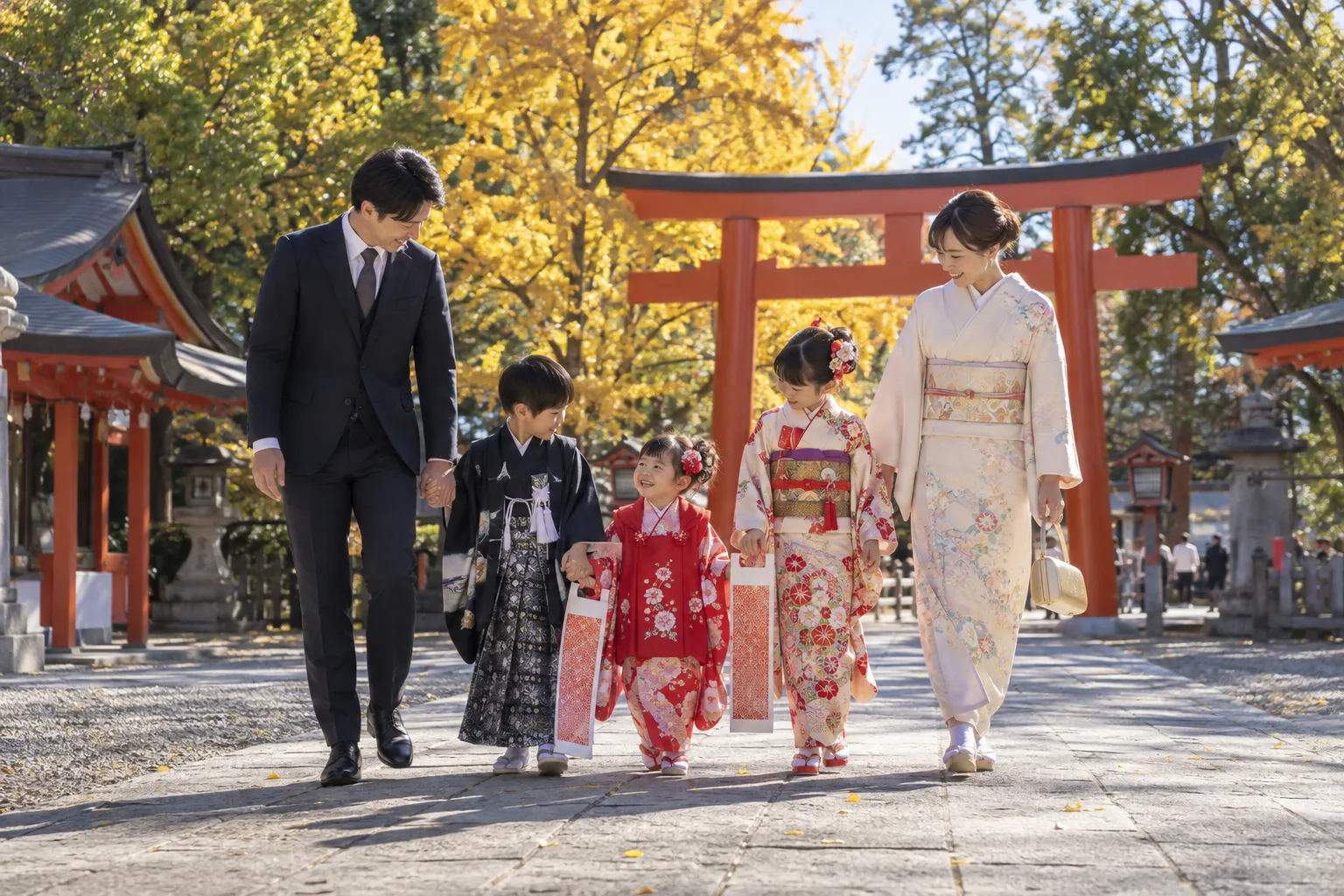
Shichi-Go-San
七五三の英語の授業アイデアとワークシート
印刷してすぐ使えるワークシート(PDF・Word・解答つき)と、授業の手順書。
🖨️Worksheetsワークシート(無料・A4)
① 「中身を見る・印刷」で全ページを確認 → ② そのページ上の 🖨️ 印刷する でそのまま印刷できます。A4・無料。
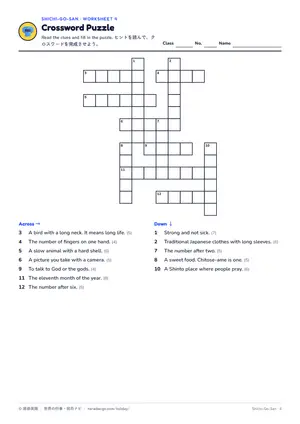
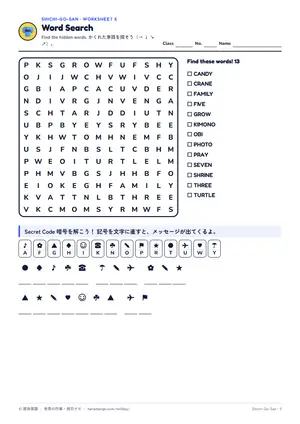
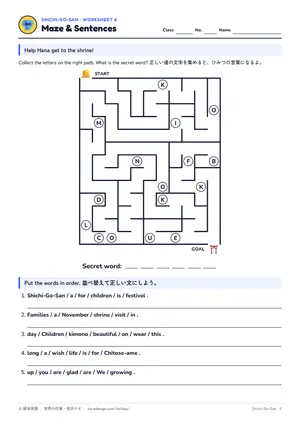
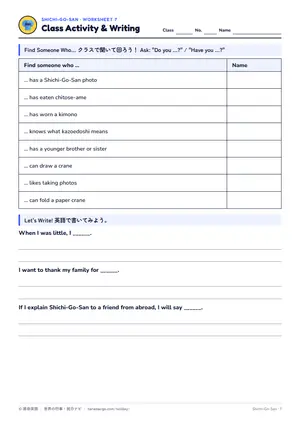
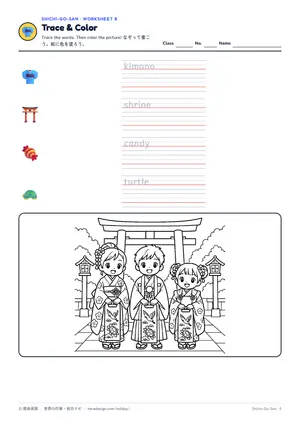
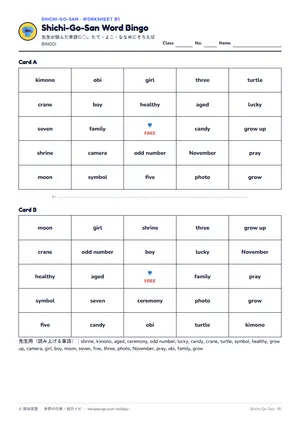
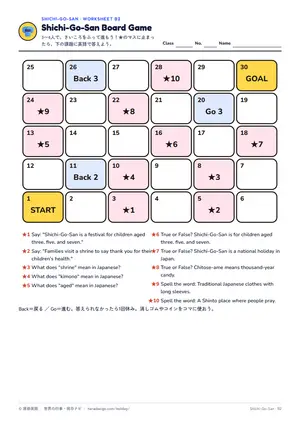
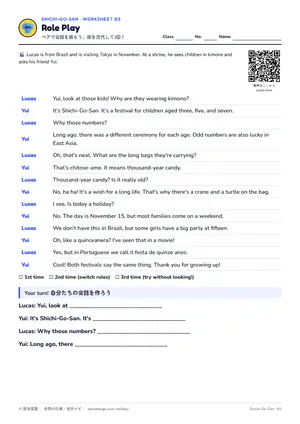
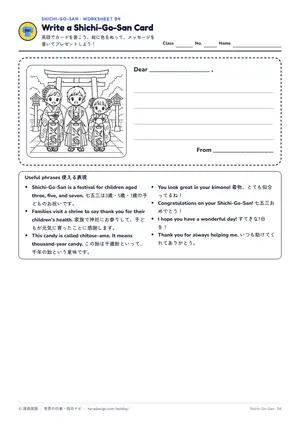
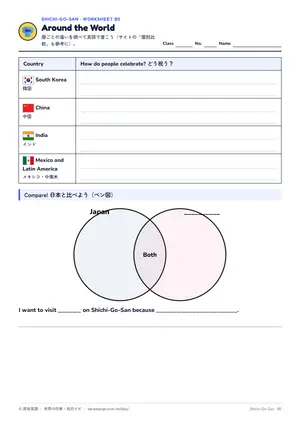
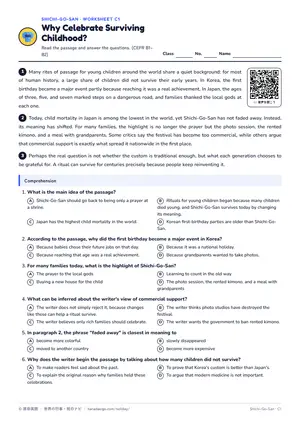
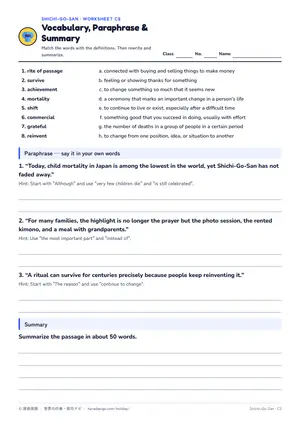
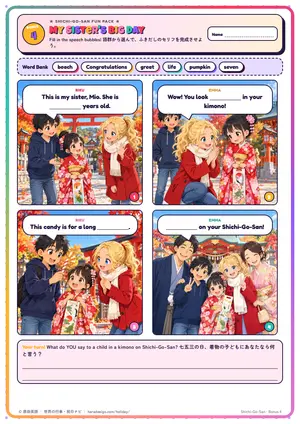
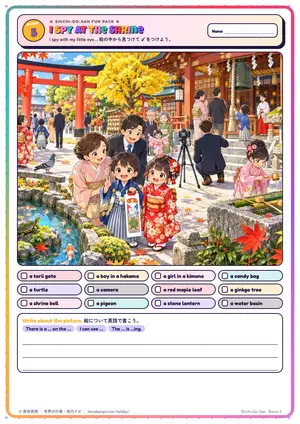
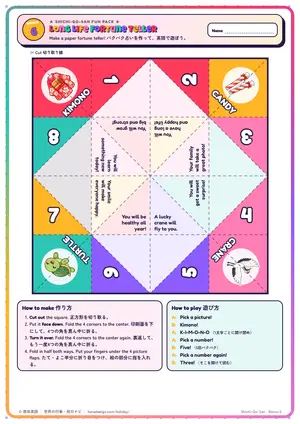
🍎Lesson Ideas七五三を使った英語の授業アイデア
成長の思い出ショー&テル
🎯 過去形を使って、小さいころの自分を英語で紹介する。
- 七五三や小さいころの写真(または絵)を1枚用意する。
- This is me. I was three. I wore a red kimono. のような3文を書く。
- グループで写真を見せながら発表する。
- 聞き手は When was this? など質問を1つする。
詳細版を開く(時間配分・Teacher Talk・板書)
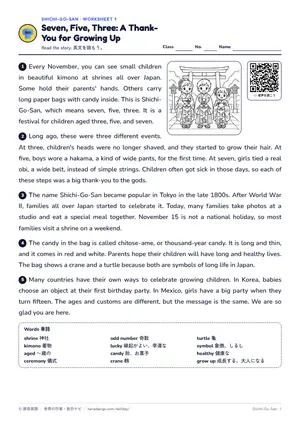
先生の小さいころの写真を見せ、This is me. I was three. I wore a ___. と見本を話す。生徒に When was this? と質問させ、先生が答える。英語ページ第1段落の音声で、七五三が3歳・5歳・7歳の子どものお祝いであることも確認する。
🗣️ Look at this photo. This is me. I was three. / I wore a red kimono. I went to a shrine with my family. / Ask me a question. When was this? / Shichi-Go-San is a festival for children aged three, five, and seven.
持ってきた写真(または絵)について、過去形の3文を書かせる。型を板書する(This is me. / I was ___. / I wore ___. / I went to ___. / I liked ___.)。七五三の写真でなくても、小さいころの思い出ならよいと伝える。机間指導で過去形の形を確認する。
🗣️ Write three sentences about your photo. / This is me. I was five. I wore a hakama. / It doesn't have to be Shichi-Go-San. Any memory is OK. / Check your verbs. Wear becomes wore.
4人グループで、写真を見せながら順に発表させる。聞き手は質問の型カードから1つ選んで質問し、発表者は短く答える(It was in November. / My father took it.)。全員が発表し終わるまで続ける。
🗣️ Show your photo and read your sentences. / Listeners, ask one question. When was this? Who took this photo? / Answer in a short sentence. My father took it. / Next person, please.
グループで印象に残った発表を1つ紹介させる。七五三は「大きくなってくれてありがとう」の気持ちを表す行事だと伝えて終わる。
🗣️ Which story did you like in your group? / Shichi-Go-San means "Thank you for growing up."
Show and Tell: When I was little

This is me.
I was __.(three / five / seven)
I wore __.(a kimono / a hakama)
I went to __.
I liked __.

質問:When was this? / Where was this? / Who took this photo?
答え:It was in November. / My father took it.
世界の子どものお祝いマッチング
🎯 国ごとの通過儀礼を英語で読み取り、共通点と違いをまとめる。
- compare の表を国ごとのカードに分けて配る。
- ペアで、年齢・すること・意味を英語で表に整理する。
- 七五三といちばん似ている行事を選び、理由を英語で話す。
- クラスで結果を共有する。
詳細版を開く(時間配分・Teacher Talk・板書)
英語ページ第5段落の音声を聞かせ、The ages and customs are different, but the message is the same. の文を確認する。「世界には子どもの成長を祝う行事がたくさんある。七五三といちばん似ているのはどれ?」と問いを示す。
🗣️ Listen to the last paragraph. / The ages and customs are different, but the message is the same. / Today's question: Which celebration is most like Shichi-Go-San?
ペアに国ごとのカードを配り、表に年齢・すること・意味を英語で整理させる。カードの日本語を英語にするとき、Korea: one year old / babies choose an object / to guess their future のように語句で書けばよいと伝える。宗教にかかわる儀式は、「その宗教の家庭で行われる」ことを書き添えるよう指示する。
🗣️ Read the cards and fill in the table. / Age, what children do, and what it means. / Short phrases are OK. One year old. Babies choose an object. / For religious events, write which families celebrate them.
表をもとに、七五三といちばん似ている行事を1つ選ばせ、理由を英語で話し合わせる。型を板書する(I think ___ is the most similar to Shichi-Go-San because ___. / Both ___. / But ___.)。インドの初めて髪をそる儀式が七五三の髪置と似ていることなど、具体的な共通点を探すよう促す。
🗣️ Which one is the most like Shichi-Go-San? Choose one. / I think Annaprashan is similar because both are about a child's first steps. / Use both and but. / Give one more reason.
何組かに結果と理由を発表させ、黒板に票の数を書く。選ばれた行事が分かれた理由(年齢の近さ・服装・願いの内容など、観点によって答えが変わること)を全体で確認する。
🗣️ Tell us your choice and your reasons. / Three pairs chose Korea. Two chose Mexico. Why are the answers different? / It depends on what you compare: the age, the clothes, or the wish.
Celebrations for Growing Children

Country       Age     What children do            Meaning
Korea         1       choose an object(トルジャビ) future
China         1       choose an object(抓周)
India         baby    eat rice for the first time
Mexico        15(girls) dress, tiara, dance
Jewish families 13(12)  Bar / Bat Mitzvah     become adults in religion
Catholic      7〜13   First Communion
Japan         3・5・7  visit a shrine, chitose-ame  long life

I think __ is the most similar to Shichi-Go-San because __.
Both __. But __.
外国の人に七五三を案内しよう
🎯 神社で七五三を見た外国人に、短い英語で説明できるようにする。
- 会話文を音読し、役を交代して練習する。
- 千歳飴(ちとせあめ)・鶴と亀・数え年の説明を、自分の言葉で一文ずつ作る。
- ロールプレイで、質問に答える役と聞く役を交代する。
- うまく伝わった表現をクラスで共有する。
詳細版を開く(時間配分・Teacher Talk・板書)
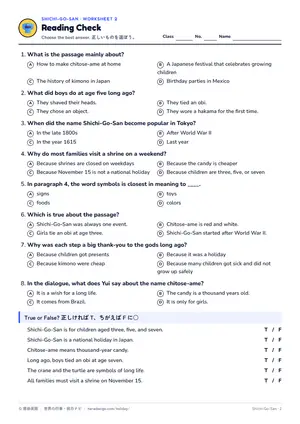
会話の音声を聞かせ、ペアで役を決めて音読させる。役を交代してもう一度読む。Why those numbers? / What are the long bags? / Is today a holiday? など、ルーカスの質問に印をつけさせる。
🗣️ Listen to Lucas and Yui. / Read it in pairs. Then change roles. / Mark Lucas's questions. These are common questions from visitors.
千歳飴・鶴と亀・数え年の3つについて、自分の言葉で1文ずつ説明を作らせる。例を示す(Chitose-ame means thousand-year candy. It's a wish for a long life. / Cranes and turtles are symbols of long life in Japan. / In the old way of counting, a baby is one year old at birth and gets one year older every New Year.)。数え年は今は満年齢で祝う家庭も多く、どちらでもよいとされることも添える。
🗣️ Write one sentence for each topic. / Chitose-ame means thousand-year candy. It's a wish for a long life. / In the old way of counting, a baby is one year old at birth. / Today, many families use their real age. Both are OK.
ロールプレイを行う。観光客役は神社で子どもを見つけた設定で質問を3つし(Why are they wearing kimono? / What's in the bag? / Why is the girl three?)、案内役が答える。役を交代し、相手を変えてもう1回行う。質問の順番は自由にさせる。
🗣️ A is a tourist at a shrine. B is a guide. / Tourists, ask three questions. / Guides, answer in your own words. / Change roles. Then find a new partner.
うまく伝わった表現を何人かに紹介させ、板書に加える。会話の最後の Thank you for growing up! を全員で言い、七五三の気持ちを表す一言として確認する。
🗣️ Which sentence worked well? Tell us. / Let's say the last line together. Thank you for growing up!
Guiding visitors at a shrine ⛩️

Q: Why are they wearing kimono?
A: It's Shichi-Go-San, a festival for children aged three, five, and seven.

chitose-ame:thousand-year candy → a wish for a long life
crane & turtle:symbols of long life
kazoedoshi:a baby is one year old at birth, +1 every New Year
            (今は満年齢でもよい)

Thank you for growing up!
千歳飴の袋をデザインしよう
🎯 長寿の象徴を知り、英単語と絵で表す。
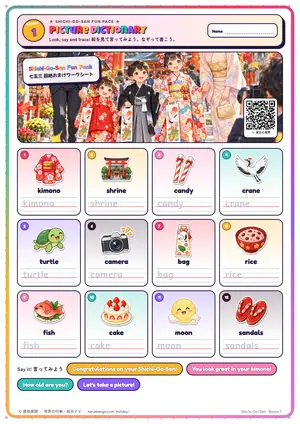
- crane, turtle, pine など長寿の象徴の英語を練習する。
- 細長い紙に、自分の千歳飴の袋をデザインする。
- This is a crane. It means long life. と英語で紹介する。
詳細版を開く(時間配分・Teacher Talk・板書)
千歳飴の袋を見せ、「何の絵がある?」と聞く。鶴と亀を見つけさせ、どちらも日本では長生きのしるしであることを伝える。千歳飴は「1000年のあめ」という意味で、子どもに長く元気に生きてほしいという願いがこめられていることを話す。
🗣️ Look at this bag. What animals can you see? / A crane and a turtle! / They mean long life in Japan. / This candy is called thousand-year candy.
絵カードで crane / turtle / pine を発音させ、It means long life. を全員で言う。細長い画用紙に自分の千歳飴の袋をデザインさせる。長寿の象徴を1つ以上入れることを条件にし、好きな色や模様を自由に足してよいと伝える。袋のいちばん上に英語で Long Life! と書かせる。
🗣️ Crane. Turtle. Pine. Say it with me. / They all mean long life. / Design your own candy bag. Draw at least one of them. / Write Long Life! at the top.
できた袋を見せながら、This is a crane. It means long life. の形で紹介させる(班の中で全員、またはクラスで数人)。自分で足した絵があれば、This is a ___. I like it. と1文加えてよいとする。聞いている子は Nice! と反応する。
🗣️ Show your bag and tell us about it. / This is a turtle. It means long life. / You can add one more. This is a star. I like it. / Everyone, say Nice!
袋を掲示し、長寿の象徴の英語をもう一度全員で言う。七五三は子どもが元気に大きくなったことを感謝する行事だと伝えて終わる。
🗣️ Let's say them again. Crane, turtle, pine. / Shichi-Go-San is a thank-you for growing up.
Chitose-ame = thousand-year candy 🍬

🦢 crane → long life
🐢 turtle → long life
🌲 pine → long life

This is a __.
It means long life.

Long Life!
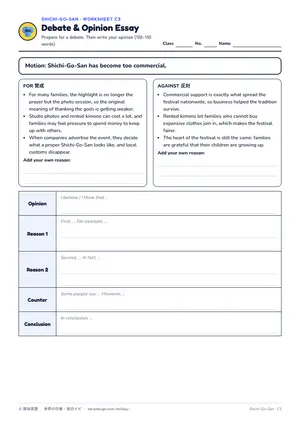
ディスカッション:伝統と商業化
🎯 七五三の歴史をもとに、伝統の変化について根拠を示して議論する。
- 「明治の東京で盛んになり、戦後に全国化した」という歴史を確認する。
- 写真館・貸衣装の役割について、賛否の論点を英語で出し合う。
- 「伝統とは何か」について、英語で短い意見文を書く。
- 相互にコメントし合い、論点を整理する。
詳細版を開く(時間配分・Teacher Talk・板書)
歴史の資料と発展セットの英文を読ませる。「全国共通の七五三」が意外に新しい姿であること、子どもが無事に育つことへの感謝が出発点だったこと、今は写真や貸衣装、食事が中心になった家庭が多いことを確認する。
🗣️ Read the history notes and the passage. / When did the name Shichi-Go-San become popular? / In Tokyo in the Meiji era. It spread nationwide after the war. / What is the highlight for many families today?
4人グループで、写真館・貸衣装の役割について賛否の論点を英語で出し合わせる。賛成側の例:商業の支えが七五三を全国に広めた・着物を買えない家庭も参加できる。反対側の例:祈りより写真が主役になった・費用が家族の負担になる。それぞれの論点に資料の根拠を書き添えさせる。
🗣️ List points for and against commercial support. / Some critics say the festival has become too commercial. / Others say commercial support spread it nationwide. / Write evidence from the history notes for each point.
「伝統とは何か」について、約150語の英語の意見文を書かせる。発展セットの最後の文 A ritual can survive for centuries precisely because people keep reinventing it. に賛成か反対かを出発点にしてもよいと伝える。主張・根拠(七五三の具体例)・反対意見への応答・結論の順で書くよう指示する。
🗣️ Write about 150 words. What is tradition? / You can start from the last sentence of the passage. / Use Shichi-Go-San as your main example. / Answer one opposite opinion before your conclusion.
意見文をグループ内で回し読みし、ほかの3人の文に英語でコメントを書かせる(I agree with ___ because ___. / Your point about ___ is interesting, but ___.)。コメントは主張と根拠のつながりに注目するよう指示する。
🗣️ Pass your essay to the left. / Write a comment. Focus on the main point and the evidence. / Your point about rented kimono is interesting, but ___. / Pass it again.
各グループで出た論点を全体で共有し、板書で「変わったもの(祈り→写真、地域ごと→全国共通)」と「変わらないもの(子どもの成長への感謝)」に整理する。
🗣️ What has changed, and what has not changed? / The prayer became the photo. But the thank-you for children is still there.
Tradition and Business: Shichi-Go-San

公家・武家の儀式(髪置・袴着(はかまぎ)・帯解)
→ 江戸の町人もまねる
→ 明治の東京で「七五三」として盛んに(千歳飴・晴れ着)
→ 戦後に全国へ

For:commercial support spread it / rental kimono for everyone
Against:photos over prayers / cost for families

A ritual can survive because people keep reinventing it.
変わったもの/変わらないもの(感謝)