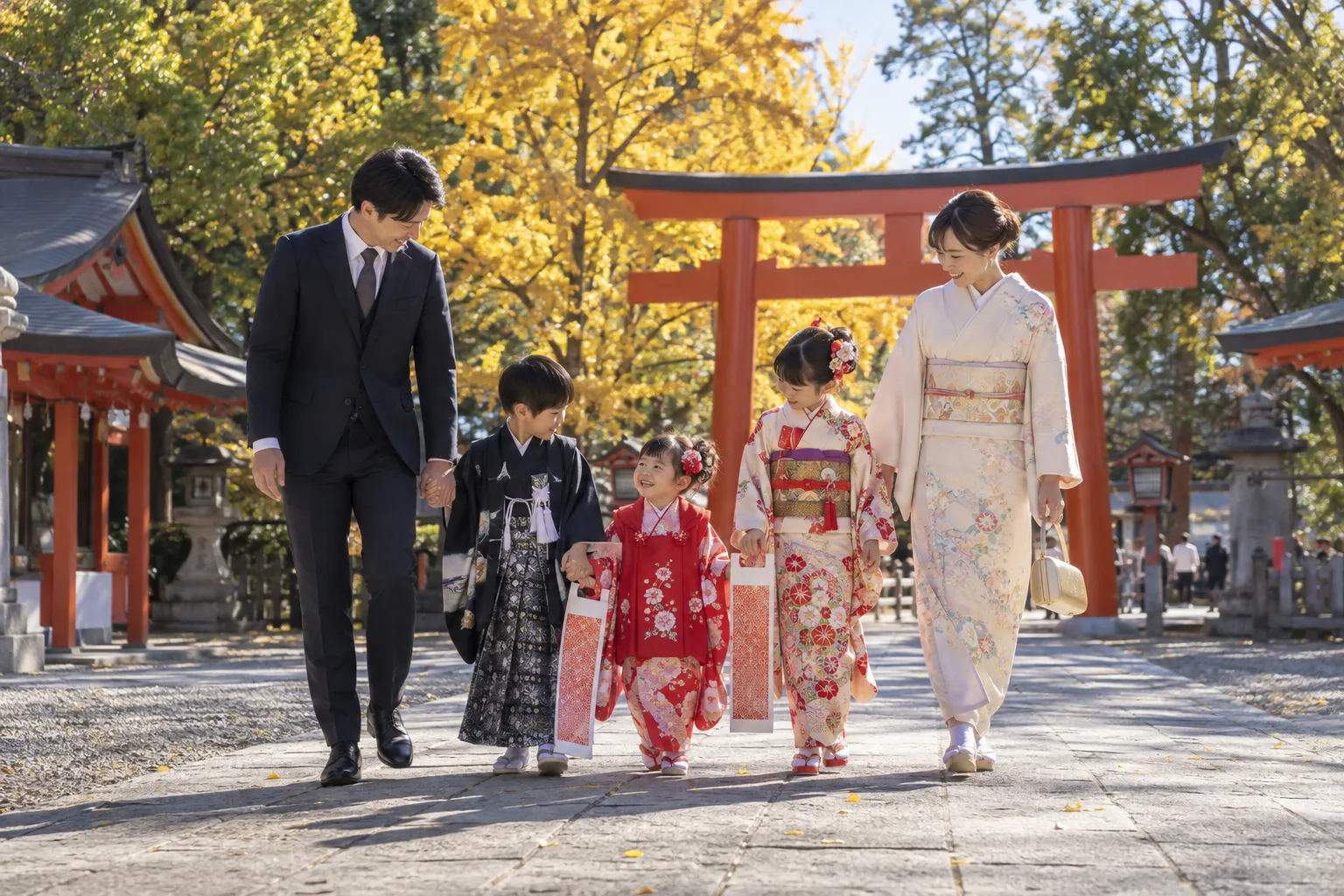
Shichi-Go-San

七五三を英語で:読む・聞く・話す・遊ぶ

やさしい英語(CEFR A2)の読み物に音声つき。会話・単語カード・クイズ8問・ゲームで、七五三の英語をまるごと。

🔊Read in English七五三を英語で読もう(CEFR A2・音声つき)

七五三を、やさしい英語で紹介する読み物です。▶で英文をタイトルから通して聞けます(アメリカ英語)。「和訳」ボタンで日本語訳の表示・非表示を切りかえられます。下線の語は下の単語カードにあります。

Seven, Five, Three: A Thank-You for Growing Up

CEFR A2
0:00
271 words

Every November, you can see small children in beautiful kimono at shrines all over Japan. Some hold their parents' hands. Others carry long paper bags with candy inside. This is Shichi-Go-San, which means seven, five, three. It is a festival for children aged three, five, and seven.

毎年11月になると、日本中の神社で美しい着物を着た小さな子どもたちを見かけます。親と手をつないでいる子もいれば、中に飴が入った細長い紙袋を持っている子もいます。これが七五三、「7・5・3」という意味の行事です。3歳・5歳・7歳の子どものためのお祝いです。

Long ago, these were three different events. At three, children's heads were no longer shaved, and they started to grow their hair. At five, boys wore a hakama, a kind of wide pants, for the first time. At seven, girls tied a real obi, a wide belt, instead of simple strings. Children often got sick in those days, so each of these steps was a big thank-you to the gods.

昔、これらは3つの別々の行事でした。3歳になると、子どもは頭をそられることがなくなり、髪を伸ばし始めました。5歳になると、男の子は初めて袴という幅の広いズボンのようなものをはきました。7歳になると、女の子は簡単なひもではなく、本物の帯という幅の広い帯を結びました。当時は子どもがよく病気になったので、一つ一つの節目は神さまへの大きな「ありがとう」でした。

The name Shichi-Go-San became popular in Tokyo in the late 1800s. After World War II, families all over Japan started to celebrate it. Today, many families take photos at a studio and eat a special meal together. November 15 is not a national holiday, so most families visit a shrine on a weekend.

七五三という名前は、1800年代の終わりに東京で広まりました。第二次世界大戦の後、日本中の家族が七五三を祝うようになりました。今では、写真館で写真を撮り、家族でごちそうを食べる家族が多くいます。11月15日は祝日ではないので、たいていの家族は週末に神社へお参りします。

The candy in the bag is called chitose-ame, or thousand-year candy. It is long and thin, and it comes in red and white. Parents hope their children will have long and healthy lives. The bag shows a crane and a turtle because both are symbols of long life in Japan.

袋の中の飴は千歳飴(ちとせあめ)、つまり「千年の飴」と呼ばれます。細長くて、赤と白の色をしています。親は子どもが長く健康に生きることを願っています。袋に鶴と亀が描かれているのは、どちらも日本では長寿の象徴だからです。

Many countries have their own ways to celebrate growing children. In Korea, babies choose an object at their first birthday party. In Mexico, girls have a big party when they turn fifteen. The ages and customs are different, but the message is the same. We are so glad you are here.

多くの国に、子どもの成長を祝う独自のやり方があります。韓国では、赤ちゃんが1歳の誕生日パーティーで物を一つ選びます。メキシコでは、女の子が15歳になると盛大なパーティーをします。年齢も習慣も違いますが、伝えたいことは同じです。あなたがここにいてくれて、本当にうれしい。

💬Dialogue英語の会話で七五三

🎬 ルーカスはブラジル出身で、11月に東京を訪れています。神社で着物姿の子どもたちを見て、友だちの結衣にたずねます。

0:00
Lucas

Yui, look at those kids! Why are they wearing kimono?

結衣、あの子たちを見て!どうして着物を着てるの?

Yui

It's Shichi-Go-San. It's a festival for children aged three, five, and seven.

七五三だよ。3歳・5歳・7歳の子どものお祝いなの。

Lucas

Why those numbers?

どうしてその数字なの?

Yui

Long ago, there was a different ceremony for each age. Odd numbers are also lucky in East Asia.

昔は年齢ごとに別の儀式があったの。それに東アジアでは奇数は縁起がいいんだ。

Lucas

Oh, that's neat. What are the long bags they're carrying?

へえ、いいね。持っている長い袋は何?

Yui

That's chitose-ame. It means thousand-year candy.

千歳飴だよ。千年の飴っていう意味。

Lucas

Thousand-year candy? Is it really old?

千年の飴?本当に古いの?

Yui

No, ha ha! It's a wish for a long life. That's why there's a crane and a turtle on the bag.

違うよ、ははは!長生きの願いなの。だから袋に鶴と亀が描いてあるんだ。

Lucas

I see. Is today a holiday?

なるほど。今日は祝日なの?

Yui

No. The day is November 15, but most families come on a weekend.

違うよ。本当の日は11月15日だけど、たいていの家族は週末に来るんだ。

Lucas

We don't have this in Brazil, but some girls have a big party at fifteen.

ブラジルにはこれはないけど、15歳で盛大なパーティーをする女の子もいるよ。

Yui

Oh, like a quinceanera? I've seen that in a movie!

あ、キンセアニェーラみたいな?映画で見たことある!

Lucas

Yes, but in Portuguese we call it festa de quinze anos.

そう。でもポルトガル語ではフェスタ・ジ・キンジ・アーノスって言うんだ。

Yui

Cool! Both festivals say the same thing. Thank you for growing up!

すてき!どっちのお祭りも同じことを言ってるんだね。大きくなってくれてありがとう!

🃏Word Cards七五三の英単語カード(12語)

カードをタップすると裏返って、意味と例文が出ます。

shrine名詞
神社We visited a shrine on Sunday.私たちは日曜日に神社にお参りした。💡 お寺は temple。shrine は神道の神社に使う。
kimono名詞
着物She wore a red kimono.彼女は赤い着物を着た。💡 英語でもそのまま kimono。複数形は kimono または kimonos。
aged形容詞
~歳のIt is for children aged three, five, and seven.それは3歳・5歳・7歳の子どものためのものだ。💡 aged + 数字で「~歳の」。発音は「エイジド」。
ceremony名詞
儀式There was a ceremony for each age.年齢ごとに儀式があった。💡 wedding ceremony 結婚式、opening ceremony 開会式。
odd number名詞
奇数Three, five, and seven are odd numbers.3、5、7は奇数だ。💡 偶数は even number。odd には「変な」という意味もある。
lucky形容詞
縁起がよい、幸運なSeven is a lucky number.7は縁起のいい数だ。💡 名詞は luck。Good luck! はおなじみ。
candy名詞
飴、お菓子This candy is long and thin.この飴は細長い。💡 アメリカ英語。イギリスでは sweets と言うことが多い。
crane名詞
鶴A crane is a symbol of long life.鶴は長寿の象徴だ。💡 建設現場の「クレーン」も同じ crane。首の長い鳥の形から。
turtle名詞
亀The turtle walked slowly.亀はゆっくり歩いた。💡 陸の亀は tortoise と言うこともある。
symbol名詞
象徴、しるしThe crane is a symbol of long life.鶴は長寿の象徴だ。💡 a symbol of ~ で「~の象徴」。
healthy形容詞
健康なI hope you stay healthy.元気でいてね。💡 名詞は health。healthy food は「体にいい食べ物」。
grow up動詞(句)
成長する、大人になるChildren grow up so fast.子どもはあっという間に大きくなる。💡 grown-up は名詞で「大人」。

✅Quiz七五三の英語クイズ(8問)

上の英文を読んでから答えてみよう。答えを選ぶとすぐに解説が出ます。全問正解でスタンプが金色に!

Q1. What is the passage mainly about?

この文章は主に何について書かれていますか。

全体を通して七五三の意味・歴史・千歳飴・世界の似た行事を紹介しています。メキシコや飴は一部の話題です。

Q2. What did boys do at age five long ago?

昔、男の子は5歳で何をしましたか。

第2段落に At five, boys wore a hakama ... for the first time とあります。帯は7歳の女の子、物を選ぶのは韓国の1歳の行事です。

Q3. When did the name Shichi-Go-San become popular in Tokyo?

七五三という名前が東京で広まったのはいつですか。

第3段落に became popular in Tokyo in the late 1800s とあります。戦後は全国に広まった時期です。

Q4. Why do most families visit a shrine on a weekend?

たいていの家族が週末に神社へ行くのはなぜですか。

第3段落に November 15 is not a national holiday, so most families visit a shrine on a weekend とあります。

Q5. In paragraph 4, the word symbols is closest in meaning to ____.

第4段落の symbols に最も意味が近いのはどれですか。

symbol は「象徴、しるし」。鶴と亀が長寿を表すしるしだという文脈です。

Q6. Which is true about the passage?

本文の内容に合うものはどれですか。

第4段落に it comes in red and white とあります。もとは3つの行事、帯は7歳、戦後は全国に広まった時期なので、ほかは誤りです。

Q7. Why was each step a big thank-you to the gods long ago?

昔、一つ一つの節目が神さまへの大きな感謝だったのはなぜですか。

第2段落の Children often got sick in those days から、無事に育つことが当たり前ではなかったと推測できます。

Q8. In the dialogue, what does Yui say about the name chitose-ame?

会話で、結衣は千歳飴という名前について何と言っていますか。

結衣は No, ha ha! It's a wish for a long life. と答えています。本当に古いわけではありません。

🎮Games七五三の英語ゲーム

タブを切りかえて遊べます。授業ではプロジェクターに映して、クラス対抗戦にしても盛り上がります。

📖Read Moreもっと読む:Why Celebrate Surviving Childhood?

少し難しめ(B1〜B2)の英文で、七五三を違う角度から。

Why Celebrate Surviving Childhood?

B1–B2
0:00
174 words

Many rites of passage for young children around the world share a quiet background: for most of human history, a large share of children did not survive their early years. In Korea, the first birthday became a major event partly because reaching it was a real achievement. In Japan, the ages of three, five, and seven marked steps on a dangerous road, and families thanked the local gods at each one.

世界の幼い子どもの通過儀礼の多くには、静かな共通の背景があります。人類の歴史のほとんどの期間、多くの子どもが幼いうちに亡くなっていたのです。韓国で1歳の誕生日が大きな行事になったのは、そこまで育つこと自体が本当に大きなことだったからでもあります。日本では、3歳・5歳・7歳は危険な道のりの一歩一歩であり、家族はその節目ごとに地元の神に感謝しました。

Today, child mortality in Japan is among the lowest in the world, yet Shichi-Go-San has not faded away. Instead, its meaning has shifted. For many families, the highlight is no longer the prayer but the photo session, the rented kimono, and a meal with grandparents. Some critics say the festival has become too commercial, while others argue that commercial support is exactly what spread it nationwide in the first place.

今日、日本の子どもの死亡率は世界でも最も低い水準にありますが、七五三は消えていません。そのかわりに、意味が変わってきました。多くの家族にとって、いちばんの楽しみはもはや祈りではなく、写真撮影や貸衣装、祖父母との食事です。行事が商業的になりすぎたと批判する人もいれば、そもそも全国に広めたのが商業の力だったのだと主張する人もいます。

Perhaps the real question is not whether the custom is traditional enough, but what each generation chooses to be grateful for. A ritual can survive for centuries precisely because people keep reinventing it.

本当に問うべきなのは、その習慣が十分に伝統的かどうかではなく、それぞれの世代が何に感謝することを選ぶのか、なのかもしれません。人々が作り直し続けるからこそ、儀式は何百年も生き延びることができるのです。

👋Useful Phrases七五三に使える英語フレーズ

Shichi-Go-San is a festival for children aged three, five, and seven.七五三は3歳・5歳・7歳の子どものお祝いです。まずはこの一言。Seven-Five-Three Festival と訳してもよい。
Families visit a shrine to say thank you for their children's health.家族で神社にお参りして、子どもが元気に育ったことに感謝します。神社は shrine、お寺は temple。
This candy is called chitose-ame. It means thousand-year candy.この飴は千歳飴といって、千年の飴という意味です。長寿の願いを説明すると喜ばれる。
You look great in your kimono!着物、とても似合ってるね!晴れ着の子どもへのほめ言葉。
Congratulations on your Shichi-Go-San!七五三おめでとう!Happy Shichi-Go-San! と言ってもよい。

🗣️ 話し合ってみよう(Discussion)

  1. Do you have a photo from your Shichi-Go-San? What do you remember?

    七五三の写真はありますか。何を覚えていますか。
  2. Which birthday was the most special for you? Why?

    あなたにとっていちばん特別だった誕生日はいつですか。それはなぜですか。
  3. Korean babies choose an object at their first birthday. What would you have chosen?

    韓国の赤ちゃんは1歳の誕生日に物を一つ選びます。あなたなら何を選んだと思いますか。
  4. Should traditional events like Shichi-Go-San change with the times? Give an example.

    七五三のような伝統行事は、時代に合わせて変わるべきでしょうか。例をあげて答えましょう。
  5. Some say Shichi-Go-San has become too commercial. Do you agree? Why or why not?

    七五三は商業的になりすぎたという意見があります。賛成ですか、反対ですか。理由も答えましょう。

🗾Explain Japan in English七五三を海外の人に英語で説明するなら

姉妹サイト「日本文化ナビ」に、英語でかんたんに説明する例文(ひと言・30秒・スピーチ)と、外国の人によく聞かれる質問がまとまっています。日本語のページと、英語だけのページ(そのまま海外の人に見せられます)があります。

七五三の晴れ着を英語で説明する(shichigosan no haregi)七五三の晴れ着(shichigosan no haregi)を英語で説明するには。一言/30秒/スピーチの3段階の英文と和訳、外国人によく聞かれる質問と答え、そのまま使えるフレーズJP 日本語で読むGB English page
👘
Shichi-Go-San
スタンプ帳に七五三のスタンプを押しました!
クイズで全問正解すると金のスタンプに。世界一周めざして集めよう。 スタンプ帳を見る →

授業アイデアとワークシートを見る →