Shichi-Go-San · Worksheet 1
Seven, Five, Three: A Thank-You for Growing Up
Read the story. 英文を読もう。
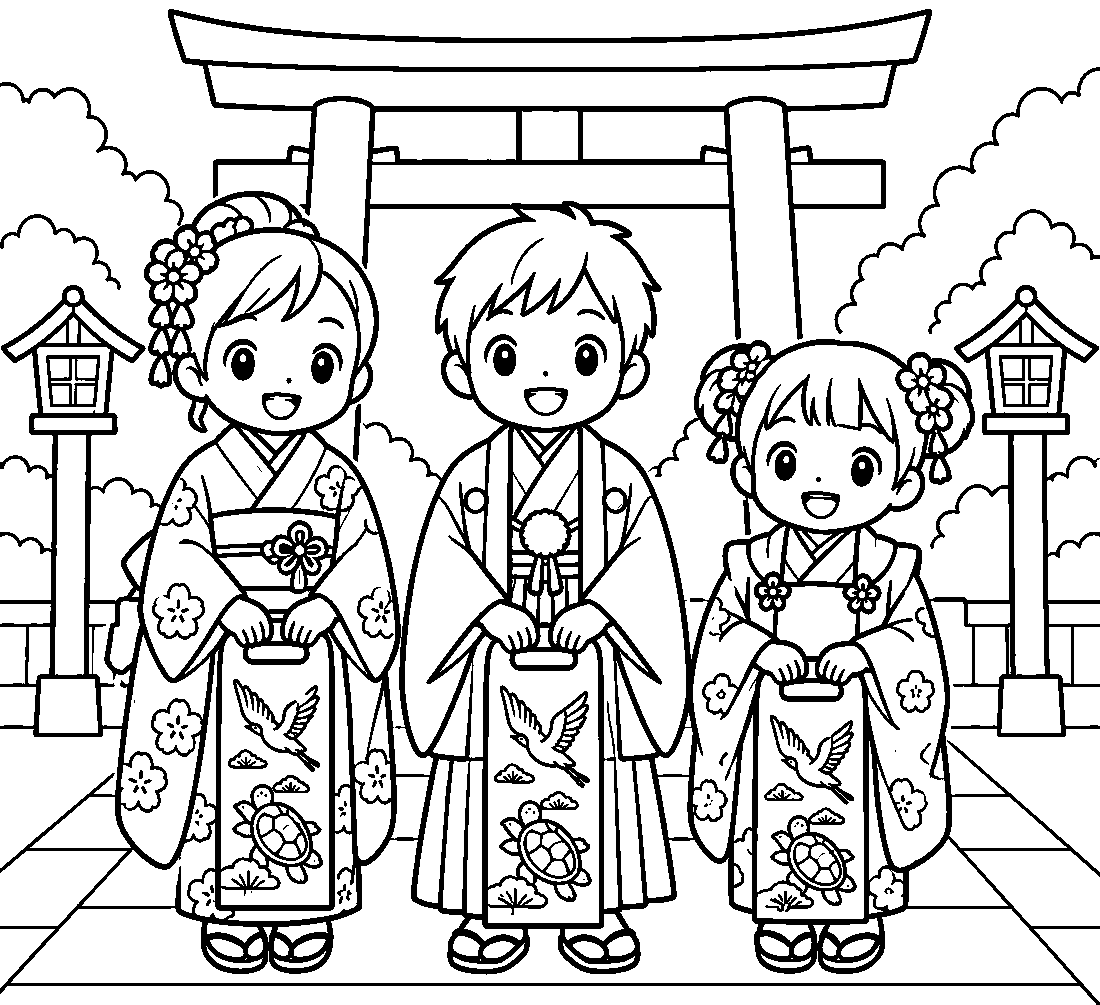
1Every November, you can see small children in beautiful kimono at shrines all over Japan. Some hold their parents' hands. Others carry long paper bags with candy inside. This is Shichi-Go-San, which means seven, five, three. It is a festival for children aged three, five, and seven.
2Long ago, these were three different events. At three, children's heads were no longer shaved, and they started to grow their hair. At five, boys wore a hakama, a kind of wide pants, for the first time. At seven, girls tied a real obi, a wide belt, instead of simple strings. Children often got sick in those days, so each of these steps was a big thank-you to the gods.
3The name Shichi-Go-San became popular in Tokyo in the late 1800s. After World War II, families all over Japan started to celebrate it. Today, many families take photos at a studio and eat a special meal together. November 15 is not a national holiday, so most families visit a shrine on a weekend.
4The candy in the bag is called chitose-ame, or thousand-year candy. It is long and thin, and it comes in red and white. Parents hope their children will have long and healthy lives. The bag shows a crane and a turtle because both are symbols of long life in Japan.
5Many countries have their own ways to celebrate growing children. In Korea, babies choose an object at their first birthday party. In Mexico, girls have a big party when they turn fifteen. The ages and customs are different, but the message is the same. We are so glad you are here.
- shrine 神社
- kimono 着物
- aged ~歳の
- ceremony 儀式
- odd number 奇数
- lucky 縁起がよい、幸運な
- candy 飴、お菓子
- crane 鶴
- turtle 亀
- symbol 象徴、しるし
- healthy 健康な
- grow up 成長する、大人になる