
テ・デウム
Te Deum
シャルパンティエ・c. 1688–1698
パンパカパーン!ヨーロッパのテレビの幕開けを飾ってきた、ごうかな前奏曲。
テ・デウム ニ長調のページへ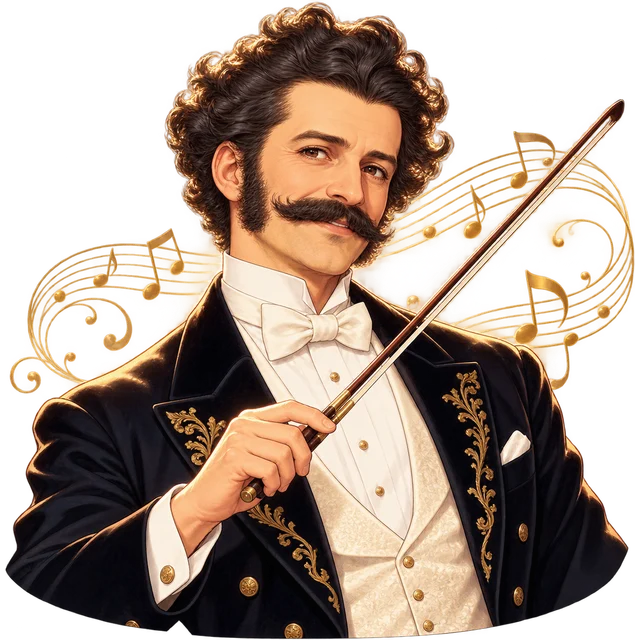
Orchestral · · 1885
ヨハン・シュトラウス2世(1825–1899)
ハンガリーの情熱とウィーンの優雅さが、ひとつにとけあう序曲。Hungarian fire meets Viennese elegance in one overture.
WATCH ON YOUTUBE
この曲は、権利の切れた高音質の録音がまだ見つからないため、YouTube の公式チャンネルなどの名演でお楽しみください(ダウンロードはできません)。YouTube でほかの演奏もさがす ↗
 STRAUSS Overture to "The Gypsy Baron" - "The President's Own" U.S. Marine Band
United States Marine Band(YouTube) YouTube で開く ↗
Riccardo Muti, Wiener Philharmoniker - Johann Strauss II: The Gypsy Baron: Entrance March
ViennaPhilVEVO(YouTube) YouTube で開く ↗
The Gypsy Baron: Overture
Berliner Philharmoniker - Topic(YouTube) YouTube で開く ↗
ホー!初演はシュトラウスの60歳の誕生日の、ちょうど前の日だったんだよ。
 この曲のおはなし The Story
『ジプシー男爵』は、ヨハン・シュトラウス2世が作曲したオペレッタ(喜歌劇)で、序曲はその幕開けに演奏される曲です。物語の舞台はハンガリー。重々しい始まりから、ハンガリーの民族音楽を思わせる情熱的なメロディー、ウィーンらしい優雅なワルツへと次々に場面が変わり、最後は息もつかせぬ速さで盛り上がります。"The Gypsy Baron" is an operetta, a light and comic opera, by Johann Strauss II. Its overture is played before the curtain rises. The story takes place in Hungary. The music moves from a serious opening to passionate tunes in a Hungarian style, then to an elegant Viennese waltz, and it ends with a breathless rush.
台本は、ハンガリーの作家ヨーカイ・モールのまだ出版されていなかった物語『サフィ』をもとに、イグナーツ・シュニッツァーが書きました。故郷に帰ってきた青年バリンカイが、ロマの人々と出会い、恋をし、かくされた宝を見つけるという冒険物語です。ハンガリーの踊りチャールダーシュのような、ゆっくりした部分と急に速くなる部分の対比が、この作品の大きな魅力です。Ignaz Schnitzer wrote the libretto based on "Saffi," a then-unpublished story by the Hungarian writer Mór Jókai. A young man named Barinkay returns to his homeland, meets the Roma people, falls in love, and finds a hidden treasure. The contrast between slow parts and sudden fast parts, like the Hungarian dance called the csárdás, gives the work much of its charm.
初演は1885年10月24日、ウィーンのアン・デア・ウィーン劇場で、シュトラウスの60歳の誕生日の前日でした。公演は大成功し、『こうもり』とならぶシュトラウスのオペレッタの代表作になりました。なお「ジプシー」という呼び方は、今ではロマの人々への差別的な言い方と受けとられることもあり、使うときに注意が必要な言葉です。The first performance was on 24 October 1885 at the Theater an der Wien in Vienna, one day before Strauss's 60th birthday. It was a great success, and it became one of his best-known operettas, together with "Die Fledermaus." Today, the word "Gypsy" can be seen as an unfair name for the Roma people, so it should be used with care.
This music starts a funny opera. The story happens in Hungary. A young man comes home and finds a treasure! The music is sometimes slow and sometimes very fast. It ends with an exciting rush.この音楽は、楽しいオペラの始まりの曲です。物語の舞台はハンガリー。故郷に帰ってきた若者が、宝物を見つけます!音楽はときにゆっくり、ときにとても速くなります。最後はわくわくする速さで終わります。
 聴きどころ Listening Guide
 えっ!?ネタ Surprising Facts
 タップすると答えが開きます
初演の1885年10月24日は、シュトラウスの60歳の誕生日(10月25日)の前の日でした。誕生日の前夜に、ウィーンの観客がこの新作に大きな拍手を送ったのです。ワルツ王の円熟期を代表する、記念すべき作品になりました。
The premiere on 24 October 1885 was the day before Strauss's 60th birthday on 25 October. On the eve of his birthday, the Vienna audience gave the new work big applause. It became a landmark of the Waltz King's mature years.
台本のもとになったのは、ハンガリーで大人気の作家ヨーカイ・モールの、まだ出版されていなかった物語『サフィ』です。ヨーカイはのちに同じ話をふくらませ、小説『ジプシー男爵』として発表しました。台本を書いたシュニッツァーもハンガリー生まれのジャーナリストでした。
The libretto is based on "Saffi," a then-unpublished story by Mór Jókai, a very popular writer in Hungary. Jókai later expanded the same story into the novel "The Gypsy Baron." The librettist, Schnitzer, was also a Hungarian-born journalist.
シュトラウスは、このオペレッタのメロディーをもとに、舞踏会用のワルツ「宝のワルツ」作品418も作りました。オペレッタの人気曲を舞踏会のワルツに仕立てなおすのは、シュトラウスのお得意の方法でした。
From the melodies of this operetta, Strauss also made a ballroom waltz, the "Treasure Waltz," Op. 418. Turning popular operetta tunes into dance waltzes was one of his favorite tricks.
シュトラウスは十数曲のオペレッタを書きましたが、その中でも『こうもり』(1874年)と『ジプシー男爵』は、今も世界の劇場でよく上演される二大人気作です。どちらも序曲だけがコンサートで演奏されることも多い名曲です。
Strauss wrote more than a dozen operettas, but "Die Fledermaus" (1874) and "The Gypsy Baron" are his two most popular, still often staged around the world. The overtures of both are also often played on their own at concerts.
ENGLISH × MASTERPIECE
 金を掘り当てる→「大成功する」。He struck gold with his new song. のように使います。
 この曲で覚える英単語 Words
 クイズに挑戦 Quiz
 著作権について Credits
MORE MASTERPIECES
シャルパンティエ・c. 1688–1698
パンパカパーン!ヨーロッパのテレビの幕開けを飾ってきた、ごうかな前奏曲。
テ・デウム ニ長調のページへ
パーセル・1695
ブリテンが「オーケストラ入門」のテーマに選んだ、かっこいいメロディー。
劇音楽「アブデラザール」より ロンドのページへクラーク・c. 1700
結婚式の大定番。でも作曲者は長いあいだ取りちがえられていた!
トランペット・ヴォランタリー(デンマーク王子の行進)のページへ
バッハ・c. 1704 (?)
タラリ〜!一度聴いたら忘れない、オルガンの大迫力の幕開け。
トッカータとフーガ ニ短調のページへバッハ・c. 1706–1713
足が弾く低いテーマが21回!重くて壮大な、オルガンの大建築。
パッサカリアとフーガ ハ短調のページへバッハ・c. 1707–1710 (?)
キラキラの駆け上がりで幕開け!若きバッハのはなやかな鍵盤ショー。
トッカータ ニ長調のページへ
ヴィヴァルディ・published 1711
2本のヴァイオリンが火花を散らす!バッハも編曲した熱い協奏曲。
協奏曲集『調和の霊感』第8番 イ短調(2つのヴァイオリンのための協奏曲)のページへヴィヴァルディ・c. 1715
オクターブがぴょんぴょん跳ねる!喜びがはじける合唱の名曲。
グローリア ニ長調のページへ
 MP3