
カノン
Canon in D
パッヘルベル・c. 1680–1706
同じ8つの音が28回!なのに聴くたび胸がいっぱいになる曲。
カノンとジーグ ニ長調 より「カノン」のページへ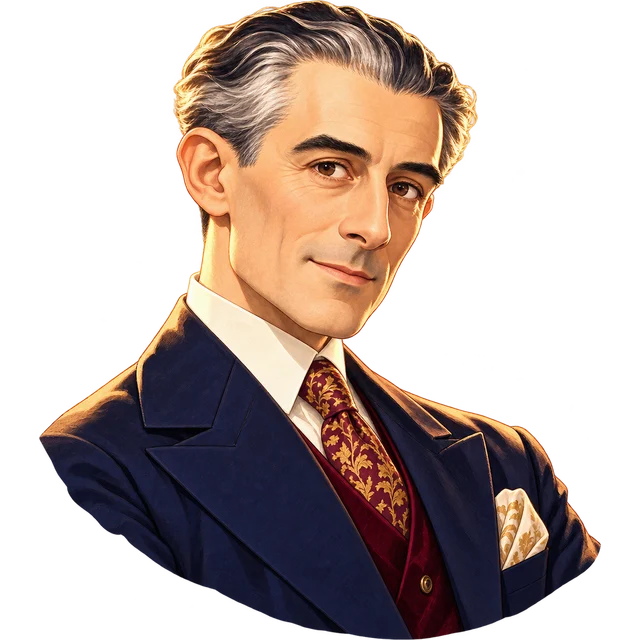
Chamber · M. 35 · 1902–1903
モーリス・ラヴェル(1875–1937)
「1音も変えるな」とドビュッシーが言ったとされる、若き傑作。'Don't change a single note,' Debussy is said to have told him.
WATCH ON YOUTUBE
この曲は、権利の切れた高音質の録音がまだ見つからないため、YouTube の公式チャンネルなどの名演でお楽しみください(ダウンロードはできません)。YouTube でほかの演奏もさがす ↗
 Hagen Quartet - Maurice Ravel - String Quartet in F - Assez vif, Très rythmé (2/4)
Judging Your Audio(YouTube) YouTube で開く ↗
Maurice Ravel - String Quartet in F major
olla-vogala(YouTube) YouTube で開く ↗
Ravel - String Quartet in F Major / Remastered (reference recording: Budapest String Quartet)
Classical Music/ /Reference Recording(YouTube) YouTube で開く ↗

ホー!第2楽章は、弦を指ではじくピツィカートで始まるよ。ギターみたいだね。
 この曲のおはなし The Story
ラヴェルの「弦楽四重奏曲」は、2つのヴァイオリン、ヴィオラ、チェロの4人で演奏する、4楽章の室内楽曲です。ラヴェルが28歳だった1903年の春に完成しました。おだやかで澄んだ第1楽章、指で弦をはじく軽やかな第2楽章、夢見るような第3楽章、激しく力強い第4楽章と、表情ゆたかに進みます。Ravel's String Quartet is a chamber work in four movements for two violins, viola and cello. Ravel finished it in the spring of 1903, at the age of 28. It moves through many moods: a calm, clear first movement, a light second movement with plucked strings, a dreamy third movement, and a fierce, powerful finale.
この曲は、先生のフォーレにささげられています。形は、10年前に書かれたドビュッシーの弦楽四重奏曲をお手本にしているところがあり、2つの曲はよくいっしょに録音されます。最初の楽章のメロディーが、あとの楽章にも形を変えて現れ、全体が1つの物語のようにつながっています。The quartet is dedicated to Ravel's teacher, Gabriel Fauré. Its structure partly follows Debussy's String Quartet, written ten years earlier, and the two works are often recorded together. Melodies from the first movement come back in new forms in later movements, linking the whole piece like one story.
1904年3月、パリでエマン四重奏団が初演しました。評価は分かれ、「ドビュッシーのまね」と言う批評家もいれば、「明日の巨匠の1人」とたたえる批評家もいました。ささげられたフォーレ自身は、あまり気に入らなかったようです。それでも今では、弦楽四重奏の代表的な名曲として世界中で演奏されています。It was first performed in Paris in March 1904 by the Heymann Quartet. Opinions were divided: one critic called it a copy of Debussy, while another praised Ravel as 'one of the masters of tomorrow'. Fauré, to whom it was dedicated, did not seem to like it much. Even so, today it is one of the best-loved string quartets in the world.
Four people play this music: two violins, a viola and a cello. Ravel wrote it when he was 28. His teacher did not like the last part very much. But another great composer said, 'Don't change it!' Today, many people love it.この音楽は4人で演奏します。ヴァイオリン2人、ヴィオラ、チェロです。ラヴェルは28歳のときにこの曲を書きました。先生は、最後の楽章をあまり気に入りませんでした。でも、別の大作曲家は「変えてはいけない!」と言いました。今では、たくさんの人がこの曲を愛しています。
 聴きどころ Listening Guide
 えっ!?ネタ Surprising Facts
 タップすると答えが開きます
ドビュッシーはラヴェルに「音楽の神々の名において、そしてわたしの名において、あなたの四重奏曲の1音たりとも変えてはいけない」と書き送った、と伝えられています。のちにライバルと言われる2人ですが、このころはおたがいを認め合っていたのです。
Debussy is said to have written to Ravel: 'In the name of the gods of music, and in my own, do not touch a single note of your quartet.' The two were later seen as rivals, but at this time they respected each other.
曲をささげられたフォーレは初演を聴きにきましたが、あまり感心しなかったと言われています。とくに最後の楽章について、短すぎてバランスが悪いと感じたという話も伝わっています。先生にささげた作品が、先生にほめられない――ちょっと切ない話です。
Fauré came to the premiere but is said not to have been very impressed. There is also a story that he felt the last movement was too short and out of balance. A work dedicated to a teacher, but not praised by him: a slightly sad story.
ラヴェルは才能があったのに、パリ音楽院のコンクールや、若手の登竜門「ローマ賞」ではなかなか評価されませんでした。ローマ賞は1901年に下の賞をもらっただけで、1等賞は一度もとれませんでした。院長デュボワは、ラヴェルの新しさを嫌ったと言われます。この四重奏曲は、学校の外で名声を得た作品でした。
Although Ravel was very talented, he struggled to win recognition in the Paris Conservatoire's competitions and in the Prix de Rome, the big prize for young composers. He won a lower prize in 1901, but never the top prize. The conservative director, Théodore Dubois, is said to have disliked his new ideas. This quartet won fame outside the school.
この曲などで注目されたラヴェルでしたが、1905年のローマ賞では予選で落とされてしまいます。すでに名の知られた作曲家を落としたことに抗議が起こり、新聞でも大さわぎに。この「ラヴェル事件」のあと音楽院の院長は交代し、フォーレが新しい院長になりました。
Ravel became well known thanks to works like this quartet, but in 1905 he was knocked out in the first round of the Prix de Rome. People protested that a well-known composer had been rejected, and the newspapers made a big fuss. After this 'Ravel Affair', the Conservatoire's director was replaced, and Fauré became the new director.
ENGLISH × MASTERPIECE
 「今のままで十分よい」ので、いじってだめにするな、という意味。イギリスでは leave well alone。
 この曲で覚える英単語 Words
 クイズに挑戦 Quiz
 著作権について Credits
MORE MASTERPIECES
パッヘルベル・c. 1680–1706
同じ8つの音が28回!なのに聴くたび胸がいっぱいになる曲。
カノンとジーグ ニ長調 より「カノン」のページへ
パーセル・1695
ブリテンが「オーケストラ入門」のテーマに選んだ、かっこいいメロディー。
劇音楽「アブデラザール」より ロンドのページへ
バッハ・c. 1703–1707 (?)
音楽の授業でおなじみ!4つの声が同じテーマで追いかけっこ。
小フーガ ト短調のページへバッハ・c. 1706–1713
足が弾く低いテーマが21回!重くて壮大な、オルガンの大建築。
パッサカリアとフーガ ハ短調のページへバッハ・c. 1707–1710 (?)
キラキラの駆け上がりで幕開け!若きバッハのはなやかな鍵盤ショー。
トッカータ ニ長調のページへ
ヴィヴァルディ・published 1711
2本のヴァイオリンが火花を散らす!バッハも編曲した熱い協奏曲。
協奏曲集『調和の霊感』第8番 イ短調(2つのヴァイオリンのための協奏曲)のページへバッハ・1713
2本のリコーダーがやさしく鳴る、のどかな牧場の歌。
カンタータ第208番より「羊は安らかに草を食み」のページへ
コレッリ・published 1714
聖なる夜のために。最後に羊飼いの笛のようなパストラーレが流れます。
合奏協奏曲 ト短調「クリスマス協奏曲」のページへ
 MP3