
ダイドーの嘆き
Dido's Lament
パーセル・by 1689
「わたしを覚えていて」。くり返す低音にのせた、胸をうつ別れの歌。
歌劇「ダイドーとエネアス」より「ダイドーの嘆き」のページへ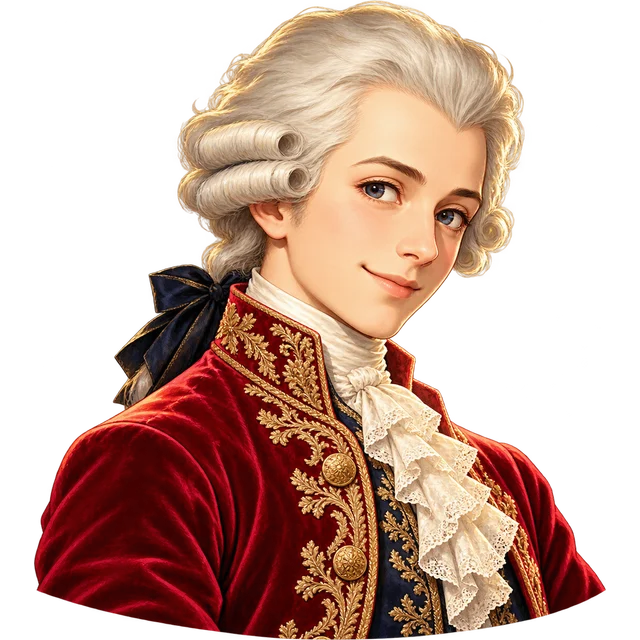
Choral · K. 626 · 1791
ヴォルフガング・アマデウス・モーツァルト(1756–1791)
モーツァルトが残したのは8小節だけ。涙にぬれた未完の音楽。Mozart left only eight bars of it: unfinished music full of tears.
PUBLIC DOMAIN RECORDING
PD / CC0 無料でダウンロードOK
WATCH ON YOUTUBE
 Berliner Philharmoniker & Claudio Abbado – Mozart: Requiem In D Minor: Sequentia: Lacrimosa
Deutsche Grammophon - DG(YouTube) YouTube で開く ↗
Mozart - Requiem: Lacrimosa (Luzerner Sinfonieorchester, Rundfunkchor Berlin, Michael Sanderling)
Warner Classics(YouTube) YouTube で開く ↗
左の音源は権利が切れた録音なのでダウンロードできます。右の動画は YouTube の公式の埋め込みで見るもので、ダウンロードはできません(動画の権利は各チャンネルにあります)。
 もっと名演を観る YouTube で何百万回も再生された人気の演奏
Requiem - Lacrimosa (Remastered 2024)
Philharmonia Orchestra - Topic(YouTube) YouTube で開く ↗
Claudio Abbado - Mozart Requiem - Lacrimosa
medici.tv(YouTube) YouTube で開く ↗
Mozart - Requiem (Lacrimosa): A Divine Masterpiece
Essential Classics(YouTube) YouTube で開く ↗
Mozart : Requiem
France Musique concerts(YouTube) YouTube で開く ↗

ホー!「ラクリモサ」はラテン語で「涙にあふれた」という意味だよ。
 この曲のおはなし The Story
レクイエムとは、亡くなった人のために祈るカトリックのミサ(死者のためのミサ曲)のことです。モーツァルトは1791年、名前を明かさない依頼を受けてこの曲を書き始めましたが、完成させる前の12月5日に35歳で亡くなりました。「ラクリモサ」はその中の1曲で、「涙の日」とも呼ばれます。A requiem is a Catholic Mass for the dead, a prayer for people who have died. In 1791 Mozart began writing this requiem after receiving an anonymous commission, but he died on 5 December, at the age of 35, before finishing it. 'Lacrimosa' is one of its movements and is also called 'Day of Tears'.
依頼主は、のちにフランツ・フォン・ヴァルゼック伯爵という貴族だとわかりました。亡くなった妻をしのぶための曲で、伯爵は自分が作曲したことにして演奏するつもりだったと考えられています。モーツァルトが「ラクリモサ」で書いたのは、最初のわずか8小節だけ。残りは弟子のフランツ・クサーヴァー・ジュースマイヤーが完成させました。The person behind the commission later turned out to be a nobleman, Count Franz von Walsegg. He wanted the piece in memory of his late wife, and it is thought that he planned to present it as his own work. In the Lacrimosa, Mozart wrote only the first eight bars. The rest was completed by his pupil Franz Xaver Süssmayr.
妻コンスタンツェは、依頼料を受け取るために曲を完成させる必要があり、モーツァルトの弟子たちに仕上げを頼みました。こうして完成したレクイエムは、今では世界で最も有名なレクイエムの一つです。モーツァルトの死をめぐっては、ライバルのサリエリに毒殺されたという噂が広まりましたが、これには何の根拠もありません。His wife Constanze needed the work finished in order to receive the fee, so she asked Mozart's pupils to complete it. The finished Requiem is now one of the most famous requiems in the world. After Mozart's death a rumour spread that his rival Salieri had poisoned him, but there is no evidence for this at all.
A requiem is music for people who have died. Mozart was writing this music when he died. In this part, he wrote only eight bars. His student finished the rest. The music sounds very sad and beautiful.レクイエムは亡くなった人のための音楽です。モーツァルトはこの曲を書いている途中で亡くなりました。この部分では、彼はたった8小節しか書いていません。残りは弟子が完成させました。音楽はとても悲しく、美しく聞こえます。
 聴きどころ Listening Guide
 えっ!?ネタ Surprising Facts
 タップすると答えが開きます
「ラクリモサ」の最初の8小節は、モーツァルトが最後に書いた音楽だと言われています。ただし、ほかの部分のメモとどちらを先に書いたのかを正確に確かめるのはむずかしく、本当に「最後の音符」だったかどうかは、はっきりしていません。
The first eight bars of the Lacrimosa are often said to be the last music Mozart ever wrote. But it is hard to prove the exact order in which he wrote his sketches, so we cannot be sure they were truly his last notes.
依頼は名前を明かさない使いの者を通して届いたため、昔から「死の使いがモーツァルトに自分のためのレクイエムを書かせた」という伝説が語られてきました。けれども実際の依頼主はヴァルゼック伯爵で、亡き妻のための曲を、自分の作品として発表するつもりだったと考えられています。
The commission arrived through a messenger who did not give a name, so a legend grew that a 'messenger of death' made Mozart write a requiem for himself. In fact, the client was Count Walsegg, who is thought to have planned to present the work, written for his late wife, as his own.
モーツァルトの死後、「サリエリが毒を盛った」という噂が広まりました。のちにプーシキンの劇『モーツァルトとサリエリ』や映画『アマデウス』で描かれて有名になりましたが、根拠はなく、歴史家はこの説を否定しています。実際のサリエリは、多くの弟子を育てた立派な音楽家でした。
After Mozart's death a rumour spread that Salieri had poisoned him. It became famous through Pushkin's play Mozart and Salieri and the film Amadeus, but there is no evidence, and historians reject it. The real Salieri was a respected musician who taught many students.
1960年代、「ラクリモサ」の最後に置くつもりだったと考えられる、モーツァルト自筆の「アーメン・フーガ」のスケッチが見つかりました。ジュースマイヤーの完成版にこのフーガはありませんが、現代の研究者による新しい完成版の中には、このスケッチを使ったものもあります。
In the 1960s, a sketch in Mozart's hand for an 'Amen fugue' was found, which he probably meant to place at the end of the Lacrimosa. Süssmayr's completion has no such fugue, but some modern completions by scholars use this sketch.
ENGLISH × MASTERPIECE
 「まだ片づいていない問題・やり残したこと」。人間関係のわだかまりにも使います。
 この曲で覚える英単語 Words
 クイズに挑戦 Quiz
 この録音について(著作権・出典) Credits
MORE MASTERPIECES
パーセル・by 1689
「わたしを覚えていて」。くり返す低音にのせた、胸をうつ別れの歌。
歌劇「ダイドーとエネアス」より「ダイドーの嘆き」のページへパーセル・1695
ブリテンが「オーケストラ入門」のテーマに選んだ、かっこいいメロディー。
劇音楽「アブデラザール」より ロンドのページへ
バッハ・c. 1704 (?)
タラリ〜!一度聴いたら忘れない、オルガンの大迫力の幕開け。
トッカータとフーガ ニ短調のページへバッハ・c. 1703–1707 (?)
音楽の授業でおなじみ!4つの声が同じテーマで追いかけっこ。
小フーガ ト短調のページへバッハ・c. 1706–1713
足が弾く低いテーマが21回!重くて壮大な、オルガンの大建築。
パッサカリアとフーガ ハ短調のページへ
ヘンデル・1711
「泣かせてください」と歌う、深い悲しみに満ちた名アリア。
私を泣かせてください(歌劇『リナルド』より)のページへ
クープラン・published 1717
題名の意味はだれも知らない!やわらかく波打つ、なぞの名曲。
神秘的なバリケードのページへ
マルチェッロ・published c. 1717
胸にしみるアダージョ!バッハも編曲したオーボエの名曲。
オーボエ協奏曲 ニ短調のページへ MP3