
カノン
Canon in D
パッヘルベル・c. 1680–1706
同じ8つの音が28回!なのに聴くたび胸がいっぱいになる曲。
カノンとジーグ ニ長調 より「カノン」のページへ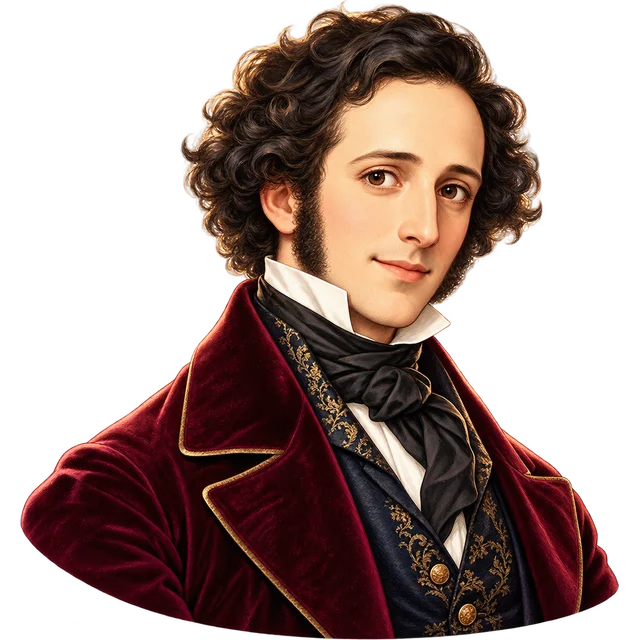
Chamber · Op. 49 · 1839
フェリックス・メンデルスゾーン(1809–1847)
シューマンが「現代の最高のトリオ」とたたえた、情熱あふれる名曲。The passionate trio Schumann called the masterpiece of its time.
PUBLIC DOMAIN RECORDING
CC BY 3.0 無料でダウンロードOK
WATCH ON YOUTUBE
 Piano Trio No. 1 in D Minor, Op. 49: I. Molto allegro e agitato
Yo-Yo Ma - Topic(YouTube) YouTube で開く ↗
Piano Trio No. 1 in D Minor, Op. 49: II. Andante con moto tranquillo
Yo-Yo Ma - Topic(YouTube) YouTube で開く ↗
左の音源は権利が切れた録音なのでダウンロードできます。右の動画は YouTube の公式の埋め込みで見るもので、ダウンロードはできません(動画の権利は各チャンネルにあります)。
 もっと名演を観る YouTube で何百万回も再生された人気の演奏
Felix Mendelssohn - Piano Trio No. 1 in D minor
olla-vogala(YouTube) YouTube で開く ↗

ホー!シューマンはこの曲の批評で、作曲者を「19世紀のモーツァルト」とよんだんだ。
 この曲のおはなし The Story
ピアノ・ヴァイオリン・チェロの3人で演奏する「ピアノ三重奏曲」です。メンデルスゾーンが30歳の1839年に書き上げました。全部で4つの楽章があり、第1楽章ではチェロが、胸にせまるような長いメロディーを歌いだします。悲しさと情熱が入りまじったニ短調の曲ですが、最後は明るいニ長調で力強く終わります。This is a piano trio, a piece for three players: piano, violin and cello. Mendelssohn finished it in 1839, when he was thirty. It has four movements, and the first one opens with the cello singing a long, heartfelt melody. The music is in D minor, full of sadness and passion, but it ends brightly and powerfully in D major.
書き上げたあと、メンデルスゾーンは友人の作曲家フェルディナント・ヒラーに楽譜を見せました。ヒラーは、ピアノのパートが少し古いスタイルだと感じてアドバイスします。ヒラーの回想によると、メンデルスゾーンはそれを受けて、ピアノのパートをまるごと書き直しました。その結果、ピアノがとても華やかで目立つ、ロマン派らしい新しい響きの曲になりました。After finishing it, Mendelssohn showed the score to his friend, the composer Ferdinand Hiller. Hiller felt the piano writing was a little old-fashioned and said so. According to Hiller's memories, Mendelssohn then rewrote the whole piano part. As a result, the piano became brilliant and eye-catching, giving the trio a fresh, Romantic sound.
初演は1840年2月1日、ライプツィヒのゲヴァントハウスで、メンデルスゾーン自身がピアノを弾きました。同じ年に出版されると、シューマンは批評で「現代の巨匠的なトリオ」と大絶賛し、メンデルスゾーンを「19世紀のモーツァルト」とよびました。今でもピアノ三重奏曲の中で、とくに人気の高い1曲です。The first performance took place at the Leipzig Gewandhaus on 1 February 1840, with Mendelssohn himself at the piano. When it was published the same year, Schumann praised it in a review as 'the master trio of our time' and called Mendelssohn 'the Mozart of the nineteenth century'. It is still one of the most popular piano trios ever written.
This piece is for three players. They play the piano, the violin and the cello. The cello starts with a beautiful, sad song. Another composer, Schumann, loved this piece. He called Mendelssohn 'the Mozart of the 19th century'!この曲は3人で演奏します。ピアノ、ヴァイオリン、チェロです。チェロが、美しくて悲しい歌で始めます。別の作曲家シューマンは、この曲が大好きでした。彼はメンデルスゾーンを「19世紀のモーツァルト」とよんだのです!
 聴きどころ Listening Guide
 えっ!?ネタ Surprising Facts
 タップすると答えが開きます
シューマンは自分の音楽雑誌の批評で、このトリオを「現代の巨匠的なトリオ」とよび、メンデルスゾーンを「19世紀のモーツァルト」とたたえました。時代の矛盾をいちばんはっきり見ぬき、それを最初に調和させた音楽家だ、という意味です。シューマンとメンデルスゾーンは、ライプツィヒで親しくしていた仲間でした。
In a review in his own music magazine, Schumann called this 'the master trio of our time' and praised Mendelssohn as 'the Mozart of the nineteenth century', a musician who saw the conflicts of his age most clearly and was the first to bring them into harmony. The two were friends in Leipzig.
アドバイスをしたヒラーは、パリで長く暮らし、ショパンやリストとも親しかった人です。パリで流行していた、華やかで新しいピアノの書き方をよく知っていました。友人の意見を素直に受け入れて大作を書き直すところに、メンデルスゾーンのまじめさが表れています。
Hiller, who gave the advice, had lived in Paris for years and was friends with Chopin and Liszt. He knew the brilliant new piano style that was popular there. Mendelssohn's willingness to rewrite a big work after a friend's comment shows how serious he was about his art.
初演でヴァイオリンを弾いたのは、ゲヴァントハウス管弦楽団のコンサートマスター、フェルディナント・ダーフィト。彼はのちに、メンデルスゾーンの名曲「ヴァイオリン協奏曲 ホ短調」の初演でソロを弾いた人でもあります。作曲中にはメンデルスゾーンの相談相手にもなりました。
The violinist at the premiere was Ferdinand David, concertmaster of the Gewandhaus Orchestra. He later played the solo at the premiere of Mendelssohn's famous Violin Concerto in E minor, and he advised Mendelssohn while he was writing it.
第2楽章は、まずピアノがひとりで、やさしいメロディーを歌いだします。その雰囲気は、メンデルスゾーンが得意としたピアノ曲集『無言歌集』にそっくりだとよく言われます。そこにヴァイオリンとチェロが加わり、3人のおだやかな会話になっていきます。
The second movement begins with the piano alone, singing a gentle melody. It is often said to sound just like one of Mendelssohn's Songs without Words for piano. Then the violin and cello join in, and it becomes a calm conversation among three friends.
ENGLISH × MASTERPIECE
 走り高跳びのバーを上げることから。「目標や水準を高くする」という意味です。
 この曲で覚える英単語 Words
 クイズに挑戦 Quiz
 この録音について(著作権・出典) Credits
MORE MASTERPIECES
パッヘルベル・c. 1680–1706
同じ8つの音が28回!なのに聴くたび胸がいっぱいになる曲。
カノンとジーグ ニ長調 より「カノン」のページへ
パーセル・1695
ブリテンが「オーケストラ入門」のテーマに選んだ、かっこいいメロディー。
劇音楽「アブデラザール」より ロンドのページへ
バッハ・c. 1703–1707 (?)
音楽の授業でおなじみ!4つの声が同じテーマで追いかけっこ。
小フーガ ト短調のページへバッハ・c. 1706–1713
足が弾く低いテーマが21回!重くて壮大な、オルガンの大建築。
パッサカリアとフーガ ハ短調のページへバッハ・c. 1707–1710 (?)
キラキラの駆け上がりで幕開け!若きバッハのはなやかな鍵盤ショー。
トッカータ ニ長調のページへ
ヴィヴァルディ・published 1711
2本のヴァイオリンが火花を散らす!バッハも編曲した熱い協奏曲。
協奏曲集『調和の霊感』第8番 イ短調(2つのヴァイオリンのための協奏曲)のページへ
ヘンデル・1711
「泣かせてください」と歌う、深い悲しみに満ちた名アリア。
私を泣かせてください(歌劇『リナルド』より)のページへバッハ・1713
2本のリコーダーがやさしく鳴る、のどかな牧場の歌。
カンタータ第208番より「羊は安らかに草を食み」のページへ MP3