
パッヘルベルのジーグ
Pachelbel's Gigue
パッヘルベル・c. 1680–1706
あの「カノン」には、はずむ相棒がいた!知られざる後半戦。
カノンとジーグ ニ長調 より「ジーグ」のページへ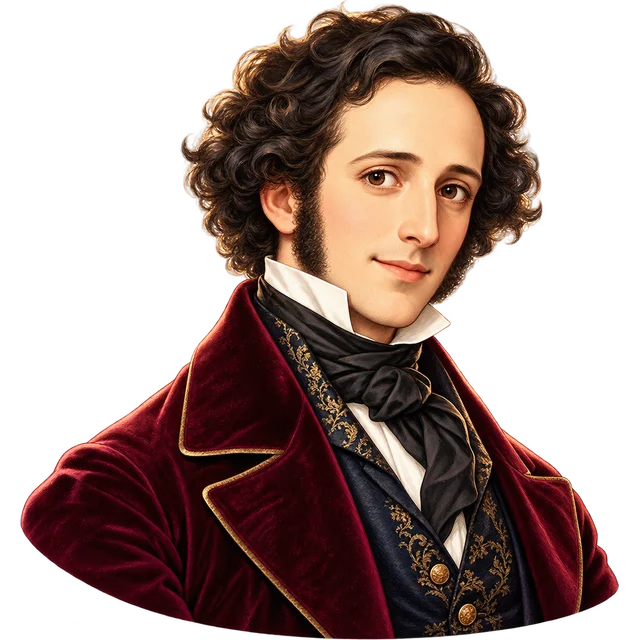
Chamber · Op. 20 · 1825 (rev. 1832)
フェリックス・メンデルスゾーン(1809–1847)
16歳の天才が書いた、8人の弦楽器による奇跡の大合奏!A miracle for eight strings, written by a sixteen-year-old genius!
PUBLIC DOMAIN RECORDING
CC BY 3.0 無料でダウンロードOK
WATCH ON YOUTUBE
 Mendelssohn: Octet in E-Flat Major, Op. 20: I. Allegro moderato ma con fuoco
Academy of St Martin in the Fields - Topic(YouTube) YouTube で開く ↗
Mendelssohn Octet in E-Flat Major, Op. 20 (Complete)
Jasper String Quartet(YouTube) YouTube で開く ↗
左の音源は権利が切れた録音なのでダウンロードできます。右の動画は YouTube の公式の埋め込みで見るもので、ダウンロードはできません(動画の権利は各チャンネルにあります)。

ホー!ヴァイオリン4人、ヴィオラ2人、チェロ2人。8人全員が主役なんだ。
 この曲のおはなし The Story
弦楽八重奏曲は、ヴァイオリン4・ヴィオラ2・チェロ2の、8つの弦楽器のための曲です。メンデルスゾーンがたった16歳の1825年、10月に書き上げました。弦楽四重奏を2組ならべただけのものではなく、8人がひとつのチームとなって、ときにはオーケストラのような厚い響きを出します。はじけるような明るさに満ちた、若さいっぱいの名曲です。The Octet is a piece for eight string instruments: four violins, two violas and two cellos. Mendelssohn finished it in October 1825, when he was only sixteen. It is not simply two string quartets side by side. The eight players work as one team, and at times they sound as rich as an orchestra. It is a bright, bursting piece full of youthful energy.
この曲は、メンデルスゾーンのヴァイオリンの先生で友人でもあったエドゥアルト・リーツの誕生日プレゼントとして書かれました。楽譜には「8人全員が交響曲のスタイルで弾くこと」という意味の注意書きがあり、強弱をふだん以上にはっきりつけるよう求めています。第3楽章のスケルツォは、ゲーテの『ファウスト』に出てくる「ワルプルギスの夜」の場面から思いついたと考えられています。Mendelssohn wrote it as a birthday present for Eduard Rietz, his violin teacher and friend. In the score, he noted that all the players should play 'in the style of a symphony', with louder and softer passages marked more strongly than usual. The third movement, a scherzo, is believed to have been inspired by the Walpurgis Night scene in Goethe's Faust.
メンデルスゾーンはのちにこの曲に手を入れ、1832年に出版しました。今ふつうに演奏されるのは、この改訂版です。最後の楽章では、ヘンデルの『メサイア』の「ハレルヤ・コーラス」の一節によく似たメロディーが顔を出したり、第3楽章のスケルツォがもう一度ちらりと現れたりと、遊び心もたっぷり。10代の作曲家が書いた最高傑作のひとつと言われています。Mendelssohn later revised the piece, and it was published in 1832. This revised version is the one usually played today. The finale is full of fun: a phrase from the 'Hallelujah' Chorus in Handel's Messiah appears, and the scherzo comes back for a moment. It is often called one of the greatest works ever written by a teenager.
This piece is for eight string players. Mendelssohn wrote it when he was just 16! It was a birthday present for his violin teacher. The music is fast, bright and happy. Sometimes the eight players sound like a big orchestra.この曲は8人の弦楽器奏者のための曲です。メンデルスゾーンはたった16歳でこれを書きました!ヴァイオリンの先生への誕生日プレゼントでした。音楽は速くて、明るくて、楽しいです。ときどき、8人が大きなオーケストラのように聞こえます。
 聴きどころ Listening Guide
 えっ!?ネタ Surprising Facts
 タップすると答えが開きます
この曲は、ヴァイオリンの先生エドゥアルト・リーツの誕生日に、作曲者のサイン入りの楽譜として贈られました。リーツはメンデルスゾーンより数歳年上の、兄のような存在でした。最初の演奏のときは、リーツ自身が楽譜からパート譜を書き写したそうです。
The score, signed by the composer, was given to his violin teacher Eduard Rietz as a birthday present. Rietz was only a few years older than Mendelssohn, like a big brother. For the first performance, Rietz himself is said to have copied out the players' parts from the score.
メンデルスゾーンはこのスケルツォがよほど気に入っていたようです。1829年、ロンドンで自分の交響曲第1番を演奏したとき、もとの第3楽章のかわりに、このスケルツォをオーケストラ用に編曲して使いました。8人の弦楽器の音楽が、そのまま大オーケストラの曲になったのです。
Mendelssohn must have loved this scherzo. In 1829, when his Symphony No. 1 was performed in London, he arranged this scherzo for orchestra and used it in place of the symphony's original third movement. Music for eight strings became music for a full orchestra.
姉ファニーの話によると、スケルツォのヒントになったのは、ゲーテの『ファウスト』の「ワルプルギスの夜の夢」に出てくる詩でした。「雲がたなびき、霧が上から晴れていく。木の葉にそよ風、葦に風、そしてすべては消え去った」という内容です。最後の音がふっと消える感じは、まさにこの詩のようです。
According to his sister Fanny, the scherzo was inspired by lines from the 'Walpurgis Night's Dream' in Goethe's Faust: clouds drift and mist clears from above, a breeze stirs in the leaves and reeds, and everything vanishes. The way the music fades away at the end matches the poem perfectly.
最終楽章は、いちばん低い第2チェロがひとりで、細かく速いメロディーを弾きはじめます。それを次々にほかの楽器がまねして加わり、ついに8人全員の大きな「フーガ(追いかけっこの音楽)」になります。バッハやヘンデルを深く学んでいた、メンデルスゾーンの腕前が光るところです。
The finale begins with the second cello, the lowest instrument, playing a fast, busy tune alone. One by one, the other instruments copy it and join in, until all eight players are part of a great fugue, a kind of musical chase. It shows how deeply Mendelssohn had studied Bach and Handel.
ENGLISH × MASTERPIECE
 「年齢をこえてかしこい」。若いのに考えや腕前が大人顔負けの人をほめる言い方です。
 この曲で覚える英単語 Words
 クイズに挑戦 Quiz
 この録音について(著作権・出典) Credits
MORE MASTERPIECES
パッヘルベル・c. 1680–1706
あの「カノン」には、はずむ相棒がいた!知られざる後半戦。
カノンとジーグ ニ長調 より「ジーグ」のページへシャルパンティエ・c. 1688–1698
パンパカパーン!ヨーロッパのテレビの幕開けを飾ってきた、ごうかな前奏曲。
テ・デウム ニ長調のページへクラーク・c. 1700
結婚式の大定番。でも作曲者は長いあいだ取りちがえられていた!
トランペット・ヴォランタリー(デンマーク王子の行進)のページへ
バッハ・c. 1703–1707 (?)
音楽の授業でおなじみ!4つの声が同じテーマで追いかけっこ。
小フーガ ト短調のページへバッハ・c. 1707–1710 (?)
キラキラの駆け上がりで幕開け!若きバッハのはなやかな鍵盤ショー。
トッカータ ニ長調のページへ
ヴィヴァルディ・published 1711
2本のヴァイオリンが火花を散らす!バッハも編曲した熱い協奏曲。
協奏曲集『調和の霊感』第8番 イ短調(2つのヴァイオリンのための協奏曲)のページへヴィヴァルディ・c. 1715
オクターブがぴょんぴょん跳ねる!喜びがはじける合唱の名曲。
グローリア ニ長調のページへ
テレマン・c. 1710–1720 (?)
バルブのないラッパで高音をきらり!バロックのトランペットの晴れ舞台。
トランペット協奏曲 ニ長調のページへ MP3