
パッヘルベルのジーグ
Pachelbel's Gigue
パッヘルベル・c. 1680–1706
あの「カノン」には、はずむ相棒がいた!知られざる後半戦。
カノンとジーグ ニ長調 より「ジーグ」のページへ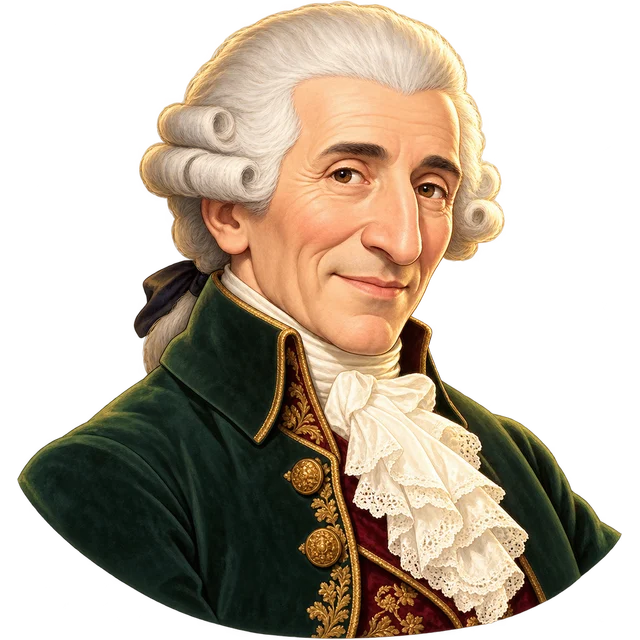
Chamber · Op. 64 No. 5 (Hob. III:63) · 1790
フランツ・ヨーゼフ・ハイドン(1732–1809)
バイオリンが青空へ舞いあがる!ひばりがさえずる四重奏曲。A violin melody that soars into the sky like a singing lark.
PUBLIC DOMAIN RECORDING
PD / CC0 無料でダウンロードOK
 別の演奏で聴く 1:Joseph Haydn
ANOTHER RECORDING 1
PD / CC0WATCH ON YOUTUBE
 Haydn: String Quartet in D Major, Op. 64 No. 5 "The Lark": I. Allegro moderato
Hagen Quartett - Topic(YouTube) YouTube で開く ↗
Haydn String Quartet No. 53 in D Major, Op. 64. - "The Lark"
LARKQuartet(YouTube) YouTube で開く ↗
左の音源は権利が切れた録音なのでダウンロードできます。右の動画は YouTube の公式の埋め込みで見るもので、ダウンロードはできません(動画の権利は各チャンネルにあります)。

ホー!「ひばり」はハイドンが付けた名前じゃなくて、後の人のあだ名なんだ。
 この曲のおはなし The Story
「ひばり」は、オーストリアの作曲家ヨーゼフ・ハイドンが1790年に書いた弦楽四重奏曲です。弦楽四重奏とは、バイオリン2本・ビオラ・チェロの4人で演奏する室内楽のこと。ハイドンはこの形の曲を70曲近くも書き、「弦楽四重奏の父」と呼ばれています。この曲は、その中でも特に人気のある1曲です。'The Lark' is a string quartet written in 1790 by the Austrian composer Joseph Haydn. A string quartet is chamber music for four players: two violins, a viola and a cello. Haydn wrote nearly 70 works of this kind and is called 'the father of the string quartet'. This is one of his most popular quartets.
曲の始まりでは、まず下の3つの楽器が短くはずむ音で伴奏を始めます。そこへ第1バイオリンが高い音で入ってきて、のびのびと歌いだします。そのようすが、空高く舞いあがってさえずるひばりのようだというので、のちに「ひばり」というあだ名がつきました。ハイドン自身が付けた題名ではありません。At the start, the three lower instruments begin with short, bouncy notes. Then the first violin enters high above them and sings freely. Because this sounds like a lark rising into the sky and singing, the quartet later got the nickname 'The Lark'. Haydn himself did not give it this name.
この曲を含む作品64の6曲は、ハイドンが長く仕えたエステルハージ家の楽団でバイオリンを弾いていたこともある、ヨハン・トストという人に献呈されました。1790年は、主人のニコラウス侯が亡くなり、ハイドンが自由の身になってロンドンへ旅立った年でもあります。最終楽章は、細かい音が休みなく走りつづける楽しい曲です。The six quartets of Op. 64, including this one, were dedicated to Johann Tost, who had played violin in the orchestra of the Esterházy family, Haydn's long-time employers. 1790 was also the year Prince Nikolaus died, leaving Haydn free to travel to London. The last movement is a joyful race of quick notes that hardly ever stops.
Four people play this music. They play two violins, a viola and a cello. At the start, one violin plays very high notes. It sounds like a little bird singing in the sky. That bird is a lark!4人がこの曲を演奏します。バイオリン2つ、ビオラ、チェロを弾きます。始まりで、1つのバイオリンがとても高い音をひきます。空で歌う小鳥のように聞こえます。その鳥がひばりです!
 聴きどころ Listening Guide
 えっ!?ネタ Surprising Facts
 タップすると答えが開きます
「ひばり」「皇帝」「鳥」など、ハイドンの弦楽四重奏曲には楽しいあだ名のついた曲がたくさんありますが、そのほとんどは後の時代の出版社や聴き手が付けたものです。あだ名のおかげで覚えやすくなり、人気が出た曲も多いと言われます。
Many of Haydn's quartets have fun nicknames, such as 'The Lark', 'The Emperor' and 'The Bird', but most were given later by publishers or listeners. These names made the pieces easier to remember, and some say they helped them become popular.
ハイドンの弦楽四重奏曲「皇帝」(1797年)の第2楽章には、彼がオーストリア皇帝のために作った歌のメロディーが使われています。このメロディーはのちに「ドイツの歌」に使われ、今ではドイツ国歌のメロディーになっています。ハイドンの曲が、国の歌として今も歌われているのです。
The slow movement of Haydn's 'Emperor' Quartet (1797) uses a melody he wrote as a song for the Austrian emperor. The melody was later used for the 'Song of Germany', and today it is the tune of Germany's national anthem. A Haydn melody is still sung as a nation's song.
ハイドンは30年近くもエステルハージ家に仕え、お城で毎日のように作曲や演奏をしていました。この曲を書いた1790年、主人のニコラウス侯が亡くなると楽団は解散し、ハイドンはついに自由になります。その年の暮れに彼はロンドンへ旅立ち、大成功をおさめました。
Haydn worked for the Esterházy family for almost 30 years, composing and performing at their palace nearly every day. In 1790, the year of this quartet, Prince Nikolaus died, the orchestra was broken up, and Haydn was finally free. At the end of that year he set off for London, where he became a huge success.
ハイドンが1809年に亡くなったあと、「頭の形で才能がわかる」と信じた人たちによって、頭がい骨がこっそり持ち去られる事件が起きました。頭がい骨が体といっしょのお墓におさめられたのは、なんと1954年のことです。
After Haydn died in 1809, some men who believed that the shape of the head showed a person's talent secretly took his skull. It was not laid to rest with the rest of his body until 1954!
ENGLISH × MASTERPIECE
 ひばりは夜明けに鳴くことから「早起きして」。主にイギリス英語の言い方です。
 この曲で覚える英単語 Words
 クイズに挑戦 Quiz
 この録音について(著作権・出典) Credits
MORE MASTERPIECES
パッヘルベル・c. 1680–1706
あの「カノン」には、はずむ相棒がいた!知られざる後半戦。
カノンとジーグ ニ長調 より「ジーグ」のページへシャルパンティエ・c. 1688–1698
パンパカパーン!ヨーロッパのテレビの幕開けを飾ってきた、ごうかな前奏曲。
テ・デウム ニ長調のページへクラーク・c. 1700
結婚式の大定番。でも作曲者は長いあいだ取りちがえられていた!
トランペット・ヴォランタリー(デンマーク王子の行進)のページへ
バッハ・c. 1703–1707 (?)
音楽の授業でおなじみ!4つの声が同じテーマで追いかけっこ。
小フーガ ト短調のページへバッハ・c. 1707–1710 (?)
キラキラの駆け上がりで幕開け!若きバッハのはなやかな鍵盤ショー。
トッカータ ニ長調のページへ
ヴィヴァルディ・published 1711
2本のヴァイオリンが火花を散らす!バッハも編曲した熱い協奏曲。
協奏曲集『調和の霊感』第8番 イ短調(2つのヴァイオリンのための協奏曲)のページへ
テレマン・c. 1710–1720 (?)
バルブのないラッパで高音をきらり!バロックのトランペットの晴れ舞台。
トランペット協奏曲 ニ長調のページへ
ヘンデル・1717
テムズ川の船の上で国王のために!夏の夜の水上コンサート。
水上の音楽のページへ MP3