
ダイドーの嘆き
Dido's Lament
パーセル・by 1689
「わたしを覚えていて」。くり返す低音にのせた、胸をうつ別れの歌。
歌劇「ダイドーとエネアス」より「ダイドーの嘆き」のページへ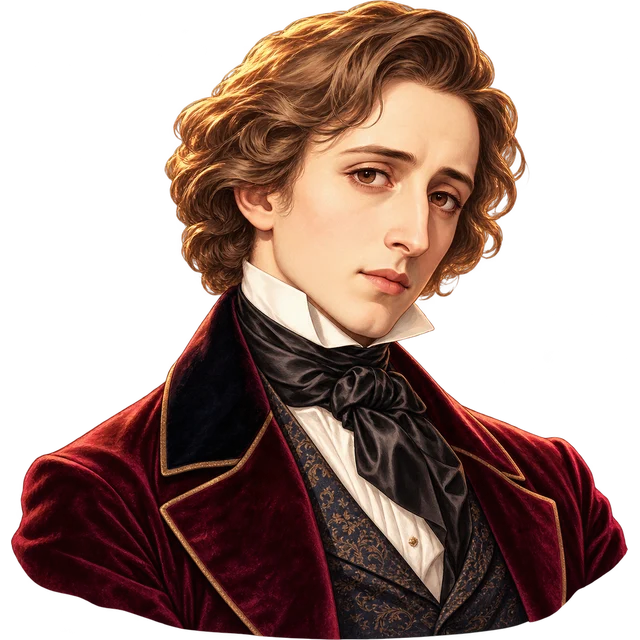
Piano · Op. 69 No. 2 · 1829(死後に出版)
フレデリック・ショパン(1810–1849)
19歳のショパンがワルシャワで書いた、ほろ苦い青春のワルツ。A bittersweet waltz of youth, written in Warsaw when Chopin was nineteen.
PUBLIC DOMAIN RECORDING
PD / CC0 無料でダウンロードOKWATCH ON YOUTUBE
 Chopin Valse in b minor Op 69 No. 2. Valentina Lisitsa
Valentina Lisitsa QOR Records Official channel(YouTube) YouTube で開く ↗
Chopin Valse Op.69 No.2 Paul Barton, FEURICH piano
Paul Barton(YouTube) YouTube で開く ↗
左の音源は権利が切れた録音なのでダウンロードできます。右の動画は YouTube の公式の埋め込みで見るもので、ダウンロードはできません(動画の権利は各チャンネルにあります)。
 もっと名演を観る YouTube で何百万回も再生された人気の演奏
Chopin - Waltz Op. 69 No. 2 in B minor
Kassia(YouTube) YouTube で開く ↗

ホー!ちょっぴりせつない、でもどこかなつかしい。若いショパンの日記のようなワルツだよ。
 この曲のおはなし The Story
この曲は、ショパンが19歳の1829年、まだ故郷ワルシャワに住んでいたころに書いたワルツです。ロ短調のメロディーは、ため息のような、ほろ苦いせつなさに満ちています。とちゅうでは明るい長調の部分が現れ、思い出の中の楽しい場面のように、ほっとする表情を見せます。Chopin wrote this waltz in 1829, at the age of nineteen, while he was still living in his hometown of Warsaw. The melody in B minor is full of bittersweet longing, like a sigh. Along the way, a bright major-key part appears and gives a sense of relief, like a happy scene in a memory.
1829年は、ショパンにとって大きな節目の年でした。ワルシャワの音楽学校での勉強を終え、夏にはウィーンで初めての演奏会を開いて成功をおさめています。この曲の自筆譜は、幼なじみの友人ヴィルヘルム・コルベルクに贈られたと伝えられています。ヴィルヘルムの弟オスカルは、のちにポーランドの民謡を数多く集めた研究者として有名になりました。1829 was a turning point for Chopin. He finished his studies at the music school in Warsaw, and in the summer he gave his first concerts in Vienna, with great success. A handwritten copy of this piece is said to have been given to his childhood friend Wilhelm Kolberg. Wilhelm's younger brother Oskar later became famous as a scholar who collected a great many Polish folk songs.
ショパンはこのワルツを生前に出版しませんでした。死後の1852年にクラクフで出版されたのが最初とされ、1855年には友人フォンタナが「作品69」の2曲目として出版しました。同じ作品69の1曲目は、1835年に書かれた「別れのワルツ」です。6年もはなれて書かれた2曲が、死後に1つの作品番号にまとめられたのです。Chopin did not publish this waltz in his lifetime. It is said to have first been printed in Kraków in 1852, after his death, and in 1855 his friend Fontana published it as the second piece of Op. 69. The first piece of Op. 69 is the Farewell Waltz, written in 1835. Two pieces written six years apart were put under one opus number after his death.
Chopin wrote this waltz in Warsaw when he was nineteen. The music is a little sad, like a sigh. In the middle, it becomes bright for a while. Chopin did not publish it. It was published after he died.ショパンは19歳のとき、ワルシャワでこのワルツを書きました。音楽はため息のように、少し悲しげです。まん中で、しばらく明るくなります。ショパンはこの曲を出版しませんでした。彼が亡くなったあとに出版されました。
 聴きどころ Listening Guide
 えっ!?ネタ Surprising Facts
 タップすると答えが開きます
この曲が書かれた1829年、ショパンは音楽学校の勉強を終え、夏にウィーンで初めての演奏会を開きました。演奏会は大成功で、若きピアニストとして注目を集めます。ほろ苦いこのワルツは、そんな希望に満ちた年に生まれました。
In 1829, when this piece was written, Chopin finished his studies at the music school and gave his first concerts in Vienna that summer. The concerts were a great success, and he drew attention as a young pianist. This bittersweet waltz was born in that hopeful year.
このワルツの自筆譜は、幼なじみのヴィルヘルム・コルベルクに贈られたと伝えられています。ヴィルヘルムの弟オスカル・コルベルクは、のちにポーランド各地の民謡を数えきれないほど集め、記録した研究者として知られるようになりました。
A handwritten copy of this waltz is said to have been given to Chopin's childhood friend Wilhelm Kolberg. Wilhelm's younger brother, Oskar Kolberg, later became known as a scholar who collected and recorded countless folk songs from all over Poland.
作品69の1曲目は、1835年に書かれた「別れのワルツ」です。この第10番は1829年の作。6年もはなれて書かれた2曲が、ショパンの死後、同じ作品番号のきょうだいとして出版されました。作品番号は、書かれた順番を表しているとはかぎらないのです。
The first piece of Op. 69 is the Farewell Waltz, written in 1835. This No. 10 dates from 1829. Two pieces written six years apart were published after Chopin's death as siblings under the same opus number. Opus numbers do not always show the order in which works were written.
このワルツは、ショパンの死後の1852年にポーランドのクラクフで出版されたのが最初とされています。そのあと1855年に、友人フォンタナがまとめた遺作の曲集の中で「作品69の2」として出版され、この番号で広く知られるようになりました。
This waltz is said to have first been published in Kraków, Poland, in 1852, after Chopin's death. Then in 1855, it was published as Op. 69 No. 2 in a collection of posthumous works prepared by his friend Fontana, and it became widely known by this number.
ENGLISH × MASTERPIECE
 memory lane は「思い出の小道」。昔をなつかしむときに使います。
 この曲で覚える英単語 Words
 クイズに挑戦 Quiz
 この録音について(著作権・出典) Credits
MORE MASTERPIECES
パーセル・by 1689
「わたしを覚えていて」。くり返す低音にのせた、胸をうつ別れの歌。
歌劇「ダイドーとエネアス」より「ダイドーの嘆き」のページへ
パッヘルベル・c. 1680–1706
同じ8つの音が28回!なのに聴くたび胸がいっぱいになる曲。
カノンとジーグ ニ長調 より「カノン」のページへ
バッハ・c. 1706–1713
足が弾く低いテーマが21回!重くて壮大な、オルガンの大建築。
パッサカリアとフーガ ハ短調のページへ
ヘンデル・1711
「泣かせてください」と歌う、深い悲しみに満ちた名アリア。
私を泣かせてください(歌劇『リナルド』より)のページへバッハ・1713
2本のリコーダーがやさしく鳴る、のどかな牧場の歌。
カンタータ第208番より「羊は安らかに草を食み」のページへ
コレッリ・published 1714
聖なる夜のために。最後に羊飼いの笛のようなパストラーレが流れます。
合奏協奏曲 ト短調「クリスマス協奏曲」のページへ
クープラン・published 1717
題名の意味はだれも知らない!やわらかく波打つ、なぞの名曲。
神秘的なバリケードのページへ
マルチェッロ・published c. 1717
胸にしみるアダージョ!バッハも編曲したオーボエの名曲。
オーボエ協奏曲 ニ短調のページへ
 MP3