
パッヘルベルのジーグ
Pachelbel's Gigue
パッヘルベル・c. 1680–1706
あの「カノン」には、はずむ相棒がいた!知られざる後半戦。
カノンとジーグ ニ長調 より「ジーグ」のページへ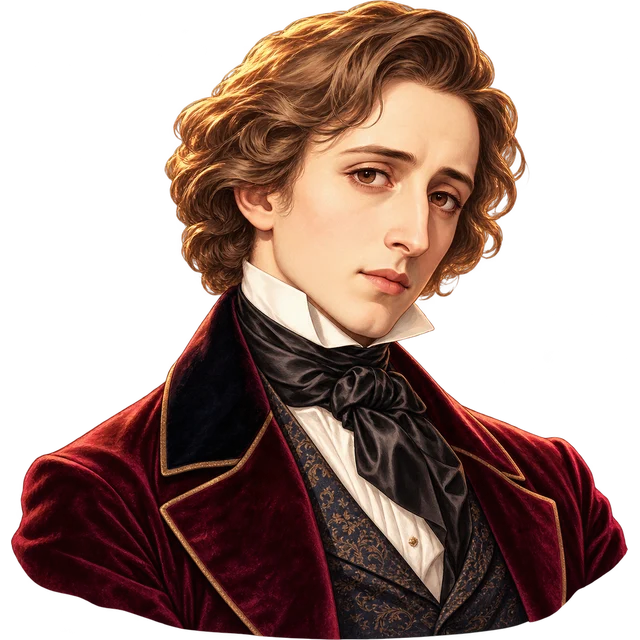
Piano · Op. 42 · 1840
フレデリック・ショパン(1810–1849)
8小節のトリルで幕開け!2拍子と3拍子が重なるふしぎなワルツ。An eight-bar trill opens the piece, followed by the magic of two beats against three!
PUBLIC DOMAIN RECORDING
PD / CC0 無料でダウンロードOKWATCH ON YOUTUBE
 BRUCE (XIAOYU) LIU – Waltz in A flat major, Op. 42 (18th Chopin Competition, second stage)
Chopin Institute(YouTube) YouTube で開く ↗
Waltz in A-Flat Major, Op. 42, "Grande valse"
Evgeny Kissin - Topic(YouTube) YouTube で開く ↗
左の音源は権利が切れた録音なのでダウンロードできます。右の動画は YouTube の公式の埋め込みで見るもので、ダウンロードはできません(動画の権利は各チャンネルにあります)。
 もっと名演を観る YouTube で何百万回も再生された人気の演奏
Arthur Rubinstein - Chopin Op. 42 In A-flat Major (The 'Two Four' Waltz)
ArRubMusic(YouTube) YouTube で開く ↗

ホー!右手は2拍子、左手は3拍子。ちがうリズムが重なっても、ちゃんとワルツなんだ。
 この曲のおはなし The Story
この曲は1840年に書かれ、同じ年に出版された、ショパンのワルツの中でも特に評価の高い1曲です。「グランド・ヴァルス(大円舞曲)」という名でも知られ、ワルツ集ではなく1曲だけで出版されました。曲は、8小節にもわたる長いトリル(2つの音をすばやくくり返す飾り)で始まり、まるで「さあ、おどりが始まるよ」と合図をしているかのようです。This piece was written and published in 1840, and it is one of Chopin's most highly praised waltzes. Known as the Grande valse, it was published on its own, not as part of a set. It begins with a long trill, two notes repeated very quickly, that lasts for eight bars, as if calling, "The dance is about to begin!"
この曲のいちばんの特徴は、リズムのしかけです。左手はワルツらしく3拍子をきざみますが、右手のメロディーは2拍子のように聞こえるのです。2つのリズムが重なることで、ふわふわと宙にうくような、ふしぎな心地よさが生まれます。そのため英語では「2/4拍子のワルツ」とよばれることもあります。The biggest feature of this piece is its rhythmic trick. The left hand keeps a waltz-like three-beat pattern, but the right-hand melody sounds as if it were in two beats. Because the two rhythms overlap, the music has a strange, pleasant feeling, as if floating in the air. That is why it is sometimes called the Two-Four Waltz in English.
曲の後半には、指がすばやく動く華やかな部分が続き、最後は聴く人を夢中にさせるようなしめくくり(コーダ)で終わります。ショパンのワルツはおどるために書かれたものではありませんが、この曲は舞踏会にも似合いそうなはなやかさを持っています。ひくのはむずかしいものの、演奏会で大人気のワルツです。In the second half, brilliant passages with quick fingers follow, and the piece ends with a coda that keeps listeners spellbound. Chopin's waltzes were not written for dancing, but this one has a sparkle that would suit a ballroom. It is difficult to play, but it is a great favorite in concerts.
This waltz starts with a long trill. A trill is two notes played fast again and again. The left hand plays in three, but the right hand sounds like two. This makes the music float. It is fun and bright.このワルツは長いトリルで始まります。トリルとは、2つの音を速く何度もくり返すことです。左手は3拍子でひきますが、右手は2拍子のように聞こえます。そのおかげで、音楽がふわりとうきます。楽しくて明るい曲です。
 聴きどころ Listening Guide
 えっ!?ネタ Surprising Facts
 タップすると答えが開きます
この曲は、8小節にもわたる長いトリルで始まります。ワルツの最初としてはとても長い「合図」です。トリルの音がしだいに期待をふくらませ、そのあとでワルツのメロディーが一気に流れ出します。幕が上がる前のドラムロールのような効果です。
This piece begins with a long trill lasting eight bars. That is a very long signal for the start of a waltz. The trill builds up excitement, and then the waltz melody suddenly pours out. It works like a drum roll before the curtain rises.
左手は「ズン・チャッ・チャッ」と3拍子のワルツをきざみますが、右手のメロディーは2つずつのまとまりで動くため、2拍子のように聞こえます。2つのリズムが同時に鳴るので、英語では「2/4拍子のワルツ」とよばれることもあります。
The left hand plays the waltz pattern in three, oom-pah-pah, but the right-hand melody moves in groups of two, so it sounds like two beats. Because two rhythms sound at once, it is sometimes called the Two-Four Waltz in English.
アメリカの第33代大統領ハリー・S・トルーマンは、ピアノをひくのが趣味でした。彼は友人たちに、このワルツが自分のお気に入りの曲の1つだと話していたと言われています。政治の世界のリーダーも、ショパンのワルツのとりこだったのです。
Harry S. Truman, the 33rd President of the United States, enjoyed playing the piano as a hobby. He is said to have told friends that this waltz was one of his favorite pieces. Even a world leader was charmed by Chopin's waltz.
ショパンが生前に出版したワルツには、作品34や作品64のような3曲組もあります。でもこの曲は、作品42として1曲だけで出版されました。「大円舞曲」という呼び名にふさわしい、はなやかな1曲です。
Some of the waltzes Chopin published in his lifetime came out in sets of three, such as Op. 34 and Op. 64. This piece, however, was published alone as Op. 42. It is a brilliant waltz that lives up to the name Grande valse.
ENGLISH × MASTERPIECE
 a cut above は「一段上」。the rest を付けて「ほかのものより」。
 この曲で覚える英単語 Words
 クイズに挑戦 Quiz
 この録音について(著作権・出典) Credits
MORE MASTERPIECES
パッヘルベル・c. 1680–1706
あの「カノン」には、はずむ相棒がいた!知られざる後半戦。
カノンとジーグ ニ長調 より「ジーグ」のページへシャルパンティエ・c. 1688–1698
パンパカパーン!ヨーロッパのテレビの幕開けを飾ってきた、ごうかな前奏曲。
テ・デウム ニ長調のページへクラーク・c. 1700
結婚式の大定番。でも作曲者は長いあいだ取りちがえられていた!
トランペット・ヴォランタリー(デンマーク王子の行進)のページへ
バッハ・c. 1707–1710 (?)
キラキラの駆け上がりで幕開け!若きバッハのはなやかな鍵盤ショー。
トッカータ ニ長調のページへ
ヴィヴァルディ・published 1711
2本のヴァイオリンが火花を散らす!バッハも編曲した熱い協奏曲。
協奏曲集『調和の霊感』第8番 イ短調(2つのヴァイオリンのための協奏曲)のページへヴィヴァルディ・c. 1715
オクターブがぴょんぴょん跳ねる!喜びがはじける合唱の名曲。
グローリア ニ長調のページへ
テレマン・c. 1710–1720 (?)
バルブのないラッパで高音をきらり!バロックのトランペットの晴れ舞台。
トランペット協奏曲 ニ長調のページへ
ヘンデル・1717
テムズ川の船の上で国王のために!夏の夜の水上コンサート。
水上の音楽のページへ
 MP3