
アブデラザール
Abdelazer Rondeau
パーセル・1695
ブリテンが「オーケストラ入門」のテーマに選んだ、かっこいいメロディー。
劇音楽「アブデラザール」より ロンドのページへ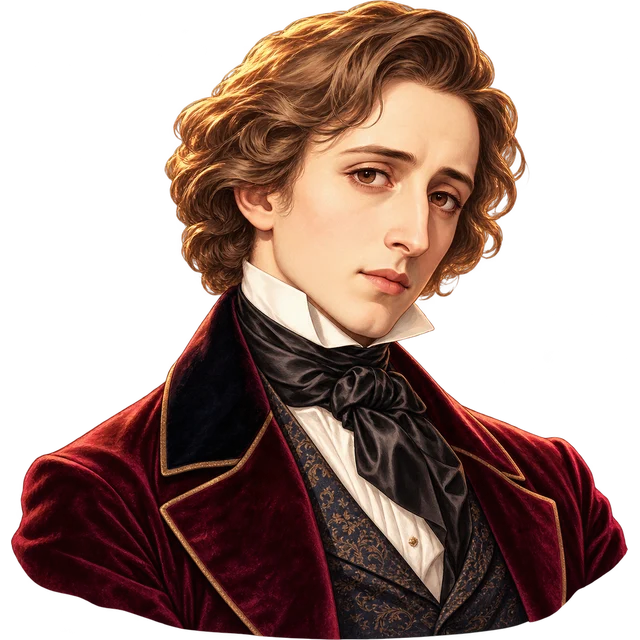
Piano · Op. 52 · 1842
フレデリック・ショパン(1810–1849)
ショパンのピアノ曲の最高傑作のひとつと言われる、深くはげしい大きな物語。Often regarded as one of Chopin's greatest works for piano.
PUBLIC DOMAIN RECORDING
PD / CC0 無料でダウンロードOKWATCH ON YOUTUBE
 Chopin - Ballade No. 4 in F Minor (4M Special)
Rousseau(YouTube) YouTube で開く ↗
Seong-Jin Cho – Chopin: Ballade No.4 In F Minor, Op.52 | Yellow Lounge
Deutsche Grammophon - DG(YouTube) YouTube で開く ↗
左の音源は権利が切れた録音なのでダウンロードできます。右の動画は YouTube の公式の埋め込みで見るもので、ダウンロードはできません(動画の権利は各チャンネルにあります)。
 もっと名演を観る YouTube で何百万回も再生された人気の演奏
Chopin: Ballade No. 4 in F Minor, Op. 52
Seong-Jin Cho - Topic(YouTube) YouTube で開く ↗

ホー!最後の部分は、ピアニストがおそれるほどの難しさなんだ。息がつまるよ。
 この曲のおはなし The Story
バラード第4番は、ショパンの4つのバラードの最後の曲です。ショパンの作品の中でも最高の傑作のひとつと言われ、深い悲しみと情熱がつまっています。ピアニストにとっては、技術も心も試される大きな山のような曲です。4曲の中でいちばん最後に書かれた、ショパンが30代はじめの円熟期の作品です。Ballade No. 4 is the last of Chopin's four ballades. It is often called one of his greatest masterpieces, full of deep sadness and passion. For pianists, it is like a great mountain that tests both skill and heart. It was the last of the four to be written, when Chopin was in his early thirties, at the height of his powers.
1842年、ショパンはジョルジュ・サンドの田舎の家があるノアンに滞在しながら、この曲を書き進め、その年の終わりまでに完成させました。曲は、しずかで不思議な短い前置きから始まり、やがて悲しいメロディーがあらわれます。このメロディーは何度ももどってきますが、そのたびに飾りや伴奏が少しずつ変わり、どんどん豊かになっていきます。In 1842, Chopin worked on this piece while staying at George Sand's country house in Nohant, and it was finished by the end of that year. It begins with a short, quiet and mysterious introduction, and then a sad melody appears. This melody returns again and again, and each time its decorations and accompaniment change, so it grows richer and richer.
曲は1843年に出版され、ロスチャイルド家のシャルロット男爵夫人にささげられました。夫人はショパンのピアノの生徒でした。最後の部分は、嵐のように速くはげしい音のうずで、一気にかけぬけて終わります。今も多くのピアニストが、いつかは弾きたいとあこがれる曲です。It was published in 1843 and dedicated to Baroness Charlotte de Rothschild, one of Chopin's piano students. The final section is a whirlwind of fast, furious notes that rushes to the end. Many pianists still dream of playing it one day.
This is a long piano piece. It tells a sad and deep story. A sad song comes back many times. Each time, it changes a little. The ending is very fast and very hard to play.これは長いピアノ曲です。悲しくて深い物語を語ります。悲しい歌が何度ももどってきます。そのたびに、少しずつ変わります。最後はとても速くて、弾くのがとてもむずかしいです。
 聴きどころ Listening Guide
 えっ!?ネタ Surprising Facts
 タップすると答えが開きます
この曲は、ヨーロッパ有数の大富豪の一族、ロスチャイルド家のシャルロット男爵夫人にささげられました。ショパンはパリの上流社会でピアノを教えて暮らしを立てていて、夫人もその生徒のひとりでした。
This piece was dedicated to Baroness Charlotte de Rothschild, from one of the richest families in Europe. Chopin earned his living by teaching piano to high society in Paris, and she was one of his students.
パリに来たばかりのころ、ショパンがロスチャイルド家の夜会で演奏して大評判になり、上流社会の生徒が一気にふえた、という言い伝えがあります。くわしい話はたしかめられていませんが、ショパンとロスチャイルド家のつながりは本物です。
There is a story that soon after arriving in Paris, Chopin played at a Rothschild evening party, became a sensation, and suddenly gained many rich students. The details are not confirmed, but his link with the Rothschild family was real.
悲しいメロディーは、何度もくり返されるたびに、細かい飾りや新しい伴奏が加わって、まるで変奏曲のように育っていきます。同じ話を、少しずつちがう言い方でくり返し語る語り部のようです。
Each time the sad melody returns, new decorations and accompaniments are added, so it grows almost like a set of variations. It is like a storyteller telling the same tale again and again in slightly different words.
最後の部分は、両手がはげしく動き回る、とてもむずかしい場面です。ショパンの曲の中でもとくに弾きにくいところとされ、ピアニストには、速さと音のはっきりさを両方コントロールする力が求められます。
The final section, with both hands racing wildly, is very difficult. It is often regarded as one of the hardest passages in Chopin's music, so pianists must control both speed and clarity.
ENGLISH × MASTERPIECE
 ごちそうや見せ場を最後にとっておくこと。大トリにふさわしい曲にぴったりです。
 この曲で覚える英単語 Words
 クイズに挑戦 Quiz
 この録音について(著作権・出典) Credits
MORE MASTERPIECES
パーセル・1695
ブリテンが「オーケストラ入門」のテーマに選んだ、かっこいいメロディー。
劇音楽「アブデラザール」より ロンドのページへ
バッハ・c. 1704 (?)
タラリ〜!一度聴いたら忘れない、オルガンの大迫力の幕開け。
トッカータとフーガ ニ短調のページへバッハ・c. 1703–1707 (?)
音楽の授業でおなじみ!4つの声が同じテーマで追いかけっこ。
小フーガ ト短調のページへバッハ・c. 1706–1713
足が弾く低いテーマが21回!重くて壮大な、オルガンの大建築。
パッサカリアとフーガ ハ短調のページへバッハ・c. 1707–1710 (?)
キラキラの駆け上がりで幕開け!若きバッハのはなやかな鍵盤ショー。
トッカータ ニ長調のページへ
ヴィヴァルディ・published 1711
2本のヴァイオリンが火花を散らす!バッハも編曲した熱い協奏曲。
協奏曲集『調和の霊感』第8番 イ短調(2つのヴァイオリンのための協奏曲)のページへバッハ・c. 1720
チェロ1本だけで、こんなに豊かな世界が広がる!
無伴奏チェロ組曲 第1番 ト長調のページへバッハ・c. 1720
ヴァイオリン1本で、宇宙のように大きな世界を描く傑作。
無伴奏ヴァイオリン・パルティータ第2番 ニ短調より「シャコンヌ」のページへ
 MP3