
アブデラザール
Abdelazer Rondeau
パーセル・1695
ブリテンが「オーケストラ入門」のテーマに選んだ、かっこいいメロディー。
劇音楽「アブデラザール」より ロンドのページへ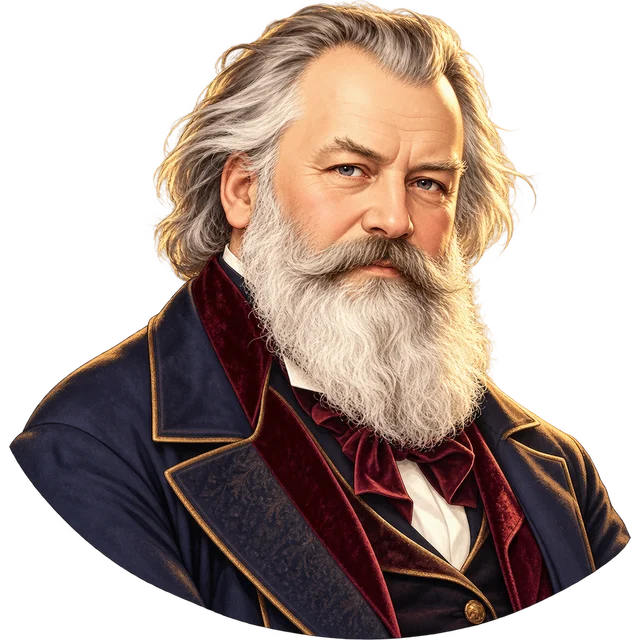
Concerto · Op. 15 · 1854–1858
ヨハネス・ブラームス(1833–1897)
25歳の若者がぶつけた嵐!2回目の演奏で非難をあびた傑作協奏曲。A storm from a 25-year-old: a masterpiece hissed at its second performance.
WATCH ON YOUTUBE
この曲は、権利の切れた高音質の録音がまだ見つからないため、YouTube の公式チャンネルなどの名演でお楽しみください(ダウンロードはできません)。YouTube でほかの演奏もさがす ↗
 Brahms: Piano Concerto No. 1 | Daniel Barenboim, Gustavo Dudamel & the Staatskapelle Berlin
DW Classical Music(YouTube) YouTube で開く ↗
Brahms : Concerto pour piano n°1 en ré mineur op 15 (Alexandre Kantorow)
France Musique concerts(YouTube) YouTube で開く ↗
Brahms piano concertos with Krystian Zimerman and Leonard Bernstein
ILoveChScBr(YouTube) YouTube で開く ↗
Johannes Brahms - Piano Concerto No. 1 in D minor, Op. 15 - Maurizio Pollini
Les beaux-arts channel(YouTube) YouTube で開く ↗
Arthur Rubinstein - Brahms Piano Concerto No.1 [FULL]
Giovanni Caramia(YouTube) YouTube で開く ↗

ホー!最初は2台ピアノのソナタ、次は交響曲、最後に協奏曲になったんだよ。
 この曲のおはなし The Story
ブラームスのピアノ協奏曲第1番は、1858年に完成した、ピアノとオーケストラのための大作です。演奏時間は45分ほど。冒頭からティンパニがとどろき、オーケストラが嵐のように激しく鳴りひびきます。若いブラームスの、あふれるような情熱と苦しみがつまった音楽です。Brahms's Piano Concerto No. 1, completed in 1858, is a large work for piano and orchestra. It lasts about 45 minutes. From the very beginning, the timpani roar and the orchestra crashes like a storm. The music is full of young Brahms's overflowing passion and pain.
この曲が生まれるまでには長い道のりがありました。1854年、ブラームスはまず2台のピアノのためのソナタとして書きはじめ、次に交響曲にしようとしてうまくいかず、最後にピアノ協奏曲の形にたどりつきました。ちょうどそのころ、恩人のロベルト・シューマンが心の病で重い状態になり、療養所に入っていました。この出来事が曲に影響したと考える人も多くいます。The piece took a long road. In 1854, Brahms began writing it as a sonata for two pianos. Then he tried to turn it into a symphony, but that did not work, and in the end it became a piano concerto. At that time, his dear friend and mentor Robert Schumann had become seriously mentally ill and had entered a sanatorium. Many people believe this affected the music.
初演は1859年1月22日、ハノーファーで、ブラームス自身のピアノ、親友ヨアヒムの指揮で行われました。しかし5日後のライプツィヒでの演奏では、終わったとたんに客席から「シーッ」という非難の音が起こり、大失敗に終わります。それでもブラームスはくじけず、この曲はのちに、ロマン派を代表する協奏曲のひとつと認められました。The premiere took place in Hanover on 22 January 1859, with Brahms at the piano and his friend Joachim conducting. But five days later in Leipzig, the audience hissed as soon as it ended, and the concert was a disaster. Brahms did not give up, and the concerto was later recognized as one of the major concertos of the Romantic era.
This is a big piece for piano and orchestra. It starts like a big storm. Brahms was only 25 when he first played it. At one concert, people did not like it at all! But today, many people love it.これは、ピアノとオーケストラのための大きな曲です。大きな嵐のように始まります。ブラームスが初めてこの曲を弾いたとき、まだ25歳でした。ある演奏会では、お客さんにまったく気に入られませんでした!でも今では、たくさんの人がこの曲を愛しています。
 聴きどころ Listening Guide
 えっ!?ネタ Surprising Facts
 タップすると答えが開きます
ライプツィヒでの失敗のあと、ブラームスはヨアヒムへの手紙で、この演奏を「はなばなしく、決定的な失敗」と書きました。でも続けて、失敗は考えを集中させ、勇気を高めてくれる、とも書いています。若きブラームスの負けずぎらいがよくわかる手紙です。
After the failure in Leipzig, Brahms wrote to Joachim that it had been 'a brilliant and decisive failure'. But he went on to say that failure helps you focus your thoughts and gives you more courage. The letter shows how tough young Brahms was.
ブラームスは第2楽章について、クララ・シューマンへの手紙に「あなたのやさしい肖像画を描いています。それがアダージョになるのです」と書きました。シューマンの妻で名ピアニストのクララとブラームスは、生涯にわたって深い友情で結ばれていました。
About the second movement, Brahms wrote to Clara Schumann: 'I am painting a gentle portrait of you, which is to be the Adagio.' Clara, Schumann's wife and a great pianist, remained one of Brahms's closest friends all his life.
第2楽章の自筆譜には、ミサ曲の言葉「主の名によって来たる者に祝福あれ」がラテン語で書きこまれていました。ブラームスはシューマンを冗談で「ドミネ(主よ)」と呼ぶことがあったため、シューマンを思う言葉ではないかと考えられています。
In the manuscript of the second movement, Brahms wrote words from the Mass in Latin: 'Blessed is he who comes in the name of the Lord.' Brahms sometimes jokingly called Schumann 'Domine' (Lord), so many think the words refer to Schumann.
この協奏曲では、オーケストラだけの前置きがとても長く、ピアノが弾きはじめるまでにかなり時間がかかります。しかもピアノは派手に登場せず、静かでしみじみとしたメロディーで入ってきます。独奏とオーケストラをほぼ対等に組み合わせる、ブラームスらしい作り方です。
In this concerto, the orchestra's introduction is very long, so the piano waits a good while before it plays. And when it enters, it does not show off. It comes in with a quiet, thoughtful melody. This balance between soloist and orchestra is typical of Brahms's concertos.
ENGLISH × MASTERPIECE
 drawing board は「製図板」。設計図を描き直すイメージから来ています。
 この曲で覚える英単語 Words
 クイズに挑戦 Quiz
 著作権について Credits
MORE MASTERPIECES
パーセル・1695
ブリテンが「オーケストラ入門」のテーマに選んだ、かっこいいメロディー。
劇音楽「アブデラザール」より ロンドのページへ
バッハ・c. 1704 (?)
タラリ〜!一度聴いたら忘れない、オルガンの大迫力の幕開け。
トッカータとフーガ ニ短調のページへバッハ・c. 1703–1707 (?)
音楽の授業でおなじみ!4つの声が同じテーマで追いかけっこ。
小フーガ ト短調のページへバッハ・c. 1706–1713
足が弾く低いテーマが21回!重くて壮大な、オルガンの大建築。
パッサカリアとフーガ ハ短調のページへバッハ・c. 1707–1710 (?)
キラキラの駆け上がりで幕開け!若きバッハのはなやかな鍵盤ショー。
トッカータ ニ長調のページへ
ヴィヴァルディ・published 1711
2本のヴァイオリンが火花を散らす!バッハも編曲した熱い協奏曲。
協奏曲集『調和の霊感』第8番 イ短調(2つのヴァイオリンのための協奏曲)のページへバッハ・c. 1720
チェロ1本だけで、こんなに豊かな世界が広がる!
無伴奏チェロ組曲 第1番 ト長調のページへバッハ・c. 1720
ヴァイオリン1本で、宇宙のように大きな世界を描く傑作。
無伴奏ヴァイオリン・パルティータ第2番 ニ短調より「シャコンヌ」のページへ
 MP3