
テ・デウム
Te Deum
シャルパンティエ・c. 1688–1698
パンパカパーン!ヨーロッパのテレビの幕開けを飾ってきた、ごうかな前奏曲。
テ・デウム ニ長調のページへ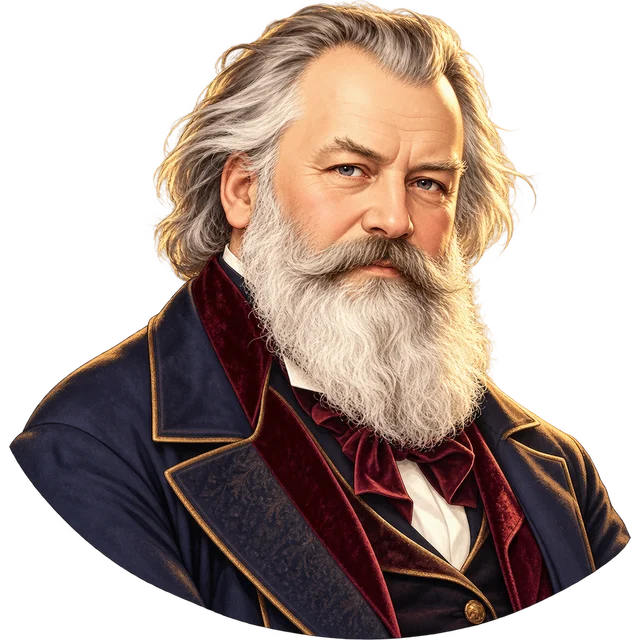
Orchestral · Op. 80 · 1880
ヨハネス・ブラームス(1833–1897)
名誉博士号のお礼は、学生の歌のメドレー!?A thank-you for an honorary degree, made of student drinking songs!
WATCH ON YOUTUBE
この曲は、権利の切れた高音質の録音がまだ見つからないため、YouTube の公式チャンネルなどの名演でお楽しみください(ダウンロードはできません)。YouTube でほかの演奏もさがす ↗
 Symphonic Gems: Brahms - Academic Festival Overture - Blomstedt | Concertgebouworkest
Concertgebouworkest(YouTube) YouTube で開く ↗
Brahms: Academic Festival Overture, Op. 80
Berliner Philharmoniker - Topic(YouTube) YouTube で開く ↗
Brahms: Academic Festival Overture, Op. 80
Berliner Philharmoniker - Topic(YouTube) YouTube で開く ↗
ホー!ブラームス自身は大学に通ったことがなかったんだよ。
 この曲のおはなし The Story
大学祝典序曲は、ブラームスが1880年に書いたオーケストラ曲です。1879年、ドイツ(当時)のブレスラウ大学から名誉博士号をおくられたブラームスが、そのお礼として作りました。「序曲」という名前ですが、オペラの前に演奏する曲ではなく、単独で演奏される演奏会用の曲です。The Academic Festival Overture is an orchestral work Brahms wrote in 1880. In 1879, the University of Breslau, then in Germany, gave him an honorary doctorate, and he wrote this piece as a thank-you. It is called an overture, but it is not played before an opera. It is a concert piece on its own.
大学の人たちは、まじめで重々しい曲を期待していたかもしれません。ところがブラームスは、当時の大学生たちが酒場などで歌っていた学生歌をいくつも組み合わせ、にぎやかな曲に仕上げました。ブラームス自身、この曲を「スッペ風の、学生歌のとてもにぎやかなメドレー」とおどけて説明したと伝えられています。The university may have expected a serious, solemn work. Instead, Brahms put together several student songs that young men of the time sang at parties and in taverns, and he made a lively, cheerful piece. Brahms is said to have joked that it was a very noisy medley of student songs in the style of Suppé, a popular composer of light music.
1881年1月、ブレスラウでブラームス自身の指揮で初演されました。曲の最後には、有名なラテン語の学生歌「ガウデアムス(さあ、楽しもう)」が、オーケストラ全体の大音量で堂々と鳴りひびきます。同じ時期に書かれた『悲劇的序曲』とは、明るさと暗さで対になる作品です。It was first performed in Breslau in January 1881, with Brahms conducting. At the very end, the famous Latin student song "Gaudeamus igitur" (So let us rejoice) is played by the full orchestra in a grand, loud finish. Brahms wrote the Tragic Overture at the same time, and the two pieces are a bright and dark pair.
A university gave the composer a special degree. To say thank you, he wrote this music. It is full of songs that students sang together. At the end, the whole orchestra plays a famous student song. He never studied at a university himself!ある大学が作曲家に特別な学位をおくりました。お礼のために、彼はこの音楽を書きました。曲には、学生たちがいっしょに歌った歌がたくさん入っています。最後には、オーケストラ全体が有名な学生歌を演奏します。彼自身は大学で学んだことがありませんでした!
 聴きどころ Listening Guide
 えっ!?ネタ Surprising Facts
 タップすると答えが開きます
ブラームスは大学で学んだことがありません。少年時代にハンブルクの酒場でピアノをひいて家計を助けたという話も伝わっていますが、どこまで本当かについては研究者の意見が分かれています。そんな彼が名誉博士になり、お礼に学生の歌を使った曲を書いたのは、ちょっとした皮肉とユーモアを感じさせます。
Brahms never studied at a university. There are stories that as a boy he played piano in Hamburg taverns to help his family, but scholars disagree about how true they are. It is a little ironic and funny that he became an honorary doctor and replied with student songs.
大学側は、学位へのお礼として、まじめで大きな新作を期待していたようです。ところがブラームスが贈ったのは、重々しい交響曲ではなく、学生歌を集めたにぎやかな序曲でした。ブラームスらしいいたずら心が感じられます。
The university seems to have expected a serious new work as thanks for the degree. Instead of a solemn symphony, Brahms gave them a lively overture built from student songs. It shows his playful side.
この曲では、コントラファゴット、チューバ、トライアングル、シンバル、大太鼓など、ふだんのブラームスより多くの楽器が使われています。にぎやかな学生のお祭りさわぎを表すために、オーケストラをめいっぱいに鳴らしたのです。
This piece uses more instruments than Brahms usually did, including contrabassoon, tuba, triangle, cymbals and bass drum. He wanted the orchestra to sound as big and noisy as a student celebration.
曲の中に使われた学生歌のひとつ「あの高みから来るのは何だ」は、大学の新入生をからかうときに歌われた歌でした。ファゴットがおどけた調子でこのメロディーを吹く場面は、思わず笑ってしまうような楽しさです。
One of the songs used in the piece, "What comes there from the hill?", was sung to tease new students. When the bassoons play this tune in a funny way, it is hard not to smile.
ENGLISH × MASTERPIECE
 「ほおに舌を当てて」→ 本気に見えて実は冗談、という意味。
 この曲で覚える英単語 Words
 クイズに挑戦 Quiz
 著作権について Credits
MORE MASTERPIECES
シャルパンティエ・c. 1688–1698
パンパカパーン!ヨーロッパのテレビの幕開けを飾ってきた、ごうかな前奏曲。
テ・デウム ニ長調のページへクラーク・c. 1700
結婚式の大定番。でも作曲者は長いあいだ取りちがえられていた!
トランペット・ヴォランタリー(デンマーク王子の行進)のページへ
バッハ・c. 1703–1707 (?)
音楽の授業でおなじみ!4つの声が同じテーマで追いかけっこ。
小フーガ ト短調のページへバッハ・c. 1707–1710 (?)
キラキラの駆け上がりで幕開け!若きバッハのはなやかな鍵盤ショー。
トッカータ ニ長調のページへ
ヴィヴァルディ・published 1711
2本のヴァイオリンが火花を散らす!バッハも編曲した熱い協奏曲。
協奏曲集『調和の霊感』第8番 イ短調(2つのヴァイオリンのための協奏曲)のページへヴィヴァルディ・c. 1715
オクターブがぴょんぴょん跳ねる!喜びがはじける合唱の名曲。
グローリア ニ長調のページへ
テレマン・c. 1710–1720 (?)
バルブのないラッパで高音をきらり!バロックのトランペットの晴れ舞台。
トランペット協奏曲 ニ長調のページへ
ヘンデル・1717
テムズ川の船の上で国王のために!夏の夜の水上コンサート。
水上の音楽のページへ
 MP3