The girl was one of those pretty and charming young creatures who sometimes are born, as if by a slip of fate, into a family of clerks. She had no dowry, no expectations, no way of being known, understood, loved, married by any rich and distinguished man; so she let herself be married to a little clerk of the Ministry of Public Instruction.
運命の手ちがいとでもいうように、ときどき下級役人の家に、美しく愛らしい娘が生まれてくることがある。彼女もそういう娘の一人だった。持参金はなく、遺産が入るあてもない。金持ちの立派な男性に知り合い、わかってもらい、愛され、結婚してもらう手だてなど、何一つなかった。それで、文部省の小役人と結婚させられるままになった。
She dressed plainly because she could not dress well, but she was unhappy as if she had really fallen from a higher station; since with women there is neither caste nor rank, for beauty, grace and charm take the place of family and birth. Natural ingenuity, instinct for what is elegant, a supple mind are their sole hierarchy, and often make of women of the people the equals of the very greatest ladies.
着飾ることができないので、身なりは質素だった。だが、まるで本当に高い身分から落ちぶれでもしたように、不幸せだった。女には、生まれつきの階級も身分もない。美しさと優雅さと魅力が、家柄や生まれのかわりになるのだ。生まれつきの機転、上品なものを見分ける勘、しなやかな心。女の位を決めるのはそれだけで、そのおかげで、庶民の娘がこの上なく高貴な貴婦人と肩を並べることも、めずらしくないのである。
Mathilde suffered ceaselessly, feeling herself born to enjoy all delicacies and all luxuries. She was distressed at the poverty of her dwelling, at the bareness of the walls, at the shabby chairs, the ugliness of the curtains. All those things, of which another woman of her rank would never even have been conscious, tortured her and made her angry. The sight of the little Breton peasant who did her humble housework aroused in her despairing regrets and bewildering dreams. She thought of silent antechambers hung with Oriental tapestry, illumined by tall bronze candelabra, and of two great footmen in knee breeches who sleep in the big armchairs, made drowsy by the oppressive heat of the stove. She thought of long reception halls hung with ancient silk, of the dainty cabinets containing priceless curiosities and of the little coquettish perfumed reception rooms made for chatting at five o'clock with intimate friends, with men famous and sought after, whom all women envy and whose attention they all desire.
マチルドは、自分はあらゆるぜいたくや楽しみを味わうために生まれてきたのだと思い、たえず苦しんでいた。住まいの貧しさ、むき出しの壁、すり切れた椅子、みっともないカーテン。同じ身分のほかの女なら気にもとめないようなそうしたものが、いちいち彼女を苦しめ、腹立たしくさせた。つましい家事をしてくれるブルターニュ出の小柄な女中を見ると、やりきれない悔しさがこみ上げ、とりとめのない夢がわいてきた。東洋のつづれ織りをかけた、ひっそりとした控えの間。背の高いブロンズの燭台がそれを照らし、ストーブのむっとする暖かさにうとうとして、半ズボンをはいた大柄な召使いが二人、大きな肘かけ椅子で眠っている。古い絹を張った細長い客間。値のつけようのない骨董品を並べた優美な飾り棚。香水のかおる、こじゃれた小さな応接間。そこでは午後五時に、親しい友人たちとおしゃべりをするのだ。女なら誰もがうらやみ、目をかけてもらいたいと願う、有名で引っぱりだこの男たちと。マチルドは、そんなことばかり思い描いていた。
When she sat down to dinner, before the round table covered with a tablecloth in use three days, opposite her husband, who uncovered the soup tureen and declared with a delighted air, "Ah, the good soup! I don't know anything better than that," she thought of dainty dinners, of shining silverware, of tapestry that peopled the walls with ancient personages and with strange birds flying in the midst of a fairy forest; and she thought of delicious dishes served on marvellous plates and of the whispered gallantries to which you listen with a sphinxlike smile while you are eating the pink meat of a trout or the wings of a quail.
夕食どき、三日も同じテーブルクロスをかけたままの丸いテーブルにつく。向かいの夫がスープ鉢のふたを取り、うれしそうに「ああ、うまいスープだ! これ以上のごちそうはないね」と言う。そんなとき、マチルドは心の中で、優美な晩餐を思い描いていた。きらきら光る銀の食器。昔の人物や、妖精の森を飛ぶふしぎな鳥が描かれた、壁一面のつづれ織り。すばらしい皿に盛られたおいしい料理。マスのピンク色の身やウズラの手羽をつまみながら、ささやかれる甘い言葉に、スフィンクスのようななぞめいた微笑で耳をかたむける自分。
She had no gowns, no jewels, nothing. And she loved nothing but that. She felt made for that. She would have liked so much to please, to be envied, to be charming, to be sought after.
ドレスもなければ、宝石もない。何もない。なのに、愛しているのはそういうものだけだった。自分はそのために生まれてきたのだと感じていた。人に好かれ、うらやまれ、魅力的だと思われ、ちやほやされたい。どれほどそう願ったことだろう。
She had a friend, a former schoolmate at the convent, who was rich, and whom she did not like to go to see any more because she felt so sad when she came home.
修道院の寄宿学校で同級生だった、金持ちの友だちが一人いた。けれども、会って帰ってくるとひどく悲しくなるので、もう訪ねていく気になれなかった。
But one evening her husband reached home with a triumphant air and holding a large envelope in his hand.
ところがある晩、夫が大きな封筒を手に、勝ちほこった様子で帰ってきた。
"There," said he, "there is something for you."
「ほら」と夫は言った。「きみにいいものがあるよ」
She tore the paper quickly and drew out a printed card which bore these words:
マチルドはすばやく封を破り、印刷されたカードを引き出した。そこにはこう書かれていた。
The Minister of Public Instruction and Madame Georges Ramponneau request the honor of M. and Madame Loisel's company at the palace of the Ministry on Monday evening, January 18th.
文部大臣ならびにジョルジュ・ランポノー夫人は、一月十八日月曜日の夜、文部省官邸にロワゼル氏ならびに夫人のご来臨をたまわりたく、謹んでご案内申し上げます。
Instead of being delighted, as her husband had hoped, she threw the invitation on the table crossly, muttering:
夫が期待していたように喜ぶどころか、マチルドはいまいましそうに招待状をテーブルに投げ出し、つぶやいた。
"What do you wish me to do with that?"
「こんなもの、わたしにどうしろとおっしゃるの?」
"Why, my dear, I thought you would be glad. You never go out, and this is such a fine opportunity. I had great trouble to get it. Every one wants to go; it is very select, and they are not giving many invitations to clerks. The whole official world will be there."
「なんだい、喜んでくれると思ったのに。きみはちっとも出かけないし、これはまたとない機会なんだよ。手に入れるのにずいぶん苦労したんだ。みんな行きたがっているんだよ。とても限られた人しか招かれないし、下っ端の役人にはあまり招待状を出していないんだ。お役所のお偉方がみんな来るんだよ」
She looked at him with an irritated glance and said impatiently:
マチルドはいらだった目で夫を見て、じれったそうに言った。
"And what do you wish me to put on my back?"
「それで、わたしに何を着て行けとおっしゃるの?」
He had not thought of that. He stammered:
夫はそこまで考えていなかった。口ごもりながら言った。
"Why, the gown you go to the theatre in. It looks very well to me."
「そりゃあ、芝居に行くときに着るドレスさ。ぼくにはとてもすてきに見えるよ」
He stopped, distracted, seeing that his wife was weeping. Two great tears ran slowly from the corners of her eyes toward the corners of her mouth.
妻が泣いているのを見て、夫はうろたえて口をつぐんだ。大粒の涙が二つ、目じりから口もとへ、ゆっくりと伝い落ちた。
"What's the matter? What's the matter?" he answered.
「どうしたんだい? どうしたんだい?」と夫は言った。
By a violent effort she conquered her grief and replied in a calm voice, while she wiped her wet cheeks:
マチルドはやっとの思いで悲しみをおさえ、ぬれた頬をふきながら、落ち着いた声で答えた。
"Nothing. Only I have no gown, and, therefore, I can't go to this ball. Give your card to some colleague whose wife is better equipped than I am."
「なんでもないの。ただ、ドレスがないから、この舞踏会には行けないわ。その招待状は、奥さまがわたしよりちゃんとした支度のできる、同僚の方にさしあげて」
He was in despair. He resumed:
夫は途方にくれた。そして、また言った。
"Come, let us see, Mathilde. How much would it cost, a suitable gown, which you could use on other occasions—something very simple?"
「ねえ、考えてみようよ、マチルド。ほかの機会にも着られる、ちゃんとしたドレスなら、いくらかかるんだい? ごく簡単なものでいいんだけど」
She reflected several seconds, making her calculations and wondering also what sum she could ask without drawing on herself an immediate refusal and a frightened exclamation from the economical clerk.
マチルドは何秒か考えた。頭の中で計算しながら、いくらまでなら頼めるだろうかとも考えていた。つましい小役人の夫に、その場ではねつけられたり、びっくりした声をあげられたりしない額は、いくらだろう。
Finally she replied hesitating:
とうとうマチルドはためらいがちに答えた。
"I don't know exactly, but I think I could manage it with four hundred francs."
「はっきりとはわからないけれど、四百フランあればなんとかなると思うわ」
He grew a little pale, because he was laying aside just that amount to buy a gun and treat himself to a little shooting next summer on the plain of Nanterre, with several friends who went to shoot larks there of a Sunday.
夫は少し青ざめた。ちょうどその額を、銃を買うためにためていたところだったのだ。来年の夏、日曜日ごとにヒバリを撃ちにいく友人たちと一緒に、ナンテールの野原で、ちょっとした狩りを楽しむつもりだった。
But he said:
それでも夫は言った。
"Very well. I will give you four hundred francs. And try to have a pretty gown."
「いいとも。四百フランあげよう。すてきなドレスを作るんだよ」
The day of the ball drew near and Madame Loisel seemed sad, uneasy, anxious. Her frock was ready, however. Her husband said to her one evening:
舞踏会の日が近づいてきた。ところがロワゼル夫人は、悲しそうで、落ち着かず、何か気がかりな様子だった。ドレスはもうできあがっていたのに。ある晩、夫が言った。
"What is the matter? Come, you have seemed very queer these last three days."
「どうしたんだい? この三日ほど、ずいぶん様子がおかしいじゃないか」
And she answered:
すると、マチルドは答えた。
"It annoys me not to have a single piece of jewelry, not a single ornament, nothing to put on. I shall look poverty-stricken. I would almost rather not go at all."
「宝石が一つもないのがいやなの。飾りが一つもない、身につけるものが何もないなんて。いかにも貧乏くさく見えるわ。いっそ行かないほうがましなくらい」
"You might wear natural flowers," said her husband. "They're very stylish at this time of year. For ten francs you can get two or three magnificent roses."
「生花をつけたらどうだい」と夫は言った。「この季節には、とてもしゃれているよ。十フランで、見事なバラが二、三本買えるさ」
She was not convinced.
マチルドは納得しなかった。
"No; there's nothing more humiliating than to look poor among other women who are rich."
「いやよ。お金持ちの奥さまたちのなかで貧乏くさく見えることほど、みじめなことはないわ」
"How stupid you are!" her husband cried. "Go look up your friend, Madame Forestier, and ask her to lend you some jewels. You're intimate enough with her to do that."
「なんてばかなんだ、きみは!」と夫は大きな声を出した。「友だちのフォレスチエ夫人のところへ行って、宝石を貸してもらえばいいじゃないか。それくらい頼めるほど親しいだろう」
She uttered a cry of joy:
マチルドは歓声をあげた。
"True! I never thought of it."
「そうだわ! ちっとも思いつかなかった」
The next day she went to her friend and told her of her distress.
次の日、マチルドは友だちを訪ねて、困っていることを打ち明けた。
Madame Forestier went to a wardrobe with a mirror, took out a large jewel box, brought it back, opened it and said to Madame Loisel:
フォレスチエ夫人は鏡のついた洋服だんすのところへ行き、大きな宝石箱を取り出して持ってくると、それを開けてロワゼル夫人に言った。
"Choose, my dear."
「選んでちょうだい、あなた」
She saw first some bracelets, then a pearl necklace, then a Venetian gold cross set with precious stones, of admirable workmanship. She tried on the ornaments before the mirror, hesitated and could not make up her mind to part with them, to give them back. She kept asking:
まず腕輪がいくつか目に入った。それから真珠の首飾り。それから、宝石をちりばめたヴェネツィアの金の十字架。見事な細工だった。鏡の前で次々につけてみては迷い、はずして返す決心がつかない。マチルドは何度もたずねた。
"Haven't you any more?"
「ほかには、ないの?」
"Why, yes. Look further; I don't know what you like."
「あるわよ。もっと見てごらんなさい。あなたが何を気に入るか、わからないもの」
Suddenly she discovered, in a black satin box, a superb diamond necklace, and her heart throbbed with an immoderate desire. Her hands trembled as she took it. She fastened it round her throat, outside her high-necked waist, and was lost in ecstasy at her reflection in the mirror.
ふと、黒いしゅすの箱の中に、すばらしいダイヤモンドの首飾りが見つかった。マチルドの胸は、おさえきれない欲しさに高鳴った。手に取るとき、指がふるえた。えりの高いブラウスの上からそれを首に留めると、鏡に映った自分の姿に、うっとりと我を忘れた。
Then she asked, hesitating, filled with anxious doubt:
それから、断られはしないかと不安でいっぱいになりながら、おずおずとたずねた。
"Will you lend me this, only this?"
「これを貸していただける? これだけでいいの」
"Why, yes, certainly."
「ええ、もちろんよ」
She threw her arms round her friend's neck, kissed her passionately, then fled with her treasure.
マチルドは友だちの首に抱きついて、夢中でキスをすると、宝物をかかえて飛ぶように帰っていった。
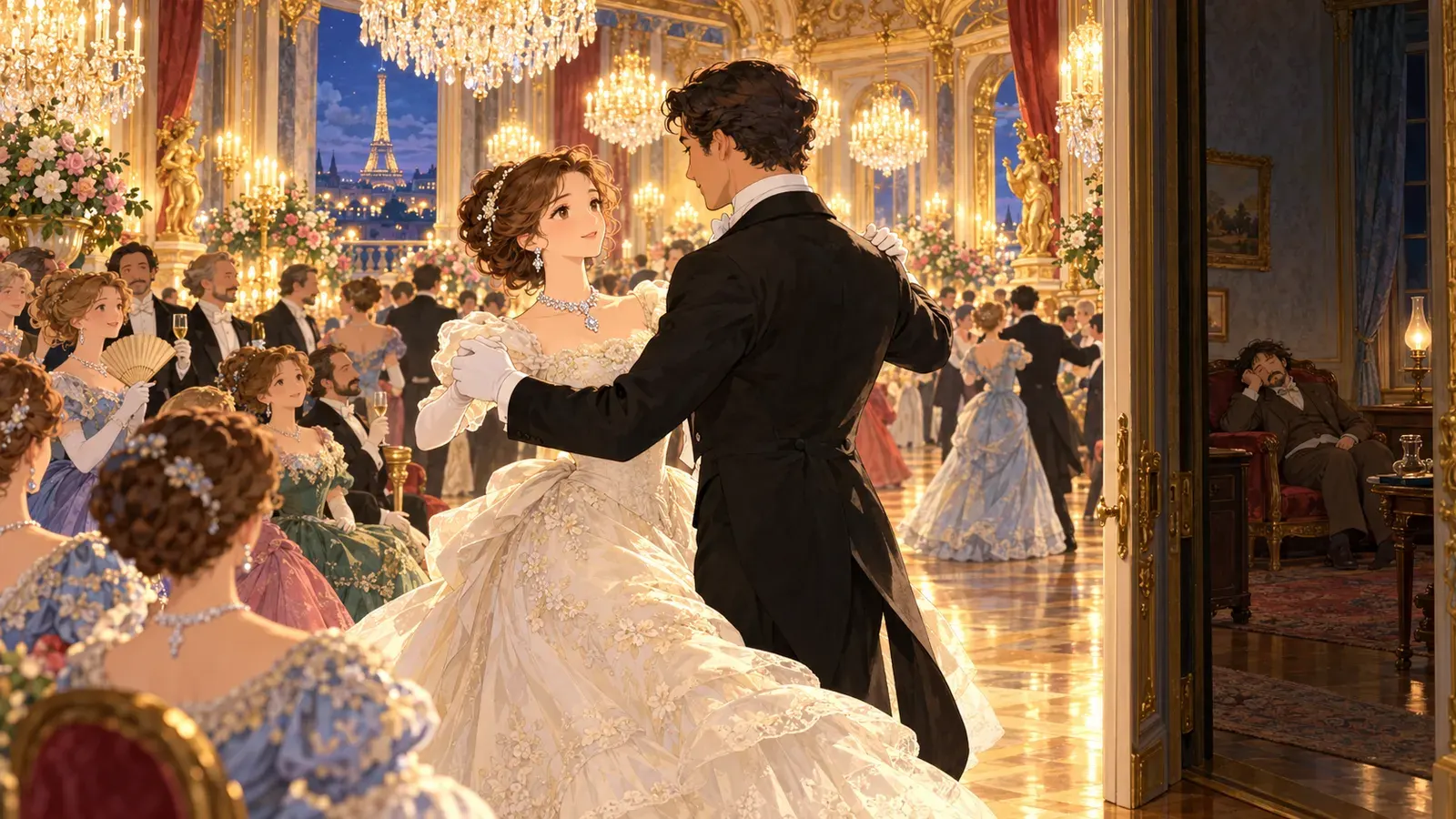
The night of the ball arrived. Madame Loisel was a great success. She was prettier than any other woman present, elegant, graceful, smiling and wild with joy. All the men looked at her, asked her name, sought to be introduced. All the attaches of the Cabinet wished to waltz with her. She was remarked by the minister himself.
舞踏会の夜が来た。ロワゼル夫人は大成功だった。その場のどの女性よりも美しく、上品で、優雅で、ほほえみをたたえ、喜びに夢中になっていた。男たちはみな彼女を見つめ、名前をたずね、紹介してもらいたがった。大臣官房の若い役人たちは、こぞって彼女とワルツを踊りたがった。大臣その人まで、彼女に目をとめた。
She danced with rapture, with passion, intoxicated by pleasure, forgetting all in the triumph of her beauty, in the glory of her success, in a sort of cloud of happiness comprised of all this homage, admiration, these awakened desires and of that sense of triumph which is so sweet to woman's heart.
マチルドは、うっとりと、夢中で踊った。喜びに酔いしれ、何もかも忘れていた。自分の美しさが勝ったこと、大成功をおさめたこと。まわりからささげられる賛辞とあこがれ、男たちの心にかき立てた思い、そして女心にとってこの上なく甘い勝利の喜び。そのすべてが幸福の雲となって、彼女を包んでいた。
She left the ball about four o'clock in the morning. Her husband had been sleeping since midnight in a little deserted anteroom with three other gentlemen whose wives were enjoying the ball.
マチルドが舞踏会を出たのは、明け方の四時ごろだった。夫は真夜中から、人けのない小さな控えの間で眠っていた。そこではほかに三人の紳士が、妻が舞踏会を楽しんでいるあいだ、同じように眠りこけていた。
He threw over her shoulders the wraps he had brought, the modest wraps of common life, the poverty of which contrasted with the elegance of the ball dress. She felt this and wished to escape so as not to be remarked by the other women, who were enveloping themselves in costly furs.
夫は、持ってきた上着をマチルドの肩にかけた。ふだん着のつつましい上着で、その貧しさが、舞踏会のドレスの優雅さとあまりにもちぐはぐだった。マチルドはそれを感じて、早くその場を逃げ出したくなった。高価な毛皮にくるまっているほかの女たちに、見られたくなかったのだ。
Loisel held her back, saying: "Wait a bit. You will catch cold outside. I will call a cab."
ロワゼルはマチルドを引きとめた。「ちょっと待ちなさい。外に出たらかぜをひくよ。辻馬車を呼んでくるから」
But she did not listen to him and rapidly descended the stairs. When they reached the street they could not find a carriage and began to look for one, shouting after the cabmen passing at a distance.
だが、マチルドは聞く耳を持たず、さっさと階段を下りていった。通りに出ても、馬車は見つからなかった。二人は、遠くを通りかかる御者に大声で呼びかけながら、馬車をさがしはじめた。
They went toward the Seine in despair, shivering with cold. At last they found on the quay one of those ancient night cabs which, as though they were ashamed to show their shabbiness during the day, are never seen round Paris until after dark.
寒さにふるえながら、二人はあきらめ半分でセーヌ川のほうへ歩いていった。やっと河岸で、古ぼけた夜の辻馬車を一台見つけた。昼間はみすぼらしい姿を見せるのが恥ずかしいとでもいうように、暗くならないとパリの町に姿を見せない、あの手の馬車だ。
It took them to their dwelling in the Rue des Martyrs, and sadly they mounted the stairs to their flat. All was ended for her. As to him, he reflected that he must be at the ministry at ten o'clock that morning.
馬車は二人を、マルティール通りの住まいまで送ってくれた。二人はしょんぼりと、自分たちの部屋への階段を上った。マチルドにとって、すべては終わってしまった。夫のほうは、きょうも朝十時には役所に出なければならない、と考えていた。
She removed her wraps before the glass so as to see herself once more in all her glory. But suddenly she uttered a cry. She no longer had the necklace around her neck!
マチルドは、晴れ姿をもう一度見ようと、鏡の前で上着を脱いだ。と、突然、叫び声をあげた。首飾りが首になかったのだ!
"What is the matter with you?" demanded her husband, already half undressed.
「どうしたんだい?」と、もう半分服を脱いでいた夫がたずねた。
She turned distractedly toward him.
マチルドは取り乱して夫のほうを振り向いた。
"I have—I have—I've lost Madame Forestier's necklace," she cried.
「わたし……わたし……フォレスチエ夫人の首飾りをなくしてしまったの」とマチルドは叫んだ。
He stood up, bewildered.
夫は呆然として立ち上がった。
"What!—how? Impossible!"
「なんだって! どうして? そんなはずはない!」
They looked among the folds of her skirt, of her cloak, in her pockets, everywhere, but did not find it.
二人は、ドレスのひだの中も、外套のひだの中も、ポケットの中も、どこもかしこもさがした。だが、見つからなかった。
"You're sure you had it on when you left the ball?" he asked.
「舞踏会を出るときには、確かにつけていたんだね?」と夫はたずねた。
"Yes, I felt it in the vestibule of the minister's house."
「ええ、大臣官邸の玄関で、さわって確かめたもの」
"But if you had lost it in the street we should have heard it fall. It must be in the cab."
「だが、もし通りで落としたのなら、落ちる音が聞こえたはずだ。馬車の中にちがいない」
"Yes, probably. Did you take his number?"
「ええ、たぶんそうね。馬車の番号は控えた?」
"No. And you—didn't you notice it?"
「いいや。きみは? 見なかったかい?」
"No."
「いいえ」
They looked, thunderstruck, at each other. At last Loisel put on his clothes.
二人は、雷に打たれたように顔を見合わせた。やがてロワゼルは服を着た。
"I shall go back on foot," said he, "over the whole route, to see whether I can find it."
「歩いて戻ってみる」と夫は言った。「通った道をぜんぶたどって、落ちていないか見てくる」
He went out. She sat waiting on a chair in her ball dress, without strength to go to bed, overwhelmed, without any fire, without a thought.
夫は出ていった。マチルドは舞踏会のドレスのまま、椅子に座って待っていた。寝床に入る気力もなく、火の気のない部屋で、打ちひしがれ、何も考えられずに。
Her husband returned about seven o'clock. He had found nothing.
夫は七時ごろ戻ってきた。何も見つからなかった。
He went to police headquarters, to the newspaper offices to offer a reward; he went to the cab companies—everywhere, in fact, whither he was urged by the least spark of hope.
夫は警視庁へ行った。新聞社をまわって、謝礼を出すという広告を頼んだ。辻馬車の会社へも行った。ほんのわずかでも望みがありそうなところなら、どこへでも足を運んだ。
She waited all day, in the same condition of mad fear before this terrible calamity.
マチルドは一日じゅう待っていた。このおそろしい災難を前にして、ずっと気も狂わんばかりにおびえながら。
Loisel returned at night with a hollow, pale face. He had discovered nothing.
ロワゼルは夜になって、げっそりと青ざめた顔で帰ってきた。何の手がかりもなかった。
"You must write to your friend," said he, "that you have broken the clasp of her necklace and that you are having it mended. That will give us time to turn round."
「友だちに手紙を書くんだ」と夫は言った。「首飾りの留め金をこわしてしまったので、修理に出していると。そうすれば、どうするか考える時間がかせげる」
She wrote at his dictation.
マチルドは、夫の言うとおりに手紙を書いた。
At the end of a week they had lost all hope. Loisel, who had aged five years, declared:
一週間たつと、二人はすっかり望みを失っていた。五年も老けこんでしまったロワゼルが、きっぱりと言った。
"We must consider how to replace that ornament."
「あの首飾りのかわりを用意する方法を考えなきゃならない」
The next day they took the box that had contained it and went to the jeweler whose name was found within. He consulted his books.
次の日、二人は首飾りの入っていた箱を持って、箱の内側に名前のあった宝石商を訪ねた。宝石商は帳簿を調べた。
"It was not I, madame, who sold that necklace; I must simply have furnished the case."
「奥さま、あの首飾りをお売りしたのは、わたしどもではございません。わたしどもは、ケースをお納めしただけのようでございます」
Then they went from jeweler to jeweler, searching for a necklace like the other, trying to recall it, both sick with chagrin and grief.
それから二人は、宝石店を一軒一軒まわって、あれと同じ首飾りをさがした。記憶をたよりに、ああだった、こうだったと思い出しながら。二人とも、悔しさと悲しみで、病気になりそうだった。
They found, in a shop at the Palais Royal, a string of diamonds that seemed to them exactly like the one they had lost. It was worth forty thousand francs. They could have it for thirty-six.
パレ・ロワイヤルのある店で、なくしたものとそっくりに見えるダイヤモンドの首飾りが見つかった。値段は四万フラン。三万六千フランにまけてくれるという。
So they begged the jeweler not to sell it for three days yet. And they made a bargain that he should buy it back for thirty-four thousand francs, in case they should find the lost necklace before the end of February.
二人は宝石商に、あと三日は売らないでくれと頼んだ。そして、二月の末までになくした首飾りが見つかったら、三万四千フランで買い戻してもらう約束を取りつけた。
Loisel possessed eighteen thousand francs which his father had left him. He would borrow the rest.
ロワゼルには、父親が残してくれた一万八千フランがあった。残りは借りることにした。
He did borrow, asking a thousand francs of one, five hundred of another, five louis here, three louis there. He gave notes, took up ruinous obligations, dealt with usurers and all the race of lenders. He compromised all the rest of his life, risked signing a note without even knowing whether he could meet it; and, frightened by the trouble yet to come, by the black misery that was about to fall upon him, by the prospect of all the physical privations and moral tortures that he was to suffer, he went to get the new necklace, laying upon the jeweler's counter thirty-six thousand francs.
ロワゼルは、ほんとうに借りた。ある人から千フラン、別の人から五百フラン、こちらで五ルイ、あちらで三ルイと、頼んで回った。証文を書き、身をほろぼすような借金を背負いこみ、高利貸しや、ありとあらゆる金貸しと取引した。残りの人生をまるごと抵当に入れ、払えるあてもないまま証文に署名した。これから来る苦労、目の前に迫った真っ暗な貧乏、これから味わうことになる体の不自由と心の責め苦。それを思うとおそろしくてたまらなかった。そんな思いをかかえて、ロワゼルは新しい首飾りを買いにいき、宝石店のカウンターに三万六千フランを置いた。
When Madame Loisel took back the necklace Madame Forestier said to her with a chilly manner:
ロワゼル夫人が首飾りを返しにいくと、フォレスチエ夫人は冷ややかに言った。
"You should have returned it sooner; I might have needed it."
「もっと早く返してくれればよかったのに。わたしが使うかもしれなかったんですもの」
She did not open the case, as her friend had so much feared. If she had detected the substitution, what would she have thought, what would she have said? Would she not have taken Madame Loisel for a thief?
マチルドがあれほどおそれていたのに、フォレスチエ夫人はケースを開けなかった。もし取りかえたことに気づいたら、何と思い、何と言っただろう。ロワゼル夫人を泥棒だと思ったのではないだろうか。
Thereafter Madame Loisel knew the horrible existence of the needy. She bore her part, however, with sudden heroism. That dreadful debt must be paid. She would pay it. They dismissed their servant; they changed their lodgings; they rented a garret under the roof.
それからロワゼル夫人は、貧しい人々のおそろしい暮らしを知った。だが、彼女は急に英雄のような覚悟を決めて、自分の役目を果たした。あのおそろしい借金は返さなければならない。わたしが返すのだ。二人は女中に暇を出し、住まいを移して、屋根裏の部屋を借りた。
She came to know what heavy housework meant and the odious cares of the kitchen. She washed the dishes, using her dainty fingers and rosy nails on greasy pots and pans. She washed the soiled linen, the shirts and the dishcloths, which she dried upon a line; she carried the slops down to the street every morning and carried up the water, stopping for breath at every landing. And dressed like a woman of the people, she went to the fruiterer, the grocer, the butcher, a basket on her arm, bargaining, meeting with impertinence, defending her miserable money, sou by sou.
力のいる家事や、台所のいやな仕事がどういうものか、身にしみてわかった。皿を洗い、そのきゃしゃな指とばら色の爪で、油だらけの鍋やフライパンをこすった。汚れたシーツやシャツや布巾を洗い、ひもにかけて干した。毎朝、汚水を通りまで運び下ろし、水を運び上げた。踊り場ごとに立ち止まって、息をつかなければならなかった。そして、庶民のおかみさんのような身なりで、腕にかごをさげて果物屋や食料品屋や肉屋へ行き、値切っては、ぞんざいな口をきかれ、なけなしのお金を一スーでも守ろうとがんばった。
Every month they had to meet some notes, renew others, obtain more time.
毎月、期限の来た証文の支払いをし、ほかの証文は書きかえて、支払いを待ってもらわなければならなかった。
Her husband worked evenings, making up a tradesman's accounts, and late at night he often copied manuscript for five sous a page.
夫は夜も働いて、ある商人の帳簿をつけた。夜ふけまで、一ページ五スーで原稿を書き写すことも多かった。
This life lasted ten years.
この暮らしが十年続いた。
At the end of ten years they had paid everything, everything, with the rates of usury and the accumulations of the compound interest.
十年たって、二人はすべてを、何もかもを返し終えた。高利の利息も、積み重なった利息の利息も。
Madame Loisel looked old now. She had become the woman of impoverished households—strong and hard and rough. With frowsy hair, skirts askew and red hands, she talked loud while washing the floor with great swishes of water. But sometimes, when her husband was at the office, she sat down near the window and she thought of that gay evening of long ago, of that ball where she had been so beautiful and so admired.
ロワゼル夫人は、いまではすっかり老けて見えた。貧しい家の女らしく、たくましく、きつく、がさつになっていた。髪はぼさぼさ、スカートはゆがみ、手は赤くあれて、ざぶざぶと水を流して床を洗いながら、大声でしゃべった。それでもときどき、夫が役所に行っているあいだに窓辺に座って、遠い昔のあの楽しい夜を思い出すのだった。あれほど美しく、あれほどほめそやされた、あの舞踏会のことを。
What would have happened if she had not lost that necklace? Who knows? who knows? How strange and changeful is life! How small a thing is needed to make or ruin us!
もしあの首飾りをなくさなかったら、どうなっていただろう? 誰にわかるだろう。誰にわかるだろう。人生とは、なんとふしぎで、移り変わりの激しいものだろう! 人を生かすのも、だめにするのも、ほんのささいなことなのだ!
But one Sunday, having gone to take a walk in the Champs Elysees to refresh herself after the labors of the week, she suddenly perceived a woman who was leading a child. It was Madame Forestier, still young, still beautiful, still charming.
ところがある日曜日、一週間の疲れをいやそうとシャンゼリゼを散歩していると、子どもの手を引いている一人の女性がふと目に入った。フォレスチエ夫人だった。相変わらず若く、相変わらず美しく、相変わらず魅力的だった。
Madame Loisel felt moved. Should she speak to her? Yes, certainly. And now that she had paid, she would tell her all about it. Why not?
ロワゼル夫人は胸がいっぱいになった。声をかけようか。ええ、もちろん。お金はもう返し終わったのだから、何もかも話してしまおう。かまうものですか。
She went up.
彼女は近づいていった。
"Good-day, Jeanne."
「こんにちは、ジャンヌ」
The other, astonished to be familiarly addressed by this plain good-wife, did not recognize her at all and stammered:
相手は、この地味なおかみさんになれなれしく呼びかけられて驚いた。誰だかまったくわからず、口ごもった。
"But—madame!—I do not know—You must have mistaken."
「あの……奥さま……存じあげませんが……人ちがいではございませんか」
"No. I am Mathilde Loisel."
「いいえ。わたしはマチルド・ロワゼルよ」
Her friend uttered a cry.
友だちは叫び声をあげた。
"Oh, my poor Mathilde! How you are changed!"
「まあ、かわいそうなマチルド! なんて変わってしまったの!」
"Yes, I have had a pretty hard life, since I last saw you, and great poverty—and that because of you!"
「ええ、この前お会いしてから、ずいぶんつらい暮らしをしてきたわ。ひどい貧乏もした。それも、あなたのせいでね!」
"Of me! How so?"
「わたしの! どうして?」
"Do you remember that diamond necklace you lent me to wear at the ministerial ball?"
「大臣の舞踏会でつけるのに貸してくださった、あのダイヤモンドの首飾りを覚えている?」
"Yes. Well?"
「ええ。それで?」
"Well, I lost it."
「それがね、わたし、あれをなくしたの」
"What do you mean? You brought it back."
「どういうこと? 返してくれたじゃないの」
"I brought you back another exactly like it. And it has taken us ten years to pay for it. You can understand that it was not easy for us, for us who had nothing. At last it is ended, and I am very glad."
「そっくり同じものを、かわりに返したの。その代金を払うのに十年かかったわ。わかるでしょう、何も持っていなかったわたしたちには、楽なことじゃなかった。でも、やっと終わったの。ほんとうにうれしいわ」
Madame Forestier had stopped.
フォレスチエ夫人は足を止めていた。
"You say that you bought a necklace of diamonds to replace mine?"
「わたしの首飾りのかわりに、ダイヤモンドの首飾りを買ったというの?」
"Yes. You never noticed it, then! They were very similar."
「ええ。じゃあ、ちっとも気づかなかったのね! とてもよく似ていたもの」
And she smiled with a joy that was at once proud and ingenuous.
そして、誇らしげで、無邪気な喜びにあふれた笑みを浮かべた。
Madame Forestier, deeply moved, took her hands.
フォレスチエ夫人は胸を打たれて、マチルドの両手を取った。
"Oh, my poor Mathilde! Why, my necklace was paste! It was worth at most only five hundred francs!"
「まあ、かわいそうなマチルド! だって、わたしの首飾りはにせものだったのよ! せいぜい五百フランのものだったのに!」