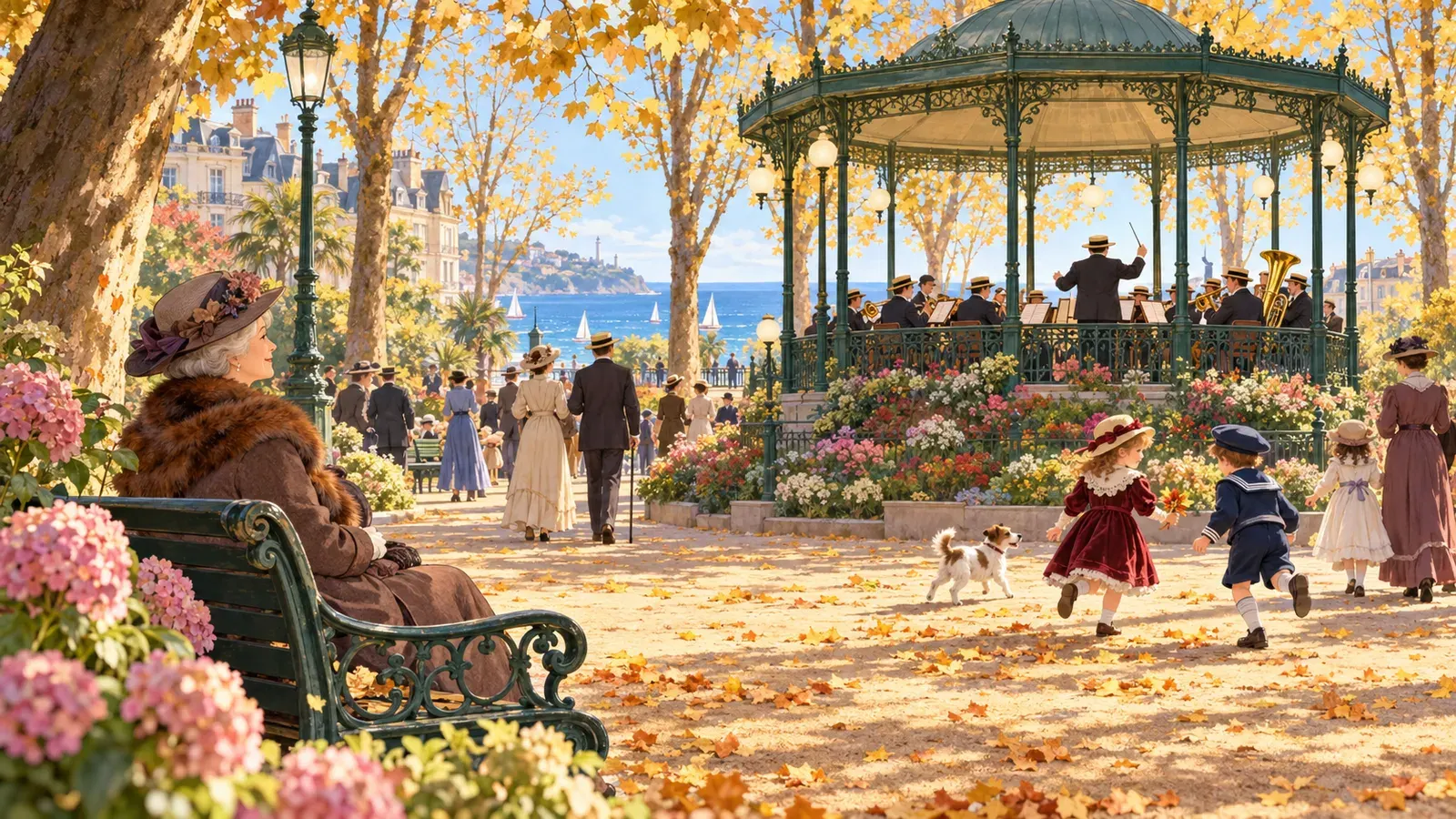
Although it was so brilliantly fine—the blue sky powdered with gold and great spots of light like white wine splashed over the Jardins Publiques—Miss Brill was glad that she had decided on her fur. The air was motionless, but when you opened your mouth there was just a faint chill, like a chill from a glass of iced water before you sip, and now and again a leaf came drifting—from nowhere, from the sky. Miss Brill put up her hand and touched her fur. Dear little thing! It was nice to feel it again. She had taken it out of its box that afternoon, shaken out the moth-powder, given it a good brush, and rubbed the life back into the dim little eyes. "What has been happening to me?" said the sad little eyes. Oh, how sweet it was to see them snap at her again from the red eiderdown!... But the nose, which was of some black composition, wasn't at all firm. It must have had a knock, somehow. Never mind—a little dab of black sealing-wax when the time came—when it was absolutely necessary.... Little rogue! Yes, she really felt like that about it. Little rogue biting its tail just by her left ear. She could have taken it off and laid it on her lap and stroked it. She felt a tingling in her hands and arms, but that came from walking, she supposed. And when she breathed, something light and sad—no, not sad, exactly—something gentle seemed to move in her bosom.
すばらしく晴れた日だった。青空には金の粉がまぶしてあり、市民公園のあちこちに、白ワインをはね散らしたような大きな光のまだらが落ちていた。それでもミス・ブリルは、毛皮の襟巻きをしてきてよかったと思った。風はそよとも吹いていなかった。けれども口を開けると、ほんのかすかに、ひんやりとした。氷水のグラスに口をつける直前に感じる、あのひんやりした感じだった。ときおり、木の葉が一枚、ひらひらとただよってきた。どこからともなく、空から。ミス・ブリルは手を上げて、毛皮にさわった。かわいい子! またこの手ざわりを味わえるのは、うれしかった。その日の午後、ミス・ブリルは毛皮を箱から出し、防虫剤の粉をはたき落とし、よくブラシをかけてやった。そして、どんよりした小さな目をこすって、生き生きさせてやったのだった。「わたし、どうしていたのかしら?」と、その悲しげな小さな目が言った。ああ、赤い羽根布団の上から、その目がまたぱちっとこちらを見るのは、なんてうれしかったことだろう!……でも鼻は、何か黒い練り物でできていて、ちっともしっかりしていなかった。いつのまにか、どこかにぶつけたにちがいない。かまわないわ。いずれそのうち、黒い封ろうをちょっとつけておけばいい。どうしても必要になったらね……。いたずらっ子! そう、ミス・ブリルは本当に、この毛皮をそんなふうに思っていた。左の耳のすぐそばで、自分のしっぽをかんでいる、いたずらっ子。はずしてひざにのせ、なでてやりたいくらいだった。手と腕がちくちくするような感じがしたが、きっと歩いてきたせいだろう、とミス・ブリルは思った。そして息をすると、何か軽くて悲しいもの、いいえ、悲しいというのとは少し違う、何かやさしいものが、胸の中で動くような気がした。
There were a number of people out this afternoon, far more than last Sunday. And the band sounded louder and gayer. That was because the Season had begun. For although the band played all the year round on Sundays, out of season it was never the same. It was like some one playing with only the family to listen; it didn't care how it played if there weren't any strangers present. Wasn't the conductor wearing a new coat, too? She was sure it was new. He scraped with his foot and flapped his arms like a rooster about to crow, and the bandsmen sitting in the green rotunda blew out their cheeks and glared at the music. Now there came a little "flutey" bit—very pretty!—a little chain of bright drops. She was sure it would be repeated. It was; she lifted her head and smiled.
この日の午後は、大勢の人が出ていた。先週の日曜日よりずっと多かった。楽隊の音も、前より大きく、陽気に聞こえた。シーズンが始まったからだ。楽隊は一年じゅう、日曜日には演奏していた。けれども、シーズンでないときは、どうもいつもと違った。家族しか聞いていないところで演奏しているようなもので、よその人がいなければ、どう演奏しようとかまわないのだ。それに、指揮者も新しい上着を着ているのではないかしら? きっと新しいにちがいない。指揮者は片足で地面をこすり、ときをつくろうとするおんどりのように両腕をばたつかせた。緑色の丸い野外ステージに座った楽隊員たちは、頬をふくらませて、楽譜をにらみつけていた。今、ちょっとした「フルートふう」のところにさしかかった。とてもきれい! 明るい水のしずくが、小さくつながって転がっていくようだった。きっと、もう一度くり返すわ、とミス・ブリルは思った。そのとおりだった。ミス・ブリルは顔を上げて、ほほえんだ。
Only two people shared her "special" seat: a fine old man in a velvet coat, his hands clasped over a huge carved walking-stick, and a big old woman, sitting upright, with a roll of knitting on her embroidered apron. They did not speak. This was disappointing, for Miss Brill always looked forward to the conversation. She had become really quite expert, she thought, at listening as though she didn't listen, at sitting in other people's lives just for a minute while they talked round her.
ミス・ブリルの「特別の」ベンチに座っているのは、ほかに二人だけだった。ビロードの上着を着たりっぱな老紳士が、彫り物のある大きなステッキの上で両手を組んでいた。それに、大柄な老婦人が、刺繍のあるエプロンの上に編みかけの毛糸をのせて、背筋をのばして座っていた。二人は口をきかなかった。これはがっかりだった。ミス・ブリルは、いつも人の話を聞くのを楽しみにしていたからだ。聞いていないふりをして聞くこと。まわりで人が話しているあいだ、ほんの少しだけ、よその人の暮らしの中に座っていること。それにかけては、自分はもうすっかり名人になった、とミス・ブリルは思っていた。
She glanced, sideways, at the old couple. Perhaps they would go soon. Last Sunday, too, hadn't been as interesting as usual. An Englishman and his wife, he wearing a dreadful Panama hat and she button boots. And she'd gone on the whole time about how she ought to wear spectacles; she knew she needed them; but that it was no good getting any; they'd be sure to break and they'd never keep on. And he'd been so patient. He'd suggested everything—gold rims, the kind that curved round your ears, little pads inside the bridge. No, nothing would please her. "They'll always be sliding down my nose!" Miss Brill had wanted to shake her.
ミス・ブリルは、横目で老夫婦をちらりと見た。たぶん、もうすぐ行ってしまうだろう。先週の日曜日も、いつもほどおもしろくなかった。イギリス人の夫婦で、夫はひどいパナマ帽をかぶり、妻はボタンどめのブーツをはいていた。妻はそのあいだじゅう、眼鏡の話ばかりしていた。眼鏡をかけたほうがいいのよ、いるのはわかっているの。でも、買ってもむだよ。どうせこわれるに決まっているし、ちゃんと顔にのっていてくれるはずがないもの、と。夫のほうは、それはそれはしんぼう強かった。あらゆるものをすすめた。金ぶちのもの、耳にくるりとかけるもの、鼻あての内側に小さなパッドのついたもの。いいえ、何をすすめても妻は気に入らなかった。「いつだって鼻からずり落ちてくるに決まっているわ!」。ミス・ブリルは、その妻の肩をつかんでゆさぶってやりたくなったものだった。
The old people sat on the bench, still as statues. Never mind, there was always the crowd to watch. To and fro, in front of the flower-beds and the band rotunda, the couples and groups paraded, stopped to talk, to greet, to buy a handful of flowers from the old beggar who had his tray fixed to the railings. Little children ran among them, swooping and laughing; little boys with big white silk bows under their chins, little girls, little French dolls, dressed up in velvet and lace. And sometimes a tiny staggerer came suddenly rocking into the open from under the trees, stopped, stared, as suddenly sat down "flop," until its small high-stepping mother, like a young hen, rushed scolding to its rescue. Other people sat on the benches and green chairs, but they were nearly always the same, Sunday after Sunday, and—Miss Brill had often noticed—there was something funny about nearly all of them. They were odd, silent, nearly all old, and from the way they stared they looked as though they'd just come from dark little rooms or even—even cupboards!
老夫婦は、ベンチの上で彫像のようにじっとしていた。かまわないわ、人ごみなら、いつだって眺めていられるもの。花壇や楽隊のステージの前を、夫婦や連れ立った人たちが行ったり来たりして、立ち止まってはおしゃべりをしたり、あいさつをしたり、手すりにお盆をくくりつけた年寄りの物ごいから、ひとつかみの花を買ったりしていた。そのあいだを、小さな子どもたちが、ぱっと飛びこんでは笑いながら走り回っていた。あごの下に大きな白い絹のリボンを結んだ小さな男の子たち。ビロードとレースで着飾った、小さなフランス人形のような女の子たち。ときどき、よちよち歩きのちびさんが、木の下から急にゆらゆらと開けたところへ出てきた。立ち止まって、目を丸くしたかと思うと、これまた急に「ぺたん」と座りこむ。すると、若いめんどりのような、小柄で足どりの軽い母親が、しかりながら助けに飛んでくるのだった。ほかにも、ベンチや緑色の椅子に座っている人たちがいた。けれども、日曜日ごとに、ほとんどいつも同じ顔ぶれだった。そして、ミス・ブリルがよく気づいていたことだが、そのほとんど全員に、どこかおかしなところがあった。みんな風変わりで、黙りこくっていて、ほとんどが年寄りだった。その目つきときたら、暗い小さな部屋から、いいえ、戸棚の中から、たった今出てきたばかりのように見えるのだった!
Behind the rotunda the slender trees with yellow leaves down drooping, and through them just a line of sea, and beyond the blue sky with gold-veined clouds.
ステージの後ろには、黄色い葉を垂らした、ほっそりした木々が並んでいた。木々のあいだからは、海が細い一本の線になって見え、その向こうには、金色の筋の入った雲を浮かべた青空が広がっていた。
Tum-tum-tum tiddle-um! tiddle-um! tum tiddley-um tum ta! blew the band.
タン・タン・タン・ティドル・アム! ティドル・アム! タン・ティドリー・アム・タン・ター!と楽隊は吹き鳴らした。
Two young girls in red came by and two young soldiers in blue met them, and they laughed and paired and went off arm-in-arm. Two peasant women with funny straw hats passed, gravely, leading beautiful smoke-coloured donkeys. A cold, pale nun hurried by. A beautiful woman came along and dropped her bunch of violets, and a little boy ran after to hand them to her, and she took them and threw them away as if they'd been poisoned. Dear me! Miss Brill didn't know whether to admire that or not! And now an ermine toque and a gentleman in grey met just in front of her. He was tall, stiff, dignified, and she was wearing the ermine toque she'd bought when her hair was yellow. Now everything, her hair, her face, even her eyes, was the same colour as the shabby ermine, and her hand, in its cleaned glove, lifted to dab her lips, was a tiny yellowish paw. Oh, she was so pleased to see him—delighted! She rather thought they were going to meet that afternoon. She described where she'd been—everywhere, here, there, along by the sea. The day was so charming—didn't he agree? And wouldn't he, perhaps?... But he shook his head, lighted a cigarette, slowly breathed a great deep puff into her face, and even while she was still talking and laughing, flicked the match away and walked on. The ermine toque was alone; she smiled more brightly than ever. But even the band seemed to know what she was feeling and played more softly, played tenderly, and the drum beat, "The Brute! The Brute!" over and over. What would she do? What was going to happen now? But as Miss Brill wondered, the ermine toque turned, raised her hand as though she'd seen some one else, much nicer, just over there, and pattered away. And the band changed again and played more quickly, more gayly than ever, and the old couple on Miss Brill's seat got up and marched away, and such a funny old man with long whiskers hobbled along in time to the music and was nearly knocked over by four girls walking abreast.
赤い服の若い娘が二人やってきて、青い軍服の若い兵隊が二人、それを出迎えた。四人は笑い合って二組に分かれ、腕を組んで行ってしまった。おかしな麦わら帽子をかぶった田舎の女が二人、きれいな煙色のロバを引いて、まじめくさった顔で通り過ぎた。冷たく青白い顔の修道女が、急ぎ足で通り過ぎた。美しい女の人がやってきて、すみれの花束を落とした。小さな男の子があとを追いかけて渡してやると、女の人はそれを受け取って、毒でも塗ってあったかのように投げ捨てた。まあ! ミス・ブリルは、それに感心すべきかどうか、わからなかった! さて今度は、白テンの縁なし帽の女と、灰色の服の紳士が、ちょうどミス・ブリルの目の前で出会った。紳士は背が高く、堅苦しく、もったいぶっていた。女がかぶっている白テンの帽子は、髪がまだ金色だったころに買ったものだった。今では何もかも、髪も顔も、目までもが、その古ぼけた白テンと同じ色になっていた。洗ってきれいにした手袋をはめた手を、唇を軽くおさえようと持ち上げると、それは黄色っぽい小さな獣の前足のようだった。ああ、女は紳士に会えて、とてもうれしそうだった。大喜びだった! きょうの午後はお会いできるような気がしていましたのよ、と言わんばかりだった。女は、どこへ行ってきたかを話した。あちこち、ここにも、あそこにも、海岸ぞいにも。なんてすてきな日でしょう、そうお思いになりません? それで、もしかしたら、ご一緒に……? けれども紳士は首を振り、紙巻きたばこに火をつけると、ゆっくりと大きく吸いこんだ煙を、女の顔に吹きかけた。そして女がまだしゃべって笑っているうちに、マッチをはじき捨てて、行ってしまった。白テンの帽子は、ひとりきりになった。女は、前よりいっそう明るくほほえんだ。けれども楽隊までが、女の気持ちを知っているかのように、もっと静かに、やさしく演奏した。太鼓が何度も何度も、「ひどいやつ! ひどいやつ!」と鳴った。あの人はどうするのだろう? これからどうなるのだろう? ところが、ミス・ブリルがそう思っているうちに、白テンの帽子は振り向いた。そして、もっとずっとすてきな誰かを、すぐそこに見つけたかのように手を上げて、ぱたぱたと小走りに去っていった。楽隊はまた曲を変え、前よりもっと速く、もっと陽気に演奏した。ミス・ブリルのベンチの老夫婦は立ち上がって、さっさと行ってしまった。長いほおひげをはやした、とてもおかしな老人が、音楽に合わせるように足を引きずって歩いていき、四人並んで歩いてきた娘たちに、もう少しで突き倒されそうになった。
Oh, how fascinating it was! How she enjoyed it! How she loved sitting here, watching it all! It was like a play. It was exactly like a play. Who could believe the sky at the back wasn't painted? But it wasn't till a little brown dog trotted on solemn and then slowly trotted off, like a little "theatre" dog, a little dog that had been drugged, that Miss Brill discovered what it was that made it so exciting. They were all on the stage. They weren't only the audience, not only looking on; they were acting. Even she had a part and came every Sunday. No doubt somebody would have noticed if she hadn't been there; she was part of the performance after all. How strange she'd never thought of it like that before! And yet it explained why she made such a point of starting from home at just the same time each week—so as not to be late for the performance—and it also explained why she had quite a queer, shy feeling at telling her English pupils how she spent her Sunday afternoons. No wonder! Miss Brill nearly laughed out loud. She was on the stage. She thought of the old invalid gentleman to whom she read the newspaper four afternoons a week while he slept in the garden. She had got quite used to the frail head on the cotton pillow, the hollowed eyes, the open mouth and the high pinched nose. If he'd been dead she mightn't have noticed for weeks; she wouldn't have minded. But suddenly he knew he was having the paper read to him by an actress! "An actress!" The old head lifted; two points of light quivered in the old eyes. "An actress—are ye?" And Miss Brill smoothed the newspaper as though it were the manuscript of her part and said gently; "Yes, I have been an actress for a long time."
ああ、なんてすてきなのだろう! なんて楽しいのだろう! ここに座って、何もかも眺めているのが、どんなに好きなことか! まるでお芝居のようだった。お芝居そのものだった。後ろの空が描いたものではないなんて、誰に信じられるだろう? そのとき、小さな茶色の犬が、もったいぶって出てきたかと思うと、ゆっくりと引っこんでいった。まるで小さな「芝居の」犬、薬をのまされた小さな犬のようだった。それを見て、ミス・ブリルはようやく、何がこんなにわくわくさせるのかに気づいた。みんな舞台の上にいるのだ。みんなはただの観客ではない。ただ眺めているだけではない。演じているのだ。ミス・ブリル自身にさえ役があって、日曜日ごとにここへやってくる。もし自分がいなかったら、きっと誰かが気づいただろう。何といっても、自分もこのお芝居の一部なのだから。これまで一度もそんなふうに考えたことがなかったなんて、なんて不思議なのだろう! でも、それでわかった。毎週きっちり同じ時刻に家を出ることに、どうしてあんなにこだわっていたのか。お芝居に遅れないためだったのだ。それに、英語を教えている生徒たちに、日曜日の午後の過ごし方を話すとき、どうしてなんだか妙に恥ずかしい気持ちになるのかも、わかった。無理もないわ! ミス・ブリルはもう少しで、声をあげて笑いそうになった。わたしは舞台の上にいるのだ。ミス・ブリルは、病気の老紳士のことを思った。週に四日、午後になると、庭で眠っているその老人に、新聞を読んであげているのだ。木綿の枕の上のかぼそい頭、落ちくぼんだ目、ぽかんと開いた口、高くとがった鼻にも、すっかり慣れてしまっていた。もしあの人が死んでいても、何週間も気づかなかったかもしれない。気にもしなかっただろう。でも、あの人はとつぜん知るのだ。女優に新聞を読んでもらっていたのだと!「女優だって!」。年老いた頭が持ち上がり、年老いた目に、二つの小さな光がふるえる。「あんた、女優なのかね?」。ミス・ブリルは、新聞を自分の役の台本のようになでつけて、やさしく言うのだ。「ええ、わたし、ずっと前から女優をしておりますの」
The band had been having a rest. Now they started again. And what they played was warm, sunny, yet there was just a faint chill—a something, what was it?—not sadness—no, not sadness—a something that made you want to sing. The tune lifted, lifted, the light shone; and it seemed to Miss Brill that in another moment all of them, all the whole company, would begin singing. The young ones, the laughing ones who were moving together, they would begin, and the men's voices, very resolute and brave, would join them. And then she too, she too, and the others on the benches—they would come in with a kind of accompaniment—something low, that scarcely rose or fell, something so beautiful—moving.... And Miss Brill's eyes filled with tears and she looked smiling at all the other members of the company. Yes, we understand, we understand, she thought—though what they understood she didn't know.
楽隊はひと休みしていたが、また演奏を始めた。それは暖かく、日ざしにあふれた曲だった。それなのに、ほんのかすかに、ひんやりしたものがあった。何か、何だろう? 悲しみではない。いいえ、悲しみではない。歌いたくなるような何かだった。旋律はどんどん高まり、光が輝いた。ミス・ブリルには、今にもみんなが、一座全員が、歌いだしそうに思えた。若い人たち、連れ立って歩きながら笑っている人たちが歌いはじめ、そこに、きっぱりとした勇ましい男たちの声が加わるだろう。それから、わたしも、わたしも、ベンチのほかの人たちも、伴奏のようなものをつけて加わるのだ。何か低い、ほとんど高くも低くもならない、何かとても美しい、胸にしみるものを……。ミス・ブリルの目は涙でいっぱいになった。そしてほほえみながら、一座のほかの人たちをみんな見わたした。ええ、わかっています、わかっていますとも、とミス・ブリルは思った。何がわかっているのかは、自分でもわからなかったけれど。
Just at that moment a boy and girl came and sat down where the old couple had been. They were beautifully dressed; they were in love. The hero and heroine, of course, just arrived from his father's yacht. And still soundlessly singing, still with that trembling smile, Miss Brill prepared to listen.
ちょうどそのとき、若い男と娘がやってきて、老夫婦のいたところに座った。二人とも美しく着飾っていた。恋をしていた。もちろん、主人公とヒロインだ。彼の父親のヨットから、たった今着いたところなのだ。ミス・ブリルは、まだ声を出さずに歌いながら、まだあのふるえるようなほほえみを浮かべたまま、耳をすまそうとした。
"No, not now," said the girl. "Not here, I can't."
「だめ、今はだめ」と娘が言った。「ここではいや、できないわ」
"But why? Because of that stupid old thing at the end there?" asked the boy. "Why does she come here at all—who wants her? Why doesn't she keep her silly old mug at home?"
「でも、どうして? あそこの端にいる、あのまぬけなばあさんのせいかい?」と若者がたずねた。「だいたい、どうしてあんな人がここに来るんだ。誰も来てほしいなんて思っちゃいないのに。あのばかみたいな古ぼけた顔は、家にしまっておけばいいんだ」
"It's her fu-fur which is so funny," giggled the girl. "It's exactly like a fried whiting."
「あの人の毛……毛皮が、とってもおかしいのよ」と娘はくすくす笑った。「まるで、タラのフライそっくりなんだもの」
"Ah, be off with you!" said the boy in an angry whisper. Then: "Tell me, ma petite chère—"
「ああ、もういいよ!」と若者は怒ったようにささやいた。それから「ねえ、ぼくのかわいい人——」
"No, not here," said the girl. "Not yet."
「だめ、ここではいや」と娘は言った。「まだだめ」
On her way home she usually bought a slice of honey-cake at the baker's. It was her Sunday treat. Sometimes there was an almond in her slice, sometimes not. It made a great difference. If there was an almond it was like carrying home a tiny present—a surprise—something that might very well not have been there. She hurried on the almond Sundays and struck the match for the kettle in quite a dashing way.
帰り道、ミス・ブリルはいつも、パン屋で蜂蜜ケーキをひと切れ買った。それが日曜日のごほうびだった。そのひと切れに、アーモンドが入っているときもあれば、入っていないときもあった。それは大違いだった。アーモンドが入っていれば、小さな贈り物を、思いがけないものを、入っていなくても少しもおかしくなかったものを、家に持ち帰るようなものだった。アーモンドの日曜日には、ミス・ブリルは足早に帰り、やかんをかけるマッチを、ずいぶん威勢よくすったものだった。
But to-day she passed the baker's by, climbed the stairs, went into the little dark room—her room like a cupboard—and sat down on the red eiderdown. She sat there for a long time. The box that the fur came out of was on the bed. She unclasped the necklet quickly; quickly, without looking, laid it inside. But when she put the lid on she thought she heard something crying.
けれども、きょうはパン屋の前を素通りした。階段を上り、小さな暗い部屋、戸棚のような自分の部屋に入って、赤い羽根布団の上に腰をおろした。ミス・ブリルは、長いあいだそこに座っていた。毛皮を出した箱が、ベッドの上にあった。ミス・ブリルはすばやく襟巻きの留め金をはずした。すばやく、見ないようにして、箱の中に入れた。けれども、ふたをしたとき、何かが泣いているのが聞こえたような気がした。