In the year 1738, in Osaka, there was a man named Katsuraya Tarobei. He owned ships that carried rice. In the autumn of 1736, one of his ships was caught in a storm. The sailor in charge sold the rice that was saved and gave part of the money to Tarobei. He said the rice had all been lost. Tarobei took the money. Later, the truth came out, and Tarobei was arrested. He was sentenced to death.
一七三八年のこと、大坂に桂屋太郎兵衛という男がいた。太郎兵衛は、米を運ぶ船を持っていた。一七三六年の秋、その船の一そうが嵐にあった。船をあずかっていた船頭は、助かった米を売りはらい、そのお金の一部を太郎兵衛にわたした。米はすっかりなくなってしまった、と言ったのだ。太郎兵衛はそのお金を受け取った。のちに本当のことがわかり、太郎兵衛はつかまった。そして、死罪を言いわたされたのだ。
Tarobei had five children. The oldest was a sixteen-year-old girl named Ichi. Next came Matsu, who was fourteen, and Chotaro, a twelve-year-old boy the family had adopted. The youngest were Toku, eight, and Hatsugoro, six. Their mother was so shocked by the news that she could only lie in bed and cry.
太郎兵衛には、五人の子どもがいた。いちばん上は、十六歳の娘のいちだった。その次が十四歳のまつ、それから一家の養子になった十二歳の男の子、長太郎。いちばん下は、八歳のとくと六歳の初五郎だった。母親は知らせにひどく打ちのめされて、ただ寝こんで泣くばかりだった。
One night, the grandmother told the mother that Tarobei would be put to death in a few days. Ichi heard her. She lay awake for a long time, thinking. Then she quietly got up and woke Matsu. "I have decided something," she whispered. "I am going to write a letter to the magistrate." The magistrate was the government officer who ruled the city and judged crimes.
ある晩、祖母が母親に、太郎兵衛は数日のうちに死罪になるのだと話した。いちはそれを聞いていた。いちは長いあいだ眠れずに考えていた。それからそっと起き上がって、まつを起こした。「わたし、決めたことがあるの」と、いちはささやいた。「お奉行さまに願い書を出すわ」奉行というのは、町を治め、罪を裁く役人のことだ。
"I will ask him to kill us children instead of Father," Ichi said. "But Chotaro must not die, because he is the son who will carry on the family. Will you come with me?" Matsu nodded. By the light of a small lamp, Ichi wrote the letter carefully. She did not cry.
「お父さんのかわりに、わたしたち子どもを殺してくださいとお願いするの」と、いちは言った。「でも、長太郎は死んではいけないわ。家をつぐ息子なのだから。一緒に来てくれる?」まつはうなずいた。小さな行灯の明かりで、いちはていねいに願い書を書いた。いちは泣かなかった。
Before dawn, Ichi and Matsu got ready to go. Chotaro woke up and heard them. "I am coming too," he said. So the three children walked through the dark, cold streets of Osaka to the magistrate's office.
夜明け前、いちとまつは出かける支度をした。長太郎が目を覚まして、ふたりの話を聞きつけた。「ぼくも行く」と、長太郎は言った。そこで三人の子どもは、大坂の暗く寒い町を歩いて、奉行所へ向かった。
The guard at the gate was surprised to see three children. "Go home," he said. "This is no place for you." But Ichi did not move. "We have a letter for the magistrate," she said politely. "Please take it." She would not leave, no matter what he said. At last an officer came out and took the letter.
門番は、三人の子どもを見ておどろいた。「帰りなさい」と、門番は言った。「ここは子どもの来るところではない」けれども、いちは動かない。「お奉行さまに願い書を持ってまいりました」と、いちはていねいに言った。「どうか受け取ってくださいませ」門番が何と言っても、いちは帰ろうとしなかった。とうとう役人がひとり出てきて、願い書を受け取った。
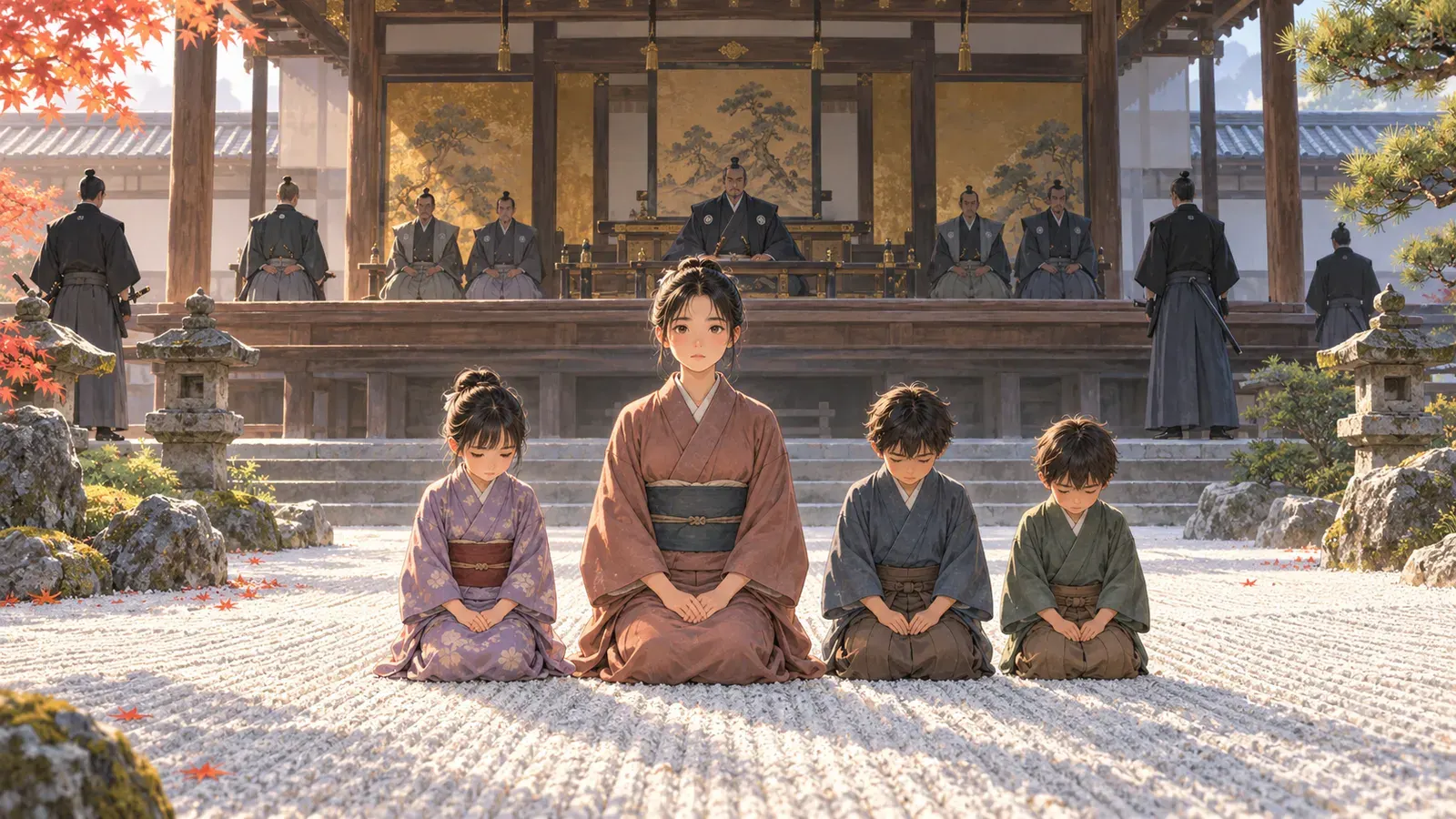
The magistrate, Sasa Matashiro, read the letter. He thought, "A child could not think of this alone. Some adult must have told her to do it." He decided to question the whole family. A few days later, the mother and all five children were brought to the court. In those days, people who were questioned sat in a courtyard of white sand, and the officials sat high above them.
奉行の佐佐又四郎は、願い書を読んで考えた。「子どもがひとりでこんなことを思いつくはずがない。だれか大人が入れ知恵したにちがいない」奉行は、一家全員を取り調べることにした。数日後、母親と五人の子どもたちが奉行所に呼び出された。そのころ、取り調べを受ける者は白い砂をしいた庭に座らされ、役人たちはその上の高いところに座っていた。
Around them, the officials had placed the tools that were used to hurt people who would not tell the truth. They wanted to frighten the children and see if they would change their story.
役人たちは、そのまわりに、本当のことを言わない者を痛めつける道具を並べておいた。子どもたちをこわがらせて、言うことを変えるかどうか見ようとしたのだ。
First, the magistrate questioned the mother. She only cried and said she knew nothing. Then he turned to Ichi. "Did you write this letter?" "Yes, I did," Ichi answered. "Did anyone tell you what to write?" "No one. I thought of it by myself."
奉行は、まず母親を取り調べた。母親はただ泣いて、何も知らないと言うばかりだった。次に、奉行はいちのほうを向いた。「この願い書を書いたのはおまえか」「はい、わたくしでございます」と、いちは答えた。「だれかに書くことを教わったのか」「だれにも教わってはおりません。自分で考えました」
"If we do what you ask, you will be put to death at once," the magistrate said. "You will never see your father again. Do you understand?" "Yes, I understand," Ichi said calmly. Then she added one more sentence.
「願いを聞き届ければ、おまえたちはすぐに殺される」と、奉行は言った。「父親にはもう二度と会えないぞ。わかっているのか」「はい、わかっております」と、いちは落ち着いて答えた。それから、もうひと言つけ加えた。
"I am sure that whatever the government decides cannot be wrong."
「お上のなさることに、まちがいはございますまいから」
Her voice was quiet, and her eyes were clear and cold. For a moment, the magistrate's face showed surprise. Then it showed something like anger. The officials who heard her felt as if an arrow had gone into their hearts. They felt that the young girl had seen through them and was quietly blaming them.
その声は静かで、目はすみきって冷ややかだった。一瞬、奉行の顔におどろきの色が浮かんだ。それから、怒りのようなものがあらわれた。それを聞いた役人たちは、まるで矢が胸につきささったように感じた。この若い娘は自分たちの心を見すかして、静かに責めているのだと感じたのだ。
The magistrate questioned the other children too. "I will do the same as my sister," said Matsu. "I am not a real child of this family," said Chotaro, "but I want to die for Father too." Toku said nothing. Little Hatsugoro was asked, "Will you die for your father?" He shook his head. Even some of the officials smiled sadly at this.
奉行は、ほかの子どもたちも取り調べた。「わたしも姉と同じにいたします」と、まつは言った。「ぼくはこの家の本当の子ではありません。でも、ぼくもお父さんのために死にたいのです」と、長太郎は言った。とくは何も言わなかった。小さな初五郎は、「おまえも父親のために死ぬか」とたずねられると、首を横にふった。これには役人の中にも、悲しげにほほえむ者がいた。
After the family left, the magistrate talked with other high officials for a long time. Ichi's last sentence stayed in all their minds.
一家が帰ったあと、奉行はほかの身分の高い役人たちと、長いあいだ話し合った。いちの最後のひと言は、だれの心にも残っていた。
That year, there was a great ceremony in Kyoto for the new emperor. Because of this, the government forgave some crimes. Tarobei's death sentence was changed. He was sent away from Osaka, but his life was saved.
その年、京都で新しい天皇のための大きな儀式が行われた。そのため、幕府はいくつかの罪を許すことにした。太郎兵衛の死罪は取り消された。太郎兵衛は大坂から追放されたが、命は助かったのだ。
In those days, there was no common Japanese word for "self-sacrifice," the act of giving up oneself for others. But the officials had seen it with their own eyes, in a sixteen-year-old girl. And they never forgot the last phrase she spoke.
人のために、自分の身をささげること。そのころの日本には、これを表す「献身」のような、ふつうに使われる言葉はまだなかった。けれども役人たちは、それを十六歳の娘の中に、自分の目で見たのだ。そして、いちが口にした最後のひと言を、決して忘れなかった。