Tsuyu (Rainy Season)
入梅(梅雨入り)とてるてる坊主の英語の授業アイデアとワークシート
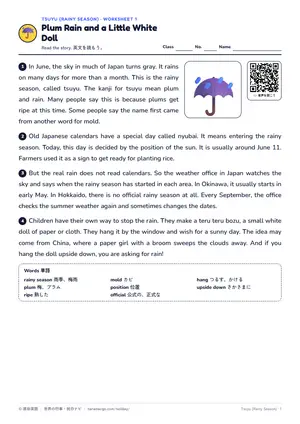
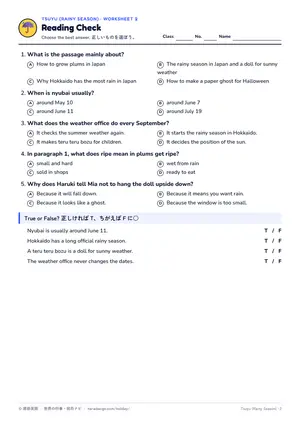
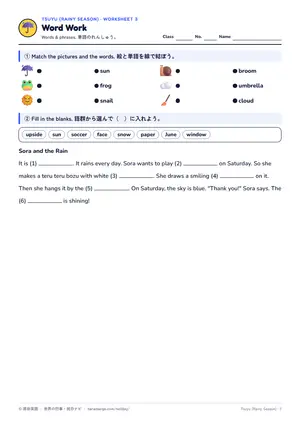
印刷してすぐ使えるワークシート(PDF・Word・解答つき)と、授業の手順書。
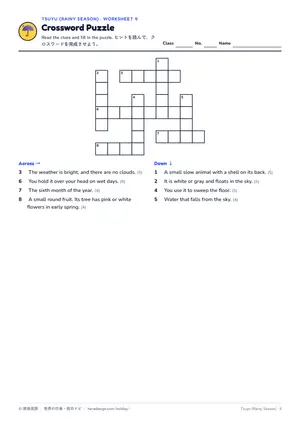
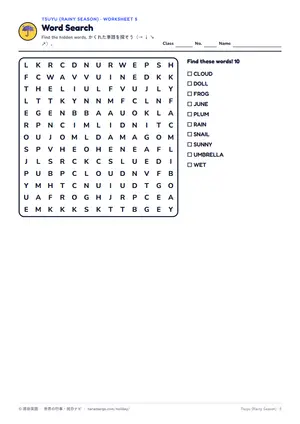
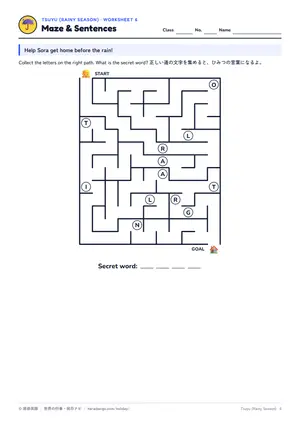
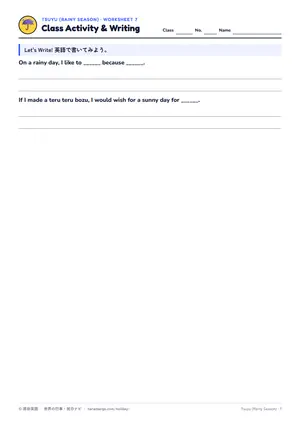
🖨️Worksheetsワークシート(無料・A4)
① 「中身を見る・印刷」で全ページを確認 → ② そのページ上の 🖨️ 印刷する でそのまま印刷できます。A4・無料。
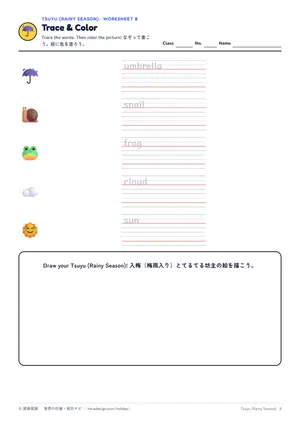
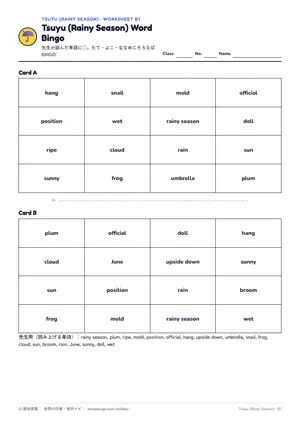
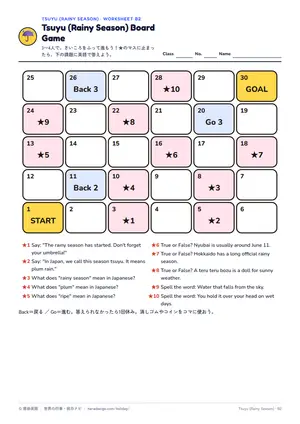
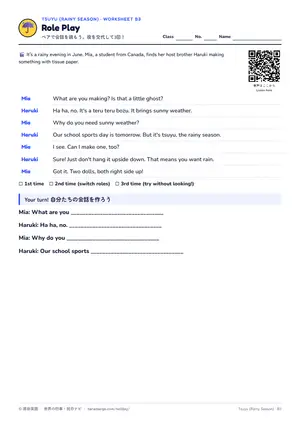
🍎Lesson Ideas入梅(梅雨入り)とてるてる坊主を使った英語の授業アイデア
てるてる坊主を作って、英語でお願いを書こう
🎯 天気の英語(sunny, rainy, cloudy)と I want ~. を使って、願いごとを書ける。
- sunny / rainy / cloudy の絵カードで天気の言い方を確認する。
- ティッシュや白い布でてるてる坊主を作る。
- 小さな紙に I want a sunny day for ______. と書き、てるてる坊主につけて教室に飾る。
詳細版を開く(時間配分・Teacher Talk・板書)
窓の外を指さして How's the weather? と聞き、絵カードで sunny / rainy / cloudy の言い方を確認する。6月は雨の日が多く、この季節を梅雨と呼ぶことを伝える。
🗣️ How's the weather today? / Look. Sunny. Rainy. Cloudy. Repeat. / In June, we have many rainy days. It's the rainy season.
てるてる坊主を見せ、晴れてほしいときに窓につるす人形だと説明する。材料を配り、作り方を見せながらいっしょに作る。顔はにこにこ顔で描かせる。
🗣️ This is a teru teru bozu. It brings sunny weather. / Make a ball with tissue paper. Put it in the middle. / Draw a smiling face.
短冊を配り、I want a sunny day for ______. の空欄に、晴れてほしい日(sports day / picnic / soccer など)を書かせる。書けた子から先生に読んで聞かせ、てるてる坊主につけて窓ぎわに飾る。
🗣️ When do you want a sunny day? / I want a sunny day for sports day. / Write it on your paper. Then read it to me.
さかさまにつるすと反対に「雨を降らせて」というお願いになることを伝え、まっすぐつるそうと声をかける。英語ページの会話で、ハルキが同じことを言っていると紹介する。
🗣️ Don't hang it upside down! / Upside down means you want rain. / Let's wish for a sunny day together.
How's the weather?
🌞 sunny ☔ rainy ☁️ cloudy

June = the rainy season(梅雨)

👻 teru teru bozu
I want a sunny day for ____.
(sports day / a picnic / soccer)

⚠️ upside down(さかさま)→ rain!
暦の入梅と気象庁の梅雨入りをくらべよう
🎯 入梅(天文で決まる日)と梅雨入り(観測で決まる日)の違いを英語で説明できる。
- 国立天文台の暦要項の入梅の日と、気象庁の自分の地方の梅雨入り(平年・去年)を調べる。
- グループで日付の違いを表にし、なぜずれるのかを話し合う。
- Nyubai is decided by ... , but the real start is decided by ... の形で英文にまとめて発表する。
詳細版を開く(時間配分・Teacher Talk・板書)
「梅雨入りの日は誰が決める?」と聞く。カレンダーの「入梅」と、ニュースで聞く「梅雨入りしたとみられます」の2種類があることを伝え、今日はその違いを調べると予告する。
🗣️ Who decides when the rainy season starts? / There are two answers. The calendar, and the weather office. / Today, let's find out the difference.
基本セット p.1 の第2・第3段落を音声で聞かせる。入梅は太陽の位置で決まりふつう6月11日ごろであること、気象庁は空を観察して地域ごとに梅雨入りを発表し、毎年9月に見直して日付を変えることもあることを確認する。
🗣️ Listen to paragraphs 2 and 3. / How is nyubai decided? By the position of the sun. / How does the weather office decide? It watches the sky. / But the real rain does not read calendars.
班ごとに、国立天文台の暦要項で今年の入梅の日を、気象庁のページで自分の地方の平年と去年の梅雨入りを調べ、表にまとめさせる。日付がずれる理由を話し合わせる。気象庁は「梅雨入りしたとみられる」と速報を出し、9月に確定値を出すことにもふれる。
🗣️ Find three dates. Nyubai this year, the average start in our area, and last year's start. / Write them in the table. / Why are the dates different? Talk in your group.
Nyubai is decided by ..., but the real start is decided by ... の形で英文にまとめさせ、班の代表が発表する。調べた日付も1つ入れて言わせる。
🗣️ Use this pattern. Nyubai is decided by ..., but the real start is decided by ... / Add one date you found. / Group 1, please share your sentences.
Two kinds of rainy season dates

① nyubai(暦の入梅)
 decided by the position of the sun → around June 11
② the weather office(気象庁の梅雨入り)
 watches the sky → each area is different
 速報「とみられる」→ 9月に確定値(日付が変わることも)

     入梅 |平年の梅雨入り|去年
うちの地方 __ | __    |__

Nyubai is decided by __, but the real start is decided by __.