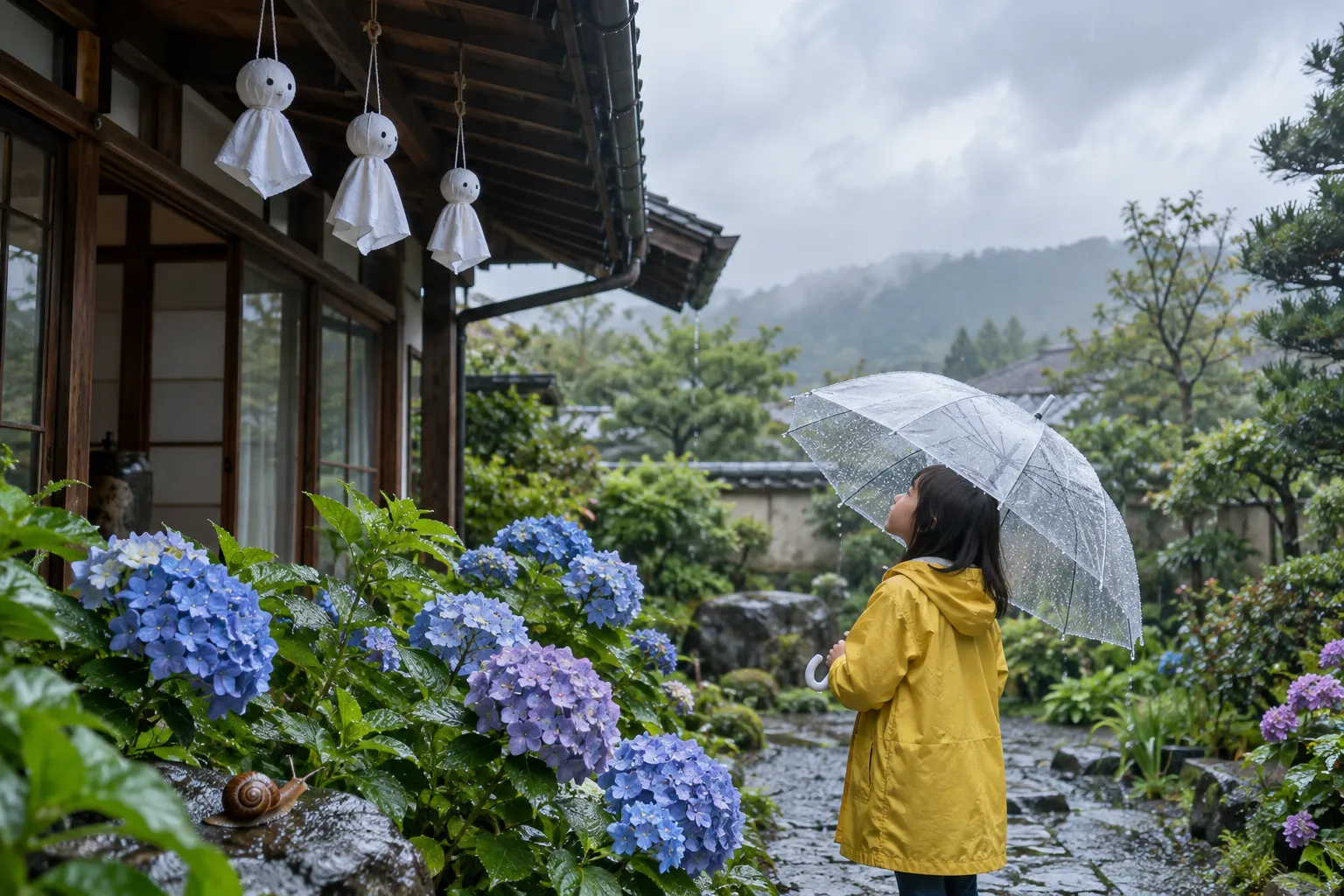
Tsuyu (Rainy Season)

入梅(梅雨入り)とてるてる坊主を英語で:読む・聞く・話す・遊ぶ

やさしい英語(CEFR A2)の読み物に音声つき。会話・単語カード・クイズ5問・ゲームで、入梅(梅雨入り)とてるてる坊主の英語をまるごと。

🔊Read in English入梅(梅雨入り)とてるてる坊主を英語で読もう(CEFR A2・音声つき)

入梅(梅雨入り)とてるてる坊主を、やさしい英語で紹介する読み物です。▶で英文をタイトルから通して聞けます(アメリカ英語)。「和訳」ボタンで日本語訳の表示・非表示を切りかえられます。下線の語は下の単語カードにあります。

Plum Rain and a Little White Doll

CEFR A2
0:00
228 words

In June, the sky in much of Japan turns gray. It rains on many days for more than a month. This is the rainy season, called tsuyu. The kanji for tsuyu mean plum and rain. Many people say this is because plums get ripe at this time. Some people say the name first came from another word for mold.

6月、日本の多くの地域で空が灰色になります。1か月以上のあいだ、雨の日が多くなります。これが雨の季節、梅雨です。梅雨の漢字は「梅」と「雨」です。このころに梅の実が熟すからだ、と多くの人が言います。名前はもともとカビを表す別の言葉から来た、と言う人もいます。

Old Japanese calendars have a special day called nyubai. It means entering the rainy season. Today, this day is decided by the position of the sun. It is usually around June 11. Farmers used it as a sign to get ready for planting rice.

日本の昔からの暦には、入梅という特別な日があります。梅雨に入る、という意味です。今では、この日は太陽の位置で決まります。たいてい6月11日ごろです。農家はこれを田植えの準備をする目印に使いました。

But the real rain does not read calendars. So the weather office in Japan watches the sky and says when the rainy season has started in each area. In Okinawa, it usually starts in early May. In Hokkaido, there is no official rainy season at all. Every September, the office checks the summer weather again and sometimes changes the dates.

でも、本物の雨は暦を読みません。そこで日本の気象庁は空を見て、それぞれの地域でいつ梅雨に入ったかを発表します。沖縄ではたいてい5月のはじめに始まります。北海道には、正式な梅雨がまったくありません。毎年9月、気象庁は夏の天気をもう一度確かめ、日付を変えることもあります。

Children have their own way to stop the rain. They make a teru teru bozu, a small white doll of paper or cloth. They hang it by the window and wish for a sunny day. The idea may come from China, where a paper girl with a broom sweeps the clouds away. And if you hang the doll upside down, you are asking for rain!

子どもたちには、雨を止める自分たちの方法があります。てるてる坊主を作るのです。紙や布でできた小さな白い人形です。窓のそばにつるして、晴れの日を願います。この考えは中国から来たのかもしれません。中国では、ほうきを持った紙の女の子が雲をはき出してくれるのです。そして、人形をさかさまにつるすと、雨をお願いしていることになるのです!

💬Dialogue英語の会話で入梅(梅雨入り)とてるてる坊主

🎬 6月の雨の夕方。カナダからの留学生ミアが、ホストブラザーのハルキがティッシュで何かを作っているのを見つけます。

0:00
Mia

What are you making? Is that a little ghost?

何を作っているの?それ、小さなおばけ?

Haruki

Ha ha, no. It's a teru teru bozu. It brings sunny weather.

はは、違うよ。てるてる坊主。晴れを呼んでくれるんだ。

Mia

Why do you need sunny weather?

どうして晴れが必要なの?

Haruki

Our school sports day is tomorrow. But it's tsuyu, the rainy season.

明日は学校の運動会なんだ。でも今は梅雨、雨の季節だからね。

Mia

I see. Can I make one, too?

なるほど。私も作っていい?

Haruki

Sure! Just don't hang it upside down. That means you want rain.

もちろん!でもさかさまにつるさないでね。雨がほしいって意味になるから。

Mia

Got it. Two dolls, both right side up!

わかった。2つとも、ちゃんと上向きにね!

🃏Word Cards入梅(梅雨入り)とてるてる坊主の英単語カード(8語)

カードをタップすると裏返って、意味と例文が出ます。

rainy season名詞
雨季、梅雨The rainy season starts in June.梅雨は6月に始まります。💡 日本の梅雨を説明するときの基本語。
plum名詞
梅、プラムPlums get ripe in June.梅の実は6月に熟します。💡 日本の梅は Japanese apricot と訳されることもある。
ripe形容詞
熟したThese tomatoes are ripe.このトマトは熟しています。💡 get ripe=熟す。反対は unripe。
mold名詞
カビMold grows fast in wet weather.じめじめした天気ではカビがすぐ生えます。💡 イギリスつづりは mould。
position名詞
位置The day is decided by the position of the sun.その日は太陽の位置で決まります。💡 スポーツの「ポジション」も同じ語。
official形容詞
公式の、正式なHokkaido has no official rainy season.北海道には正式な梅雨がありません。💡 名詞は「役人、職員」。
hang動詞
つるす、かけるHang the doll by the window.人形を窓のそばにつるしなさい。💡 過去形は hung。
upside down副詞
さかさまにDon't hang it upside down.さかさまにつるさないで。💡 上(up)の面(side)が下(down)になる、と覚えよう。

✅Quiz入梅(梅雨入り)とてるてる坊主の英語クイズ(5問)

上の英文を読んでから答えてみよう。答えを選ぶとすぐに解説が出ます。全問正解でスタンプが金色に!

Q1. What is the passage mainly about?

本文は主に何についての話ですか。

第1〜3段落で梅雨と入梅・気象庁の発表、第4段落でてるてる坊主を紹介しています。梅の育て方やハロウィンの話はなく、北海道には正式な梅雨がないと書かれています。

Q2. When is nyubai usually?

入梅はたいていいつですか。

第2段落に It is usually around June 11. とあります。ほかの日付は本文の入梅の日ではありません。

Q3. What does the weather office do every September?

気象庁は毎年9月に何をしますか。

第3段落に Every September, the office checks the summer weather again とあります。北海道には正式な梅雨がなく、太陽の位置を「決める」わけでもありません。

Q4. In paragraph 1, what does ripe mean in plums get ripe?

第1段落の plums get ripe の ripe の意味はどれですか。

ripe は「熟した」。梅の実が熟すころの雨なので「梅雨」と書く、という説明の一部です。

Q5. Why does Haruki tell Mia not to hang the doll upside down?

ハルキはなぜミアに、人形をさかさまにつるさないよう言うのですか。

ハルキは That means you want rain. と言っています。明日は運動会なので、雨を願うことになっては困るのです。

🎮Games入梅(梅雨入り)とてるてる坊主の英語ゲーム

タブを切りかえて遊べます。授業ではプロジェクターに映して、クラス対抗戦にしても盛り上がります。

👋Useful Phrases入梅(梅雨入り)とてるてる坊主に使える英語フレーズ

The rainy season has started. Don't forget your umbrella!梅雨に入ったね。傘を忘れないで!梅雨は the rainy season と言えば通じる。
In Japan, we call this season tsuyu. It means plum rain.日本ではこの季節を梅雨と言います。「梅の雨」という意味です。plum=梅。外国の人に名前の意味を説明する一言。
Let's make a teru teru bozu and wish for sunny weather.てるてる坊主を作って、晴れるようにお願いしよう。wish for sunny weather=晴れを願う。

🗣️ 話し合ってみよう(Discussion)

  1. Do you like the rainy season? What do you do on rainy days?

    梅雨は好きですか。雨の日には何をしますか。
  2. The weather office sometimes changes the start or end date months later. Why do you think it does this?

    気象庁は、梅雨入りや梅雨明けの日付を何か月もあとで変えることがあります。なぜだと思いますか。
  3. Japan has two kinds of rainy season dates, one from the calendar and one from real weather. Why do old calendar days still matter today?

    日本には、暦の梅雨入りと実際の天気の梅雨入りの2種類があります。古い暦の日が今も大切にされるのはなぜでしょう。
☔
Tsuyu (Rainy Seaso
スタンプ帳に入梅(梅雨入り)とてるてる坊主のスタンプを押しました!
クイズで全問正解すると金のスタンプに。世界一周めざして集めよう。 スタンプ帳を見る →

授業アイデアとワークシートを見る →