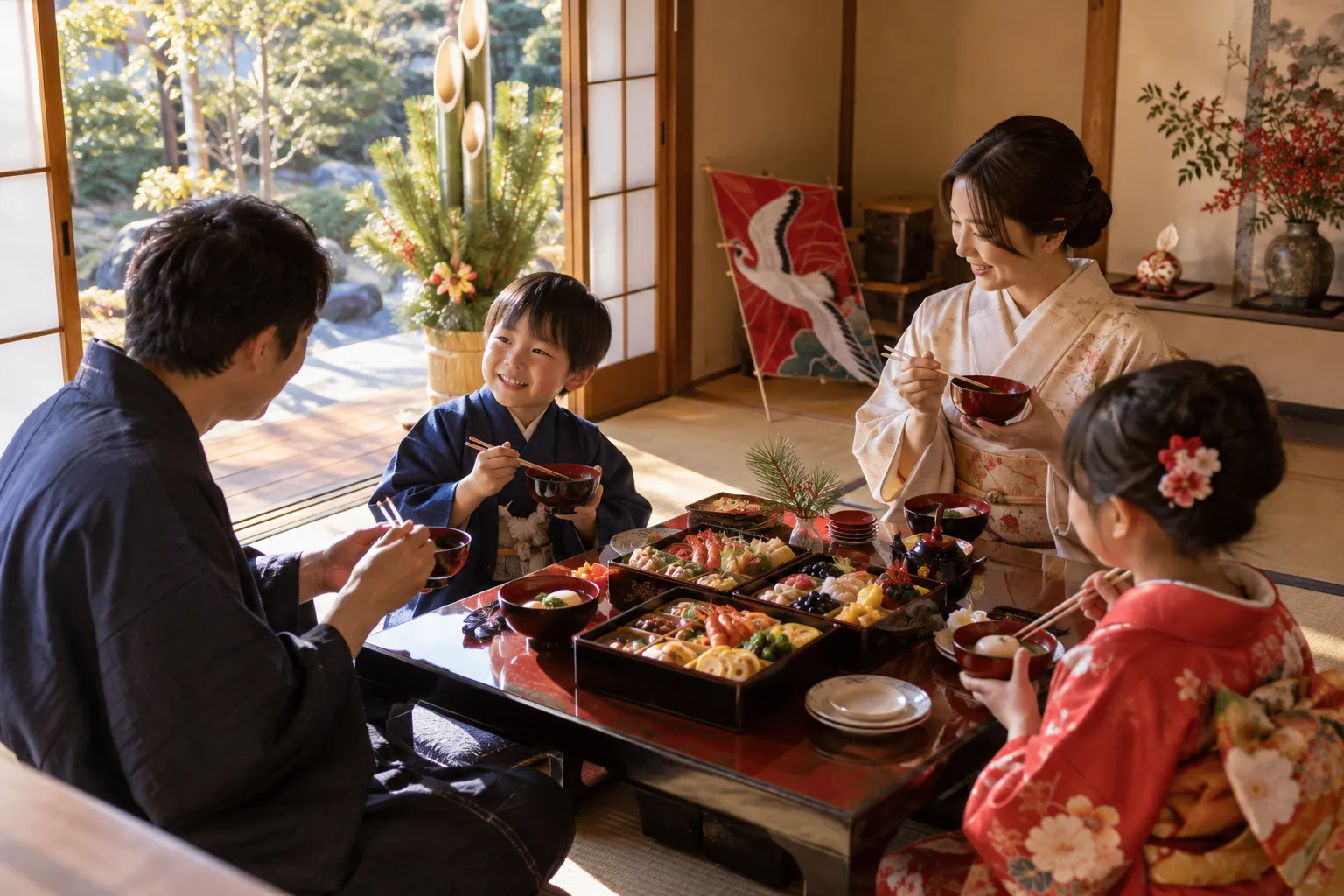
New Year's Day in Japan (Shogatsu)
元日・お正月の英語の授業アイデアとワークシート
印刷してすぐ使えるワークシート(PDF・Word・解答つき)と、授業の手順書。
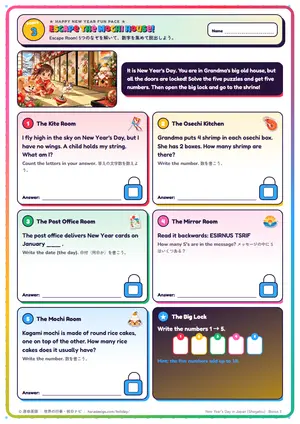
🖨️Worksheetsワークシート(無料・A4)
① 「中身を見る・印刷」で全ページを確認 → ② そのページ上の 🖨️ 印刷する でそのまま印刷できます。A4・無料。
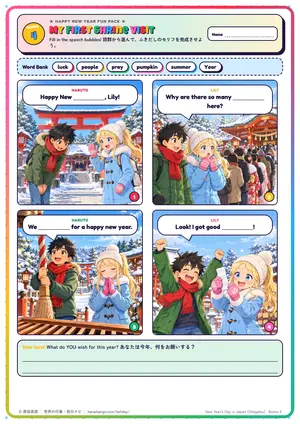
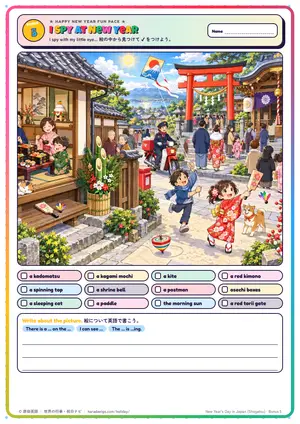
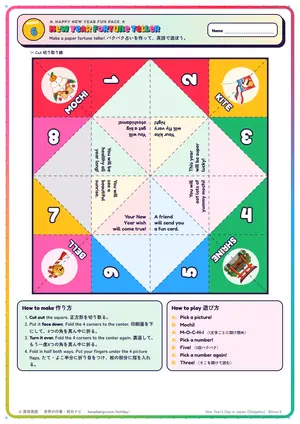
🍎Lesson Ideas元日・お正月を使った英語の授業アイデア
おせちの願いメニューを英語で作ろう
🎯 食べ物と願いを "... is for ..." の形で言えるようになる。
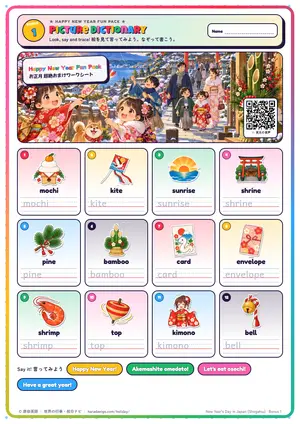
- おせちの写真を見せ、黒豆・えび・数の子・栗きんとんの英語名を確認する。
- "Black beans are for good health." の形を練習する。
- グループで「自分たちの新しいおせち」を考え、食べ物と願いを3つ英語で書く(例:Pizza is for a happy party.)。
- レストランのメニュー風にまとめ、クラスで発表する。
詳細版を開く(時間配分・Teacher Talk・板書)
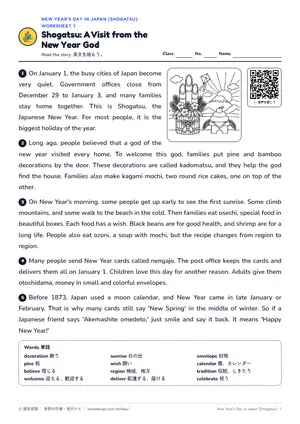
おせちの写真を見せ、本文の第3段落を音声で聞かせる。Each food has a wish. Black beans are for good health, and shrimp are for a long life. の部分を確認し、黒豆とえびの絵カードを黒板にはる。
🗣️ What is this? Yes, osechi. Listen to the story. / Each food has a wish. / Black beans are for good health. What about shrimp? / Shrimp are for a long life. Their backs are bent, like old people's backs.
数の子と栗きんとんの絵カードを見せ、願いを予想させてから答えを確認する(数の子=卵の粒が多いので子孫が栄える、栗きんとん=黄金色なので金運)。4つの文を ... is / are for ... の形で全員で言い、is と are の使い分けにふれる。
🗣️ Kazunoko has many, many eggs. What is the wish? / Kazunoko is for many children and grandchildren. / Kuri kinton is gold. So it is for money! / Black beans are for ... Kazunoko is for ... Let's say them all.
グループで「自分たちの新しいおせち」を考えさせる。好きな食べ物を3つ選び、願いのことばカードを参考に ... is for ... の文を書く。例:Pizza is for a happy party. 理由もつけられるグループには because を足させる。メニュー用紙にレストランのメニュー風に書かせる。
🗣️ Now make your own osechi menu. / Choose three foods you like. / Write a wish for each. Pizza is for a happy party. / Can you add a reason? Use because.
各グループがメニューを見せて発表する。聞く側は、いちばん食べたいおせちに手をあげる。最後に、本物のおせちの願いを1つ選んで英語で書かせて終わる。
🗣️ Show us your menu. Read your three wishes. / Which osechi do you want to eat? Raise your hand. / Finally, write one real osechi wish in your notebook.
Osechi 🍱  Each food has a wish.

Black beans are for good health.(まめに働けるように)
Shrimp are for a long life.(腰が曲がるまで長生き)
Kazunoko is for many children and grandchildren.(子孫が栄える)
Kuri kinton is for money.(黄金色 → 金運)

Our new osechi
__ is for __.
__ are for __.
お雑煮マップ・インタビュー
🎯 家庭のお雑煮を英語で説明し、地域の違いに気づく。
- 家のお雑煮について、もちの形・汁の味・具を事前に聞いてくる。
- "Our ozoni has square mochi and clear soup." の形で説明を書く。
- ペアでインタビューし合い、黒板の日本地図に結果を貼る。
- 東と西でどんな違いがあるか、英語の1文でまとめる。
詳細版を開く(時間配分・Teacher Talk・板書)
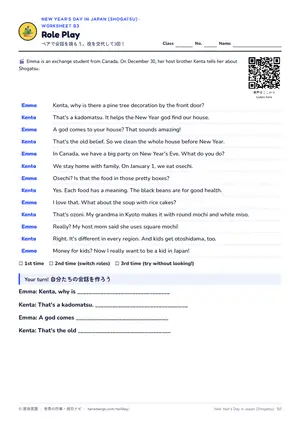
英語ページの会話の後半(What about the soup with rice cakes? から It's different in every region. まで)を聞かせ、京都のおばあさんのお雑煮と、ホストマザーのお雑煮のちがいを聞き取らせる。
🗣️ Listen. What kind of ozoni does Kenta's grandma make? / Round mochi and white miso. She lives in Kyoto. / What about Emma's host mom? Square mochi! / It's different in every region. What about your family?
宿題プリントをもとに、Our ozoni has __ mochi and __ soup. It also has __. の形で自分の家のお雑煮の説明を書かせる。square / round、clear soup / miso soup / white miso、chicken / carrots / spinach などの語を黒板に出す。
🗣️ Look at your homework sheet. / Write: Our ozoni has square mochi and clear soup. / It also has chicken and carrots. / If you don't know a word, ask me.
立ってペアを3回変えながらインタビューさせる(What kind of mochi is in your ozoni? / What kind of soup is it? / Where is your family from?)。聞いた結果をメモし、最後に自分の分を付せんに書いて、家族の出身地の位置に日本地図にはらせる(角もちと丸もちで色を分ける)。
🗣️ Stand up and find a partner. / Ask, What kind of mochi is in your ozoni? What kind of soup is it? / Change partners. Talk to three people. / Put your sticky note on the map. Blue for square, pink for round.
地図を見て、東と西でどんなちがいがあるかを考えさせる。記事の「東日本は焼いた角もち+すまし汁、西日本は煮た丸もち+みそ仕立て、という大まかな傾向」を紹介し、例外(香川のあんこもち、鳥取の小豆汁など)にもふれる。In the east, ... / In the west, ... の形で1文書かせる。
🗣️ Look at the map. What do you see? / In the east, many people use square mochi. / In the west, many people use round mochi. / Write one sentence. In the east, ... In the west, ...
What kind of ozoni do you eat?

Our ozoni has __ mochi and __ soup.
It also has __.
square / round clear soup / miso soup / white miso
chicken / carrots / spinach / fish cake

大まかな傾向
East:grilled square mochi + clear soup
West:boiled round mochi + miso soup
例外も! 香川:あんこもち+白みそ 鳥取:小豆の汁

In the east, __. In the west, __.
1分でお正月を外国の人に紹介しよう
🎯 日本固有の言葉をローマ字+やさしい英語の説明で伝える。
- kadomatsu, osechi, ozoni, otoshidama などから3つ選ぶ。
- "Osechi is special food in boxes. Each food has a wish." のように、言葉+説明の2文セットを作る。
- ペアで聞き手が "What does that mean?" と質問し、言いかえを練習する。
- 1分スピーチとして発表し、聞き手は一番わかりやすかった説明を選ぶ。
詳細版を開く(時間配分・Teacher Talk・板書)
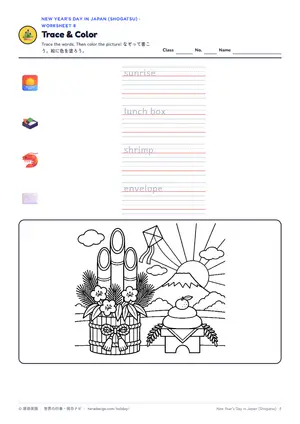
門松の写真を見せ、「外国の人に Kadomatsu. とだけ言って伝わる?」と問う。本文の These decorations are called kadomatsu, and they help the god find the house. を読ませ、ローマ字の言葉のあとに説明を足すと伝わることを確認する。
🗣️ If you say just kadomatsu, will people understand? / Read this sentence from the text. / These decorations are called kadomatsu, and they help the god find the house. / Word, then a simple explanation. That's the trick.
写真カードから3つ選ばせ、2文セットを作らせる。例:Osechi is special food in boxes. Each food has a wish. 1文目で「何か」(food / soup / money / card / decoration)、2文目で「なぜ・どんな意味か」を書くよう指示する。本文の表現を使ってよいと伝える。
🗣️ Choose three words from the cards. / Sentence one says what it is. It's a kind of food, soup, or money. / Sentence two says why or what it means. / You can use phrases from the text.
ペアで練習させる。聞き手は説明のあとに必ず What does that mean? か Can you say it another way? と質問し、話し手は別の言い方で答える(例:envelope → a small paper bag for money)。役を交代して2回行う。
🗣️ Explain your three words to your partner. / Listeners, ask, What does that mean? / Speakers, try another way. Use easier words or a gesture. / Now change roles.
4〜5人に1分スピーチとして発表させる。聞き手は、いちばんわかりやすかった説明に投票用紙で投票する。最後に、わかりやすかった説明の共通点(短い文・身近な語・例がある)をクラスで確認する。
🗣️ Now give a one-minute speech. Who wants to go first? / Listeners, vote for the clearest explanation. / Why was it easy to understand? Short sentences? Easy words? Examples?
Introduce Shogatsu in one minute

Word + What it is + Why / What it means
Kadomatsu are pine and bamboo decorations. They help the New Year god find the house.
Osechi is special food in boxes. Each food has a wish.
Otoshidama is money in small, colorful envelopes. Adults give it to children.

Listener:What does that mean? / Can you say it another way?
Speaker:In other words, __. / It's like __.
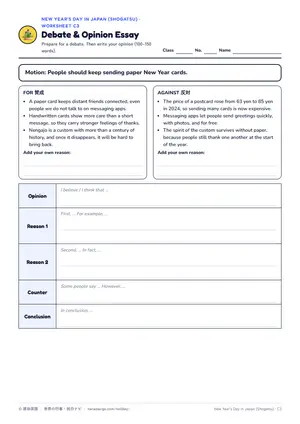
ディベート:年賀状は続けるべきか
🎯 advanced の英文をもとに、社会の変化について根拠をあげて議論する。
- advanced の英文を読み、年賀状の発行数と値上げの事実を確認する。
- 賛成・反対のチームに分かれ、理由を3つずつ英語で準備する。
- 立論・反論・まとめの順でミニ・ディベートを行う。
- 最後に個人の意見を100語の英文で書く。
詳細版を開く(時間配分・Teacher Talk・板書)
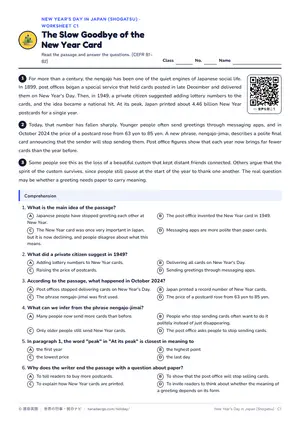
「去年、紙の年賀状を何枚出した?」と挙手で聞き、0枚・1〜10枚・11枚以上に分ける。結果を板書し、本文のタイトル The Slow Goodbye of the New Year Card を示して、なぜ slow goodbye なのかを予想させる。
🗣️ How many paper New Year cards did you send last year? / Zero? One to ten? More than ten? Raise your hand. / The title is The Slow Goodbye of the New Year Card. Why slow?
本文を個人で黙読させ、事実確認シートを埋めさせる。1899年の元日配達のサービス、1949年に民間人がくじ番号を提案したこと、ピーク時の約44億6000万枚、2024年10月の63円から85円への値上げ、年賀状じまいの意味を確認する。ペアで答え合わせをさせる。
🗣️ Read the passage and fill in the fact sheet. / What started in 1899? Who suggested the lottery numbers? / How much did a postcard cost before and after October 2024? / What is nengajo-jimai? Explain it in English.
論題 People should keep sending paper New Year cards. を示し、賛成・反対のチームに分ける。各チームは理由を3つ英語で準備し、少なくとも1つは本文の事実を根拠にさせる。第3段落の2つの見方(美しい習慣の喪失/感謝の気持ちは残っている)を参考にしてよいと伝える。
🗣️ The motion is: People should keep sending paper New Year cards. / This side is for, and that side is against. / Prepare three reasons. Use at least one fact from the passage. / You have ten minutes.
立論(各3分)→ 作戦タイム(1分)→ 反論(各2分)→ まとめ(各1分)の順でミニ・ディベートを行う。最後の2分で、審判役の学生が勝敗と理由を英語で述べる。先生は数字の引用が正確かを確かめながら進める。
🗣️ For team, three minutes. Please start. / Against team, please answer their points. / Is that number correct? Check the passage. / Judges, who won and why?
本文の最後の問い whether a greeting needs paper to carry meaning を読み、チームの立場を離れて自分の意見を100語の英文で書かせる。授業中に書き出し、残りは課題とする。
🗣️ Read the last sentence again. Does a greeting need paper to carry meaning? / Forget your team. What do you really think? / Write about 100 words. Finish it at home.
The Slow Goodbye of the New Year Card

1899 cards posted in late Dec → delivered on Jan 1
1949 a private citizen → lottery numbers → a national hit
peak:about 4.46 billion cards in one year
Oct 2024:63 yen → 85 yen
nengajo-jimai:a polite final card(もう出しません)

Motion: People should keep sending paper New Year cards.
For:a beautiful custom / keeps distant friends connected
Against:apps / cost / the spirit survives without paper

Does a greeting need paper to carry meaning?
世界のお正月すごろく
🎯 世界のお正月の習慣に親しみ、簡単な英語の語を覚える。
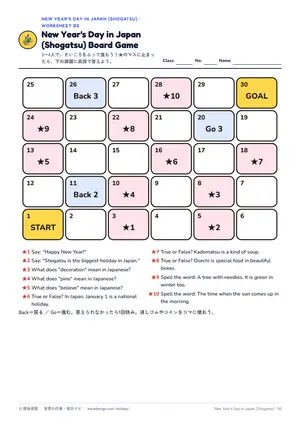
- スペインのぶどう、韓国のトックク、日本の門松などのマスを作ったすごろくを用意する。
- 止まったマスの絵を見て、先生のあとに英語で言う(grapes, soup, pine など)。
- ゴールした人は "Happy New Year!" と言ってカードをもらう。
詳細版を開く(時間配分・Teacher Talk・板書)
門松の絵を見せ、日本のお正月の飾りであることを確認する。続けて「スペインでは大みそかの真夜中に、鐘に合わせてぶどうを12粒食べる」など、絵カードを見せながら世界のお正月を2〜3つ紹介する。
🗣️ Look. This is kadomatsu. It's made of pine and bamboo. / In Spain, people eat twelve grapes at midnight! / In Korea, people eat rice cake soup.
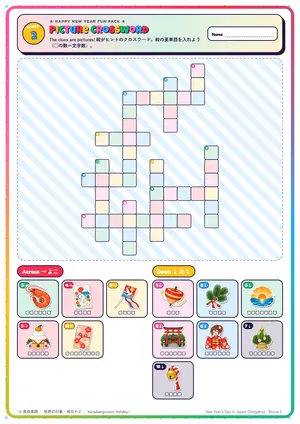
黒板の絵カードを指しながら grapes / soup / pine / red envelope / flowers / kite を発音させる。すごろくのルール(止まったマスの絵を英語で言えたら、そのまま。言えなかったら先生や友だちのまねをして言う)を説明する。
🗣️ Repeat after me. Grapes. Soup. Pine. / Red envelope. Flowers. Kite. / When you stop on a picture, say the word in English.
グループですごろくをさせる。さいころを振るときは One, two, three! と数えさせる。先生はグループを回り、止まったマスの語を一緒に言い、言えたらほめる。
🗣️ Roll the dice. Count with me. One, two, three! / What's this picture? Say it in English. / Great job! / When you reach the goal, say Happy New Year!
ゴールした子は Happy New Year! と言ってカードをもらう。最後に全員で Happy New Year! と言い、どの国のお正月がいちばん楽しそうだったかを指でさして答えさせる。
🗣️ Everyone, say it together. Happy New Year! / Which country's New Year do you like best? / Point to the picture.
Happy New Year around the world 🌏Japan:kadomatsu(pine and bamboo)
Spain:12 grapes at midnight
Korea:tteokguk(rice cake soup)
China:red envelope(money)
USA:Rose Parade(flowers) ゴールで → Happy New Year!