New Year's Day in Japan (Shogatsu)

元日・お正月を英語で:読む・聞く・話す・遊ぶ

やさしい英語(CEFR A2)の読み物に音声つき。会話・単語カード・クイズ8問・ゲームで、元日・お正月の英語をまるごと。

🔊Read in English元日・お正月を英語で読もう(CEFR A2・音声つき)

元日・お正月を、やさしい英語で紹介する読み物です。▶で英文をタイトルから通して聞けます(アメリカ英語)。「和訳」ボタンで日本語訳の表示・非表示を切りかえられます。下線の語は下の単語カードにあります。

Shogatsu: A Visit from the New Year God

CEFR A2
0:00
255 words

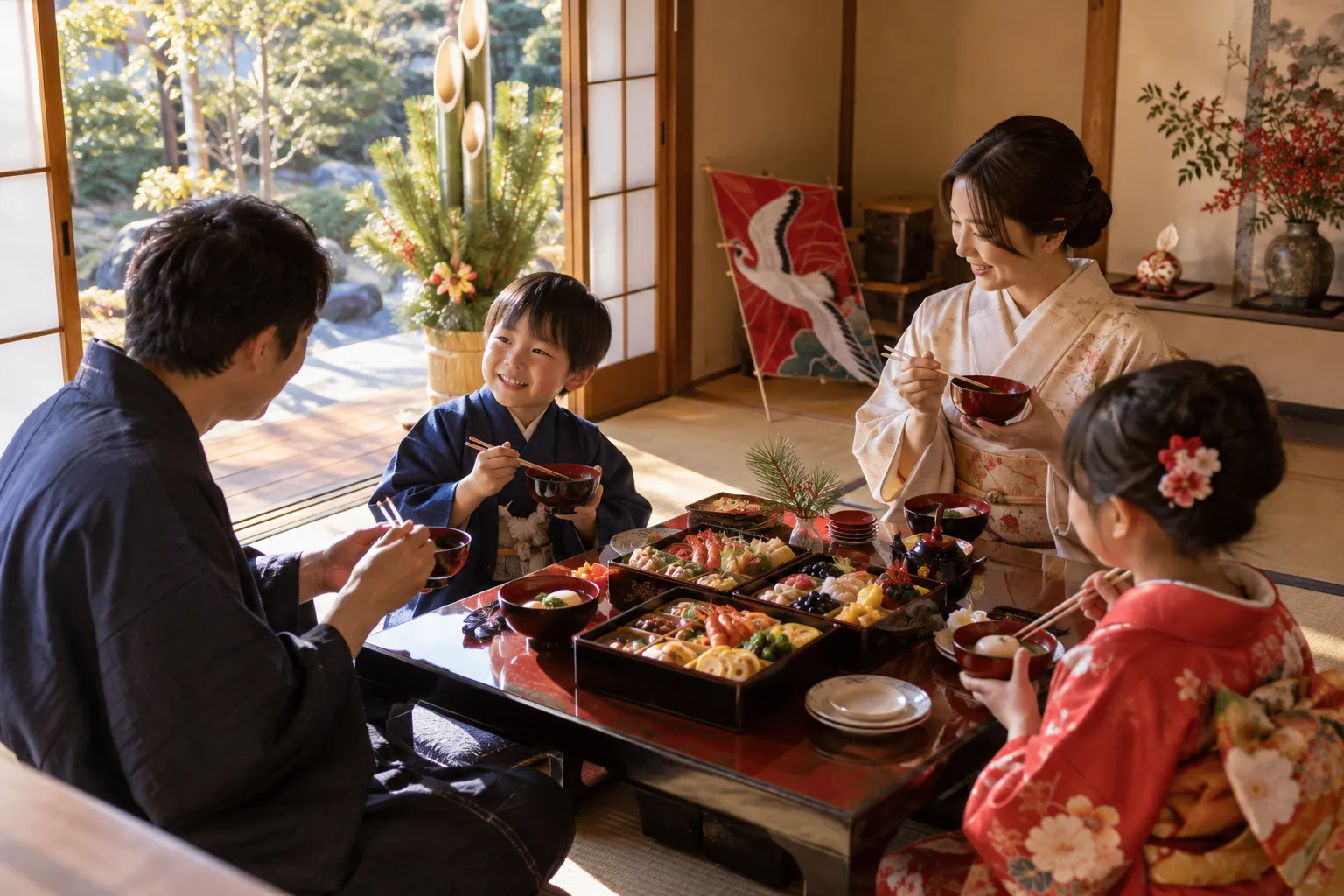
On January 1, the busy cities of Japan become very quiet. Government offices close from December 29 to January 3, and many families stay home together. This is Shogatsu, the Japanese New Year. For most people, it is the biggest holiday of the year.

1月1日、日本のにぎやかな都会はとても静かになります。役所は12月29日から1月3日まで閉まり、多くの家族が家でいっしょに過ごします。これが日本のお正月です。ほとんどの人にとって、一年でいちばん大きな休日です。

Long ago, people believed that a god of the new year visited every home. To welcome this god, families put pine and bamboo decorations by the door. These decorations are called kadomatsu, and they help the god find the house. Families also make kagami mochi, two round rice cakes, one on top of the other.

昔の人は、新しい年の神さまがすべての家を訪れると信じていました。この神さまを迎えるために、家族は玄関に松と竹の飾りを置きました。この飾りは門松と呼ばれ、神さまが家を見つける助けになります。家族は鏡もちも作ります。丸いおもちを2つ重ねたものです。

On New Year's morning, some people get up early to see the first sunrise. Some climb mountains, and some walk to the beach in the cold. Then families eat osechi, special food in beautiful boxes. Each food has a wish. Black beans are for good health, and shrimp are for a long life. People also eat ozoni, a soup with mochi, but the recipe changes from region to region.

元日の朝、早起きして初日の出を見る人もいます。山に登る人もいれば、寒い中を海岸まで歩く人もいます。それから家族は、きれいな箱に入った特別な料理、おせちを食べます。どの料理にも願いがこもっています。黒豆は健康のため、えびは長生きのためです。もち入りのお汁、お雑煮も食べますが、作り方は地域ごとに変わります。

Many people send New Year cards called nengajo. The post office keeps the cards and delivers them all on January 1. Children love this day for another reason. Adults give them otoshidama, money in small and colorful envelopes.

多くの人が年賀状という新年のカードを送ります。郵便局はカードを預かり、1月1日にまとめて配達します。子どもたちには、この日が大好きな理由がもう一つあります。大人がお年玉をくれるのです。小さくてカラフルな封筒に入ったお金です。

Before 1873, Japan used a moon calendar, and New Year came in late January or February. That is why many cards still say 'New Spring' in the middle of winter. So if a Japanese friend says 'Akemashite omedeto,' just smile and say it back. It means 'Happy New Year!'

1873年より前、日本は月の暦を使っていて、お正月は1月下旬か2月に来ました。だから多くの年賀状には、真冬なのに今も「新春」と書いてあるのです。だから日本の友だちが「あけましておめでとう」と言ったら、笑顔で同じ言葉を返しましょう。それは「ハッピーニューイヤー!」という意味です。

💬Dialogue英語の会話で元日・お正月

🎬 エマはカナダからの留学生。12月30日、ホストファミリーの兄ケンタがお正月について教えます。

0:00
Emma

Kenta, why is there a pine tree decoration by the front door?

ケンタ、どうして玄関に松の飾りがあるの?

Kenta

That's a kadomatsu. It helps the New Year god find our house.

あれは門松。お正月の神さまがうちを見つける目印なんだ。

Emma

A god comes to your house? That sounds amazing!

神さまが家に来るの?すごいね!

Kenta

That's the old belief. So we clean the whole house before New Year.

昔からの考え方だよ。だから新年の前に家じゅうを掃除するんだ。

Emma

In Canada, we have a big party on New Year's Eve. What do you do?

カナダでは大みそかに大きなパーティーをするよ。日本では何をするの?

Kenta

We stay home with family. On January 1, we eat osechi.

家族と家で過ごすよ。1月1日にはおせちを食べるんだ。

Emma

Osechi? Is that the food in those pretty boxes?

おせち?あのきれいな箱に入った料理?

Kenta

Yes. Each food has a meaning. The black beans are for good health.

そう。どの料理にも意味があるんだ。黒豆は健康のためだよ。

Emma

I love that. What about the soup with rice cakes?

それ、すてき。おもちの入ったスープは?

Kenta

That's ozoni. My grandma in Kyoto makes it with round mochi and white miso.

お雑煮だよ。京都のおばあちゃんは、丸もちと白みそで作るんだ。

Emma

Really? My host mom said she uses square mochi!

本当?ホストマザーは四角いおもちを使うって言ってたよ!

Kenta

Right. It's different in every region. And kids get otoshidama, too.

そうなんだ。地域ごとに違うんだよ。それに子どもはお年玉ももらえるんだ。

Emma

Money for kids? Now I really want to be a kid in Japan!

子どもにお金?もう日本で子どもになりたいよ!

🃏Word Cards元日・お正月の英単語カード(12語)

カードをタップすると裏返って、意味と例文が出ます。

decoration名詞
飾りWe put a New Year decoration on the door.私たちはドアにお正月飾りをつけます。💡 動詞 decorate(飾る)の名詞形。Christmas decorations もよく使う。
pine名詞
松Pine trees stay green all winter.松の木は冬じゅう緑のままです。💡 pineapple(パイナップル)は形が松ぼっくり(pine cone)に似ているから。
believe動詞
信じるPeople believed a god visited every home.人々は神さまがすべての家を訪れると信じていました。💡 believe that ~ で「~だと信じる」。名詞は belief。
welcome動詞
迎える、歓迎するWe clean the house to welcome the New Year.新年を迎えるために家を掃除します。💡 Welcome to Japan! の welcome と同じ語。
sunrise名詞
日の出We watched the first sunrise of the year.私たちはその年の初日の出を見ました。💡 sun + rise(のぼる)。反対は sunset(日の入り)。
wish名詞
願いEach food has a wish for the new year.どの料理にも新年の願いがこめられています。💡 make a wish(願いごとをする)。動詞としても使う。
region名詞
地域、地方Ozoni changes from region to region.お雑煮は地域ごとに変わります。💡 from region to region で「地域によって」。形容詞は regional。
deliver動詞
配達する、届けるThe post office delivers the cards on January 1.郵便局は1月1日にカードを配達します。💡 名詞は delivery(配達)。pizza delivery など。
envelope名詞
封筒The money is in a small envelope.お金は小さな封筒に入っています。💡 アクセントは最初の EN-。ぽち袋は a small envelope for gift money と説明できる。
calendar名詞
暦、カレンダーJapan changed its calendar in 1873.日本は1873年に暦を変えました。💡 moon calendar(月の暦=旧暦)、solar calendar(太陽暦)。
tradition名詞
伝統、しきたりEating osechi is a New Year tradition.おせちを食べるのはお正月の伝統です。💡 形容詞は traditional(伝統的な)。
celebrate動詞
祝うJapan celebrates New Year on January 1.日本は1月1日に新年を祝います。💡 名詞は celebration。祝う「相手」ではなく「行事」を目的語にとる。

✅Quiz元日・お正月の英語クイズ(8問)

上の英文を読んでから答えてみよう。答えを選ぶとすぐに解説が出ます。全問正解でスタンプが金色に!

Q1. What is the main idea of the reading?

この文章の主旨は何ですか。

全体を通して、お正月の由来・料理・年賀状・お年玉を紹介しています。都会は「静かになる」と書かれ、子どもはお年玉が好きで、月の暦は1873年より前の話なので、ほかの選択肢は合いません。

Q2. When do government offices close for New Year?

役所がお正月で閉まるのはいつですか。

第1段落に from December 29 to January 3 とあります。1月7日は門松を飾る「松の内」の終わりの目安で、役所の休みとは関係ありません。

Q3. Why do families put kadomatsu by the door?

家族はなぜ門松を玄関に置くのですか。

第2段落に they help the god find the house とあります。ほかの選択肢は本文に書かれていません。

Q4. What is the wish of the shrimp in osechi?

おせちのえびにこめられた願いは何ですか。

第3段落に shrimp are for a long life とあります。good health(健康)は黒豆の願いなので混同しないようにしましょう。

Q5. In paragraph 3, 'the recipe changes from region to region' means:

第3段落の the recipe changes from region to region の意味は?

region は「地域」、from region to region は「地域ごとに」。作り方が場所によって違うという意味です。会話でも、丸もちと角もちの違いが出てきます。

Q6. Which is true about nengajo?

年賀状について正しいものはどれですか。

第4段落に The post office keeps the cards and delivers them all on January 1 とあります。送るのは many people で、子どもだけではありません。

Q7. Why do New Year cards say 'New Spring' in winter?

なぜ年賀状は冬なのに「新春」と書くのですか。

第5段落から、1873年より前はお正月が1月下旬か2月だったことがわかります。つまり昔のお正月は春に近く、その言葉が残ったと考えられます。

Q8. In the dialogue, what kind of mochi does Kenta's grandma use?

会話で、ケンタのおばあちゃんはどんなおもちを使いますか。

ケンタは My grandma in Kyoto makes it with round mochi and white miso と言っています。角もち(square mochi)はエマのホストマザーのほうです。

🎮Games元日・お正月の英語ゲーム

タブを切りかえて遊べます。授業ではプロジェクターに映して、クラス対抗戦にしても盛り上がります。

📖Read Moreもっと読む:The Slow Goodbye of the New Year Card

少し難しめ(B1〜B2)の英文で、元日・お正月を違う角度から。

The Slow Goodbye of the New Year Card

B1–B2
0:00
190 words

For more than a century, the nengajo has been one of the quiet engines of Japanese social life. In 1899, post offices began a special service that held cards posted in late December and delivered them on New Year's Day. Then, in 1949, a private citizen suggested adding lottery numbers to the cards, and the idea became a national hit. At its peak, Japan printed about 4.46 billion New Year postcards for a single year.

100年以上ものあいだ、年賀状は日本の人づきあいを静かに動かすエンジンの一つでした。1899年、郵便局は12月下旬に出されたカードを預かり、元日に配達する特別なサービスを始めました。そして1949年、ある民間人がカードにくじの番号をつけることを提案し、そのアイデアは全国的なヒットになりました。ピーク時には、日本は1年分として約44億6000万枚の年賀はがきを発行しました。

Today, that number has fallen sharply. Younger people often send greetings through messaging apps, and in October 2024 the price of a postcard rose from 63 yen to 85 yen. A new phrase, nengajo-jimai, describes a polite final card announcing that the sender will stop sending them. Post office figures show that each year now brings far fewer cards than the year before.

今では、その数は大きく落ちこんでいます。若い世代はメッセージアプリであいさつを送ることが多く、2024年10月にははがきの値段が63円から85円に上がりました。「年賀状じまい」という新しい言葉は、これからは送るのをやめると伝える、ていねいな最後の一枚を表します。郵便のデータを見ると、今では毎年、前の年よりずっと少ない枚数になっています。

Some people see this as the loss of a beautiful custom that kept distant friends connected. Others argue that the spirit of the custom survives, since people still pause at the start of the year to thank one another. The real question may be whether a greeting needs paper to carry meaning.

これを、遠くの友人とのつながりを保ってきた美しい習慣が失われることだと考える人もいます。一方で、人々は今も年のはじめに立ち止まって感謝を伝え合うのだから、習慣の心は生きていると主張する人もいます。本当の問いは、あいさつに意味をもたせるのに紙が必要かどうか、なのかもしれません。

👋Useful Phrases元日・お正月に使える英語フレーズ

Happy New Year!あけましておめでとうございます!年が明けてから使う。大みそかに言うなら "Have a happy New Year!"(よいお年を)。
Shogatsu is the biggest holiday in Japan.お正月は日本でいちばん大きな休日です。外国の人に最初に伝えたい一言。
We eat special food called osechi from beautiful boxes.きれいな箱に入った「おせち」という特別な料理を食べます。osechi のあとに説明を続けるとよく伝わる。
Kids get money from adults. We call it otoshidama.子どもは大人からお金をもらいます。お年玉と言います。"New Year money" と言いかえてもOK。
I hope this year will be a great one for you.今年があなたにとってすばらしい年になりますように。「今年もよろしくお願いします」に近い気持ちを伝える言い方。

🗣️ 話し合ってみよう(Discussion)

  1. What is your favorite New Year food? Why do you like it?

    好きなお正月の食べ物は何ですか。なぜ好きですか。
  2. How do you spend January 1 with your family?

    家族と1月1日をどう過ごしますか。
  3. Should people keep sending paper New Year cards? Why or why not?

    紙の年賀状を送り続けるべきだと思いますか。理由も答えましょう。
  4. Japan moved its New Year to January 1 in 1873, but China and Korea still have their biggest New Year on the old calendar. What are the good and bad points of each choice?

    日本は1873年にお正月を1月1日に移しましたが、中国や韓国は今も旧暦のお正月をいちばん大きく祝います。それぞれの選択の良い点と悪い点は?
  5. How would you explain the meaning of kadomatsu to a visitor in one minute?

    門松の意味を、外国から来た人に1分でどう説明しますか。

🗾Explain Japan in English元日・お正月を海外の人に英語で説明するなら

姉妹サイト「日本文化ナビ」に、英語でかんたんに説明する例文(ひと言・30秒・スピーチ)と、外国の人によく聞かれる質問がまとまっています。日本語のページと、英語だけのページ(そのまま海外の人に見せられます)があります。

お正月を英語で説明する(oshogatsu)お正月(oshogatsu)を英語で説明するには。一言/30秒/スピーチの3段階の英文と和訳、外国人によく聞かれる質問と答え、そのまま使えるフレーズ、音声つき。JP 日本語で読むGB English page
おせち料理を英語で説明する(osechi)おせち料理(osechi)を英語で説明するには。一言/30秒/スピーチの3段階の英文と和訳、外国人によく聞かれる質問と答え、そのまま使えるフレーズ、音声つき。JP 日本語で読むGB English page
お年玉を英語で説明する(otoshidama)お年玉(otoshidama)を英語で説明するには。一言/30秒/スピーチの3段階の英文と和訳、外国人によく聞かれる質問と答え、そのまま使えるフレーズ、音声つき。JP 日本語で読むGB English page
門松を英語で説明する(kadomatsu)門松(kadomatsu)を英語で説明するには。一言/30秒/スピーチの3段階の英文と和訳、外国人によく聞かれる質問と答え、そのまま使えるフレーズ、音声つき。JP 日本語で読むGB English page
🎍
New Year's Day in
スタンプ帳に元日・お正月のスタンプを押しました!
クイズで全問正解すると金のスタンプに。世界一周めざして集めよう。 スタンプ帳を見る →

授業アイデアとワークシートを見る →