
カノン
Canon in D
パッヘルベル・c. 1680–1706
同じ8つの音が28回!なのに聴くたび胸がいっぱいになる曲。
カノンとジーグ ニ長調 より「カノン」のページへ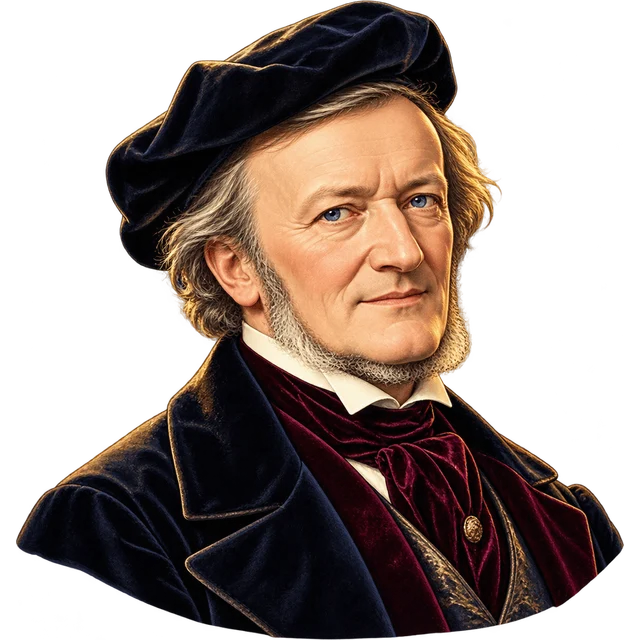
Opera · WWV 90 · 1857–1859(初演1865)
リヒャルト・ワーグナー(1813–1883)
音楽の歴史を変えた、なぞの和音。答えの出ない、あこがれの音楽。One mysterious chord that changed the history of music.
WATCH ON YOUTUBE
この曲は、権利の切れた高音質の録音がまだ見つからないため、YouTube の公式チャンネルなどの名演でお楽しみください(ダウンロードはできません)。YouTube でほかの演奏もさがす ↗
 Wagner: Tristan und Isolde, Act I: Prelude
Berliner Philharmoniker - Topic(YouTube) YouTube で開く ↗
Wagner: Prelude to Tristan und Isolde / Rattle - Berliner Philharmoniker
Berliner Philharmoniker(YouTube) YouTube で開く ↗
Wagner: Tristan und Isolde – Vorspiel und Liebestod ∙ hr-Sinfonieorchester ∙ Andrés Orozco-Estrada
hr-Sinfonieorchester – Frankfurt Radio Symphony(YouTube) YouTube で開く ↗
Richard Wagner - "Tristan und Isolde", Prelude
neuIlaryRheinKlange(YouTube) YouTube で開く ↗
WAGNER - Tristan und Isolde: Prelude & Liebestod (Furtwängler/Flagstad)
Pegasus Grane(YouTube) YouTube で開く ↗

ホー!最初の和音は「トリスタン和音」。どう説明するか、今も学者が議論しているんだ。
 この曲のおはなし The Story
『トリスタンとイゾルデ』は、ワーグナーが1857年から1859年にかけて作曲した楽劇(音楽と劇がしっかり一体になった、ワーグナー流のオペラ)です。中世の伝説をもとにした、騎士トリスタンと王女イゾルデの悲しい恋の物語です。前奏曲は幕が上がる前に演奏される音楽で、チェロが静かに、ため息のようなメロディーを歌い出すところから始まります。Tristan und Isolde is a music drama that Wagner composed between 1857 and 1859. It is based on a medieval legend about the sad love of the knight Tristan and the princess Isolde. The prelude is the music played before the curtain rises. It begins with the cellos quietly singing a phrase that sounds like a sigh.
最初のメロディーのすぐあとに鳴る和音は「トリスタン和音」と呼ばれます。ふつうの音楽では、不安定な和音のあとには落ち着く和音が来ます。ところがここでは、不安定な和音が、また別の不安定な和音へ進むのです。こうして「解決」がずっと先のばしにされ、満たされないあこがれが続いていきます。ワーグナーは当時、哲学者ショーペンハウアーの考えに深く影響されていました。The chord heard right after the first phrase is called the 'Tristan chord'. In most music, a tense chord moves to a calm one. Here, however, one tense chord moves to another tense chord. The 'answer' keeps being delayed, so the feeling of longing never stops. At this time, Wagner was deeply influenced by the ideas of the philosopher Arthur Schopenhauer.
このオペラは「演奏できない」と言われ、ウィーンでは70回以上もリハーサルをしたのに、上演が中止されてしまいました。初演は1865年6月10日、ミュンヘンで、ハンス・フォン・ビューローの指揮によって行われました。トリスタン和音は、のちのドビュッシーやシェーンベルクなど多くの作曲家に影響をあたえ、「現代音楽への入り口」とも言われています。People said the opera could not be performed, and in Vienna it was dropped after more than 70 rehearsals. It was finally premiered in Munich on 10 June 1865, conducted by Hans von Bülow. The Tristan chord influenced many later composers, such as Debussy and Schoenberg, and it is sometimes called a doorway to modern music.
This music comes before a sad love story. It starts very quietly with the cellos. Then we hear a strange chord. The music wants to rest, but it cannot! It keeps waiting until the very end of the opera.この音楽は、悲しい恋の物語の前に演奏されます。チェロで、とても静かに始まります。それから、ふしぎな和音が聞こえます。音楽は落ち着きたいのに、落ち着けません!オペラのいちばん最後まで、ずっと待ちつづけるのです。
 聴きどころ Listening Guide
 えっ!?ネタ Surprising Facts
 タップすると答えが開きます
前奏曲で先のばしにされた和音の「解決」は、オペラのいちばん最後、イゾルデが歌う「愛の死」の終わりで、やっとおとずれると言われます。オペラの上演時間はおよそ4時間。観客は長い長い時間をかけて、ようやく心から落ち着ける和音にたどりつくのです。
The long-delayed 'answer' to the chords of the prelude is said to arrive only at the very end of the opera, when Isolde sings her 'Liebestod' (Love-Death). The opera lasts about four hours, so the audience waits a very long time to reach a truly peaceful chord.
ワーグナーは当時、自分を援助してくれた商人ヴェーゼンドンクの妻マティルデと、深く心を通わせていました。この関係が『トリスタン』に影響したと考えられています。ワーグナーはマティルデの詩5つに曲をつけ、そのうち2曲に「トリスタンとイゾルデのための習作」と書きこみました。
At this time, Wagner had a deep relationship with Mathilde Wesendonck, the wife of a rich merchant who supported him. Many think this influenced Tristan. Wagner set five of her poems to music, and he called two of the songs 'studies for Tristan und Isolde'.
初演でトリスタン役を歌ったテノール歌手シュノル・フォン・カロルスフェルトは、この役をわずか4回歌ったあと、1865年7月、29歳の若さで急に亡くなりました。役があまりに大変だったせいだと言う人もいましたが、本当の理由ははっきりしていません。
The tenor Ludwig Schnorr von Carolsfeld, who sang Tristan at the premiere, performed the role only four times. He died suddenly in July 1865, at just 29. Some people blamed the very hard role, but the true cause is not clear.
前奏曲は、オペラではそのまま第1幕につながるので、はっきりした終わりがありません。そこで演奏会で単独で弾くために、指揮者ビューローや、ワーグナー自身が「終わり」の部分を書きました。今は、最後の場面「愛の死」と続けて弾く『前奏曲と愛の死』の形も人気です。
In the opera, the prelude flows straight into Act 1, so it has no real ending. To play it alone in concerts, both the conductor Bülow and Wagner himself wrote endings for it. Today it is also popular to play it together with the final scene, as 'Prelude and Liebestod'.
ENGLISH × MASTERPIECE
 布をぴんと張る昔の道具(tenterhooks)から。気をもんで待つ様子です。
 この曲で覚える英単語 Words
 クイズに挑戦 Quiz
 著作権について Credits
MORE MASTERPIECES
パッヘルベル・c. 1680–1706
同じ8つの音が28回!なのに聴くたび胸がいっぱいになる曲。
カノンとジーグ ニ長調 より「カノン」のページへ
パーセル・1695
ブリテンが「オーケストラ入門」のテーマに選んだ、かっこいいメロディー。
劇音楽「アブデラザール」より ロンドのページへ
バッハ・c. 1704 (?)
タラリ〜!一度聴いたら忘れない、オルガンの大迫力の幕開け。
トッカータとフーガ ニ短調のページへバッハ・c. 1706–1713
足が弾く低いテーマが21回!重くて壮大な、オルガンの大建築。
パッサカリアとフーガ ハ短調のページへ
ヘンデル・1711
「泣かせてください」と歌う、深い悲しみに満ちた名アリア。
私を泣かせてください(歌劇『リナルド』より)のページへ
クープラン・published 1717
題名の意味はだれも知らない!やわらかく波打つ、なぞの名曲。
神秘的なバリケードのページへバッハ・c. 1720
ヴァイオリン1本で、宇宙のように大きな世界を描く傑作。
無伴奏ヴァイオリン・パルティータ第2番 ニ短調より「シャコンヌ」のページへ
ヴィヴァルディ・1725
うだる暑さ、そして大嵐!ヴァイオリンが雷を鳴らす夏。
協奏曲集『四季』より「夏」のページへ
 MP3