
テ・デウム
Te Deum
シャルパンティエ・c. 1688–1698
パンパカパーン!ヨーロッパのテレビの幕開けを飾ってきた、ごうかな前奏曲。
テ・デウム ニ長調のページへ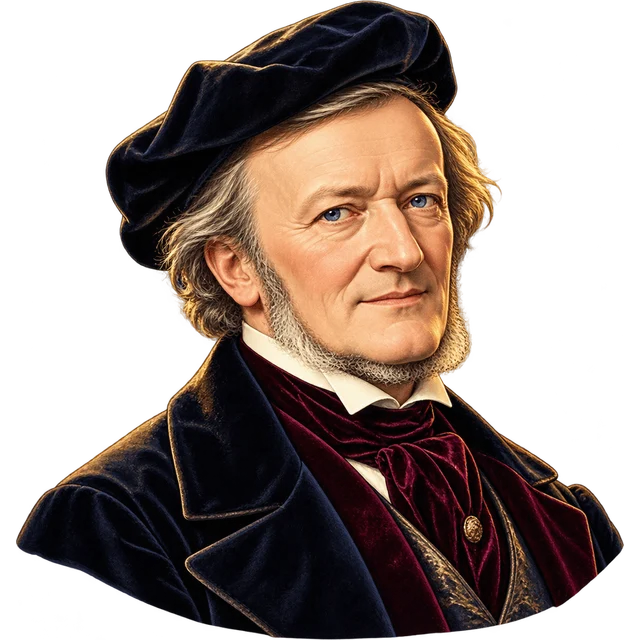
Orchestral · WWV 49 · 1838–1840(初演1842)
リヒャルト・ワーグナー(1813–1883)
トランペット1本の長〜い音から始まる、ローマの英雄の物語。One long trumpet note opens the story of a Roman hero.
WATCH ON YOUTUBE
この曲は、権利の切れた高音質の録音がまだ見つからないため、YouTube の公式チャンネルなどの名演でお楽しみください(ダウンロードはできません)。YouTube でほかの演奏もさがす ↗
 WAGNER Overture to Rienzi - "The President's Own" U.S. Marine Band
United States Marine Band(YouTube) YouTube で開く ↗
Wagner - Rienzi: Overture
Deutsche Grammophon - DG(YouTube) YouTube で開く ↗
Wagner: Rienzi – Ouvertüre ∙ hr-Sinfonieorchester ∙ Paavo Järvi
hr-Sinfonieorchester – Frankfurt Radio Symphony(YouTube) YouTube で開く ↗
Richard Wagner: Rienzi Ouverture | University Orchestra Weimar
University of Music FRANZ LISZT Weimar(YouTube) YouTube で開く ↗
ホー!ワーグナーの出世作なのに、のちに本人はこの作品をあまり認めなくなったんだ。
 この曲のおはなし The Story
『リエンツィ』は、ワーグナーが1838年から1840年にかけて作曲した、5幕の大きなオペラです。正式な題名は『リエンツィ、最後の護民官』。14世紀のローマで民衆のために立ち上がった、実在の人物コーラ・ディ・リエンツォの物語で、イギリスの作家ブルワー=リットンの小説をもとにしています。Rienzi is a grand opera in five acts that Wagner composed between 1838 and 1840. Its full title is Rienzi, the Last of the Tribunes. It tells the story of Cola di Rienzo, a real man who rose up for the people of Rome in the 14th century, and it is based on a novel by the English writer Edward Bulwer-Lytton.
当時のパリでは、豪華な舞台と大合唱、バレエが入った「グランド・オペラ」が大人気でした。若いワーグナーはその流行にのり、パリでの成功を夢見てこの作品を書きました。序曲は、トランペットが長くのばす1つの音で静かに始まり、つづいて弦楽器がリエンツィの「祈り」のメロディーを美しく歌います。そして後半は、軍隊の行進のような華やかな音楽で盛り上がります。In Paris at that time, 'grand opera', with huge sets, big choruses and ballet, was very popular. The young Wagner followed this fashion and wrote Rienzi hoping for success in Paris. The overture begins quietly with one long note on the trumpet. Then the strings sing the beautiful melody of Rienzi's prayer. Later, the music grows into a brilliant, military-style march.
パリでは上演されませんでしたが、1842年10月20日にドレスデンで初演され、大成功をおさめました。この成功で、ワーグナーはドレスデンの宮廷で指揮者の地位を手に入れます。初演は休憩を入れて6時間ほどもかかったと言われ、のちには短くして上演されるようになりました。ワーグナー自身は、やがてこの作品を若いころの作として、あまり重く見なくなりました。It was never staged in Paris, but it was premiered in Dresden on 20 October 1842 and was a huge hit. Thanks to this success, Wagner became a conductor at the Dresden court. The premiere is said to have lasted about six hours, including intervals, so later performances were shortened. In later years, Wagner himself saw it as a work of his youth and did not value it very much.
This music comes before an opera about a hero in old Rome. It starts with one long trumpet note. Then the strings sing a beautiful prayer. At the end, the music sounds like a big army march. This opera made young Wagner famous.この音楽は、昔のローマの英雄のオペラの前に演奏されます。トランペットの長い1つの音で始まります。それから、弦楽器が美しい祈りの歌をかなでます。最後は、大きな軍隊の行進のような音楽になります。このオペラで、若いワーグナーは有名になりました。
 聴きどころ Listening Guide
 えっ!?ネタ Surprising Facts
 タップすると答えが開きます
序曲のいちばん最初は、トランペットがたった1つの音を、だんだん大きく、そしてまた小さくのばすだけ。この音が、静かな弦楽器の合間に何度かくり返されます。まるで人びとを呼び集める合図のような、とても印象的な始まり方です。
At the very start, a trumpet plays just one long note, growing louder and then softer again. The note comes back several times between quiet string phrases. It sounds like a signal calling people together, a very striking way to begin.
ワーグナーが自分の作品のために始めたバイロイト音楽祭では、伝統的に『リエンツィ』は上演されません。大成功した出世作なのに、のちの自分の音楽の考え方とは合わないと感じていたようです。それでも序曲は、演奏会で今もよく取り上げられる人気曲です。
By tradition, Rienzi is not performed at the Bayreuth Festival, which Wagner founded for his own works. Although it was his first big hit, he seems to have felt it did not match his later ideas about music. Even so, the overture is still a popular concert piece.
『リエンツィ』の自筆楽譜は、1939年、ドイツの独裁者ヒトラーの50歳の誕生日に贈られました。ヒトラーは若いころ、このオペラに強く感動したと言われています。しかし楽譜は第二次世界大戦が終わる1945年に行方がわからなくなり、今も見つかっていません。
Wagner's handwritten score of Rienzi was given to the dictator Adolf Hitler for his 50th birthday in 1939. Hitler is said to have been deeply moved by this opera as a young man. But the score disappeared at the end of World War II in 1945, and it has never been found.
パリで成功できなかったワーグナーを助けたのは、当時グランド・オペラの大スターだった作曲家マイアベーアでした。マイアベーアの推薦もあって、ドレスデンでの上演が決まったと言われています。ところがワーグナーはのちに、マイアベーアをきびしく批判するようになりました。
Wagner failed in Paris, but help came from Giacomo Meyerbeer, the star composer of grand opera. Meyerbeer's recommendation is said to have helped Rienzi get accepted in Dresden. Later, however, Wagner turned against Meyerbeer and criticized him harshly.
ENGLISH × MASTERPIECE
 もとは「武器をとれ」という合図。今は「みんなで行動しよう」という呼びかけにも使います。
 この曲で覚える英単語 Words
 クイズに挑戦 Quiz
 著作権について Credits
MORE MASTERPIECES
シャルパンティエ・c. 1688–1698
パンパカパーン!ヨーロッパのテレビの幕開けを飾ってきた、ごうかな前奏曲。
テ・デウム ニ長調のページへ
パーセル・1695
ブリテンが「オーケストラ入門」のテーマに選んだ、かっこいいメロディー。
劇音楽「アブデラザール」より ロンドのページへ
バッハ・c. 1704 (?)
タラリ〜!一度聴いたら忘れない、オルガンの大迫力の幕開け。
トッカータとフーガ ニ短調のページへバッハ・c. 1706–1713
足が弾く低いテーマが21回!重くて壮大な、オルガンの大建築。
パッサカリアとフーガ ハ短調のページへバッハ・c. 1707–1710 (?)
キラキラの駆け上がりで幕開け!若きバッハのはなやかな鍵盤ショー。
トッカータ ニ長調のページへ
ヴィヴァルディ・published 1711
2本のヴァイオリンが火花を散らす!バッハも編曲した熱い協奏曲。
協奏曲集『調和の霊感』第8番 イ短調(2つのヴァイオリンのための協奏曲)のページへヴィヴァルディ・c. 1715
オクターブがぴょんぴょん跳ねる!喜びがはじける合唱の名曲。
グローリア ニ長調のページへ
テレマン・c. 1710–1720 (?)
バルブのないラッパで高音をきらり!バロックのトランペットの晴れ舞台。
トランペット協奏曲 ニ長調のページへ
 MP3