
テ・デウム
Te Deum
シャルパンティエ・c. 1688–1698
パンパカパーン!ヨーロッパのテレビの幕開けを飾ってきた、ごうかな前奏曲。
テ・デウム ニ長調のページへ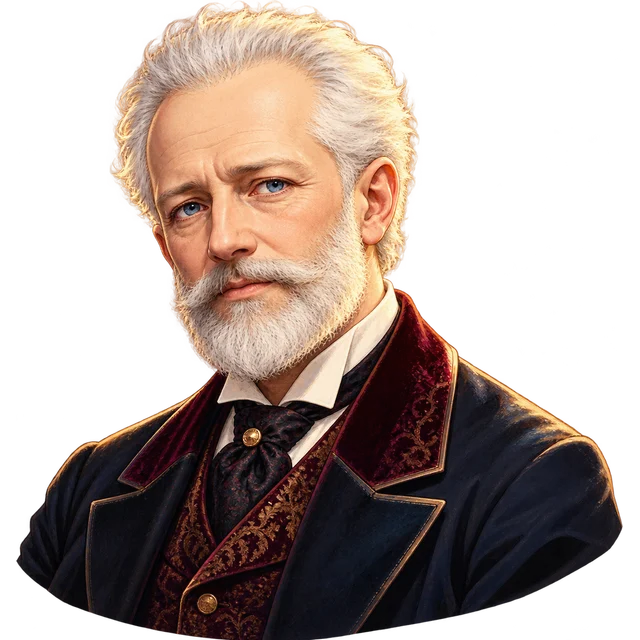
Symphony · Op. 36 · 1877–1878
ピョートル・イリイチ・チャイコフスキー(1840–1893)
ファンファーレが告げる「運命」。苦しみをこえて民衆の祭りへ!A fanfare of Fate, then on through pain to a people's festival!
PUBLIC DOMAIN RECORDING
PD / CC0 無料でダウンロードOK 別の演奏で聴く 1:Felix Mendelssohn
ANOTHER RECORDING 1
PD / CC0
WATCH ON YOUTUBE
 Keeping Score | Piotr Tchaikovsky: Symphony No. 4 (FULL DOCUMENTARY AND CONCERT)
San Francisco Symphony(YouTube) YouTube で開く ↗
Symphony No. 4 / Pyotr Tchaikovsky / Vasily Petrenko / Oslo Philharmonic
Oslo Philharmonic(YouTube) YouTube で開く ↗
左の音源は権利が切れた録音なのでダウンロードできます。右の動画は YouTube の公式の埋め込みで見るもので、ダウンロードはできません(動画の権利は各チャンネルにあります)。
 もっと名演を観る YouTube で何百万回も再生された人気の演奏
Tschaikowsky: 5. Sinfonie ∙ hr-Sinfonieorchester ∙ Manfred Honeck
hr-Sinfonieorchester – Frankfurt Radio Symphony(YouTube) YouTube で開く ↗
ホー!第3楽章は、弦楽器が弓を使わず、指ではじくだけで演奏するんだ。
 この曲のおはなし The Story
交響曲第4番は、チャイコフスキーが1877年から1878年にかけて書いた交響曲です。冒頭でホルンやファゴット、トランペットなどが鳴らすするどいファンファーレを、チャイコフスキー自身は「運命」を表すと説明しました。4つの楽章は、暗い苦しみから始まり、最後はロシア民謡を使ったお祭りさわぎの終楽章へと進みます。Tchaikovsky wrote his Symphony No. 4 in 1877 and 1878. The composer himself explained that the sharp fanfare at the beginning, played by horns, bassoons, trumpets and others, stands for "Fate." The four movements begin in dark suffering and end with a festive finale that uses a Russian folk song.
この時期、チャイコフスキーの人生は大きくゆれていました。お金持ちの未亡人ナジェジダ・フォン・メック夫人が彼の音楽にほれこみ、手紙のやりとりと経済的な援助を始めます。一方で1877年には結婚がすぐに破たんし、深く苦しみました。この交響曲は「わが最良の友へ」としてメック夫人にささげられ、彼女の求めで曲の解説も書かれました。During this time, Tchaikovsky's life was in great turmoil. Nadezhda von Meck, a wealthy widow, fell in love with his music and began writing to him and supporting him with money. At the same time, his marriage in 1877 quickly fell apart, and he suffered deeply. The symphony was dedicated to von Meck as "my best friend," and at her request he wrote a program explaining it.
初演は1878年2月22日、モスクワでニコライ・ルビンシテインの指揮によって行われました。チャイコフスキー自身は外国にいて、初演には立ち会えませんでした。はじめの評判は分かれましたが、のちに演奏会の定番曲となり、第5番、第6番「悲愴」とならぶ後期の三大交響曲のひとつとして愛されています。It was first performed in Moscow on 22 February 1878, conducted by Nikolai Rubinstein. Tchaikovsky himself was abroad and could not attend. The first reactions were mixed, but it later became a concert favorite. Together with No. 5 and No. 6, the "Pathétique," it is loved as one of his three great late symphonies.
This is a big symphony from Russia. It starts with loud horns. The composer said this music is "Fate." In the third movement, the string players pluck the strings with their fingers! The last part is a happy festival.これはロシアの大きな交響曲です。大きなホルンの音で始まります。作曲家は、この音楽は「運命」だと言いました。第3楽章では、弦楽器の人たちが指で弦をはじいて演奏します!最後の楽章は楽しいお祭りです。
 聴きどころ Listening Guide
 えっ!?ネタ Surprising Facts
 タップすると答えが開きます
チャイコフスキーとメック夫人は、13年ほどの間に1000通をこえる手紙をやりとりしましたが、会わないことを約束していました。偶然すれちがったことはあったものの、きちんと会って話すことはなかったと言われています。
Tchaikovsky and von Meck exchanged more than a thousand letters over about 13 years, but they agreed never to meet. It is said that although they passed each other by chance, they never actually sat down and talked.
第3楽章では、弦楽器が最初から最後まで弓を使わず、指で弦をはじく「ピッツィカート」だけで演奏します。楽譜には「ピッツィカート・オスティナート(ずっとピッツィカートで)」と書かれ、木管や金管と会話をするように進みます。
In the third movement, the strings never use their bows. They pluck the strings with their fingers the whole time, called "pizzicato." The score says "Pizzicato ostinato" (always pizzicato), and the strings seem to chat with the woodwinds and brass.
終楽章には、ロシアの有名な民謡「野に立つ白樺」のメロディーが使われています。チャイコフスキーはメック夫人への解説で、自分の中に喜びが見つからないなら、民衆の中へ行き、そのお祭りを見よ、という意味のことを書いています。
The finale uses the melody of the famous Russian folk song "In the Field Stood a Birch Tree." In his program for von Meck, Tchaikovsky wrote, in effect, that if you cannot find joy in yourself, you should go among the people and see their festivities.
冒頭の「運命」のファンファーレは、お祭りさわぎの終楽章の途中で、とつぜんもう一度鳴りひびきます。楽しい気分が一瞬で打ちくだかれますが、音楽はそこから力強く盛り返し、はなやかに終わります。
The "Fate" fanfare from the beginning suddenly blasts out again in the middle of the festive finale. The happy mood is shattered in a moment, but the music fights back strongly and ends in a blaze of glory.
ENGLISH × MASTERPIECE
 腕をのばした長さより近づけない、ということ。親しくなりすぎないようにすることです。
 この曲で覚える英単語 Words
 クイズに挑戦 Quiz
 この録音について(著作権・出典) Credits
MORE MASTERPIECES
シャルパンティエ・c. 1688–1698
パンパカパーン!ヨーロッパのテレビの幕開けを飾ってきた、ごうかな前奏曲。
テ・デウム ニ長調のページへ
パーセル・1695
ブリテンが「オーケストラ入門」のテーマに選んだ、かっこいいメロディー。
劇音楽「アブデラザール」より ロンドのページへ
バッハ・c. 1704 (?)
タラリ〜!一度聴いたら忘れない、オルガンの大迫力の幕開け。
トッカータとフーガ ニ短調のページへバッハ・c. 1706–1713
足が弾く低いテーマが21回!重くて壮大な、オルガンの大建築。
パッサカリアとフーガ ハ短調のページへバッハ・c. 1707–1710 (?)
キラキラの駆け上がりで幕開け!若きバッハのはなやかな鍵盤ショー。
トッカータ ニ長調のページへ
ヴィヴァルディ・published 1711
2本のヴァイオリンが火花を散らす!バッハも編曲した熱い協奏曲。
協奏曲集『調和の霊感』第8番 イ短調(2つのヴァイオリンのための協奏曲)のページへ
コレッリ・published 1714
聖なる夜のために。最後に羊飼いの笛のようなパストラーレが流れます。
合奏協奏曲 ト短調「クリスマス協奏曲」のページへヴィヴァルディ・c. 1715
オクターブがぴょんぴょん跳ねる!喜びがはじける合唱の名曲。
グローリア ニ長調のページへ MP3